Implant-retained Dentures: Complete Guide
Key Takeaways
- ```markdown
- ## Introduction
## Introduction
For millions of Americans, the journey through significant tooth loss can lead to daily challenges with eating, speaking, and self-confidence. Traditional dentures have long been a solution, but often come with frustrations: slipping, discomfort, and the accelerated bone loss that can change the shape of your face. But what if there was a way to reclaim the stability and comfort of natural teeth, even with a full set of replacement teeth? Enter **implant-retained dentures** – a revolutionary advancement in restorative dentistry that offers a secure, comfortable, and often life-changing alternative.
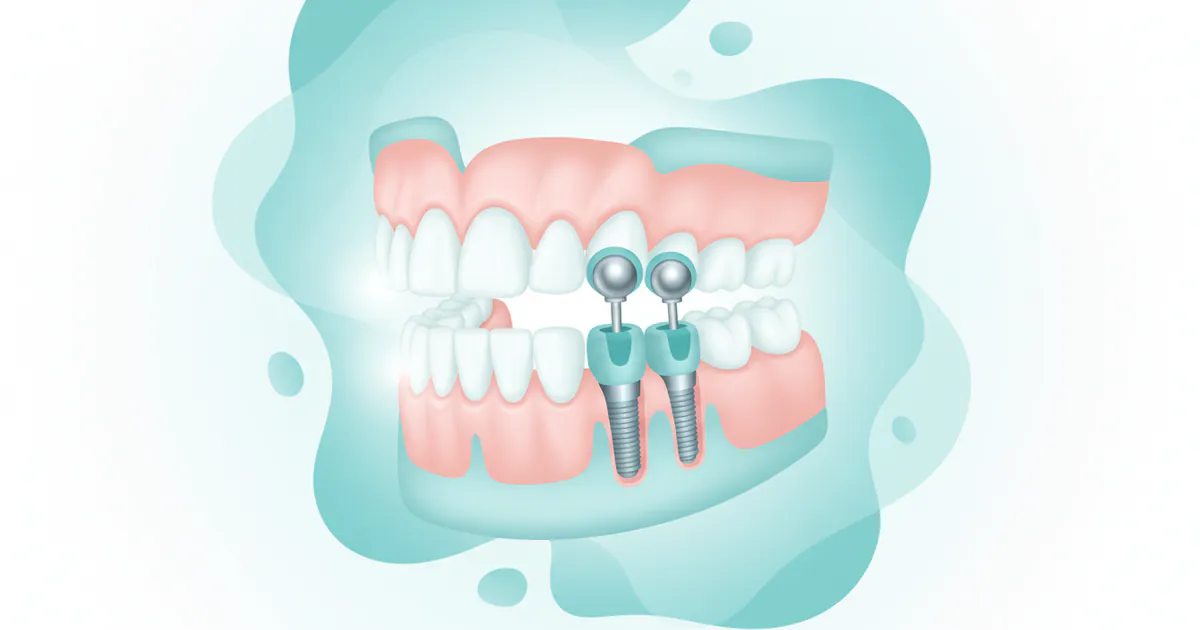
Imagine enjoying your favorite foods without worry, speaking clearly without fear of your dentures shifting, and smiling broadly with newfound confidence. This is the promise of implant-retained dentures, a solution that anchors your prosthetic teeth securely to dental implants surgically placed in your jawbone. This innovative approach not only provides unparalleled stability but also helps preserve your jawbone, a crucial benefit that traditional dentures cannot offer.
This comprehensive guide will delve deep into the world of implant-retained dentures, exploring everything from their fundamental design and various types to the detailed treatment process, associated costs, recovery expectations, and long-term care. Whether you're considering alternatives to traditional dentures or exploring advanced solutions for complete tooth loss, this article will equip you with the knowledge needed to make informed decisions about your oral health and well-being.
> **Key Takeaways:**
> * **What they are:** Implant-retained dentures are removable or fixed prosthetic teeth anchored to dental implants, offering superior stability and comfort compared to traditional dentures.
> * **Types:** They come in removable (snap-in, supported by 2-4 implants) and fixed (permanent, screw-retained, typically 4-6 implants) variations.
> * **Cost:** Removable implant-retained dentures typically range from **$6,000 to $20,000** per arch, while fixed options like All-on-4 can range from **$15,000 to $30,000+** per arch in the US.
> * **Process:** Involves consultation, implant surgery, a healing period (osseointegration, 3-6 months), abutment placement, and final denture fabrication and attachment.
> * **Benefits:** Enhanced chewing ability, improved speech, increased confidence, preservation of jawbone structure, and elimination of denture adhesives.
> * **Longevity:** Dental implants can last 20+ years or a lifetime with proper care, while the prosthetic dentures may need replacement or relining every 5-10 years.
> * **"Where can I get snap-in dentures with implants?":** Consult a general dentist, prosthodontist, or oral surgeon experienced in dental implants. They will assess your bone health and suitability.
## What Are Implant-Retained Dentures? An Overview
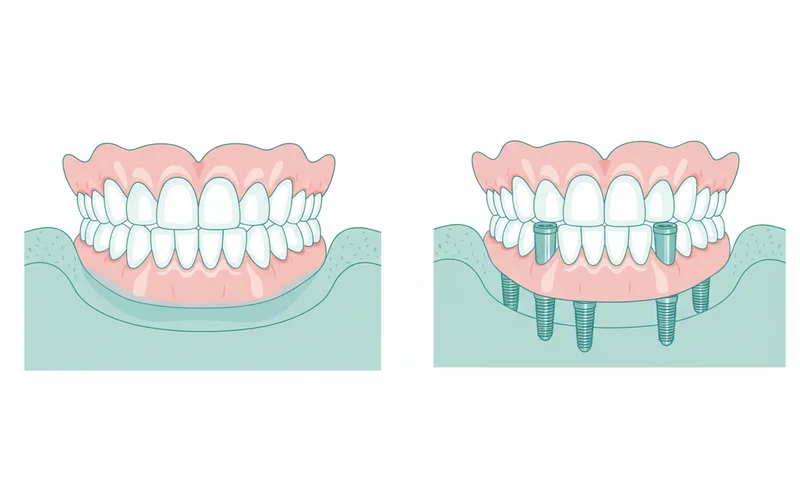
Implant-retained dentures, often referred to as **overdentures** or **implant-supported dentures**, represent a significant leap forward from conventional full dentures. While traditional dentures rest directly on the gums and rely on suction and adhesives for retention, implant-retained dentures securely attach to a small number of dental implants surgically placed in the jawbone. This fundamental difference provides a level of stability, comfort, and functionality that traditional dentures simply cannot match.
At their core, dental implants are small, screw-shaped posts, typically made of biocompatible titanium. These posts are surgically inserted into the jawbone, where they fuse with the bone over several months in a process called **osseointegration**. Once integrated, these implants act as sturdy artificial tooth roots. The implant-retained denture then "snaps" or "screws" onto these implants, preventing slippage, rocking, and the embarrassment often associated with loose dentures.
This innovation addresses several critical drawbacks of traditional dentures. Without the stimulation of tooth roots, the jawbone naturally begins to resorb or shrink over time, a process known as bone atrophy. Traditional dentures do nothing to halt this process; in fact, they can sometimes accelerate it due to the pressure they exert on the gums. Dental implants, however, mimic natural tooth roots, providing the necessary stimulation to help preserve the jawbone. This not only maintains facial structure but also ensures a more stable and comfortable foundation for the denture over the long term.
Understanding the difference between implant-retained (often removable) and implant-supported (often fixed) is crucial. While both utilize implants, "implant-retained" typically refers to dentures that clip or snap onto implants and are still removable by the patient. "Implant-supported" can be a broader term, sometimes encompassing both removable and fixed options, but often leans towards more permanently affixed solutions like full-arch bridges (e.g., All-on-4). For simplicity, in this guide, we will use "implant-retained dentures" to cover both snap-in and permanently fixed (screw-retained) full-arch options, distinguishing between them as "removable" and "fixed" where necessary.
``
## Types and Variations of Implant-Retained Dentures
The world of implant-retained dentures offers various solutions, each designed to meet different patient needs, anatomical conditions, and budget considerations. The primary distinction lies in whether the denture is removable by the patient or permanently fixed by the dentist.
### Removable Implant-Retained Dentures (Snap-In Dentures)
These are the most common type of implant-retained dentures and are often referred to as "snap-in dentures" or "overdentures." They are designed to be removed by the patient for cleaning, just like traditional dentures. However, unlike traditional dentures, they attach securely to dental implants, offering significantly enhanced stability.
Typically, **2 to 4 dental implants** are strategically placed in the jawbone per arch (upper or lower). The denture itself has special attachments on its underside that correspond to attachments on the implants (called abutments). When placed in the mouth, the denture "snaps" onto these abutments, holding it firmly in place.
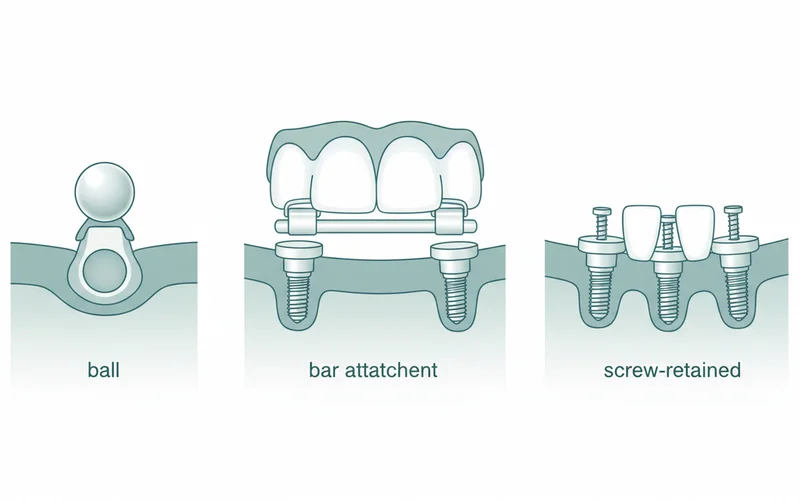
There are two primary types of attachments for removable implant-retained dentures:
1. **Ball-Retained (Stud-Attachment) Dentures:**
* In this system, each implant has a ball-shaped abutment protruding from the gum line. The denture has corresponding sockets (often lined with rubber O-rings) that snap over these ball attachments.
* **Pros:** Simpler and generally less expensive to fabricate. Easier to clean around individual implants. Can be used with fewer implants (sometimes as few as two for a lower arch).
* **Cons:** May offer slightly less stability than bar-retained systems, especially with fewer implants. O-rings may need periodic replacement due to wear.
* **Ideal for:** Patients seeking an affordable yet stable upgrade from traditional dentures, particularly for the lower jaw where retention is often a bigger problem.
2. **Bar-Retained (Clip-Attachment) Dentures:**
* With this method, a thin metal bar follows the curve of the jaw and is securely attached to 2 to 6 implants. The denture then has clips or other attachments built into its underside that clip onto this bar.
* **Pros:** Provides excellent stability and retention, as the bar splints the implants together and offers a broader surface for attachment. Distributes chewing forces more evenly.
* **Cons:** More complex and costly to fabricate than ball-retained systems. Requires very meticulous hygiene to clean under the bar and around the implants.
* **Ideal for:** Patients desiring maximum retention and stability from a removable denture, especially for the upper jaw which often requires more support due to the palate.
### Fixed Implant-Retained Dentures (Permanent Dentures / Implant Bridges)
These solutions are permanently secured to dental implants and can only be removed by a dentist. They offer the closest resemblance to natural teeth in terms of feel, function, and aesthetics. These are often referred to as **implant-supported fixed bridges** or **full-arch restorations**.
* **All-on-4™ / All-on-6™ Dental Implants:**
* This is a popular technique where a full arch of prosthetic teeth is supported by just **four to six specially angled dental implants** per jaw. The unique angulation of the posterior implants allows for maximum contact with existing bone, often eliminating the need for bone grafting, even in cases of moderate bone loss.
* **Pros:** Provides a completely stable, non-removable solution that feels much like natural teeth. Helps prevent further bone loss. Often allows for immediate load (temporary teeth placed on the same day as implant surgery) in suitable candidates. Can be done for patients with some bone loss.
* **Cons:** Higher cost than removable options. Requires significant surgical precision. More challenging to clean around the prosthesis at home (requires special tools).
* **"Permanent dentures vs implants cost":** This category typically represents the higher end of the implant dentistry spectrum, but it's important to differentiate. A "permanent denture" often refers to this type of fixed implant bridge, which is indeed supported by implants. The cost comparison is essentially fixed implant bridge (like All-on-4) vs. removable implant-retained denture. The fixed option is generally 2-3 times more expensive due to the increased number of implants, complexity of the prosthesis, and surgical demands.
* **Ideal for:** Patients seeking the ultimate in comfort, stability, and aesthetics, who desire a solution that functions and feels most like their natural teeth.
### Number of Implants
The number of implants required varies based on the type of denture and the patient's anatomy:
* **Lower Jaw (Mandible):** Often requires fewer implants due to denser bone. Two implants are sometimes sufficient for a removable snap-in denture, though four offer superior stability. For fixed solutions, four implants (All-on-4) are common.
* **Upper Jaw (Maxilla):** Typically requires more implants (4-6 for removable, 4-6 for fixed) due to less dense bone structure and the presence of the sinus cavities, which can complicate implant placement.
``
## Causes: Why People Need Implant-Retained Dentures
The primary reason individuals seek implant-retained dentures is significant tooth loss, leading to the need for a full arch replacement. This situation often arises from a combination of factors, which also highlight why traditional dentures might not be sufficient.
### Root Causes of Tooth Loss Leading to Denture Needs:
1. **Periodontal (Gum) Disease:** This is the leading cause of tooth loss in adults. Untreated gum disease leads to inflammation, infection, and destruction of the supporting bone and ligaments around teeth, eventually causing them to loosen and fall out or require extraction.
2. **Severe Tooth Decay (Cavities):** Extensive and untreated cavities can destroy tooth structure to the point where restoration is impossible, necessitating extraction. This is often exacerbated by poor oral hygiene or limited access to dental care.
3. **Trauma or Injury:** Accidents, sports injuries, or other forms of physical trauma can result in the loss of multiple teeth.
4. **Congenital Conditions:** Some individuals are born with conditions that affect tooth development or cause premature tooth loss.
5. **Failed Dental Work:** Previous extensive dental work (e.g., numerous crowns, large fillings, root canals) can fail over time, leading to non-restorable teeth.
6. **Aging:** While not a direct cause, aging can contribute to the accumulation of dental problems over a lifetime, increasing the likelihood of tooth loss.
7. **Systemic Diseases:** Certain medical conditions like uncontrolled diabetes or autoimmune diseases can increase the risk of gum disease and tooth loss.
### Why Traditional Dentures Fall Short:
Many patients who have lost all their teeth initially receive traditional full dentures. However, they often experience a range of dissatisfactions that lead them to explore implant-retained options:
* **Instability and Movement:** Traditional dentures often slip, tilt, or click, especially during eating or speaking. This can be embarrassing and makes it difficult to chew many foods effectively.
* **Reduced Chewing Efficiency:** Because they are not firmly anchored, conventional dentures can only provide a fraction of the chewing power of natural teeth, limiting diet choices and affecting nutrition.
* **Speech Difficulties:** Loose dentures can interfere with clear pronunciation, causing slurred speech or whistling sounds.
* **Gum Soreness and Irritation:** The constant rubbing and pressure of ill-fitting dentures can cause chronic sore spots, ulcers, and discomfort.
* **Accelerated Jawbone Loss:** Without the stimulation of natural tooth roots or implants, the jawbone beneath traditional dentures progressively shrinks. This not only leads to a poorer fit of the denture over time but also results in a "collapsed" facial appearance, making the person look older.
* **Reliance on Adhesives:** Many traditional denture wearers depend on messy and often ineffective denture adhesives to keep their prosthetics in place.
* **Impact on Quality of Life:** The cumulative effect of these issues can significantly impact a person's self-confidence, social interactions, and overall quality of life.
For these reasons, individuals seeking a more stable, comfortable, and health-preserving solution after significant tooth loss turn to implant-retained dentures.
## Signs and Symptoms Indicating a Need for a Better Denture Solution
While the most obvious "symptom" is the absence of natural teeth, certain signs indicate that an individual with full tooth loss, particularly those already wearing traditional dentures, could greatly benefit from implant-retained dentures.
### Problems Arising from Traditional Dentures:
If you experience any of the following, it might be time to consider the stability and benefits of implants:
* **Loose-fitting Dentures:** Your dentures feel unstable, shift frequently, or even fall out when you speak, laugh, or cough. This is a primary indicator of insufficient retention.
* **Difficulty Chewing Certain Foods:** You find yourself avoiding hard, crunchy, or sticky foods because your dentures can't handle them or because food gets trapped underneath. This leads to a restricted diet, potentially impacting nutrition.
* **Sore Spots, Blisters, or Chronic Gum Irritation:** The constant rubbing and pressure of a denture on the gum tissue can cause painful sores. While some irritation can come from new or ill-fitting traditional dentures, persistent issues suggest a need for better support.
* **Slurred Speech or Clicking Sounds:** Your dentures interfere with your ability to pronounce words clearly, or you hear clicking noises when you speak or eat, indicating movement.
* **Increased Use of Denture Adhesives:** You find yourself applying denture adhesive multiple times a day, or needing stronger adhesives, to keep your dentures in place.
* **Changes in Facial Appearance:** Over time, the loss of jawbone can lead to a "sunken" facial look, especially around the mouth and chin, making you appear older. This is a direct consequence of bone resorption that traditional dentures do not prevent.
* **Reduced Self-Confidence:** The fear of dentures slipping or causing embarrassment can lead to social withdrawal, hesitation to smile, and a general decline in self-esteem.
* **Food Trapped Under Dentures:** Even with adhesives, food particles can get underneath your dentures, causing discomfort and making cleaning more challenging.
* **Pain or Discomfort in the Jaw:** While some adjustment period is normal, persistent jaw pain can indicate that traditional dentures are not providing proper support or are contributing to muscle strain.
* **Unpleasant Odor or Taste:** Poorly fitting dentures can trap bacteria and food debris, leading to bad breath or an altered sense of taste, despite regular cleaning.
These symptoms are not just nuisances; they are clear indicators that your current tooth replacement solution may be hindering your health and quality of life. Implant-retained dentures are specifically designed to alleviate these issues by providing a secure, stable foundation for your prosthetic teeth.
## Treatment Options: Comparing Full Arch Solutions
When considering full-arch tooth replacement, you have several primary options. Understanding the pros and cons of each will help you determine the best path forward.
### 1. Traditional Full Dentures
* **Description:** A removable appliance that rests directly on the gums, relying on suction and denture adhesives for retention.
* **Pros:**
* **Lowest upfront cost:** Generally the most affordable option.
* **Non-invasive:** No surgery required.
* **Quick fabrication:** Can be made relatively quickly.
* **Cons:**
* **Poor stability:** Prone to slipping, clicking, and dislodging.
* **Reduced chewing efficiency:** Significantly limits diet.
* **Accelerated bone loss:** Does not stimulate the jawbone, leading to continued bone resorption and changes in facial structure.
* **Gum irritation:** Can cause chronic sores and discomfort.
* **Requires adhesives:** Often necessitates messy and ineffective glues.
* **Impact on speech:** Can affect pronunciation.
* **Ideal for:** Patients with severe bone loss where implants are not feasible without extensive grafting, or those who cannot undergo surgery due to health reasons or financial constraints as a temporary or last resort.
### 2. Removable Implant-Retained Dentures (Snap-In Dentures)
* **Description:** A removable denture that securely snaps onto 2-4 dental implants per arch. The patient can remove it for cleaning.
* **Pros:**
* **Significantly improved stability:** Eliminates slippage and rocking, greatly enhancing chewing and speech.
* **Preserves jawbone:** Implants stimulate the bone, helping to prevent further bone loss.
* **Enhanced comfort:** Reduces gum irritation as the denture is supported by implants, not entirely by the gums.
* **No adhesives needed:** Frees patients from the hassle of denture glues.
* **More affordable than fixed options:** A good middle-ground solution in terms of cost.
* **Easier to clean:** Can be removed for thorough cleaning.
* **Cons:**
* **Still removable:** Some patients prefer a non-removable solution.
* **Minor movement possible:** While much more stable, there can still be a slight amount of movement compared to fixed options.
* **Requires surgery:** Involves implant placement surgery.
* **Maintenance:** O-rings or clips may need periodic replacement due to wear.
* **Ideal for:** Patients seeking a significant upgrade in stability and function from traditional dentures without the higher cost of fixed options, or those who prefer to remove their prosthesis for cleaning. **This is where you can get "snap-in dentures with implants."**
### 3. Fixed Implant-Supported Dentures (All-on-4/6 or Full-Arch Bridges)
* **Description:** A permanent prosthetic bridge (not a traditional denture) that is screwed onto 4-6 dental implants per arch and can only be removed by a dentist.
* **Pros:**
* **Maximum stability and comfort:** Functions and feels most like natural teeth, offering superior chewing power.
* **Optimal bone preservation:** Implants provide continuous stimulation to the jawbone.
* **Excellent aesthetics:** Custom-designed for a natural-looking smile.
* **Completely non-removable:** Offers the highest level of confidence and convenience.
* **Can often avoid bone grafting:** Techniques like All-on-4 utilize angled implants to maximize existing bone.
* **Cons:**
* **Highest upfront cost:** The most expensive full-arch replacement option.
* **Requires surgery:** Involves implant placement surgery, potentially more complex.
* **Challenging home hygiene:** Requires special tools and techniques to clean under the bridge.
* **Not suitable for all candidates:** Requires sufficient bone density for the specific number and angulation of implants.
* **Ideal for:** Patients who prioritize the highest level of function, aesthetics, and permanence, seeking a solution that most closely mimics their natural dentition, and are willing to invest accordingly. This option directly addresses "permanent dentures vs implants cost" as it represents the "permanent denture" aspect that is fully implant-supported.
### Comparison Table: Full Arch Replacement Options
| Feature | Traditional Dentures | Removable Implant-Retained Dentures | Fixed Implant-Supported Dentures (All-on-4/6) |
| :------------------ | :-------------------------------- | :---------------------------------- | :-------------------------------------------- |
| **Stability** | Poor, prone to slipping | Excellent, snaps securely | Superior, completely fixed |
| **Removable by Patient?** | Yes | Yes | No (only by dentist) |
| **Jawbone Preservation** | No (accelerates loss) | Yes (stimulates bone) | Yes (optimal stimulation) |
| **Chewing Efficiency** | ~10-20% of natural teeth | ~50-70% of natural teeth | ~80-95% of natural teeth |
| **Comfort** | Often causes sore spots | Very comfortable, minimal gum irritation | Extremely comfortable, feels natural |
| **Aesthetics** | Good, but can look bulky | Very good | Excellent, natural-looking |
| **Cost (per arch)** | **$1,500 - $5,000** | **$6,000 - $20,000** | **$15,000 - $30,000+** |
| **Adhesives Needed?** | Often | Never | Never |
| **Speech** | Can be affected | Greatly improved | Excellent |
| **Oral Hygiene** | Easy to clean | Easy to remove and clean | Requires special tools and techniques |
## Step-by-Step Process for Implant-Retained Dentures
The journey to a stable, confident smile with implant-retained dentures is a multi-stage process that requires careful planning, skilled execution, and patience during healing. While specifics can vary slightly, the general steps are as follows:
### Step 1: Comprehensive Consultation and Planning
This initial phase is crucial. Your dentist (general dentist, prosthodontist, or oral surgeon) will conduct a thorough examination including:
* **Oral Examination:** Assessment of your remaining jawbone, gum tissue, and overall oral health.
* **Advanced Imaging:** **X-rays**, **3D CT scans** are essential to evaluate the quality and quantity of your jawbone, identify nerve pathways, and locate sinus cavities. This allows for precise implant placement planning.
* **Medical History Review:** To identify any systemic health conditions (e.g., diabetes, heart disease) or medications (e.g., blood thinners, bisphosphonates) that might affect surgery or healing.
* **Impressions and Models:** To create precise models of your mouth for planning and future denture fabrication.
* **Treatment Plan Discussion:** The dentist will discuss the best type of implant-retained denture for you (removable vs. fixed), the number of implants required, the timeline, and the estimated cost.
* **Bone Grafting Assessment (if needed):** If there isn't sufficient bone density or volume, a bone grafting procedure may be necessary before implant placement to create a stable foundation. This adds to the overall timeline and cost.
### Step 2: Dental Implant Placement Surgery
This is the surgical phase where the titanium implants are placed into your jawbone.
* **Anesthesia:** Local anesthesia is typically used to numb the area, though sedation options (oral, IV) are often available for patient comfort.
* **Incision:** The surgeon makes a small incision in the gum tissue to expose the underlying jawbone.
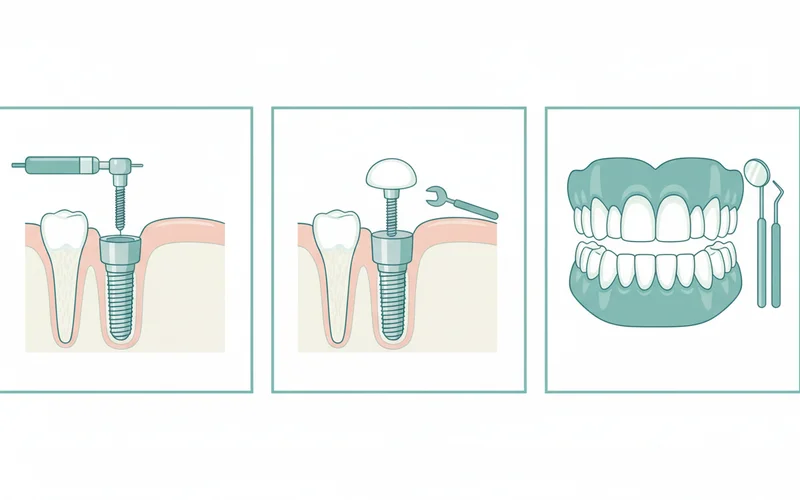
* **Pilot Hole:** A small pilot hole is drilled into the bone at the precisely planned location.
* **Implant Insertion:** Specialized drills are used to gradually widen the hole, and then the titanium dental implant is carefully screwed into place.
* **Healing Caps/Cover Screws:** A small healing cap or cover screw is placed over the implant, and the gum tissue is then sutured closed.
* **Immediate Denture (Optional):** In some cases, particularly with the All-on-4 technique, a temporary denture can be immediately loaded onto the implants on the same day as surgery (immediate loading). This is not always possible and depends on implant stability and bone quality. Most often, patients will wear their existing denture (adjusted) or a new temporary denture during the healing phase.
### Step 3: Osseointegration (Healing Period)
This is a critical biological process where the dental implants fuse with the surrounding jawbone.
* **Duration:** This phase typically takes **3 to 6 months**, though it can be shorter or longer depending on individual healing capabilities, bone quality, and whether bone grafting was performed.
* **Temporary Prosthesis:** During this time, you will usually wear a temporary denture (either your existing one, modified, or a new temporary) that does not put pressure on the healing implants.
* **Monitoring:** Regular check-ups will monitor the healing process.
``
### Step 4: Abutment Placement (if not already placed)
Once osseointegration is complete, the implants are stable.
* **Exposure:** A small incision is made to uncover the top of the implant (if a cover screw was used).
* **Abutment Attachment:** A small connector piece called an **abutment** is screwed into the implant. This abutment protrudes through the gum tissue and will serve as the attachment point for your new denture. For fixed dentures, impressions for the final prosthesis may be taken at this stage.
### Step 5: Denture Fabrication and Attachment
With the abutments in place, the focus shifts to creating your custom-designed denture.
* **Impressions:** New impressions of your mouth and the abutments are taken. These impressions are sent to a dental lab.
* **Wax Try-Ins:** The lab creates a wax model of your future denture. You will have several "try-in" appointments to ensure the fit, bite, aesthetics, and speech are perfect. Adjustments are made until you and your dentist are completely satisfied.
* **Final Denture Creation:** Once approved, the lab fabricates your final denture using high-quality acrylic and prosthetic teeth.
* **Attachment:**
* **For Removable Dentures:** The final denture is fitted with the corresponding attachments (e.g., O-rings or clips) and is then snapped onto the abutments.
* **For Fixed Dentures:** The permanent bridge is screwed directly onto the implants or abutments by the dentist.
* **Final Adjustments:** Your dentist will make any last adjustments to ensure optimal comfort, fit, and function.
**Pro Tip:** Be patient during the osseointegration phase. Rushing the process or placing too much pressure on the implants too soon can jeopardize their success. Follow your dentist's post-operative instructions meticulously.
## Cost and Insurance for Implant-Retained Dentures in the US
The cost of implant-retained dentures can be a significant factor for many patients. It's crucial to understand that pricing varies widely based on the type of denture, the number of implants, geographical location, the complexity of the case (e.g., need for bone grafting), and the experience of the dental team. This section will break down the typical cost ranges in the US and discuss insurance considerations.
### Average US Cost Ranges (Per Arch – Upper or Lower)
The total cost typically includes the dental implants themselves, surgical fees, abutments, and the fabrication of the custom denture or fixed bridge.
#### 1. Removable Implant-Retained Dentures (Snap-In Dentures)
* **2 Implants (typically for lower jaw):** **$6,000 - $12,000**
* *Breakdown:* Implants ($1,500 - $3,000 per implant), abutments ($500 - $1,000 per abutment), surgical fees ($1,000 - $2,000), denture fabrication ($2,000 - $4,000).
* **4 Implants (for lower or upper jaw, more common for upper):** **$10,000 - $20,000**
* *Breakdown:* Implants ($6,000 - $12,000), abutments ($2,000 - $4,000), surgical fees ($2,000 - $4,000), denture fabrication ($3,000 - $6,000).
#### 2. Fixed Implant-Supported Dentures (All-on-4 / Full-Arch Bridge)
* **Per Arch (4-6 Implants):** **$15,000 - $30,000+**
* *Breakdown:* This is often quoted as a single "package" price. It includes 4-6 implants, surgical fees, temporary prosthesis, abutments, and the final high-quality fixed prosthetic bridge. Some high-end practices or complex cases can exceed **$35,000 per arch**. This is the answer to "permanent dentures vs implants cost" where the "permanent denture" is a full arch fixed bridge supported by implants.
**Pro Tip:** Remember that these are ranges. A general dentist may charge less than a specialist prosthodontist or oral surgeon, but specialists often have more extensive experience and advanced equipment. Always get a detailed, written treatment plan and cost estimate before proceeding.
### Regional Variations
Costs can fluctuate significantly based on geographic location:
* **High-Cost Areas:** Major metropolitan areas like New York City, Los Angeles, San Francisco, and other coastal cities typically have higher prices. An All-on-4 procedure might start closer to **$20,000 - $25,000** and go up to **$35,000+** per arch.
* **Mid-Cost Areas:** Midwestern and Southern states often have more moderate pricing.
* **Lower-Cost Areas:** Rural areas or practices in regions with lower overhead may offer more competitive pricing.
### Additional Costs to Consider
* **Bone Grafting:** If needed, a bone graft can add **$300 - $2,000+** per site, depending on the type and extent of the graft.
* **Tooth Extractions:** If existing failing teeth need removal, this adds **$75 - $300** per tooth.
* **Sedation:** IV sedation or general anesthesia can add **$400 - $1,500+** per procedure.
* **Temporary Denture:** A new temporary denture during the healing phase might cost **$500 - $2,000**.
* **Maintenance:** Future relines of removable dentures (**$200-$500**), replacement of O-rings/clips (**$50-$200**), or eventual replacement of the denture itself (every 5-10 years, **$2,000-$6,000**) are ongoing costs.
### Insurance Coverage
Dental insurance coverage for implant-retained dentures can be complex and often limited.
* **Dental Insurance (PPO/HMO):**
* Most basic dental insurance plans **do not cover the full cost of dental implants**. Many categorize implants as "major procedures" or "cosmetic," resulting in low coverage (e.g., 0-15%) or outright exclusion.
* Some plans may cover a percentage of the **prosthetic portion** (the denture itself), often 50%, but exclude the implant placement surgery.
* **Annual maximums** (typically **$1,000 - $2,500**) mean that even if implants are covered, the benefit is quickly exhausted by the high cost.
* **Pre-authorization** is almost always required to determine your specific benefits.
* **Medical Insurance:**
* In very specific circumstances, if tooth loss is due to a medical condition, severe trauma, or jaw surgery, parts of the implant procedure might be covered by medical insurance. This is rare and requires extensive documentation from your dentist and physician.
* **Medicare/Medicaid:**
* Generally, **Medicare does not cover routine dental care**, including dentures or implants. Some Medicare Advantage (Part C) plans may offer limited dental benefits, but comprehensive implant coverage is unlikely.
* **Medicaid coverage for adult dental care varies greatly by state** and rarely includes advanced procedures like dental implants.
**Pro Tip:** Always have your dental office submit a pre-treatment estimate to your insurance company. This will clarify exactly what your plan covers and what your out-of-pocket expenses will be.
### Payment Plans and Financing Options
Given the significant investment, most dental practices offer or work with third-party financing options:
* **In-Office Payment Plans:** Some practices allow patients to pay in installments over the course of treatment.
* **Dental Credit Cards (e.g., CareCredit, LendingClub):** These offer special financing options, including interest-free periods if paid in full within a certain timeframe.
* **Personal Loans:** Banks and credit unions offer personal loans that can be used for dental work.
* **Health Savings Accounts (HSAs) / Flexible Spending Accounts (FSAs):** These tax-advantaged accounts can be used to pay for qualified medical and dental expenses, including implants, using pre-tax dollars.
### Cost-Saving Tips
* **Shop Around:** Get quotes from several qualified dentists and compare their treatment plans and costs.
* **Consider a Dental School:** Dental schools often offer reduced fees for implant procedures, performed by students under the supervision of experienced faculty.
* **Phased Treatment:** Discuss with your dentist if the treatment can be phased over several years to utilize annual insurance benefits or manage payments.
* **Dental Tourism (Caution Advised):** Some individuals consider going abroad for lower costs, but this comes with risks regarding quality of care, follow-up, and potential complications. Exercise extreme caution and thoroughly research any international clinic.
### Comparison Table: Cost of Implant-Retained Dentures (Per Arch, US Average)
| Type of Denture | Number of Implants | Average Cost Range (USD) | Key Features |
| :------------------------------- | :----------------- | :----------------------- | :---------------------------------------------------------------- |
| **Removable (Snap-in) Lower Jaw** | 2-3 | **$6,000 - $12,000** | Basic stability for lower arch, often ball attachments, patient removable. |
| **Removable (Snap-in) Upper Jaw** | 4 | **$10,000 - $20,000** | Enhanced stability for upper arch, often bar-retained, patient removable. |
| **Fixed (All-on-4/6) Per Arch** | 4-6 | **$15,000 - $30,000+** | Permanent, highest stability/function, feels like natural teeth, dentist removable. |
| **Bone Grafting (per site, if needed)** | N/A | **$300 - $2,000+** | Additional cost if insufficient bone for implant placement. |
**Pro Tip:** Don't let cost be the sole determining factor. Quality of materials, experience of the dental team, and comprehensive aftercare are equally important for long-term success.
## Recovery and Aftercare for Implant-Retained Dentures
Successful implant-retained dentures rely not only on precise placement and fabrication but also on diligent recovery and long-term aftercare. Understanding what to expect during healing and how to maintain your new smile is crucial for its longevity.
### Immediate Post-Surgery Recovery (First Few Days to Weeks)
After implant placement surgery, it's normal to experience some discomfort.
* **Pain Management:** Your dentist will prescribe pain medication or recommend over-the-counter options like ibuprofen. Swelling and bruising are common and can be managed with cold compresses applied to the outside of the face.
* **Diet:** Stick to a soft or liquid diet for the first few days. Avoid hot liquids, alcohol, and using straws, which can dislodge blood clots. Gradually reintroduce soft foods as comfort allows.
* **Oral Hygiene:** Gently rinse your mouth with a prescribed antimicrobial mouthwash or warm salt water, starting 24 hours after surgery. Avoid brushing directly on the surgical sites. Be extremely careful if you wear a temporary denture, ensuring it doesn't put pressure on the implants.
* **Activity:** Rest and avoid strenuous physical activity for at least 48-72 hours. Elevate your head when sleeping to help reduce swelling.
* **Follow-up:** Attend all scheduled follow-up appointments so your dentist can monitor healing and remove sutures if necessary.
### Osseointegration Period (3-6 Months)
This is the phase where the implants fuse with your jawbone.
* **Diet:** Continue to eat a softer diet to avoid putting excessive pressure on the healing implants, especially if a temporary denture is worn. Avoid sticky, hard, or crunchy foods.
* **Hygiene:** Maintain excellent oral hygiene, cleaning around your temporary denture and any exposed gum tissue, as instructed by your dentist.
* **Patience:** This period requires patience. Avoid probing the surgical sites or disturbing the implants.
### Long-Term Care for Removable Implant-Retained Dentures
Once your final removable denture is attached, ongoing care is vital.
* **Daily Removal and Cleaning:** Remove your snap-in denture daily.
* **Clean the Denture:** Brush the denture thoroughly with a soft-bristled denture brush and non-abrasive denture cleaner. Rinse well. You can also soak it in a denture cleaning solution daily or as recommended.
* **Clean Around Implants:** Use a soft-bristled toothbrush, interdental brushes, or floss to meticulously clean around the abutments and gum tissue surrounding the implants. **This is critical to prevent peri-implantitis (gum disease around implants).**
* **Regular Dental Check-ups:** Schedule professional cleanings and examinations every **6 months** or as advised. Your dentist will check the health of your implants, gums, and the fit of your denture.
* **Relining and Maintenance:** Over time, your jawbone will naturally change shape, even with implants. Your removable denture may need relining (adjusting the fit) every **1-3 years**. The O-rings or clips that connect your denture to the implants will also wear out and typically need to be replaced every **6-12 months** to maintain retention.
* **Denture Replacement:** The acrylic denture itself may need replacement every **5-10 years** due to wear, staining, or changes in bite.
### Long-Term Care for Fixed Implant-Supported Dentures (All-on-4/6)
Fixed dentures are permanent, but they still require specialized cleaning.
* **Daily Oral Hygiene:**
* **Brushing:** Brush your fixed bridge and gums twice daily with a soft-bristled toothbrush.
* **Flossing/Interdental Cleaners:** This is crucial. Use specialized tools like water flossers, super floss, or interdental brushes to clean thoroughly under the fixed bridge and around the implants. Food particles and plaque can accumulate in these areas.
* **Professional Cleanings:** Schedule professional cleanings every **3-6 months**. These are typically more involved than standard cleanings, requiring specialized tools to clean around and under the fixed prosthesis without damaging it or the implants.
* **Avoid Hard/Sticky Foods:** While you can eat a wider variety of foods than with removable dentures, it's wise to avoid excessively hard candies, ice, or extremely sticky foods that could potentially damage the prosthesis or put undue stress on the implants.
* **Night Guards:** If you clench or grind your teeth (bruxism), your dentist might recommend a custom night guard to protect your fixed prosthesis from excessive forces.
**Pro Tip:** Good oral hygiene is the single most important factor for the long-term success of dental implants. Peri-implantitis, a condition similar to gum disease, can lead to implant failure if not prevented and treated.
## Prevention of Tooth Loss (and thus, Denture Needs)
While this article focuses on solutions for tooth loss, preventing it in the first place is paramount for optimal oral health. Many of the underlying causes of tooth loss are preventable with consistent, good oral hygiene and regular dental care.
Here are key preventive measures:
1. **Maintain Excellent Oral Hygiene:**
* **Brush Twice Daily:** Use a soft-bristled toothbrush and fluoride toothpaste for at least two minutes each time. Brush all surfaces of your teeth and gently along the gum line.
* **Floss Daily:** Flossing removes plaque and food particles from between teeth and under the gum line, areas your toothbrush can't reach. This is crucial for preventing gum disease and interproximal cavities.
* **Use Mouthwash:** An antimicrobial or fluoride mouthwash can provide an extra layer of protection, reducing bacteria and strengthening enamel.
2. **Regular Dental Check-ups and Professional Cleanings:**
* Visit your dentist every **6 months** (or as recommended) for check-ups and professional cleanings. These appointments allow your dentist to detect and address issues like cavities or gum disease early, before they become severe and lead to tooth loss.
* **X-rays** taken periodically can reveal problems hidden from visual inspection.
3. **Balanced Diet:**
* Limit sugary and acidic foods and drinks, as these contribute to tooth decay.
* Choose a diet rich in fruits, vegetables, lean proteins, and dairy products (for calcium) to support overall health, including strong teeth and bones.
4. **Avoid Tobacco Products:**
* Smoking and chewing tobacco are significant risk factors for gum disease, oral cancer, and tooth loss. Quitting tobacco is one of the best things you can do for your oral and overall health.
5. **Limit Alcohol Consumption:**
* Excessive alcohol consumption can contribute to dry mouth, which increases the risk of tooth decay and gum disease.
6. **Wear a Mouthguard for Sports:**
* If you participate in contact sports, a custom-fitted mouthguard can protect your teeth from trauma and potential loss.
7. **Address Teeth Grinding (Bruxism):**
* If you clench or grind your teeth, especially at night, talk to your dentist. Bruxism can wear down teeth, crack restorations, and contribute to jaw problems. A night guard can help protect your teeth.
8. **Manage Systemic Health Conditions:**
* Conditions like diabetes can impact oral health. Work with your physician to manage any chronic diseases, and keep your dentist informed about your medical history.
**Pro Tip:** Prevention is always less expensive and less invasive than treatment. By adopting these habits, you can significantly reduce your risk of tooth loss and the need for complex restorative procedures like implant-retained dentures.
## Risks and Complications Associated with Implant-Retained Dentures
While implant-retained dentures boast a high success rate (often above 95% for implants), like any surgical procedure and long-term prosthetic, there are potential risks and complications. It's important to be aware of these to make an informed decision and to know when to contact your dentist.
### Surgical Risks (During or Immediately After Implant Placement):
1. **Infection:** Though rare, bacterial infection at the implant site can occur. This is often managed with antibiotics.
2. **Nerve Damage:** Implants placed near major nerves (especially in the lower jaw) can cause numbness, tingling, or pain in the lips, gums, tongue, or chin. This can be temporary or, in very rare cases, permanent. Careful planning with 3D imaging significantly reduces this risk.
3. **Sinus Perforation:** When placing implants in the upper jaw, there's a small risk of penetrating the maxillary sinus cavity. This is usually easily managed during surgery and may require a sinus lift procedure.
4. **Excessive Bleeding:** Some bleeding is normal, but excessive or prolonged bleeding should be reported to your surgeon.
5. **Implant Fracture:** Although titanium implants are very strong, excessive force during placement or later trauma can, in rare instances, cause an implant to fracture.
### Implant-Related Complications (Long-Term):
1. **Osseointegration Failure (Implant Failure):** The implant may fail to properly fuse with the jawbone. This can be due to poor bone quality, infection, smoking, certain medical conditions, or excessive pressure on the implant during healing. If an implant doesn't integrate, it typically needs to be removed, and the site may need to heal before another attempt.
2. **Peri-implantitis:** This is an inflammatory condition affecting the soft and hard tissues surrounding a dental implant, similar to periodontal disease around natural teeth. It's often caused by bacterial plaque accumulation and can lead to bone loss around the implant, potentially causing implant failure. It requires immediate intervention.
3. **Abutment or Screw Loosening:** The abutment that connects the implant to the denture, or the screws that secure it, can sometimes loosen. This usually requires a simple tightening by the dentist.
4. **Fracture of Implant Component:** While rare, an implant or abutment can fracture under extreme biting forces. This often requires complex repair or replacement.
### Denture-Related Complications:
1. **Denture Fracture or Wear:** The acrylic base or prosthetic teeth can chip, crack, or wear down over time, especially with heavy biting forces. This often requires repair or replacement of the denture.
2. **Loss of Retention (for Removable Dentures):** For snap-in dentures, the O-rings, clips, or other attachment mechanisms wear out over time, leading to a loose fit. These components need periodic replacement (typically every 6-12 months).
3. **Poor Fit (Removable Dentures):** Even with implants, minor bone resorption can occur, or the gum tissue may change, leading to a less snug fit over time. This may necessitate a denture reline.
4. **Speech Issues:** While implant-retained dentures generally improve speech, some initial adjustment is necessary. Rarely, issues might persist due to the bulk of the denture or tongue adaptation.
### General Complications:
1. **Allergic Reaction:** Although rare with titanium (which is highly biocompatible), some individuals may have an allergic reaction to implant materials.
2. **Bruxism (Teeth Grinding/Clenching):** Uncontrolled bruxism can put excessive forces on implants and prostheses, leading to complications like loosening, fractures, or bone loss around implants. A night guard may be necessary.
**Pro Tip:** Many complications can be prevented or managed effectively with excellent oral hygiene, regular dental check-ups, and immediate reporting of any issues (pain, swelling, looseness) to your dentist. Do not ignore warning signs.
## Frequently Asked Questions
### How long do implant-retained dentures last?
Dental implants themselves are designed to be a permanent solution and can last **20 years or even a lifetime** with proper care and maintenance. The prosthetic denture portion (the teeth and acrylic base) typically needs replacement or significant refurbishment every **5-10 years** due to wear, staining, or changes in the underlying gum tissue.
### Are implant-retained dentures painful?
The implant placement surgery is performed under local anesthesia, so you won't feel pain during the procedure. Post-surgery, you'll experience some discomfort, swelling, and bruising, which is manageable with prescribed or over-the-counter pain medication. Once the implants have healed and the dentures are in place, they should be very comfortable and virtually pain-free.
### Can I get snap-in dentures on my existing implants?
If you already have dental implants, it's possible they can be adapted to support snap-in dentures. Your dentist will need to assess the number, position, and health of your existing implants. You may need new abutments or minor modifications to your implants to accept the snap-in attachments.
### What's the difference between "snap-in" and "permanent" dentures?
"Snap-in" dentures (removable implant-retained dentures) attach to implants via a ball or bar system and can be removed by the patient for cleaning. "Permanent" dentures (fixed implant-supported dentures, like All-on-4/6) are screwed directly onto the implants and can only be removed by a dentist. Fixed options offer superior stability and chewing power, more closely mimicking natural teeth, but come at a higher cost.
### How much do snap-in dentures with implants cost?
In the US, the cost for snap-in dentures typically ranges from **$6,000 to $12,000 per arch** for 2 implants, and **$10,000 to $20,000 per arch** for 4 implants. This includes the implants, surgical fees, abutments, and the denture itself. Prices vary based on location and case complexity.
### Is eating easier with implant-retained dentures?
Absolutely. Implant-retained dentures offer significantly improved chewing efficiency compared to traditional dentures. Because they are securely anchored, you can eat a wider variety of foods without worrying about your dentures slipping or food getting trapped underneath. Fixed options provide the closest chewing power to natural teeth.
### Who is a good candidate for implant-retained dentures?
Good candidates are generally individuals who have lost most or all of their teeth in one or both jaws, have sufficient jawbone density (or are candidates for bone grafting), are in good general health, and do not have uncontrolled systemic diseases. Non-smokers or those willing to quit have higher success rates.
### What are the alternatives to implant-retained dentures?
The main alternatives include traditional full dentures (removable, resting on gums) and individual dental implants to replace each missing tooth (a more costly and extensive option for a full arch). Traditional dentures are the least stable, while individual implants offer maximum function and preservation but are typically the most expensive for a full arch.
### How do I clean implant-retained dentures?
For **removable (snap-in) dentures**, you must remove them daily to clean both the denture (with a soft brush and denture cleaner) and the implant abutments in your mouth (with a soft toothbrush, interdental brushes, or floss). For **fixed (permanent) dentures**, you brush them like natural teeth, but also use specialized tools like water flossers, super floss, or interdental brushes to clean thoroughly under the bridge and around the implants. Regular professional cleanings are essential for both types.
### Are implant-retained dentures covered by insurance?
Dental insurance coverage is often limited. Many plans categorize implants as major procedures or cosmetic, covering only a small percentage (e.g., 0-15%) or excluding them entirely. Some plans might cover a portion of the denture itself (e.g., 50%). It's crucial to get a pre-treatment estimate from your dental office to understand your specific benefits.
## When to See a Dentist
Navigating your oral health journey requires knowing when to seek professional dental attention. For implant-retained dentures, certain situations warrant immediate contact with your dentist, while others are part of routine care.
### Immediate Attention (Red Flags):
Contact your dentist or oral surgeon as soon as possible if you experience any of the following, especially after implant surgery or with existing implant-retained dentures:
* **Severe or Worsening Pain:** Persistent, throbbing pain around an implant site or under your denture that doesn't subside with medication.
* **Significant Swelling or Redness:** Noticeable swelling, redness, or tenderness in the gums or face around the implants, which could indicate infection or inflammation (peri-implantitis).
* **Pus or Discharge:** Any discharge, pus, or foul taste coming from the implant site or under your denture.
* **Loose Implant or Abutment:** If you feel an implant wiggling or notice an abutment (the connector piece) has come loose or fallen out.
* **Denture Damage:** A broken, cracked, or severely ill-fitting denture that causes significant discomfort or interferes with eating/speaking.
* **Numbness or Tingling:** Persistent numbness or tingling in your lip, tongue, or chin after implant surgery, which could indicate nerve irritation.
* **Difficulty Chewing or Biting:** Sudden inability to chew comfortably or a change in your bite with your implant-retained dentures.
* **Bleeding that Won't Stop:** Prolonged or excessive bleeding from the surgical site after initial healing.
### Scheduled Appointments (Routine Care and Consultations):
These situations typically do not require emergency care but should be addressed during a scheduled visit:
* **Initial Consultation:** If you are considering implant-retained dentures, schedule a comprehensive consultation to discuss your options, suitability, and treatment plan.
* **Routine Check-ups and Cleanings:** Follow your dentist's recommendation for regular check-ups and professional cleanings (typically every 3-6 months for fixed dentures, 6 months for removable).
* **Denture Relining or Component Replacement:** For removable snap-in dentures, if you notice your denture feels less secure or the attachments are wearing out (usually every 6-12 months for clips/O-rings, 1-3 years for reline).
* **Minor Discomfort:** If you have mild, intermittent discomfort that isn't severe or accompanied by other red flags, mention it at your next routine appointment.
* **Aesthetic Concerns:** If you are unhappy with the appearance of your implant-retained dentures, discuss this during a scheduled visit.
**Pro Tip:** Your dental team is your best resource. When in doubt, always call your dentist's office. Early intervention can often prevent minor issues from becoming major complications.
Frequently Asked Questions
Medically Reviewed Content
This article was written by our dental health editorial team and reviewed for medical accuracy. Our content follows strict editorial guidelines for reliability and trustworthiness.
Medical Disclaimer
This article is for informational purposes only and does not constitute medical advice. Always consult with a qualified dental professional for diagnosis and treatment. Do not delay seeking professional advice because of something you read on this website.
Related Articles
Implantologist: Complete Guide
Losing a tooth can be a significant setback, impacting not only your smile but also your ability to speak, chew, and maintain overall oral health. In fact, over 3 million Americans currently have dental implants, and that number is projected to grow significantly as more people seek a durable, n
March 8, 2026
Dentures Over Implants: Complete Guide
Missing multiple teeth or even an entire arch can profoundly impact your life, affecting everything from your ability to chew and speak to your self-confidence. For millions of Americans, traditional removable dentures have long been a solution, but they often come with compromises: slipping, discom
March 8, 2026
Implants Process: Complete Guide
Missing teeth can impact more than just your smile; they can affect your ability to eat, speak, and even your overall confidence. In fact, over 178 million Americans are missing at least one tooth, and about 40 million are missing all of their teeth. When faced with tooth loss, understanding the
March 8, 2026
Implants Dentaires: Complete Guide
Missing teeth can dramatically impact not just your smile, but your overall health, confidence, and quality of life. In the United States, an estimated 178 million adults are missing at least one tooth, while approximately 40 million are missing all their teeth. These statistics underscore a
March 8, 2026