Types of Teeth Diseases: Complete Guide
Key Takeaways
- Imagine a world where a simple smile is free from worry, where every bite is pain-free, and your teeth function flawlessly throughout your life. Unfortunately, for a significant portion of the US population, this ideal remains out of reach due to various types of teeth diseases. Statistics show
Types of Teeth Diseases: Complete Guide
Imagine a world where a simple smile is free from worry, where every bite is pain-free, and your teeth function flawlessly throughout your life. Unfortunately, for a significant portion of the US population, this ideal remains out of reach due to various types of teeth diseases. Statistics show that nearly 1 in 4 adults in the United States currently has untreated tooth decay, and almost half of all adults aged 30 and older show signs of gum disease. These prevalent conditions can range from minor discomfort to severe infections that threaten not only your oral health but your overall systemic well-being. Understanding the different types of teeth diseases is the first crucial step toward prevention, early detection, and effective treatment, safeguarding your health and preserving your smile.

This comprehensive guide from SmilePedia.net will explore the full spectrum of dental ailments, from the common cavity to more complex conditions like periodontal disease and dental abscesses. We’ll delve into their causes, recognizable symptoms, available treatment options, associated costs, and most importantly, how to prevent them. You’ll gain insights into specific considerations for children, including baby tooth numbering and tooth eruption baby timelines, alongside practical advice for maintaining optimal oral hygiene at every stage of life.
Key Takeaways:
- Dental Caries (Cavities): The most common tooth disease. Early detection often allows for simple fillings, costing $50 - $250 per filling (amalgam) or $100 - $450 (composite) without insurance. Untreated decay can lead to root canals ($700 - $2,000) or extraction ($75 - $450).
- Periodontal Disease (Gum Disease): Ranges from reversible gingivitis to advanced periodontitis. Professional cleaning for gingivitis typically costs $75 - $200, while scaling and root planing for periodontitis can range from $500 - $4,000 for the full mouth, often covered partially by insurance.
- Prevention is Key: Regular brushing (twice daily), flossing (once daily), and routine dental check-ups (every six months) are the most effective ways to prevent most teeth diseases, costing roughly $100 - $300 per visit without insurance, often fully covered with insurance.
- Children's Oral Health: Pediatric dental care is crucial. First dental visit recommended by age one. Dental sealants for cavity prevention typically cost $30 - $60 per tooth. Parents should be aware of
baby tooth numberingandtooth eruption babyschedules to monitor development.- Dental Abscesses: A serious infection requiring immediate attention. Treatment often involves drainage and either a root canal or extraction, with costs similar to those for advanced decay treatment.
- Dental Insurance: Most dental insurance plans cover 80-100% of preventive care, 50-80% of basic procedures (fillings), and 0-50% of major procedures (crowns, bridges). Orthodontics may have separate coverage limits.
- Emergency Care: Severe pain, swelling, or trauma warrant immediate dental evaluation. Waiting can lead to more extensive damage and higher treatment costs.
What It Is: An Overview of Teeth Diseases
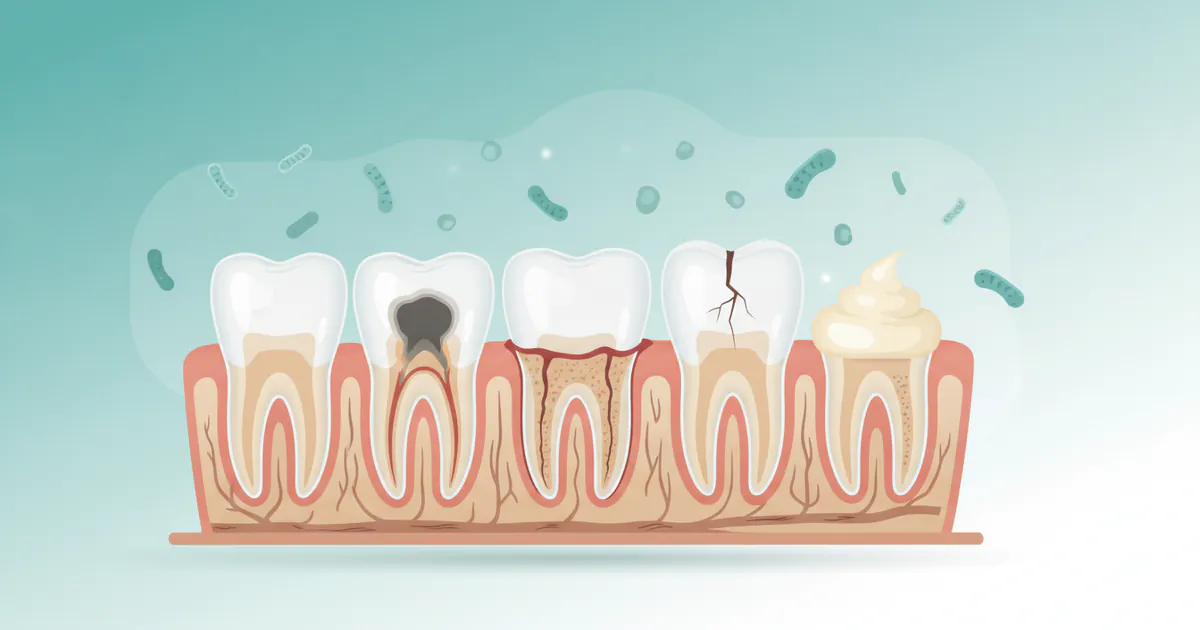
"Teeth diseases" is a broad term encompassing any condition that affects the structure, health, or function of your teeth, gums, and supporting oral tissues. These conditions are typically caused by bacteria, trauma, genetic factors, or lifestyle choices, and they can lead to pain, infection, tooth loss, and systemic health issues if left untreated. Good oral health is more than just a bright smile; it’s an integral component of your overall health, influencing everything from digestion and nutrition to speech and self-esteem.
The Anatomy of a Tooth and Its Vulnerabilities
To understand teeth diseases, it's helpful to know the basic anatomy of a tooth:
- Enamel: The outermost, hardest layer, protecting the tooth from decay.
- Dentin: The layer beneath enamel, containing microscopic tubules that connect to the pulp.
- Pulp: The innermost part, housing nerves, blood vessels, and connective tissue.
- Cementum: A hard connective tissue covering the tooth root, helping anchor it to the jawbone.
- Periodontal Ligament: Tissues that connect the tooth to the bone.
- Gums (Gingiva): Soft tissues surrounding the teeth, protecting the roots.
- Alveolar Bone: The part of the jawbone that holds the teeth.
Each of these components is susceptible to specific diseases, from enamel erosion to bone loss.
Types of Teeth Diseases and Their Impact
Teeth diseases vary widely in their nature, severity, and the specific parts of the oral cavity they affect. Here, we delve into the most common and significant conditions.
Dental Caries (Tooth Decay / Cavities)
What It Is / Overview
Dental caries, commonly known as tooth decay or cavities, is the breakdown of tooth structure caused by acids produced by bacteria in plaque. Plaque is a sticky film of bacteria, food particles, and saliva that constantly forms on your teeth. When you consume sugary or starchy foods, these bacteria metabolize the sugars and produce acids that demineralize (erode) the enamel, creating tiny holes or cavities. If left untreated, these holes can deepen, reaching the dentin and eventually the pulp, leading to pain, infection, and even tooth loss.
Types / Variations
- Coronal Cavities: The most common type, occurring on the chewing surfaces or between teeth.
- Root Cavities: Develop on the surface of the roots when gums recede, exposing the root to acid. Common in older adults.
- Recurrent (Secondary) Cavities: Occur around existing fillings or crowns, where plaque can accumulate.
Causes / Why It Happens
The primary causes of tooth decay include:
- Poor Oral Hygiene: Infrequent brushing and flossing allow plaque to accumulate.
- Sugary and Acidic Diet: Frequent consumption of sweets, sodas, and acidic foods fuels acid-producing bacteria.
- Dry Mouth (Xerostomia): Saliva helps wash away food particles and neutralize acids. Reduced saliva flow increases decay risk.
- Lack of Fluoride: Fluoride strengthens enamel and makes it more resistant to acid.
- Genetics: Some individuals are more predisposed to decay due to enamel strength or saliva composition.
Signs and Symptoms
Early decay often has no symptoms. As it progresses, you might notice:
- White Spots: Initial signs of demineralization on enamel.
- Tooth Sensitivity: Pain when consuming hot, cold, or sweet foods/drinks.
- Mild to Sharp Pain: Especially when biting down.
- Visible Pits or Holes: In the tooth.
- Brown, Black, or White Staining: On the tooth surface.
Treatment Options
Treatment depends on the severity of the decay:
- Fluoride Treatments: Can reverse very early demineralization.
- Fillings: For small to moderate cavities, the decayed part is removed and replaced with a filling material (composite resin, amalgam, gold, porcelain).
- Crowns: If decay is extensive and has weakened a large portion of the tooth, a custom-fitted cap (crown) is placed over the entire tooth.
- Root Canal Therapy: When decay reaches the pulp, causing infection and severe pain, the infected pulp is removed, the canal is cleaned, filled, and sealed. A crown usually follows.
- Extraction: If a tooth is too severely damaged to be saved, it may need to be extracted.
Step-by-Step Process (for a typical filling)
- Numbing: The dentist applies a local anesthetic to numb the tooth and surrounding gum.
- Removal of Decay: A dental drill is used to carefully remove the decayed portion of the tooth.
- Preparation: The prepared cavity is thoroughly cleaned and shaped for the filling material.
- Filling Placement:
- Composite: A tooth-colored resin is applied in layers, hardened with a special light, and then shaped and polished.
- Amalgam: The silver-colored mixture is pressed into the cavity, shaped, and allowed to harden.
- Finishing: The dentist checks your bite and polishes the filling for a smooth finish.
Cost and Insurance (US Ranges)
Costs vary significantly by location, dentist, and material.
- Composite Filling: $100 - $450 per tooth.
- Amalgam Filling: $50 - $250 per tooth.
- Crown: $800 - $2,500 per tooth.
- Root Canal Therapy: $700 - $1,500 (front tooth) to $1,000 - $2,000+ (molar).
- Extraction: $75 - $300 (simple) to $200 - $600+ (surgical).
Most dental insurance plans cover 50-80% of basic restorative procedures like fillings, and 0-50% of major procedures like crowns and root canals, after deductibles.
Recovery and Aftercare
- Fillings: Mild sensitivity for a few days to weeks is common. Avoid chewing on the treated tooth until the numbness wears off.
- Crowns: May experience sensitivity. Avoid sticky or hard foods immediately after placement.
- Root Canal: The tooth might be sensitive for a few days. Follow post-operative instructions carefully, especially if a temporary filling is in place before the permanent crown.
Prevention
- Brush Twice Daily: With fluoride toothpaste for at least two minutes.
- Floss Daily: To remove plaque and food particles between teeth.
- Limit Sugary/Acidic Foods: Reduce frequency, rinse with water after consuming.
- Regular Dental Check-ups: Every six months for cleaning and early decay detection.
- Dental Sealants: Protective coatings applied to the chewing surfaces of molars in children and adolescents.
- Fluoride: Tap water, toothpaste, mouth rinses, and professional treatments.
Risks and Complications
Untreated decay can lead to:
- Severe Pain: Intense toothache.
- Dental Abscess: A pus-filled sac at the root of the tooth, potentially spreading infection.
- Tooth Loss: Requiring extraction and replacement options like implants or bridges.
- Systemic Infections: In rare cases, severe dental infections can spread to other parts of the body, potentially leading to life-threatening conditions.
Periodontal Disease (Gum Disease)
What It Is / Overview
Periodontal disease, commonly known as gum disease, is an inflammatory condition affecting the tissues surrounding and supporting your teeth. It ranges from mild gum inflammation (gingivitis) to severe disease (periodontitis) that can lead to irreversible bone loss and tooth loss. It is caused by bacterial plaque accumulating on teeth and hardening into tartar (calculus).
Types / Variations
- Gingivitis: The mildest form. Gums become red, swollen, and bleed easily. It's reversible with good oral hygiene and professional cleaning.
- Periodontitis: If gingivitis is left untreated, it can progress to periodontitis. Plaque spreads below the gum line, causing the gums to pull away from the teeth, forming "pockets" that become infected. The body's immune response, combined with bacterial toxins, starts to break down the bone and connective tissue supporting the teeth.
- Chronic Periodontitis: Most common form, slow progression.
- Aggressive Periodontitis: Rapid progression, often with genetic links.
- Necrotizing Periodontal Disease: Severe form, often seen in immunocompromised individuals.
Causes / Why It Happens
- Plaque and Tartar Accumulation: The primary cause.
- Poor Oral Hygiene: Inconsistent brushing and flossing.
- Smoking/Tobacco Use: Significantly increases the risk and severity.
- Hormonal Changes: During pregnancy, puberty, menopause.
- Certain Medications: Some drugs can cause dry mouth or gum overgrowth.
- Systemic Diseases: Diabetes, heart disease, autoimmune diseases.
- Genetics: Some individuals are more genetically predisposed.
Signs and Symptoms
- Red, Swollen, or Tender Gums:
- Bleeding Gums: Especially when brushing or flossing.
- Receding Gums: Teeth may appear longer.
- Persistent Bad Breath (Halitosis):
- Pus Between Teeth and Gums:
- Loose or Shifting Teeth: In advanced stages.
- Changes in Bite: Or the fit of partial dentures.
Treatment Options
- Professional Dental Cleaning (Prophylaxis): For gingivitis, removal of plaque and tartar above the gum line.
- Scaling and Root Planing (Deep Cleaning): For early to moderate periodontitis. Involves scraping away tartar from above and below the gum line (scaling) and smoothing rough spots on the root surfaces (root planing) to remove bacterial toxins.
- Antibiotics: Oral or topical antibiotics (gels, chips) can help control bacterial infection.
- Gum Surgery: For advanced periodontitis, when non-surgical methods aren't enough.
- Flap Surgery (Pocket Reduction Surgery): Gums are lifted back to remove tartar and diseased tissue, then re-sutured.
- Bone Grafts: To regenerate bone lost to periodontitis.
- Soft Tissue Grafts: To cover exposed tooth roots and reduce sensitivity.
Step-by-Step Process (for Scaling and Root Planing)
- Numbing: Local anesthetic is applied to numb the specific areas of the mouth.
- Scaling: Using specialized instruments (ultrasonic scalers and hand scalers), the hygienist or dentist carefully removes plaque and tartar from the tooth surfaces, both above and below the gum line, and from within the periodontal pockets.
- Root Planing: The root surfaces are then smoothed to remove bacterial toxins and prevent future plaque adhesion, promoting gum reattachment.
- Irrigation (Optional): Antiseptic solutions may be used to flush out pockets.
- Follow-up: Multiple appointments may be needed. Regular maintenance cleanings are crucial post-treatment.
Cost and Insurance (US Ranges)
- Professional Cleaning (Gingivitis): $75 - $200. Usually covered 100% by insurance (preventive).
- Scaling and Root Planing (Per Quadrant): $150 - $450 per quadrant (there are 4 quadrants in the mouth, so $600 - $1,800 for a full mouth deep cleaning). Often covered 50-80% by insurance (basic).
- Gum Surgery: $500 - $1,500+ per tooth or area. Coverage varies widely (0-50%).
- Antibiotics: Varies based on prescription.
Recovery and Aftercare
- SRP: Expect some soreness, swelling, and sensitivity for a few days. Follow a soft diet, use prescribed mouthwashes, and continue meticulous oral hygiene.
- Gum Surgery: More significant discomfort. Pain medication, soft diet, and specific cleaning instructions are common.
Prevention
- Brush Twice Daily: With fluoride toothpaste.
- Floss Daily: To remove plaque between teeth and below the gum line.
- Regular Dental Check-ups and Cleanings: Crucial for early detection and professional plaque/tartar removal.
- Quit Smoking: The single most impactful lifestyle change.
- Manage Systemic Conditions: Control diabetes, heart disease, etc.
- Healthy Diet: Limit sugary and processed foods.
Risks and Complications
- Tooth Loss: If periodontitis progresses untreated.
- Systemic Health Issues: Link between gum disease and heart disease, stroke, diabetes complications, respiratory disease, and adverse pregnancy outcomes.
- Abscess Formation: Infection in deep pockets.
Dental Abscesses
What It Is / Overview
A dental abscess is a localized collection of pus caused by a bacterial infection. It can form at different locations in the mouth and is typically accompanied by severe pain and swelling. Abscesses are serious infections that require immediate dental attention to prevent them from spreading.
Types / Variations
- Periapical Abscess: Occurs at the tip of the tooth root, usually due to untreated dental decay that has reached the pulp, or trauma that has infected the pulp.
- Periodontal Abscess: Occurs in the gum tissue next to the root of a tooth, often as a complication of advanced periodontal disease where bacteria become trapped in a deep gum pocket.
Causes / Why It Happens
- Untreated Tooth Decay: Allowing bacteria to penetrate the pulp.
- Dental Trauma: A cracked or chipped tooth can expose the pulp to bacteria.
- Advanced Periodontal Disease: Deep gum pockets can harbor bacteria.
Signs and Symptoms
- Severe, Persistent, Throbbing Toothache: May radiate to the jaw, ear, or neck.
- Swelling of the Gums, Face, or Jaw:
- Sensitivity to Hot and Cold:
- Pain When Chewing or Biting:
- Fever:
- Swollen Lymph Nodes: In the neck or under the jaw.
- Bad Breath or Foul Taste: If the abscess drains.
- Difficulty Opening Mouth (Trismus):
Treatment Options
An abscess is an emergency that needs prompt treatment to clear the infection and alleviate pain.
- Drainage: The dentist makes a small incision to drain the pus, relieving pressure and pain.
- Antibiotics: To help fight the bacterial infection, especially if there's significant swelling or fever.
- Root Canal Therapy: For a periapical abscess, the infected pulp is removed, and the tooth is cleaned and sealed.
- Extraction: If the tooth is too severely damaged to be saved, it will be removed.
- Periodontal Treatment: For a periodontal abscess, deep cleaning or gum surgery may be necessary after drainage.
Recovery and Aftercare
- Pain Management: Over-the-counter pain relievers or prescribed medication.
- Antibiotic Regimen: Complete the full course of antibiotics, even if symptoms improve.
- Soft Diet: For a few days.
- Saltwater Rinses: To promote healing and keep the area clean.
Prevention
- Prompt Treatment of Decay: Don't let cavities go untreated.
- Good Oral Hygiene: Brush and floss regularly.
- Regular Dental Check-ups: For early detection of problems.
- Mouthguards: To prevent dental trauma during sports.
Risks and Complications
If left untreated, a dental abscess can lead to:
- Spread of Infection: To the jawbone, head, neck, or even into the bloodstream (sepsis), which can be life-threatening.
- Fistula Formation: A pathway through the bone and skin or gum that allows pus to drain.
- Tooth Loss:
Dental Erosion
What It Is / Overview
Dental erosion is the irreversible loss of tooth structure due to chemical dissolution by acids, without bacterial involvement. Unlike tooth decay, which creates distinct holes, erosion typically results in a generalized wear of the enamel surface.
Causes / Why It Happens
- Extrinsic Acids:
- Acidic Foods and Drinks: Sodas, fruit juices (especially citrus), sports drinks, wine, vinegar. Frequent consumption can dissolve enamel.
- Environmental/Occupational Exposure: Acidic fumes.
- Intrinsic Acids:
- Gastroesophageal Reflux Disease (GERD): Stomach acid flows back into the esophagus and mouth.
- Bulimia and Anorexia: Frequent vomiting exposes teeth to stomach acid.
- Morning Sickness: In pregnant women.
Signs and Symptoms
- Sensitivity: Especially to cold, sweet, or acidic foods/drinks.
- Discoloration: Teeth may appear yellow as dentin becomes exposed.
- Smooth, Shiny Surfaces: Enamel loss can make teeth look polished.
- Rounded Teeth: Loss of anatomical features.
- Cupping: Indentations on the chewing surfaces.
- Fractures: Weakened enamel is more prone to chipping.
Treatment Options
- Identify and Address Cause: Crucial for preventing further erosion (e.g., GERD management, dietary changes).
- Fluoride Treatments: To strengthen remaining enamel and reduce sensitivity.
- Bonding: Composite resin can be used to rebuild eroded areas.
- Crowns or Veneers: For more extensive erosion, to restore tooth structure and aesthetics.
- Desensitizing Toothpastes: To manage sensitivity.
Prevention
- Limit Acidic Foods/Drinks: Reduce frequency and duration of exposure.
- Rinse with Water: After consuming acidic items or episodes of reflux/vomiting.
- Avoid Brushing Immediately After Acid Exposure: Wait at least 30-60 minutes to allow saliva to remineralize enamel.
- Use Fluoride Toothpaste:
- Use a Soft-Bristled Toothbrush: And brush gently.
- Address Underlying Medical Conditions: Consult a doctor for GERD or eating disorders.
- Use a Straw: When drinking acidic beverages to minimize contact with teeth.
Risks and Complications
- Increased Sensitivity:
- Increased Risk of Decay: As enamel thins, teeth become more vulnerable.
- Changes in Bite: Due to loss of tooth structure.
- Esthetic Concerns:
Dental Trauma and Fractures
What It Is / Overview
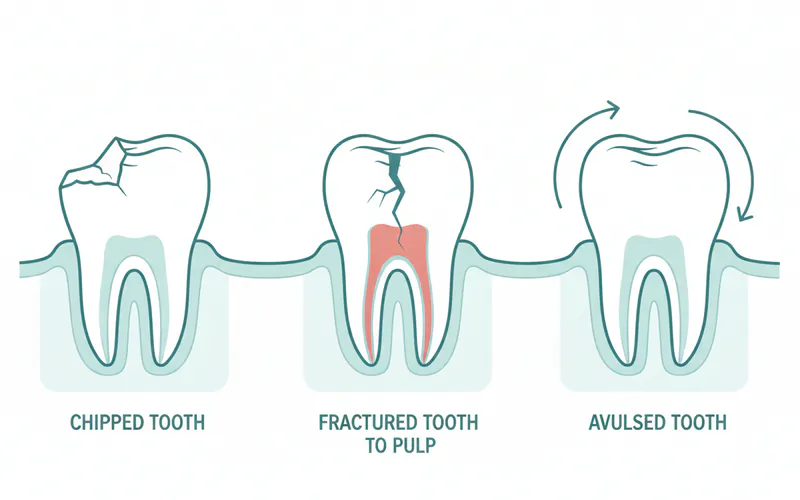
Dental trauma refers to any injury to the teeth, gums, and supporting bone structures. This can range from a minor chip to a complete avulsion (tooth knocked out).
Types / Variations
- Enamel Chips/Fractures: Superficial damage to the outermost layer.
- Dentin Fractures: Involve the layer beneath enamel, often causing sensitivity.
- Pulp Involvement (Complicated Fractures): Fractures extending into the pulp, requiring immediate attention.
- Root Fractures: Fractures below the gum line.
- Luxation Injuries: Tooth is still in the socket but displaced (loosened, pushed in, or pushed out).
- Avulsion (Knocked-Out Tooth): The entire tooth is completely out of its socket.
Causes / Why It Happens
- Accidents: Falls, car accidents.
- Sports Injuries: (especially without mouthguards).
- Fights or Assaults:
- Biting on Hard Objects: (e.g., ice, hard candy).
- Bruxism: Chronic teeth grinding can lead to stress fractures.
Signs and Symptoms
- Visible Damage: Chips, cracks, missing tooth fragments.
- Pain: Especially when biting, chewing, or with hot/cold sensitivity.
- Loose Tooth:
- Bleeding from Gums or Around the Tooth:
- Discoloration of the Tooth: May indicate pulp damage.
- Swelling of Gums or Face:
Treatment Options
Treatment depends heavily on the type and severity of the injury.
- Enamel Chips: Usually repaired with composite bonding.
- Dentin Fractures: May require bonding or a crown to protect the exposed dentin.
- Pulp Involvement: Often requires root canal therapy followed by a crown.
- Root Fractures: Prognosis varies; may require splinting, root canal, or extraction.
- Luxation: The tooth may be repositioned and splinted to adjacent teeth to stabilize it. Root canal therapy may be needed.
- Avulsion (Knocked-Out Tooth): Time-sensitive emergency! The tooth should be gently rinsed (do NOT scrub) and immediately reinserted into the socket if possible, or placed in milk/saliva/saline and transported to the dentist within 30-60 minutes. It may be splinted, and a root canal will likely be needed.
Step-by-Step Process (for Avulsion - Emergency!)
- Locate the Tooth: Handle it only by the crown, avoid touching the root.
- Rinse Gently: If dirty, rinse briefly with milk or saliva – NOT tap water for more than 10 seconds. Do not scrub.
- Reinsert (If Possible): Try to gently push the tooth back into its socket.
- Keep Moist: If reinsertion isn't possible, store the tooth in milk, saline solution, or the patient's saliva. Do not let it dry out.
- Seek Immediate Dental Care: Every minute counts for successful replantation.
Cost and Insurance (US Ranges)
- Bonding: $100 - $450 (per tooth).
- Crown: $800 - $2,500.
- Root Canal: $700 - $2,000.
- Splinting: $100 - $400.
- Replantation of Avulsed Tooth: Initial emergency fee $200 - $600, plus subsequent root canal $700 - $1,500 and potentially a crown.
Insurance coverage varies, often treating these as basic or major procedures.
Recovery and Aftercare
- Soft Diet: For several days or weeks, depending on the injury.
- Pain Management: As needed.
- Oral Hygiene: Careful brushing and flossing around the injured area.
- Follow-up Appointments: Crucial for monitoring healing and addressing complications.
Prevention
- Mouthguards: Essential for sports.
- Avoid Biting Hard Objects:
- Wear Seatbelts:
Risks and Complications
- Pulp Necrosis: Death of the tooth's nerve.
- Root Resorption: The body breaks down the tooth's root.
- Ankylosis: The tooth fuses to the bone.
- Tooth Discoloration:
- Loss of Tooth: If the injury is too severe or treatment delayed.
Malocclusion (Bite Problems)
What It Is / Overview
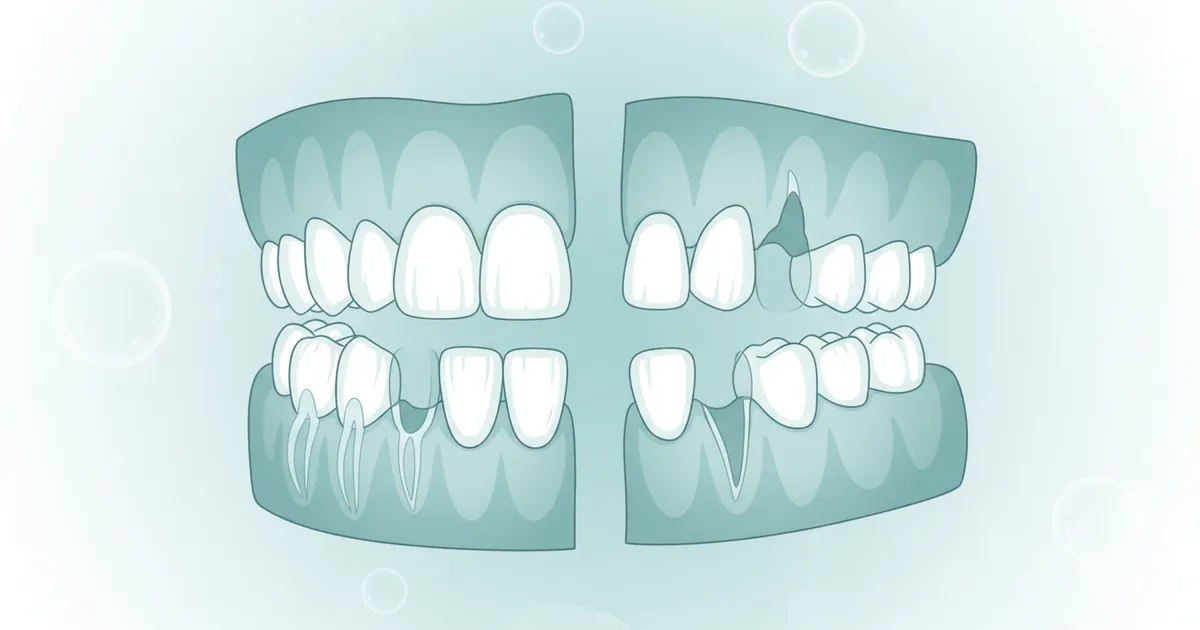
Malocclusion refers to the misalignment of teeth and/or jaws. It means that the upper and lower teeth do not properly come together when the mouth is closed, affecting chewing, speaking, and the aesthetics of the smile.
Types / Variations
- Overbite (Class II Malocclusion): Upper front teeth overlap the lower front teeth significantly.
- Underbite (Class III Malocclusion): Lower front teeth extend beyond the upper front teeth.
- Crossbite: One or more upper teeth bite on the inside of the lower teeth.
- Open Bite: A gap exists between the biting surfaces of the front or back teeth when the mouth is closed.
- Crowding: Not enough space in the jaw for all teeth to erupt properly.
- Spacing: Gaps between teeth, often due to missing teeth or small teeth relative to jaw size.
Causes / Why It Happens
- Genetics: Most common cause, inherited jaw size or tooth size.
- Habits: Thumb sucking, prolonged pacifier use, tongue thrusting in childhood.
- Premature Loss of Primary (Baby) Teeth: Can cause adult teeth to erupt incorrectly.
- Extra or Missing Teeth:
- Trauma: Jaw fractures or misaligned tooth eruption due to injury.
Signs and Symptoms
- Misaligned Teeth: Visibly crooked, crowded, or gapped teeth.
- Difficulty Chewing or Biting:
- Speech Problems: Lisp or difficulty pronouncing certain sounds.
- Breathing Through the Mouth: (especially related to jaw issues).
- Jaw Pain or Discomfort:
- Abnormal Facial Appearance: Due to jaw misalignment.
- Increased Tooth Wear: Due to improper forces.
Treatment Options
The primary treatment for malocclusion is orthodontics.
- Braces: Traditional metal, ceramic, or lingual (on the inside of teeth) braces use brackets and wires to gradually move teeth into alignment.
- Clear Aligners (e.g., Invisalign): A series of custom-made, clear, removable trays that gradually shift teeth.
- Retainers: Worn after orthodontic treatment to maintain the new position of teeth.
- Tooth Extraction: Sometimes necessary to create space for crowded teeth.
- Orthognathic Surgery (Jaw Surgery): For severe jaw misalignments, often combined with orthodontics.
- Expanders: To widen the palate, especially in children.
Cost and Insurance (US Ranges)
Orthodontic treatment is a significant investment.
- Traditional Braces: $3,000 - $7,000.
- Clear Aligners (Invisalign): $3,500 - $8,000.
- Retainers: $150 - $600 (after treatment).
- Jaw Surgery: $20,000 - $40,000+ (often covered by medical insurance for functional issues).
Some dental insurance plans include orthodontic coverage, often with a lifetime maximum benefit (e.g., $1,500 - $3,000).
Recovery and Aftercare
- Braces: Initial discomfort and soreness after adjustments.
- Aligners: Mild discomfort when switching to new trays.
- Retainers: Consistent wear is essential to prevent relapse.
- Oral Hygiene: Meticulous brushing and flossing are crucial during orthodontic treatment to prevent cavities and gum disease.
Prevention
- Early Orthodontic Evaluation: Recommended around age 7 for children to identify potential issues.
- Discourage Thumb Sucking/Pacifier Use: By age 2-4.
- Proper Management of Premature Tooth Loss: Space maintainers may be used.
Risks and Complications
- Root Resorption: Shortening of tooth roots.
- Relapse: Teeth shifting back if retainers aren't worn.
- Decalcification/Cavities: If oral hygiene is poor during treatment.
- Gum Inflammation:
Other Common Teeth Diseases
Bruxism (Teeth Grinding/Clenching)
- What It Is: Involuntary clenching or grinding of teeth, often during sleep (sleep bruxism) or while awake (awake bruxism).
- Causes: Stress, anxiety, sleep disorders (e.g., sleep apnea), misaligned bite, certain medications.
- Symptoms: Worn-down teeth, fractured teeth, jaw pain (TMJ disorders), headaches, sensitive teeth.
- Treatment:
- Nightguards/Splints: Custom-made oral appliances to protect teeth.
- Stress Management: Counseling, relaxation techniques.
- Biofeedback: To learn to control jaw muscle activity.
- Bite Adjustment: In some cases, to correct misalignment.
- Cost: Nightguards range from $300 - $800 (custom-made by dentist) or $20 - $100 (over-the-counter).
Sensitive Teeth (Dentin Hypersensitivity)
- What It Is: Sharp, sudden pain in teeth triggered by hot, cold, sweet, or acidic foods/drinks, or even cold air. It occurs when dentin (the layer beneath enamel) becomes exposed, allowing stimuli to reach the nerves in the pulp.
- Causes: Gum recession, enamel erosion, untreated cavities, fractured teeth, aggressive brushing.
- Treatment:
- Desensitizing Toothpaste: Contains ingredients like potassium nitrate or stannous fluoride.
- Fluoride Varnishes/Gels: Applied by a dentist.
- Dental Bonding: To cover exposed root surfaces.
- Gum Grafts: To cover receding gums.
- Treating Underlying Cause: (e.g., filling a cavity, repairing a fracture).
- Cost: Desensitizing toothpaste is typically $5 - $15. Professional fluoride treatments are $25 - $75. Bonding is $100 - $450.
Comparison Tables
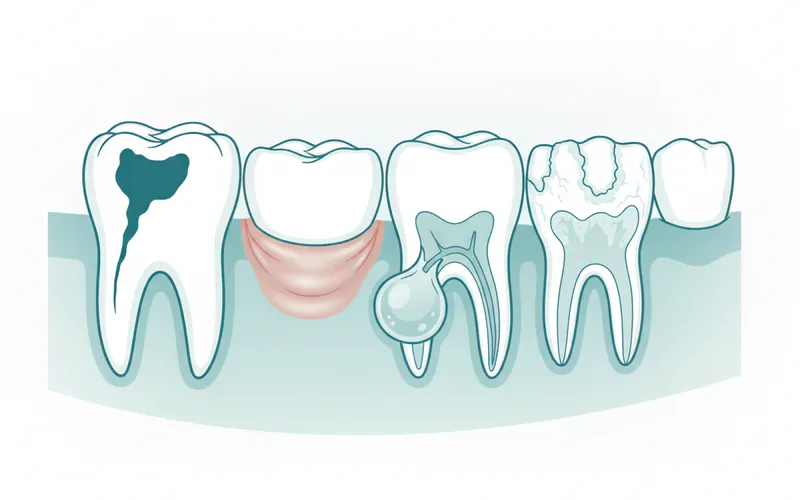
To help understand the different facets of common teeth diseases, here are two comparison tables.
Table 1: Common Teeth Diseases – Overview and Key Characteristics
| Disease Type | Primary Cause | Key Symptoms | Common Treatments | Prevention Strategies |
|---|---|---|---|---|
| Dental Caries (Cavities) | Plaque bacteria, sugar | Sensitivity, visible holes, pain | Fillings, Crowns, Root Canal | Brushing, flossing, fluoride, diet, sealants |
| Periodontal Disease | Plaque, tartar, inflammation | Bleeding gums, swelling, bad breath, loose teeth | Scaling & Root Planing, Gum Surgery | Regular cleanings, daily hygiene, quit smoking |
| Dental Abscess | Bacterial infection | Severe throbbing pain, swelling, fever | Drainage, Antibiotics, Root Canal | Prompt cavity treatment, good hygiene, mouthguards |
| Dental Erosion | Acidic exposure (extrinsic/intrinsic) | Sensitivity, smooth shiny teeth, discoloration | Bonding, Crowns, Lifestyle changes | Limit acids, rinse, fluoride, treat GERD |
| Bruxism | Stress, anxiety, bite issues | Worn teeth, jaw pain, headaches | Nightguards, Stress management | Nightguards, stress reduction |
| Sensitive Teeth | Exposed dentin | Sharp pain to hot/cold/sweet | Desensitizing toothpaste, Bonding | Gentle brushing, fluoride, treat underlying causes |

Table 2: Estimated Costs and Durations for Common Dental Treatments (US Averages, without insurance)
| Treatment Type | Average Cost Range (USD) | Typical Duration (Procedure) | Recovery Time |
|---|---|---|---|
| Composite Filling | $100 - $450 | 30-60 minutes | A few days (mild sensitivity) |
| Amalgam Filling | $50 - $250 | 30-60 minutes | A few days (mild sensitivity) |
| Dental Crown | $800 - $2,500 | 1-2 visits (1-2 hours each) | A few days to weeks (sensitivity) |
| Root Canal Therapy | $700 - $2,000 | 1-2 visits (1-2 hours each) | A few days (soreness) |
| Simple Extraction | $75 - $300 | 15-30 minutes | 3-7 days |
| Surgical Extraction | $200 - $600 | 30-60 minutes | 7-14 days |
| Professional Cleaning | $75 - $200 | 30-60 minutes | None to a few hours (mild soreness) |
| Scaling & Root Planing | $150 - $450 per quadrant ($600 - $1,800 full mouth) | 1-4 visits (1 hour each) | Several days to 2 weeks (soreness, sensitivity) |
| Traditional Braces | $3,000 - $7,000 | 18-36 months | Ongoing adjustment discomfort |
| Clear Aligners | $3,500 - $8,000 | 12-24 months | Mild discomfort with new trays |
| Custom Nightguard | $300 - $800 | 2 visits (impression, fitting) | Immediate comfort/adjustment |
Pro Tip: Always get a detailed treatment plan and estimate from your dentist before proceeding with any major dental work. Discuss all payment options and check your insurance benefits thoroughly.
Children / Pediatric Considerations
Children's teeth and oral health have unique considerations, and establishing good habits early is paramount. Understanding baby tooth numbering and tooth eruption baby timelines is essential for parents and caregivers.
Baby Tooth Numbering and Eruption Timelines
Children have 20 primary (baby) teeth, which are crucial for chewing, speech development, and holding space for permanent teeth. These teeth typically erupt in a predictable sequence.
Baby Tooth Eruption BabyTimeline:- 6-10 months: Lower central incisors (front bottom teeth)
- 8-12 months: Upper central incisors (front top teeth)
- 9-13 months: Upper lateral incisors
- 10-16 months: Lower lateral incisors
- 13-19 months: First molars (top and bottom)
- 16-23 months: Canines (cuspids)
- 23-33 months: Second molars (top and bottom)
By the age of 2.5 to 3 years, most children have all 20 primary teeth.
Baby Tooth Numbering: While the universal numbering system (1-32) is used for permanent teeth, primary teeth are often identified by letters A-T by dentists. For example, tooth 'A' is the upper right second primary molar, and 'T' is the lower right second primary molar.
Pro Tip: Teething symptoms (irritability, drooling, mild fever) are common during eruption. Consult your pediatrician or pediatric dentist for advice on soothing remedies.
Common Pediatric Teeth Diseases
- Early Childhood Caries (ECC):
- What it is: Severe decay in infants and young children, often affecting front teeth first. It's often associated with prolonged bottle feeding of sugary liquids (milk, formula, juice) or breast milk, especially at night when saliva flow is reduced.
- Prevention: Avoid putting babies to sleep with bottles containing anything but water. Wipe gums after feeding and start brushing with a tiny smear of fluoride toothpaste (rice-grain size) as soon as the first tooth erupts. Limit sugary snacks and drinks.
- Dental Trauma: Children are very active and prone to falls and accidents, which can lead to chipped, fractured, or knocked-out baby teeth. Prompt dental attention is crucial.
- Malocclusion (Developing Bite Problems): Habits like prolonged thumb sucking or pacifier use can affect jaw development and tooth alignment. An early orthodontic evaluation (around age 7) can identify and sometimes mitigate these issues.
Pediatric Dental Care Guidelines
- First Dental Visit: The American Dental Association (ADA) recommends the first dental visit by age one, or within six months of the first tooth erupting.
- Fluoride: Ensure children receive adequate fluoride through fluoridated water, fluoride toothpaste, and professional applications.
- Dental Sealants: Protective coatings applied to the chewing surfaces of molars to prevent decay. Highly recommended for children as soon as their permanent molars erupt. Cost is typically $30 - $60 per tooth.
Cost Breakdown (for US Market)
Understanding the financial aspect of dental care is critical. Costs can vary significantly based on location, the dentist's fees, the complexity of the procedure, and whether it's an emergency.
Average US Costs (without insurance)
- Preventive Care (e.g., check-up, cleaning, X-rays): $100 - $300
- Basic Restorative (e.g., fillings): $50 - $450 per tooth
- Major Restorative (e.g., crowns, bridges, root canals): $700 - $3,000+ per tooth
- Orthodontics (e.g., braces, aligners): $3,000 - $8,000+
- Oral Surgery (e.g., wisdom tooth extraction): $200 - $600+ per tooth
With vs. Without Insurance
- With Insurance: Most dental insurance plans follow a "100-80-50" coverage model:
- 100% for preventive care (cleanings, exams, X-rays).
- 80% for basic procedures (fillings, simple extractions).
- 50% for major procedures (crowns, bridges, dentures, root canals).
- Orthodontics may have separate coverage with a lifetime maximum.
- You will typically pay a deductible (e.g., $50-$100) before coverage begins, and there's usually an annual maximum benefit (e.g., $1,000 - $2,500).
- Without Insurance: You are responsible for 100% of the costs. This highlights the importance of regular preventive care, as early intervention is almost always less expensive than treating advanced disease.
Payment Plans and Financing Options
Many dental offices understand the financial burden of extensive treatment and offer options:
- In-Office Payment Plans: Monthly installments directly with the practice.
- Third-Party Financing (e.g., CareCredit): Medical credit cards offering deferred interest or low-interest payment plans.
- Dental Discount Plans: Not insurance, but a membership that provides reduced rates on dental services from participating dentists (typically 10-60% off).
- Health Savings Accounts (HSAs) or Flexible Spending Accounts (FSAs): Tax-advantaged savings accounts that can be used for qualified medical and dental expenses.
Cost-Saving Tips
- Prioritize Prevention: Regular cleanings and check-ups are the best long-term savings.
- Address Issues Early: Small cavities are cheaper to fill than dealing with a root canal or extraction.
- Compare Costs: Get quotes from a few different dentists for major procedures.
- Dental Schools: May offer reduced rates for treatment performed by supervised students.
Frequently Asked Questions
What are the most common types of teeth diseases?
The most common types of teeth diseases are dental caries (tooth decay/cavities) and periodontal disease (gum disease), including gingivitis and periodontitis. Dental abscesses and sensitive teeth are also very prevalent issues that many individuals experience at some point.

How painful is treatment for teeth diseases?
Most modern dental treatments are performed with local anesthesia, making them largely pain-free during the procedure. You might experience some pressure or discomfort, but sharp pain is usually avoided. After the anesthesia wears off, some soreness, sensitivity, or mild pain is common, which can typically be managed with over-the-counter pain relievers or prescribed medication.
Can teeth diseases affect my overall health?
Absolutely. Oral health is intimately connected to systemic health. Untreated dental infections like abscesses can spread throughout the body. Periodontal disease has been linked to increased risk or severity of conditions such as heart disease, stroke, diabetes, respiratory issues, and adverse pregnancy outcomes.
What is the most effective way to prevent all types of teeth diseases?
The most effective prevention strategy is a consistent, comprehensive oral hygiene routine: brushing twice daily with fluoride toothpaste, flossing daily, and attending regular dental check-ups and professional cleanings every six months. Limiting sugary and acidic foods and drinks, and avoiding tobacco, also significantly reduces your risk.
Are children more susceptible to certain teeth diseases than adults?
Yes, children are particularly susceptible to Early Childhood Caries (ECC), also known as "baby bottle tooth decay," due to prolonged exposure to sugary liquids. They are also prone to dental trauma from falls and sports activities. Parents should pay close attention to baby tooth numbering and tooth eruption baby schedules to monitor development.
What if I can't afford dental treatment?
Financial barriers to dental care are common. Many dental offices offer payment plans, and third-party financing options like CareCredit are available. Dental schools often provide services at reduced rates. You can also look into dental discount plans or community dental clinics for more affordable options.
How long does it take to treat a typical cavity?
A typical small to moderate cavity treated with a filling usually takes about 30 to 60 minutes. This includes administering local anesthesia, removing the decay, preparing the tooth, and placing and finishing the filling material. More extensive decay or complex procedures will take longer.
What are alternatives to traditional dental treatments for cavities?
For very early-stage cavities, fluoride treatments or remineralization therapies can sometimes reverse demineralization. For established cavities, while alternatives to fillings exist (like silver diamine fluoride to halt decay progression), restoring the tooth with a filling, crown, or root canal remains the standard of care to ensure structural integrity and prevent further infection.
Can natural remedies cure tooth decay or gum disease?
While some natural remedies might offer temporary relief from symptoms or contribute to overall oral hygiene (e.g., oil pulling, herbal rinses), there is no scientific evidence that they can cure established tooth decay or advanced gum disease. These conditions require professional dental intervention to remove decay, eliminate infection, and restore health.
What role does diet play in teeth diseases?
Diet plays a huge role. Frequent consumption of sugary and acidic foods and drinks directly contributes to tooth decay and dental erosion. A balanced diet, rich in fruits, vegetables, and whole grains, and limited in processed sugars and acids, supports overall oral health and strengthens your teeth.
When to See a Dentist
Knowing when to seek dental care is crucial for preventing minor issues from becoming major problems.
Routine Care vs. Warning Signs
- Routine Care: Schedule dental check-ups and professional cleanings every six months. This allows your dentist to detect problems like early decay or gingivitis before they cause significant symptoms. Even if you feel fine, regular visits are your best defense.
Red Flags That Need Attention:
- Persistent Toothache: Any tooth pain that doesn't go away, especially if it's throbbing or worsens with pressure, hot, or cold, is a sign of a serious problem.
- Swelling: Swelling in your gums, face, or jaw can indicate an infection (like an abscess) that needs immediate attention.
- Bleeding Gums: Gums that bleed consistently when you brush or floss are a common sign of gingivitis or periodontitis.
- Sensitivity: New or increased sensitivity to hot, cold, or sweets could signal a cavity, gum recession, or enamel erosion.
- Loose Teeth: Adult teeth should not be loose. This is a red flag for advanced periodontal disease or trauma.
- Visible Holes or Pits: Any visible damage to your teeth suggests decay.
- Persistent Bad Breath: While sometimes related to diet, persistent halitosis can be a symptom of gum disease or an underlying infection.
- Pain When Chewing: Can indicate a cracked tooth, cavity, or bite problem.
Emergency vs. Scheduled Appointment
- Emergency Situations (Seek immediate care within hours):
- Severe, uncontrolled pain.
- Swelling of the face or jaw that is rapidly spreading or affecting breathing/swallowing.
- A knocked-out tooth (avulsed tooth) – time is critical for replantation.
- Significant trauma (e.g., fractured jaw, large tooth fracture with exposed pulp).
- Bleeding that won't stop.
- Urgent Care (Seek care within 24-48 hours):
- Moderate to severe toothache that is manageable with pain relievers but not resolving.
- Lost filling or crown causing discomfort.
- Chipped or fractured tooth without severe pain or exposed pulp.
- Dental abscess with localized swelling, without signs of widespread infection.
- Scheduled Appointment (Within days to weeks):
- Mild sensitivity.
- Gums that bleed only occasionally.
- Concern about bad breath.
- Routine check-ups and cleanings.
Listening to your body and addressing dental concerns promptly is the best way to maintain a healthy smile and prevent the progression of types of teeth diseases. Your oral health truly is a window to your overall health, so prioritize consistent care.
Frequently Asked Questions
Medically Reviewed Content
This article was written by our dental health editorial team and reviewed for medical accuracy. Our content follows strict editorial guidelines for reliability and trustworthiness.
Medical Disclaimer
This article is for informational purposes only and does not constitute medical advice. Always consult with a qualified dental professional for diagnosis and treatment. Do not delay seeking professional advice because of something you read on this website.
Related Articles
Tooth Eruption Order: Complete Guide
The journey of human teeth, from their initial emergence in infancy to the arrival of wisdom teeth in young adulthood, is a fascinating and crucial aspect of our overall health. Understanding the tooth eruption order is not just a matter of curiosity; it's a vital piece of knowledge that empower
February 23, 2026
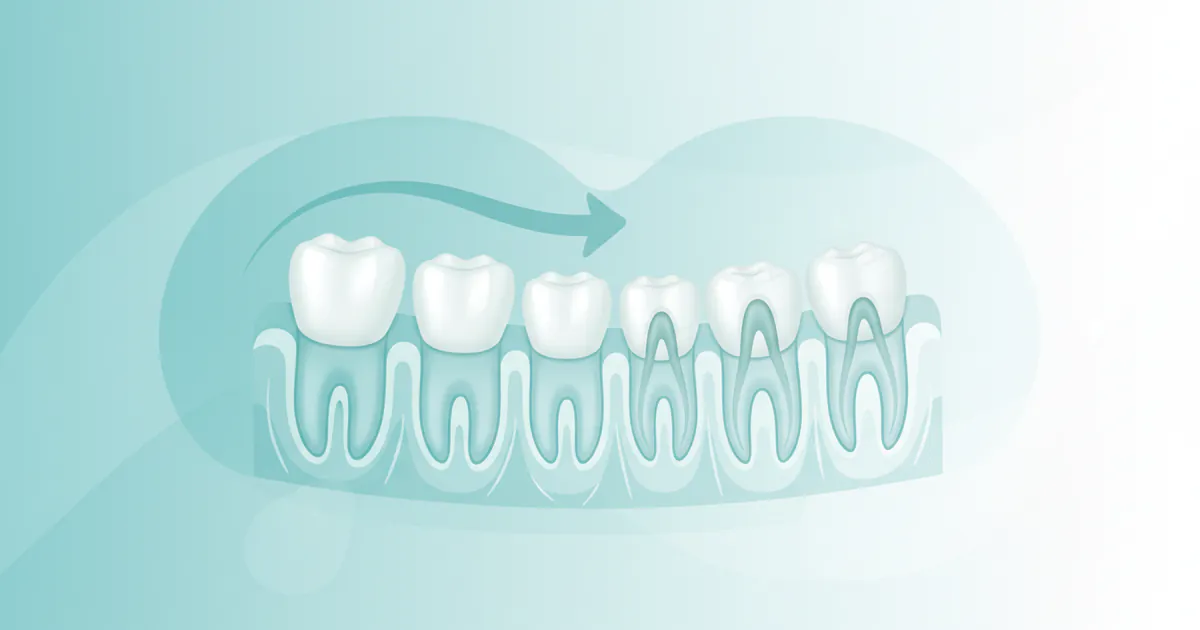
Primary Tooth Eruption Sequence: Complete Guide
Did you know that by their third birthday, most children will have a full set of 20 primary teeth? The journey of these first teeth, from their initial appearance to their eventual replacement by permanent teeth, is a remarkable and often challenging milestone for both infants and parents. Understan
February 23, 2026
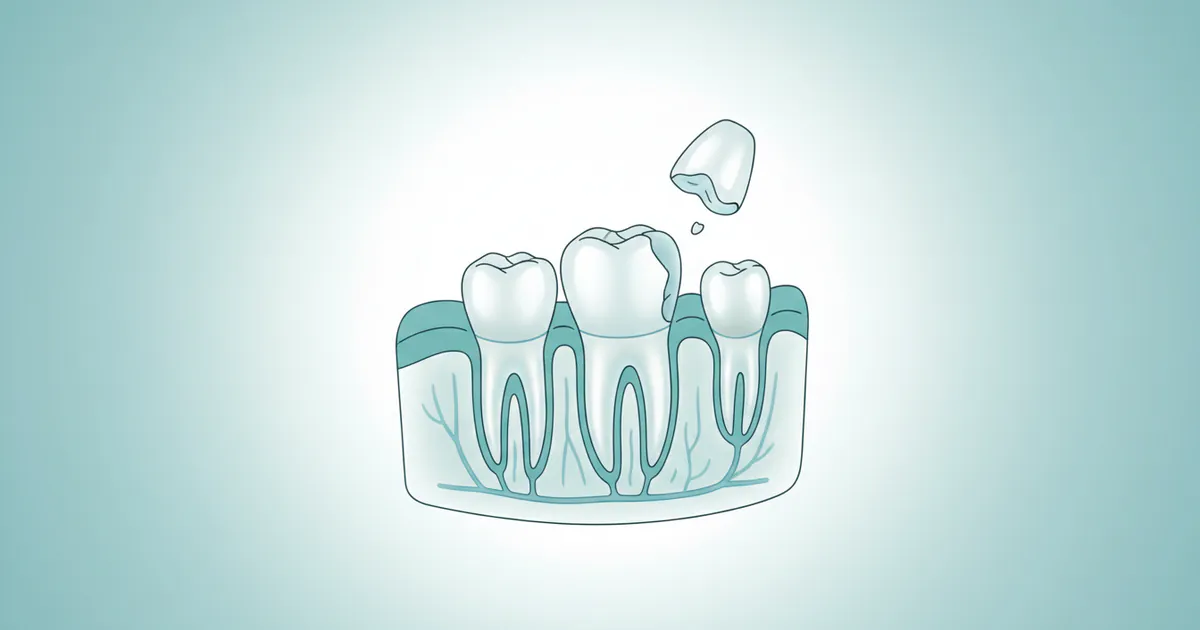
Canine Tooth Eruption: Complete Guide
Have you ever wondered about the complex process that brings your teeth into alignment, especially the prominent, pointed teeth known as canines? While often overshadowed by discussions of wisdom teeth or incisors, the canine tooth eruption process is a critical stage in your oral development, d
February 23, 2026
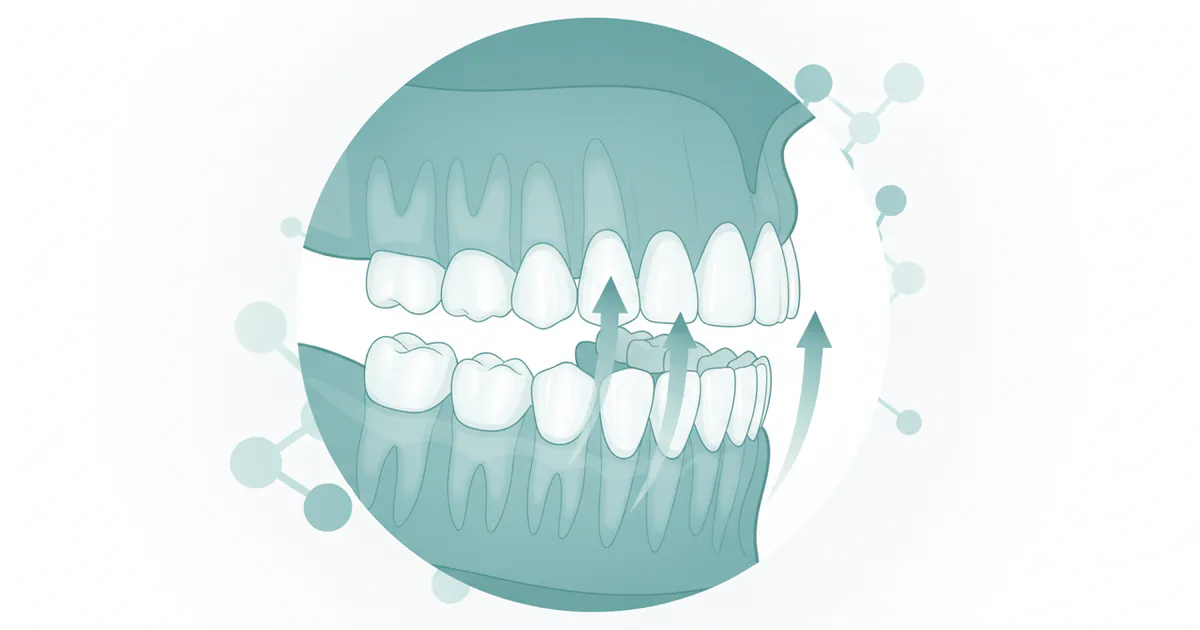
Permanent Tooth Eruption Sequence: Complete Guide
Welcome to SmilePedia.net, your trusted resource for comprehensive dental health information. The journey of your permanent teeth emerging into your mouth, known as the permanent tooth eruption sequence, is a fundamental aspect of oral development. Did you know that while primary (baby) teeth ty
February 23, 2026