Cracked Tooth Syndrome: Complete Guide
Key Takeaways
- Cracked Tooth Syndrome: Complete Guide
- Category: Dental Conditions & Diseases
Cracked Tooth Syndrome: Complete Guide Category: Dental Conditions & Diseases
Introduction
Have you ever experienced a sudden, sharp pain when biting down on something, only for it to disappear just as quickly when you release the pressure? Or perhaps a fleeting sensitivity to cold that seems to come and go without explanation? If so, you might be among the millions of Americans silently suffering from cracked tooth syndrome (CTS). This often-elusive condition, affecting an estimated 1 in 5 adults, can be a frustrating and debilitating source of discomfort, leading to severe pain and potentially jeopardizing the health and longevity of your teeth if left unaddressed. Unlike a clearly visible chip or fracture, the cracks associated with CTS are frequently microscopic, extending deep within the tooth structure, making diagnosis challenging even for experienced dental professionals.

Understanding cracked tooth syndrome is crucial for preserving your oral health and preventing further damage. This comprehensive guide will illuminate every aspect of CTS, from its subtle beginnings and varied presentations to the most advanced diagnostic techniques and effective treatment options. We’ll delve into the common causes, the tell-tale signs to watch for, and the step-by-step processes involved in achieving lasting relief. Furthermore, we’ll explore prevention strategies, discuss the associated costs and insurance considerations, and address frequently asked questions to empower you with the knowledge needed to protect your smile. By the end of this article, you'll be equipped to recognize the signs of a cracked tooth and understand how prompt, appropriate care can save your tooth and your comfort.
Key Takeaways:
- Cracked tooth syndrome (CTS) involves microscopic cracks within a tooth, often causing pain on biting/releasing pressure and sensitivity.
- Diagnosis can be challenging, requiring specific tests like bite sticks and transillumination.
- Common causes include chewing hard foods, bruxism (teeth grinding), large fillings, and trauma.
- Treatment ranges from bonding or a dental crown for minor cracks to root canal therapy or extraction for severe cases.
- Dental crowns are a frequent solution, costing roughly $800 to $2,300 per tooth, with insurance often covering 50-80% after deductibles.
- Prevention involves wearing mouthguards, avoiding biting hard objects, and managing bruxism.
- Don't delay seeing a dentist if you suspect a crack, as early intervention is key to saving the tooth and preventing infection.
What Is Cracked Tooth Syndrome?
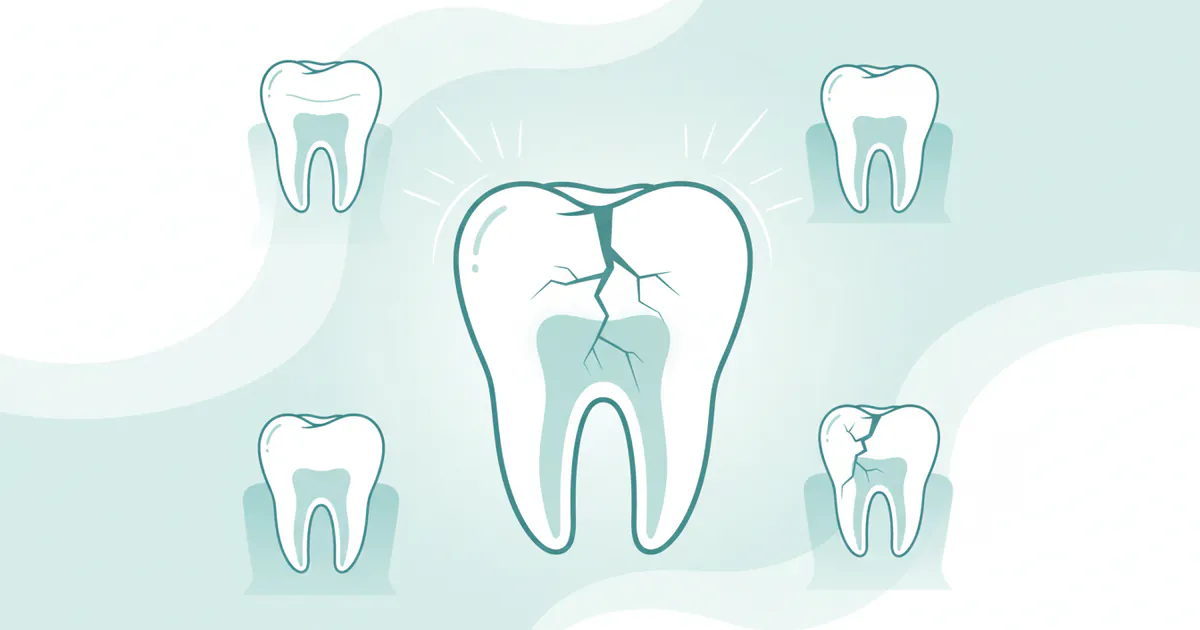
Cracked tooth syndrome (CTS) is a condition characterized by the presence of an incomplete fracture (a crack) of a tooth that involves the dentin but often extends into the enamel. Unlike a completely fractured or split tooth, the crack in CTS is usually not easily visible to the naked eye and does not yet fully separate the tooth into distinct pieces. This makes it particularly challenging to diagnose, as the pain can be intermittent and difficult for patients to pinpoint.
The hallmark of CTS is pain that occurs specifically when you bite down and, crucially, when you release the biting pressure. This "release pain" is caused by the crack flexing open under pressure and then snapping shut when the pressure is released, stimulating the nerves within the pulp (the innermost part of the tooth containing nerves and blood vessels). The crack acts like a hinge, causing movement that irritates the sensitive tissues. In addition to biting pain, individuals with CTS often experience increased sensitivity to hot and cold temperatures, and sometimes even spontaneous pain.
CTS most commonly affects molars and premolars, particularly those that have large fillings or have been subjected to significant biting forces over time. These posterior teeth bear the brunt of chewing pressure, making them more susceptible to developing these internal fractures. Without intervention, these cracks can propagate deeper into the tooth, eventually reaching the pulp, leading to irreversible pulpitis (inflammation of the pulp), infection, and potentially necessitating root canal therapy or even extraction. Early diagnosis and treatment are paramount to prevent the crack from worsening and to preserve the tooth's vitality and structure.
Types of Cracks and Fractures
Understanding the different classifications of tooth cracks is essential for accurate diagnosis and effective chipped tooth repair and treatment. The American Association of Endodontists (AAE) provides a helpful categorization:
Craze Lines
These are superficial, tiny cracks found only in the enamel, the outermost layer of the tooth.
- Appearance: Very common in adult teeth, appearing as fine lines, often discolored.
- Symptoms: Generally asymptomatic; they do not cause pain or sensitivity.
- Treatment: No treatment is usually necessary, as they don't extend into the dentin or pulp and are primarily an aesthetic concern. They are considered benign.
Fractured Cusp
This occurs when a part of the tooth's chewing surface (cusp) breaks off. This is distinct from a true cracked tooth syndrome because it typically involves a vertical fracture that separates the cusp from the rest of the tooth.
- Appearance: Often involves a cusp that has been weakened by a large filling. The fracture line usually extends from the occlusal (chewing) surface down the side of the tooth.
- Symptoms: Sharp pain when biting, especially on the affected cusp. May also cause sensitivity to cold. The pain is usually more consistent and localized than CTS.
- Treatment: Often requires a dental crown to protect the remaining tooth structure. If the fracture is deep and involves the pulp, root canal therapy might be needed before the crown.
Cracked Tooth
This is the classic presentation of cracked tooth syndrome. The crack extends from the chewing surface of the tooth vertically toward the root, potentially involving the pulp. It has not yet split the tooth into separate pieces.
- Appearance: Can be difficult to see, often requiring magnification or special dyes. The crack might be under a filling.
- Symptoms: The most common symptom is pain upon biting and releasing pressure, as well as sensitivity to temperature changes. Pain can be elusive and hard to localize.
- Treatment: The primary goal is to prevent the crack from propagating. This usually involves a dental crown to hold the tooth together and prevent the crack from spreading. If the pulp is involved, root canal therapy will be necessary before placing the crown. Prognosis depends on the depth and direction of the crack.
Split Tooth
A split tooth is typically the result of an untreated cracked tooth that has progressed. The crack extends completely through the tooth, from the chewing surface to below the gum line, resulting in two distinct, separable segments.
- Appearance: The crack is usually visible and extends completely, often separating two parts of the tooth.
- Symptoms: Severe pain, often continuous, and localized. The tooth is extremely sensitive to pressure and temperature.
- Treatment: In most cases, a split tooth cannot be saved and requires extraction. In rare instances, if the split is very early and affects only one root, it might be possible to save one half of the tooth with a hemisection and crown.
Vertical Root Fracture
Unlike other cracks that start at the crown, a vertical root fracture begins in the root of the tooth and extends upwards towards the chewing surface. These fractures are often found in teeth that have undergone root canal therapy.
- Appearance: Difficult to diagnose visually as it's below the gum line. May be detectable on X-rays or through symptoms like a persistent sinus tract (pimple-like lesion) on the gums.
- Symptoms: Often causes a dull ache, chronic pain, a sinus tract on the gum, and localized swelling. Symptoms may be subtle or mimic other dental problems.
- Treatment: Unfortunately, teeth with vertical root fractures almost always require extraction. The prognosis is poor because the fracture line is impossible to seal or repair effectively.
Each type of crack presents unique diagnostic and treatment challenges. Early detection and intervention are critical, especially for cracked teeth, to prevent progression to a split tooth or vertical root fracture, which often results in tooth loss.
Causes of Cracked Tooth Syndrome
Several factors contribute to the development of cracks in teeth, often in combination. Understanding these causes can help in both prevention and diagnosis:
-
Excessive Chewing Pressure:
- Bruxism (Teeth Grinding/Clenching): Chronic clenching or grinding of teeth, especially during sleep, places immense and sustained stress on tooth structure, leading to microscopic cracks over time. This is a leading cause of CTS.
- Chewing Hard Foods: Biting down on very hard items like ice, hard candies, nuts, popcorn kernels, or unpopped seeds can exert sudden, concentrated force that exceeds the tooth's structural integrity, causing cracks.
- Trauma: Accidental impacts from sports injuries, falls, or even car accidents can directly fracture teeth.
- Uneven Bite Forces: Misaligned teeth or an imbalanced bite can cause certain teeth to absorb more biting force than others, leading to localized stress and cracks.
-
Large Dental Fillings:
- Teeth with extensive, old amalgam (silver) or composite fillings are more susceptible to cracks. The filling material itself can expand and contract differently from natural tooth structure, creating stress.
- Large fillings weaken the remaining tooth structure, especially the cusps, making them more prone to fracture under normal chewing forces. The wedge effect of a large filling can also contribute to cracks forming within the tooth.
-
Tooth Structure Weakening:
- Age: As teeth age, they naturally become more brittle and lose some of their elasticity, making them more prone to cracking.
- Previous Dental Work: Teeth that have undergone multiple restorative procedures (e.g., repeated fillings, crowns) can become structurally compromised.
- Root Canal Treated Teeth: While root canal therapy saves a tooth from infection, it can dehydrate the tooth and remove a significant amount of tooth structure, making the tooth more brittle and susceptible to fracture. This is why a crown is often recommended after a root canal to protect the tooth.
-
Temperature Extremes:
- Rapid changes in temperature, such as consuming very hot food followed immediately by an icy drink, can cause the tooth to expand and contract quickly. This thermal stress can lead to the formation or propagation of cracks, similar to how glass can crack with sudden temperature changes.
-
Parafunctional Habits:
- Using teeth for purposes other than chewing, such as opening bottles, tearing packages, or habitually biting on pens, can place undue stress on specific teeth and contribute to crack development.
Often, CTS is not caused by a single event but rather a culmination of these factors over time, weakening the tooth until a final stressor triggers the noticeable symptoms.
Signs and Symptoms
The symptoms of cracked tooth syndrome can be notoriously vague and elusive, making diagnosis challenging. However, recognizing the common indicators can help you seek timely dental care.
Characteristic Pain Patterns:
- Pain Upon Biting and Releasing: This is the most classic and defining symptom of CTS. You might feel a sharp, sudden jolt of pain specifically when you bite down on food, and then a more pronounced, acute pain as you release the biting pressure. This "release pain" is key and differentiates CTS from other dental issues. The crack flexes open under pressure, then snaps back as the pressure is removed, irritating the nerve.
- Intermittent Pain: Unlike a cavity or abscess that might cause constant pain, CTS pain is often sporadic. It might only occur when chewing in a particular way or on certain types of food.
- Difficulty Locating Pain: Because the crack might be internal or microscopic, and the pain often originates from nerve irritation rather than a direct cavity, it can be very difficult for individuals to identify the exact tooth or even the specific area of the mouth where the pain is originating. It might feel like the pain is radiating or coming from multiple teeth.
Sensitivity:
- Temperature Sensitivity: Increased sensitivity to hot or, more commonly, cold temperatures is a frequent symptom. The crack allows stimuli to reach the dentin and pulp, causing a sharp, fleeting discomfort.
- Sweet Sensitivity: Some individuals may experience heightened sensitivity to sweet foods or drinks, similar to how a cavity might present.

Other Indicators:
- Absence of Cavity or Obvious Damage: One of the frustrating aspects of CTS is that the tooth often looks perfectly healthy on the outside, and X-rays may not reveal the crack. This can lead to delays in diagnosis.
- Gum Swelling or Fistula (Pimple): If the crack progresses and the pulp becomes infected, an abscess can form, leading to localized gum swelling, tenderness, or the development of a small "pimple" (fistula) on the gum near the affected tooth, from which pus might drain. This indicates a more advanced and serious condition requiring urgent attention.
Pro Tip: If you experience any of these symptoms, especially the characteristic biting and release pain, keep a detailed mental note of when and how the pain occurs. This information is invaluable for your dentist in accurately diagnosing cracked tooth syndrome.
Treatment Options
The appropriate treatment for a cracked tooth depends heavily on the type, depth, and location of the crack, as well as the extent of damage to the tooth's pulp. The goal is always to protect the tooth, relieve pain, and prevent the crack from spreading.
1. Dental Bonding / Filling
- What it is: For very minor cracks or chips that are superficial and don't extend into the dentin, dental bonding (using a tooth-colored composite resin) or a small filling can be used to repair the defect.
- Pros: Minimally invasive, relatively inexpensive, can be completed in a single visit, preserves most of the natural tooth structure.
- Cons: Not suitable for deep or extensive cracks; composite resin is not as strong as natural enamel and may require replacement over time.
- Cost: $100 - $400 per tooth.
2. Dental Crown
- What it is: This is the most common and often preferred treatment for significant cracked tooth syndrome where the crack extends into the dentin but has not yet severely damaged the pulp. A dental crown is a custom-made cap that covers the entire visible portion of the cracked tooth, holding the weakened parts together and protecting it from further stress and crack propagation.
- Pros: Provides excellent protection and stability, restores the tooth's function and aesthetics, can prevent the need for more invasive treatments like root canal therapy or extraction if performed early.
- Cons: Requires removal of some healthy tooth structure, typically involves two dental visits, more expensive than bonding.
- Process: The tooth is prepared (reshaped), an impression is taken, a temporary crown is placed, and then a permanent crown (porcelain, ceramic, or metal) is cemented in a subsequent visit.
- Cost: $800 - $2,300 per tooth, depending on material and location.
3. Root Canal Therapy (Endodontic Treatment)
- What it is: If the crack has reached the pulp, causing irreversible inflammation, infection, or severe pain, root canal therapy becomes necessary. This procedure involves removing the infected or inflamed pulp tissue, cleaning and disinfecting the root canals, and then filling and sealing them. After a root canal, a dental crown is almost always recommended to protect the now-brittle tooth from further fracture.
- Pros: Saves the tooth from extraction, eliminates pain and infection, preserves the tooth's natural position and function.
- Cons: More invasive and time-consuming than a crown alone, requires a subsequent crown, can weaken the tooth structurally (hence the need for a crown).
- Cost: Root canal therapy alone can range from $700 - $1,500 for front teeth and $900 - $2,000+ for molars, plus the cost of the crown.
4. Extraction
- What it is: Unfortunately, if the crack extends too deeply below the gum line (e.g., a vertical root fracture or a split tooth), or if the tooth is severely compromised beyond repair, extraction may be the only viable option.
- Pros: Eliminates the source of pain and infection, prevents further complications.
- Cons: Permanent loss of the tooth, requires subsequent replacement (implant, bridge, or partial denture) to prevent shifting of adjacent teeth, bone loss, and chewing difficulties.
- Cost: Simple extraction: $75 - $300. Surgical extraction: $150 - $650. Replacement options (implant, bridge) are significantly more expensive.
5. Orthodontic Banding / Splinting (Temporary)
- What it is: In some very early or mild cases, or as a temporary measure, the dentist might place an orthodontic band around the tooth to hold it together and prevent the crack from flexing. This is rarely a long-term solution but can offer immediate relief.
- Pros: Non-invasive, quick, temporary relief.
- Cons: Not a definitive treatment, may not prevent crack propagation long-term.
- Cost: Varies, often included in diagnostic fees or as part of temporary measures ($50 - $200).
The decision on the best treatment pathway is made after a thorough examination, which may include visual inspection (with magnification), transillumination (shining a light through the tooth), periodontal probing, and a bite test using a "tooth sleuth" or similar instrument to isolate the offending crack. Your dentist will explain the most suitable options based on the specific condition of your tooth.
Step-by-Step Treatment Process (Dental Crown Example)
Since a dental crown is the most common and effective treatment for many cases of cracked tooth syndrome, let's detail the typical process. This usually involves two visits.
Visit 1: Preparation and Temporary Crown
- Diagnosis Confirmation: The dentist will thoroughly examine your tooth, using a bite test (e.g., "tooth sleuth" or "fray test") to pinpoint the exact location of the crack and confirm it's the source of your pain. X-rays may be taken, though cracks are often not visible on X-rays.
- Anesthesia: Local anesthetic will be administered to numb the tooth and surrounding gum tissue, ensuring you are comfortable throughout the procedure.
- Tooth Preparation: The dentist will carefully reshape the cracked tooth, removing a thin layer of enamel from the top and sides. This creates space for the crown to fit snugly over your natural tooth. The amount of tooth structure removed depends on the type of crown being placed.
- Crack Assessment & Protection: The dentist will assess the crack's depth. If the crack is deep but hasn't reached the pulp, or if pulp inflammation is present, a dental cement or base may be placed to protect the pulp. If the pulp is already infected, a root canal may be performed at this stage or scheduled for a separate appointment before the crown.
- Impression Taking: A digital scan or a physical impression (using a putty-like material) of your prepared tooth and the surrounding teeth will be taken. This impression is sent to a dental laboratory, where your custom-made permanent crown will be fabricated. Your dentist may also take an impression of your opposing arch to ensure proper bite alignment.
- Temporary Crown Placement: A temporary crown, usually made of acrylic, will be fabricated chairside and cemented onto your prepared tooth. This temporary crown protects the tooth, prevents shifting of adjacent teeth, and maintains chewing function while your permanent crown is being made.
- Pro Tip: Be gentle with your temporary crown. Avoid sticky or very hard foods on that side of your mouth. If it comes off, contact your dentist immediately for re-cementation.
Visit 2: Permanent Crown Placement
- Temporary Crown Removal: Your dentist will gently remove the temporary crown.
- Tooth Cleaning: The underlying tooth will be cleaned to remove any temporary cement and debris.
- Crown Try-In: The permanent crown, which has been custom-made to precisely fit your tooth and match the color of your surrounding teeth (if it's a porcelain or ceramic crown), will be placed on your tooth for a "try-in." The dentist will check its fit, bite, and aesthetics. Adjustments may be made at this stage.
- Final Cementation: Once you and your dentist are satisfied with the fit and appearance, the permanent crown will be permanently cemented onto your tooth using a strong dental adhesive.
- Final Adjustments: Your bite will be re-checked, and any final minor adjustments will be made to ensure comfortable and proper occlusion.
The entire process, from initial diagnosis to permanent crown placement, typically takes 1-3 weeks, depending on the dental lab's turnaround time. If a root canal is needed, that procedure will add an additional visit or be integrated into the first visit if feasible, extending the overall timeline and cost.
Cost and Insurance
The cost of treating cracked tooth syndrome in the US can vary significantly based on the type of treatment needed, the materials used, the complexity of the case, the specific dental practice, and its geographical location. Insurance coverage also plays a crucial role in determining your out-of-pocket expenses.

Average US Cost Ranges (Without Insurance):
| Treatment Type | Average Cost Range (USD) | Notes |
|---|---|---|
| Dental Bonding/Filling | $100 - $400 | For minor craze lines or small chips. |
| Dental Crown | $800 - $2,300 | Most common for cracked teeth; price varies by material (porcelain, metal, zirconia). |
| Root Canal Therapy | $700 - $1,500 (front) | Plus the cost of a crown; typically for infected pulp. |
| $900 - $2,000+ (molar) | ||
| Tooth Extraction | $75 - $300 (simple) | For unrepairable cracks/split teeth. Does not include replacement cost. |
| $150 - $650 (surgical) | ||
| Dental Implant (w/ crown) | $3,000 - $6,000+ | If extraction is necessary, this is a common replacement option. |
| Dental Bridge | $2,000 - $5,000+ | Another replacement option, typically for 3-unit bridge. |
Prices are estimates and can vary. Major metropolitan areas or specialists may charge higher fees.
Insurance Coverage Details:
Most dental insurance plans in the US categorize treatments based on complexity and necessity:
- Preventive Care (Class I): Typically 80-100% coverage. Includes exams, cleanings, X-rays. (Initial diagnostic visits fall here).
- Basic Procedures (Class II): Typically 50-80% coverage. Includes fillings, simple extractions, sometimes root canals.
- Major Procedures (Class III): Typically 30-50% coverage. Includes crowns, bridges, dentures, and often more complex extractions or surgical procedures. Dental implants are often not covered or have very limited coverage under basic plans.
What to Expect with Insurance:
- Deductible: Most plans have an annual deductible (e.g., $50 - $150) that you must pay out-of-pocket before your insurance begins to cover costs.
- Co-insurance/Co-pay: After your deductible is met, your insurance will cover a percentage of the "Allowable Fee" (the maximum amount the insurance company will pay for a procedure). You will be responsible for the remaining percentage (co-insurance) or a set co-pay amount.
- Annual Maximum: Most dental insurance plans have an annual maximum benefit (e.g., $1,000 - $2,000) that they will pay out in a calendar year. For extensive cracked tooth treatments (e.g., root canal + crown), you might reach this maximum, leaving subsequent costs to you.
- Waiting Periods: Some plans, especially new ones, may have waiting periods (e.g., 6-12 months) before they cover major procedures like crowns or root canals.
- PPO vs. HMO:
- PPO (Preferred Provider Organization): Offers more flexibility. You can choose any dentist, but you'll pay less if you stay within the network.
- HMO (Health Maintenance Organization): Requires you to choose a primary dentist within the network who must refer you to specialists. Generally lower premiums and out-of-pocket costs but less choice.
Pro Tip: Before undergoing treatment, ask your dental office to submit a "pre-determination of benefits" to your insurance company. This provides an estimate of what your plan will cover, giving you a clearer picture of your out-of-pocket expenses.
Recovery and Aftercare
Proper recovery and aftercare are crucial to ensure the longevity of your treatment and prevent future complications, especially after significant procedures like crown placement or root canal therapy.
After a Dental Filling or Bonding:
- Sensitivity: You might experience temporary sensitivity to hot, cold, or pressure for a few days up to a couple of weeks. This usually subsides as the nerve settles.
- Chewing: Avoid chewing hard or sticky foods on the treated side immediately after a composite filling until the anesthetic wears off to prevent accidental biting, and give the material time to fully harden if it was not light-cured.
- Oral Hygiene: Continue your regular brushing and flossing routine.
After a Dental Crown:
- Temporary Crown:
- Be gentle when chewing on the temporary crown; avoid hard, sticky, or chewy foods (like gum, caramels) that could dislodge it.
- Brush gently around the temporary crown and floss by pulling the floss through, rather than snapping it up, to avoid pulling it off.
- If the temporary crown comes off, contact your dentist immediately. Keep it in a safe place and try to put it back on with a small dab of toothpaste or temporary dental cement (available at pharmacies) as a stop-gap until you can see the dentist.
- Permanent Crown:
- Initial Sensitivity: It's normal to experience some sensitivity to hot, cold, or pressure for a few days or weeks after the permanent crown is cemented. This should gradually diminish.
- Bite Adjustment: Your bite may feel slightly "off" initially. If this feeling persists after a few days, or if you feel a high spot when you bite down, contact your dentist for an adjustment. An uneven bite can cause discomfort or even damage the crown or opposing teeth.
- Oral Hygiene: Maintain excellent oral hygiene. Brush twice a day with fluoride toothpaste and floss daily, paying special attention around the margins of the crown to prevent decay or gum disease.
- Avoid Hard/Sticky Foods: While crowns are strong, avoid excessively hard foods (ice, hard candies) or sticky items that could potentially dislodge or damage the crown.
- Nightguard: If you grind or clench your teeth (bruxism), your dentist might recommend a custom nightguard to protect your new crown and other teeth from excessive forces.
After Root Canal Therapy:
- Pain/Soreness: It's common to experience some mild pain, tenderness, or soreness for a few days after a root canal, especially when chewing. Over-the-counter pain relievers (ibuprofen or acetaminophen) usually suffice.
- Antibiotics: If an infection was present, you might be prescribed antibiotics. Complete the full course as directed.
- Avoid Chewing: Avoid chewing on the treated tooth until the permanent crown is placed to prevent fracturing the weakened tooth.
- Permanent Restoration: It is critical to get a permanent crown (or other final restoration) on a root canal-treated tooth as soon as possible, ideally within a few weeks. Leaving it with only a temporary filling significantly increases the risk of re-infection and fracture.
General Aftercare for All Treatments:
- Follow Dentist's Instructions: Adhere strictly to any specific instructions provided by your dentist.
- Regular Check-ups: Continue with your routine dental check-ups and cleanings (usually every six months) to monitor the treated tooth and overall oral health.
- Report Concerns: If you experience severe pain, swelling, fever, or if the sensitivity does not improve or worsens, contact your dentist immediately.
By diligently following these aftercare guidelines, you can maximize the success and longevity of your cracked tooth treatment.
Prevention of Cracked Tooth Syndrome
Preventing cracked tooth syndrome often involves a combination of modifying habits, proactive dental care, and protective measures.
-
Address Bruxism (Teeth Grinding/Clenching):
- Nightguard/Occlusal Splint: If you grind or clench your teeth, especially during sleep, a custom-fitted nightguard prescribed by your dentist is one of the most effective preventive measures. It creates a barrier that protects your teeth from destructive forces.
- Stress Management: Explore stress-reduction techniques, as stress is a common trigger for bruxism.
- Biofeedback or Physical Therapy: In some cases, these can help train you to relax your jaw muscles.
-
Avoid Chewing on Hard Objects:
- Be mindful of what you bite. Avoid chewing on ice, popcorn kernels, hard candies, olives with pits, or using your teeth to open packages, tear tape, or bite fingernails. These activities put undue stress on specific teeth.
-
Wear a Mouthguard During Sports:
- If you participate in contact sports or activities with a risk of facial trauma, a custom-fitted athletic mouthguard is essential. It cushions your teeth from impact and prevents fractures.
-
Maintain Excellent Oral Hygiene and Regular Dental Check-ups:
- Routine exams (every six months) allow your dentist to identify potential issues early, such as large fillings nearing the end of their lifespan or early signs of cracks, before they become symptomatic.
- Good oral hygiene prevents cavities and gum disease, which can further weaken teeth.
-
Address Large or Failing Fillings:
- If you have old, large fillings, especially amalgam fillings, discuss their condition with your dentist. Over time, these can stress the tooth. Your dentist might recommend replacing them with smaller, more conservative restorations or placing a crown to protect a tooth with a compromised structure.
-
Consider Crowns for At-Risk Teeth:
- Teeth that have undergone root canal treatment are more brittle. Your dentist will almost always recommend a crown after a root canal to protect the tooth from fracture.
- If a tooth shows evidence of craze lines or very early, asymptomatic cracks, your dentist might recommend a crown proactively to prevent the crack from progressing.
-
Manage Uneven Bite Forces:
- If you have misaligned teeth or an imbalanced bite, discuss this with your dentist. Orthodontic treatment or selective reshaping of certain tooth surfaces (occlusal adjustment) can help distribute biting forces more evenly across your teeth.
Prevention is always better than treatment. By being proactive and adopting these habits, you can significantly reduce your risk of developing cracked tooth syndrome and maintain a healthy, pain-free smile.
Risks and Complications
While treatments for cracked tooth syndrome are generally successful, there are potential risks and complications, especially if the condition is left untreated or if the crack is severe.
Risks of Untreated Cracked Tooth Syndrome:
- Progression to Split Tooth or Vertical Root Fracture: The most significant risk is that an incomplete crack will deepen and spread, eventually leading to a complete split of the tooth or a vertical root fracture. At this stage, the tooth often becomes unsalvageable and requires extraction.
- Pulp Necrosis and Infection: As the crack progresses, bacteria from the mouth can enter the tooth's pulp chamber, leading to inflammation (pulpitis) and eventually death of the pulp tissue (necrosis). This can result in a painful abscess, characterized by swelling, pus, and severe, throbbing pain. Untreated infections can spread to surrounding bone and tissues, potentially leading to more serious health issues.
- Chronic Pain and Sensitivity: Ongoing, intermittent, or severe pain and sensitivity can significantly impact your quality of life, making it difficult to eat, drink, or even speak comfortably.
- Tooth Loss: Ultimately, if the crack becomes too extensive or leads to irreparable infection, the tooth may need to be extracted, leading to permanent tooth loss.
Complications Associated with Treatment:
- Persistent Sensitivity/Pain: Even after a crown or root canal, some individuals may experience residual sensitivity or discomfort for a period. In rare cases, if the crack was very deep or if there are other underlying issues, pain might persist.
- Crown Dislodgement or Fracture: Crowns can occasionally become loose, dislodge, or chip/fracture, especially if subjected to excessive forces or if the cement fails. This requires re-cementation or replacement.
- Need for Further Treatment: Despite efforts to save the tooth, a crack might continue to propagate under a crown, eventually leading to the need for a root canal or extraction. This is more likely if the initial crack was extensive or if the tooth was already severely compromised.
- Allergic Reaction: While rare, some individuals may have an allergic reaction to materials used in fillings, bonding, or crowns.
- Root Canal Complications: While highly successful, root canal therapy carries minor risks such as instrument fracture within the canal, persistent infection (requiring re-treatment or surgery), or incomplete cleaning of complex canal anatomy.

Early diagnosis and appropriate treatment significantly reduce these risks. Regular follow-up with your dentist is crucial to monitor the health of the treated tooth and address any potential complications promptly.
Comparison Tables
To help visualize the differences between crack types and common treatment options, here are two comparison tables:
Table 1: Types of Tooth Cracks & Their Prognosis
| Crack Type | Location/Extent | Common Symptoms | Typical Treatment | Prognosis (Likelihood of Saving Tooth) |
|---|---|---|---|---|
| Craze Lines | Enamel only, superficial | None | None needed | Excellent |
| Fractured Cusp | Cusp breaks off, usually from large filling | Sharp, localized pain on biting | Crown | Good (if pulp not involved) |
| Cracked Tooth | Enamel/Dentin, extends toward root, incomplete | Pain on biting/releasing, sensitivity | Crown (often after root canal) | Fair to Good (early intervention key) |
| Split Tooth | Extends through tooth, separates segments | Severe, localized, continuous pain | Extraction | Poor (tooth usually lost) |
| Vertical Root Fracture | Starts in root, extends toward crown | Dull ache, gum swelling/fistula | Extraction | Poor (tooth usually lost) |
Table 2: Common Treatments for Cracked Teeth – Costs & Timelines
| Treatment Option | Average Cost Range (USD) (without insurance) | Typical Number of Visits | Average Timeline (Completion) | Pros | Cons |
|---|---|---|---|---|---|
| Dental Bonding | $100 - $400 | 1 | 30-60 minutes | Minimally invasive, quick, aesthetic | Less durable, not for deep cracks, may stain |
| Dental Crown | $800 - $2,300 | 2 | 1-3 weeks | Strong protection, restores function/aesthetics | Invasive (tooth reduction), higher cost, temp crown needed |
| Root Canal Therapy | $700 - $2,000+ (plus crown) | 1-2 | 1-2 hours per visit | Saves tooth from extraction, eliminates pain | Invasive, can weaken tooth (needs crown), higher cost |
| Tooth Extraction | $75 - $650 | 1 | 30-60 minutes | Immediate pain relief, removes infection | Permanent tooth loss, requires replacement |
Children / Pediatric Considerations
Cracked tooth syndrome is less common in children than in adults, primarily because children's teeth (primary/baby teeth and newly erupted permanent teeth) are generally healthier, have not sustained years of biting stress, and typically don't have large, old fillings. However, cracks can still occur, and special considerations apply:
- Trauma: Children are more prone to dental trauma from falls, sports injuries, or playground accidents. These can cause visible chips or more subtle cracks. Parents should be vigilant for any signs of pain or sensitivity after an injury.
- Large Fillings in Permanent Molars: As children reach adolescence, they may develop cavities in their permanent molars, leading to fillings. If these fillings are large, they can weaken the tooth and increase the risk of cracks later on.
- Bruxism: While often temporary, some children grind their teeth, especially at night. If bruxism is severe or prolonged, it can contribute to tooth wear and, potentially, cracking. A pediatric dentist might recommend a nightguard for persistent grinding.
- Symptoms in Children: Children may not articulate their pain as precisely as adults. They might complain of general toothache, sensitivity to sweets or cold, or avoid chewing on one side of their mouth. Any unexplained or persistent tooth pain warrants a visit to the pediatric dentist.
- Diagnosis: Diagnosing cracks in children can be challenging, as they may be less cooperative during examinations. Pediatric dentists use similar diagnostic tools, often with child-friendly approaches.
- Treatment: Treatment options for cracked primary teeth typically involve fillings or, if severe, extraction. For permanent teeth in children, treatment mirrors that of adults (bonding, crowns, or root canal therapy), but with careful consideration of the developing tooth and jaw structure. For instance, if a root canal is needed in an immature permanent tooth, a procedure called apexification or vital pulp therapy might be performed to encourage root development.
- Prevention: Emphasize wearing mouthguards for sports, avoiding hard candies, and ensuring regular pediatric dental check-ups. Addressing bruxism early can also prevent future problems.
Parents should be proactive and seek dental care if a child complains of tooth pain, especially after an injury or if they show signs of sensitivity.
Cost Breakdown
Understanding the granular cost breakdown and how insurance applies can make navigating cracked tooth treatment less stressful.
Average US Costs (Low, Mid, High for common procedures):
| Procedure | Low Range (USD) | Mid Range (USD) | High Range (USD) |
|---|---|---|---|
| Composite Filling | $100 | $250 | $400 |
| Porcelain Crown | $800 | $1,200 | $1,800 |
| Zirconia Crown | $1,000 | $1,500 | $2,300 |
| Root Canal (Molar) | $900 | $1,300 | $2,000 |
| Simple Extraction | $75 | $150 | $300 |
| Surgical Extraction | $150 | $350 | $650 |
Geographic variations: Costs in major cities like NYC or San Francisco can be 15-30% higher than the national average, while rural areas might be slightly lower.
With vs. Without Insurance:
Let's consider a common scenario: a cracked molar requiring a root canal followed by a zirconia crown.
-
Total Cost Without Insurance:
- Root Canal (Molar): $1,300 (mid-range)
- Zirconia Crown: $1,500 (mid-range)
- Total: $2,800
-
Total Cost With Insurance (Example PPO Plan):
- Assume a $100 deductible.
- Root Canal: Covered at 80% (Basic Procedure). You pay 20%.
- Insurance pays: $1,300 * 0.80 = $1,040
- Your share: $1,300 - $1,040 = $260
- Crown: Covered at 50% (Major Procedure). You pay 50%.
- Insurance pays: $1,500 * 0.50 = $750
- Your share: $1,500 - $750 = $750
- Total Out-of-Pocket: $100 (deductible) + $260 (root canal co-insurance) + $750 (crown co-insurance) = $1,110
- Note: This assumes you haven't hit your annual maximum benefit (e.g., $1,500 - $2,000 for many plans).
Payment Plans and Financing Options:
If the out-of-pocket costs are substantial, many dental offices offer or work with third-party financing solutions:
- In-Office Payment Plans: Some practices allow you to pay for treatment in installments over a few months, often without interest.
- Third-Party Medical Financing: Services like CareCredit or LendingClub offer specialized healthcare credit cards with various interest rates and payment terms, including 0% APR promotional periods for qualified applicants.
- Health Savings Accounts (HSAs) & Flexible Spending Accounts (FSAs): If you have an HSA or FSA through your employer, you can use these tax-advantaged accounts to pay for dental treatment. These funds are pre-tax, saving you money.
Cost-Saving Tips:
- Early Diagnosis and Treatment: Addressing a cracked tooth early can prevent it from progressing to a more severe condition requiring more expensive procedures like root canals or extractions. A crown is less expensive than a root canal plus a crown, or an extraction plus an implant.
- Compare Dentists: Costs can vary between practices. Get a few quotes, but remember to consider the dentist's experience and reputation, not just the price.
- Dental Schools: University dental schools often provide treatment at a reduced cost, as procedures are performed by students under the close supervision of experienced faculty.
- Dental Discount Plans: These are not insurance but membership plans where you pay an annual fee and get discounts on dental services from participating dentists. They can be beneficial if you don't have traditional insurance.
- Negotiate: For extensive work, some dentists might be open to discussing payment options or a slight reduction, especially if paying in cash.
Frequently Asked Questions
### What is the difference between a chipped tooth and cracked tooth syndrome?
A chipped tooth usually involves a visible break in the enamel, often at the edge of the tooth, and may or may not cause pain. Cracked tooth syndrome, on the other hand, describes an incomplete fracture that typically extends from the chewing surface into the dentin, often invisibly, causing characteristic pain on biting and releasing pressure, and sensitivity. Chipped tooth repair is often simpler, like bonding, while cracked tooth syndrome usually requires more extensive treatment like a crown.

### How do dentists diagnose cracked tooth syndrome since cracks are often invisible?
Dentists use a combination of techniques: asking about your symptoms (especially pain on biting/release), visual inspection with magnification, shining a light through the tooth (transillumination) to highlight the crack, and using a "tooth sleuth" or bite stick to pinpoint the exact area of pain by having you bite on different cusps. X-rays are often taken but typically do not show cracks.
### Can a cracked tooth heal itself?
No, a cracked tooth cannot heal itself. Unlike bone, tooth enamel and dentin do not have living cells that can regenerate to repair a crack. Without treatment, a cracked tooth will likely worsen over time, leading to deeper cracks, pulp infection, increased pain, and potential tooth loss.
### How can I stop tooth pain fast at home while waiting to see a dentist?
While waiting for a dental appointment, you can manage pain with over-the-counter pain relievers like ibuprofen (Advil, Motrin) or acetaminophen (Tylenol). Avoid chewing on the affected side, and try to avoid extreme temperatures (very hot or cold foods/drinks) and very hard or sticky foods. Rinsing with warm salt water can also help soothe irritated gums if there's any associated inflammation. However, these are temporary measures; a dentist must treat the crack.
### Is a root canal always necessary for a cracked tooth?
No, a root canal is not always necessary. If the crack is caught early and has not reached the pulp (the nerve tissue inside the tooth), a dental crown alone may be sufficient to protect the tooth and prevent the crack from spreading. A root canal is only needed if the crack has caused irreversible damage or infection to the pulp.
### How long does treatment for a cracked tooth take?
The timeline varies depending on the treatment. A simple filling or bonding can be done in one visit (30-60 minutes). A dental crown typically requires two visits over 1-3 weeks. If a root canal is needed before the crown, that adds at least one more visit. If extraction is required, that's usually one visit, but replacing the tooth with an implant or bridge will involve several more visits over months.
### How much does it cost to fix a cracked tooth?
The cost varies significantly based on the severity of the crack and the chosen treatment. Dental bonding might cost $100-$400, a dental crown $800-$2,300, and a root canal plus a crown can range from $1,500-$4,300+. These are average US costs without insurance; your out-of-pocket expense will depend on your specific dental insurance plan's coverage.
### What happens if I don't treat a cracked tooth?
If left untreated, a cracked tooth will almost certainly worsen. The crack will deepen, leading to more severe pain, increased sensitivity, and eventually infection of the tooth's pulp. This can result in a painful abscess, requiring a root canal, and ultimately, if the crack becomes too extensive (e.g., a split tooth or vertical root fracture), the tooth will need to be extracted, leading to tooth loss.
### Can I just put a filling in a cracked tooth?
A standard filling is usually not sufficient for a true cracked tooth, as the crack often runs deep within the tooth structure, affecting its integrity. While minor surface chips might be addressed with bonding, a cracked tooth almost always requires a dental crown to hold the tooth together, prevent the crack from spreading, and restore its strength.
### Are some teeth more prone to cracking than others?
Yes, molars and premolars (the back teeth) are most commonly affected by cracked tooth syndrome because they bear the brunt of chewing forces. Teeth that have large existing fillings, especially older amalgam fillings, are also more susceptible because the filling material can weaken the surrounding tooth structure.
When to See a Dentist
Recognizing when to seek dental care for a cracked tooth is paramount to preventing further damage and preserving your tooth. Delaying treatment can turn a salvageable situation into a tooth loss scenario.
Seek Immediate Dental Attention (Emergency Signs):
- Severe, persistent, or throbbing pain: Especially if it wakes you up at night, indicates possible pulp infection or abscess.
- Swelling in your gums, face, or jaw: This is a strong indicator of infection, which can spread if not treated.
- A visible "pimple" or lesion on your gums near a tooth: Known as a fistula or sinus tract, this is where pus from an infection is draining.
- Pain accompanied by fever: Suggests a spreading infection.
- A tooth that has visibly split into two or more pieces: This is an irreversible split tooth, requiring urgent assessment.
Schedule an Appointment Promptly (Red Flags for Cracked Tooth Syndrome):
- Sharp pain when biting down and, critically, when releasing the bite: This is the most classic symptom of cracked tooth syndrome and warrants an immediate dental visit.
- Intermittent sensitivity to hot or cold foods/drinks: Especially if it's new or worsening and you don't have obvious cavities.
- Difficulty locating the source of tooth pain: If you know you have pain but can't point to a specific tooth, it's often a sign of a subtle crack.
- Pain that is inconsistent but recurring: If you experience these symptoms off and on, don't ignore them.
Routine Care Guidance:
- Even without pain, regular dental check-ups every six months are vital. Your dentist can often spot early signs of wear, bruxism, or micro-cracks before they become symptomatic and cause significant issues.
- If you've been diagnosed with bruxism, ensure you wear your nightguard consistently. If you notice it's worn or damaged, get it replaced.
Never ignore persistent tooth pain or sensitivity. Early intervention is key to managing cracked tooth syndrome effectively, often allowing for less invasive and more successful treatment outcomes. Your dentist is the best resource for an accurate diagnosis and appropriate treatment plan.
Frequently Asked Questions
Medically Reviewed Content
This article was written by our dental health editorial team and reviewed for medical accuracy. Our content follows strict editorial guidelines for reliability and trustworthiness.
Medical Disclaimer
This article is for informational purposes only and does not constitute medical advice. Always consult with a qualified dental professional for diagnosis and treatment. Do not delay seeking professional advice because of something you read on this website.
Related Articles
What Is an Abscess
Imagine a throbbing pain deep within your jaw, a persistent ache that keeps you awake at night and makes even the softest foods unbearable. This isn't just a bad toothache; it could be a sign of something much more serious: a dental abscess. Affecting millions of Americans annually, an abscess is an
February 22, 2026
Dentinogenesis Imperfecta: Complete Guide
Imagine a world where your teeth, fundamental to chewing, speaking, and even smiling confidently, are inherently fragile, discolored, and prone to rapid wear from the moment they emerge. For individuals affected by dentinogenesis imperfecta (DI), this is a reality. While relatively rare, affecti
February 22, 2026
Stage 1 Early Cavity: Complete Guide
Did you know that dental cavities are one of the most common chronic diseases globally, affecting both children and adults? In the United States, over 90% of adults have had a cavity, and a significant portion of these begin as a stage 1 early cavity. Often invisible and painless in its nasc
February 22, 2026
Clove Oil for Toothache: Complete Guide
Few experiences are as acutely distressing as a throbbing toothache, often striking at the most inconvenient times, like the middle of the night. It's a pain that can disrupt sleep, concentration, and overall well-being. While modern dentistry offers definitive solutions, many individuals seek immed
February 22, 2026