All-on-4 Dentures: Complete Guide
Key Takeaways
- More than 120 million Americans are missing at least one tooth, and roughly 36 million are missing all their teeth in one or both arches. If you're among them, struggling with the daily challenges of traditional dentures – the slipping, the discomfort, the restrictive diet – you've likely sought
More than 120 million Americans are missing at least one tooth, and roughly 36 million are missing all their teeth in one or both arches. If you're among them, struggling with the daily challenges of traditional dentures – the slipping, the discomfort, the restrictive diet – you've likely sought a more stable and permanent solution. This is where All-on-4 dentures emerge as a transformative option, offering a fixed, full-arch prosthetic supported by just four strategically placed dental implants. This comprehensive guide from SmilePedia.net will demystify the All-on-4 system, explaining exactly what it is, who it's for, the step-by-step process, associated costs, recovery expectations, and why it represents a significant leap forward in restorative dentistry, allowing you to reclaim your smile and your confidence.
Key Takeaways:
- All-on-4 Dentures Defined: A fixed, full-arch dental prosthetic supported by just four strategically placed dental implants, designed for individuals missing most or all of their teeth.
- Cost (Per Arch): Expect a significant investment, typically ranging from $15,000 to $30,000+ per arch in the US, depending on materials, location, and additional procedures. Full mouth (upper and lower) can range from $30,000 to $60,000+.
- Procedure Time: The surgical phase (extractions and implant placement) often takes 2-4 hours per arch. A temporary prosthesis can typically be placed on the same day or within 24-48 hours.
- Treatment Duration: The entire process, from initial surgery to placement of the final, permanent prosthesis, can take 4-8 months, allowing for proper osseointegration.
- Bone Grafting: All-on-4 often minimizes or eliminates the need for extensive bone grafting due to strategic implant placement, a significant advantage for many patients.
- Maintenance: Requires diligent oral hygiene, including specialized brushing and flossing techniques, and regular professional cleanings (typically every 6 months) to prevent peri-implantitis.
- Longevity: With proper care, All-on-4 implants can last 20 years or more, with the prosthetic bridge typically lasting 10-15 years before needing refurbishment or replacement.
What Are All-on-4 Dentures?
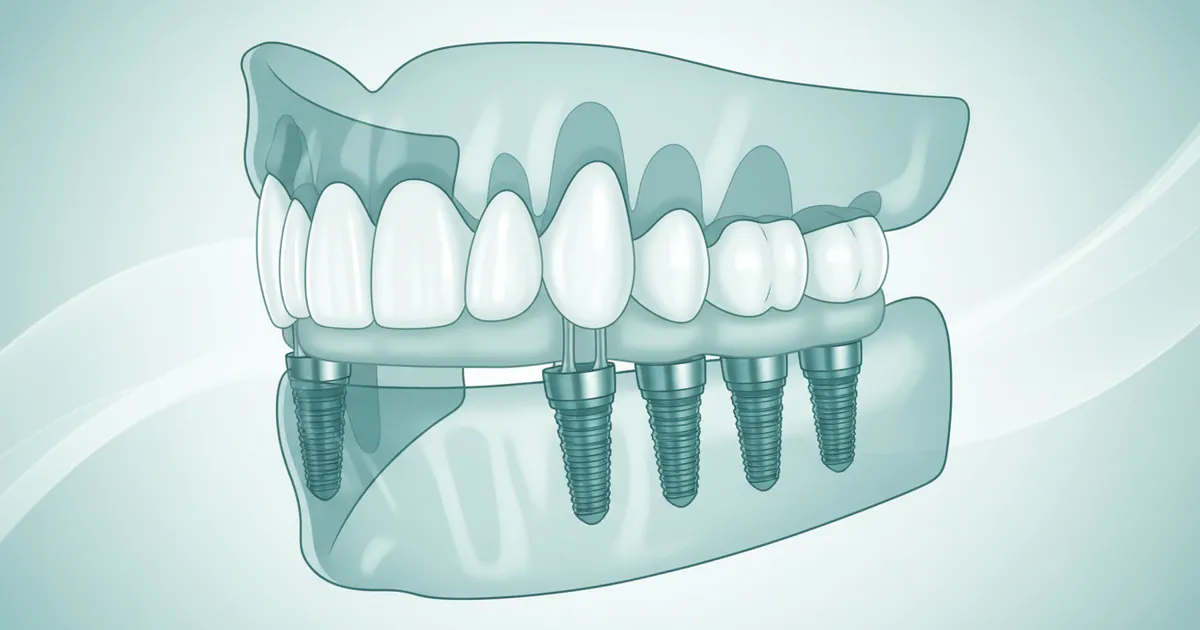
All-on-4 dentures, more accurately described as an All-on-4 dental implant-supported fixed bridge or All-on-4 full arch restoration, represent a revolutionary approach to replacing a full arch of missing teeth. Unlike traditional removable dentures that rest on the gums and can slip or cause discomfort, All-on-4 provides a permanent, non-removable solution that mimics the feel and function of natural teeth.
The "All-on-4" name refers to the fact that an entire arch of prosthetic teeth (typically 10-12 teeth) is securely anchored onto just four precisely placed dental implants in the jawbone. These implants, made of biocompatible titanium, fuse with the bone over several months in a process called osseointegration, providing a robust and stable foundation for the prosthetic bridge.
A key innovation of the All-on-4 technique, developed by Nobel Biocare and first introduced by Dr. Paulo Maló, is the strategic angling of the two posterior implants. Instead of being placed vertically, these implants are angled up to 45 degrees, which allows for maximum contact with the denser, anterior bone, often bypassing areas of significant bone loss in the posterior jaw. This ingenious placement often eliminates the need for complex and time-consuming bone grafting procedures that are frequently required for traditional implant placement in areas with insufficient bone volume.
For patients who have experienced extensive tooth loss or are struggling with failing dentition, All-on-4 dentures offer a fixed, reliable, and often immediate solution that can dramatically improve quality of life, chewing ability, and overall oral health.
Types and Variations of All-on-4 Systems
While the core concept of supporting a full arch on four implants remains consistent, there are variations primarily related to the timing of prosthetic placement and the materials used for the final restoration.
1. Immediate Load vs. Delayed Load
- Immediate Load (Teeth-in-a-Day): This is often the most appealing aspect of All-on-4. In suitable candidates, a temporary, lighter-weight prosthetic (often acrylic) can be attached to the newly placed implants on the same day as implant surgery, or within 24-48 hours. This allows patients to leave the dental office with a functional and aesthetically pleasing set of teeth, albeit with dietary restrictions, while the implants heal and osseointegrate. After 4-6 months, once healing is complete, the temporary prosthesis is replaced with the final, permanent one.
- Pros: Immediate aesthetic and functional improvement, boosts confidence, avoids a period without teeth.
- Cons: Requires careful adherence to a soft-food diet during healing, not suitable for all patients (e.g., those with poor bone quality or certain medical conditions).
- Delayed Load: In some cases, particularly if bone quality is compromised or complex extractions were performed, the implants may be allowed to heal for 3-6 months before any prosthetic is attached. During this period, the patient might wear a traditional removable denture.
- Pros: Lower risk of implant failure due to undisturbed healing, potentially more predictable outcome in challenging cases.
- Cons: Extended period without fixed teeth, potentially impacting aesthetics and function.
2. Restorative Materials for the Final Prosthesis
The material chosen for your final All-on-4 bridge significantly impacts its durability, aesthetics, and cost.
- Acrylic with Titanium Frame: This is a common and often more affordable option. A titanium frame provides strength, which is then covered with acrylic and prosthetic teeth.
- Pros: Good aesthetics, resilient to chewing forces, relatively easy to repair or modify, lighter weight.
- Cons: Acrylic can wear down or stain over time, and some patients might experience minor chipping.
- Zirconia (Full Zirconia or Porcelain Fused to Zirconia): Zirconia is a highly durable, biocompatible ceramic material known for its exceptional strength and natural appearance.
- Pros: Superior strength and longevity, highly aesthetic (mimics natural tooth translucency), highly resistant to staining and chipping, excellent biocompatibility.
- Cons: Higher cost, can be heavier, more difficult to repair if damaged (often requires removal and re-fabrication).
- PEEK (Polyetheretherketone): A newer material gaining traction in dentistry, PEEK is a high-performance polymer.
- Pros: Lightweight, shock-absorbing properties, good biocompatibility, can be more comfortable for some patients.
- Cons: Long-term clinical data is still accumulating compared to zirconia or acrylic-titanium.
3. Implant System Variations
While Nobel Biocare pioneered the All-on-4 concept, various reputable dental implant companies now offer systems that utilize similar principles, often with minor design variations in their implants and prosthetic components. Your dentist will choose the system they are most experienced with and that best suits your specific anatomical needs.
Why People Choose All-on-4: Causes and Contributing Factors
The need for a full arch restoration like All-on-4 often stems from a combination of factors leading to extensive tooth loss or failing dentition. Understanding these causes helps highlight why this solution is so critical for many individuals.
1. Extensive Tooth Loss (Edentulism)
The most direct reason for seeking All-on-4 is the absence of a significant number of teeth in an arch, or even complete edentulism (total tooth loss). This can be due to:
- Severe Periodontal Disease (Gum Disease): The leading cause of tooth loss in adults. Untreated gum disease leads to bone loss around the teeth, eventually loosening them to the point of extraction.
- Extensive Tooth Decay: Large cavities that are left untreated can destroy too much tooth structure, making restoration impossible and leading to extractions.
- Trauma: Accidents or injuries can result in the loss of multiple teeth.
- Congenital Conditions: Some individuals are born with conditions that lead to missing or poorly formed teeth.
2. Failing Dentition
Even if all teeth aren't completely missing, many patients seek All-on-4 when their remaining teeth are in a state of irreversible decline. This includes:
- Terminal Dentition: Teeth that are beyond repair due to severe decay, advanced gum disease, or extensive fractures.
- Multiple Missing Teeth with Compromised Remaining Teeth: When there are too few healthy teeth to support traditional bridges or partial dentures, or when the remaining teeth themselves have a poor prognosis.
3. Dissatisfaction with Traditional Dentures
For many years, traditional removable dentures were the only option for full arch tooth replacement. However, they come with significant drawbacks that drive patients to seek fixed alternatives:
- Lack of Stability: Traditional dentures rely on suction and the underlying gum tissue for retention. They often slip, click, or fall out, especially when eating or speaking.
- Reduced Chewing Efficiency: Studies show that traditional denture wearers have significantly reduced chewing force compared to those with natural teeth or implant-supported prosthetics. This limits dietary choices and can impact nutrition.
- Gum Soreness and Irritation: Constant rubbing can cause sore spots, blisters, and discomfort.
- Bone Loss (Resorption): Without tooth roots to stimulate the jawbone, the bone naturally begins to resorb (shrink) over time. This leads to the denture fitting poorly, requiring frequent relines, and causes a "collapsed" facial appearance. All-on-4 implants, by stimulating the bone, help to prevent further bone loss.
- Impact on Speech and Confidence: Loose dentures can interfere with speech, causing slurring or whistling, leading to self-consciousness.
4. Desire for a Permanent, Fixed Solution
Many individuals simply prefer the convenience, comfort, and confidence that comes with a non-removable set of teeth. All-on-4 offers the closest experience to having natural teeth restored, eliminating the need to remove dentures for cleaning or worry about them slipping.
[IMAGE: Illustration showing a patient with failing teeth, then a diagram of the All-on-4 implant placement in the jaw, and finally a person smiling confidently with a full set of fixed teeth.]
Signs You Might Be a Candidate for All-on-4 Dentures
Recognizing the signs that you could benefit from All-on-4 dentures is the first step toward reclaiming your oral health and quality of life. These signs often point to severe tooth loss, failing dentition, or significant dissatisfaction with existing dental prosthetics.
- You Have Multiple Missing Teeth: If you are missing several teeth in an upper or lower arch, especially in various locations, All-on-4 might be a more efficient and stable solution than multiple individual implants.
- Your Remaining Teeth Are Severely Damaged or Decayed: If your existing teeth are extensively compromised by decay, fractures, or advanced gum disease, and your dentist has deemed them "non-restorable" or "terminal," a full arch extraction followed by All-on-4 can provide a fresh start.
- You Suffer from Advanced Periodontal Disease: If gum disease has led to significant bone loss and mobility of multiple teeth, extractions might be necessary, and All-on-4 can immediately address the subsequent tooth loss and prevent further bone deterioration.
- You Experience Significant Discomfort or Instability with Traditional Dentures:
- Denture Slippage: Your dentures move, shift, or even fall out when you speak, chew, or laugh.
- Difficulty Chewing: You find it hard to eat certain foods, leading to dietary restrictions and potential nutritional deficiencies.
- Sore Spots and Irritation: Your gums are constantly irritated, inflamed, or develop sores from the rubbing of your dentures.
- Poor Taste Perception: The acrylic covering your palate can reduce your ability to taste food.
- You Notice Changes in Your Facial Structure: Long-term tooth loss and traditional denture wear lead to jawbone resorption, which can cause the jawline to recede, the lips to sink in, and a prematurely aged appearance. All-on-4 helps to maintain bone structure.
- You Have Difficulty Speaking Clearly: Loose dentures can interfere with articulation, leading to lisping or mumbling.
- You Feel Self-Conscious About Your Smile: If you hide your smile, avoid social situations, or feel embarrassed by the appearance of your teeth or dentures, All-on-4 can restore your confidence.
- You're Seeking a Permanent, Fixed Solution: You no longer want the hassle of removing your teeth for cleaning or dealing with adhesives.
If any of these scenarios resonate with you, it's highly recommended to schedule a consultation with a qualified dental implant specialist to discuss whether All-on-4 is the right treatment path for your specific needs.
Treatment Options: All-on-4 vs. Alternatives
When facing extensive tooth loss, several treatment options exist, each with its own advantages and disadvantages. Understanding how All-on-4 dentures compare to other solutions is crucial for making an informed decision.
1. Traditional Removable Dentures (Complete Dentures)
- Description: A removable acrylic appliance that rests on the gums, held in place by suction and sometimes adhesives.
- Pros:
- Lowest Initial Cost: Typically the most affordable upfront option.
- Non-Invasive: No surgery required.
- Quick Fabrication: Can be made relatively quickly.
- Cons:
- Poor Stability: Prone to slipping, clicking, and falling out.
- Reduced Chewing Efficiency: Significantly weaker bite force.
- Accelerated Bone Loss: Does not stimulate the jawbone, leading to continuous bone resorption and changes in facial structure.
- Discomfort: Can cause sore spots and irritation.
- Impact on Speech and Taste: Can affect articulation and cover the palate, reducing taste.
- Inconvenience: Must be removed for cleaning.
2. Conventional Dental Implants (Individual or Implant-Supported Bridge)
- Description: Each missing tooth is replaced with a single implant and crown, or a bridge is supported by two or more implants for several missing teeth. This includes options where a full arch is supported by 6-8 implants.
- Pros:
- Excellent Stability and Function: Closest to natural teeth in terms of chewing power and feel.
- Preserves Bone: Implants stimulate the jawbone, preventing resorption.
- Highly Aesthetic: Individual crowns mimic natural teeth perfectly.
- Cons:
- Higher Cost (for full arch): Replacing every tooth with an implant can be extremely expensive. A cost of one tooth implant typically ranges from $3,000 to $6,000 for the implant, abutment, and crown. For a full arch of 10-12 implants, this would be prohibitively expensive for most.
- More Invasive: Requires more implant placements than All-on-4 for a full arch.
- Potential for Bone Grafting: Often requires significant bone grafting if bone volume is insufficient, prolonging treatment time.
- Longer Treatment Time: Multiple surgeries and healing periods can extend the process.
3. All-on-4 Dentures (Implant-Supported Fixed Bridge)
- Description: A full arch prosthetic supported by just four strategically placed dental implants, often allowing for immediate placement of a temporary bridge.
- Pros:
- Fixed and Stable: Non-removable, excellent chewing function, high confidence.
- Prevents Bone Loss: Implants stimulate the jawbone.
- Often Avoids Bone Grafting: Angled implant placement maximizes use of existing bone.
- "Teeth-in-a-Day" Potential: Temporary fixed bridge often placed on the day of surgery.
- Cost-Effective for Full Arch: More economical than replacing every tooth with an individual implant.
- Cons:
- Significant Initial Cost: Higher than traditional dentures.
- Surgical Procedure: Requires oral surgery.
- Dietary Restrictions (initially): Soft diet during the healing phase.
- Requires Diligent Maintenance: Specific cleaning techniques are necessary.
Comparison Table: Full Arch Tooth Replacement Options
| Feature | Traditional Dentures | Conventional Full Arch Implants (6-8 implants) | All-on-4 Dentures (4 implants) |
|---|---|---|---|
| Stability | Poor (removable) | Excellent (fixed) | Excellent (fixed) |
| Bone Preservation | None (causes bone loss) | Excellent | Excellent |
| Chewing Power | ~20% of natural teeth | ~90-100% of natural teeth | ~80-90% of natural teeth |
| Cost (per arch) | $1,500 - $5,000 | $30,000 - $60,000+ | $15,000 - $30,000+ |
| Invasiveness | None | High (multiple implant surgeries) | Moderate (4 implant surgeries) |
| Bone Grafting Req. | Not applicable | Often required | Rarely required (due to angled implants) |
| "Teeth-in-a-Day" | Not applicable | Rarely | Often possible |
| Maintenance | Daily removal and cleaning | Like natural teeth | Specialized cleaning around implants |
| Longevity | 5-10 years (with relines) | 20+ years for implants, 10-15 for prosthetics | 20+ years for implants, 10-15 for prosthetics |
Pro Tip: While the cost of one tooth implant might seem high, for full arch replacement, All-on-4 often provides a more cost-effective and less invasive solution compared to placing individual implants for every missing tooth.
Step-by-Step Process for All-on-4 Dentures
The journey to receiving All-on-4 dentures is a carefully planned and executed multi-stage process. Understanding each step can help alleviate anxiety and set realistic expectations.
Step 1: Initial Consultation and Comprehensive Evaluation
This crucial first step involves a thorough assessment by your dental implant specialist.
- Oral Examination: Your dentist will examine your existing teeth, gums, and overall oral health.
- Diagnostic Imaging: This is critical. It typically includes:
- Panoramic X-rays: To get a broad view of your jawbones and sinuses.
- 3D Cone Beam Computed Tomography (CBCT) Scans: These provide highly detailed 3D images of your jawbone density, nerve pathways, and sinus anatomy. This allows the surgeon to precisely plan implant placement, especially the angled posterior implants characteristic of All-on-4.
- Medical History Review: Your dentist will review your complete medical history, including any chronic conditions (e.g., diabetes, heart disease), medications you take, and habits (e.g., smoking), as these can impact treatment success.
- Treatment Planning: Based on the evaluation, your dentist will determine if you are a suitable candidate for All-on-4 and discuss the proposed treatment plan, materials, timeline, and costs. Digital planning software is often used to map out the exact implant positions.
Step 2: Preparing for Surgery (Pre-Treatment)
- Extractions: If you have failing teeth, these will be extracted. Often, these extractions can be performed on the same day as implant placement (see Step 3), streamlining the process.
- Addressing Other Oral Health Issues: Any active gum disease or infections must be treated before implant surgery.
- Sedation Options: You'll discuss sedation options for the surgical procedure, which can range from local anesthesia with oral sedatives to IV sedation or general anesthesia, ensuring your comfort.
Step 3: Implant Placement Surgery
This is the main surgical phase, typically performed in a single appointment per arch.
- Anesthesia: The chosen sedation method will be administered.
- Tooth Extractions (if needed): Any remaining unhealthy teeth in the arch are carefully removed. This is where the concept of tooth extraction and implant same day is often applied with All-on-4, meaning you won't leave with a gap.
- Site Preparation: The surgical sites are prepared, and any necessary bone contouring is performed to create a smooth foundation for the prosthesis.
- Implant Placement: Four dental implants are strategically placed into the jawbone. The two anterior implants are typically placed vertically, while the two posterior implants are angled up to 45 degrees to maximize bone support and avoid anatomical structures like the sinuses or nerves.
- Abutment Placement: Small connecting pieces called abutments are often attached to the implants during the same surgery.
- Suturing: The gum tissue is sutured closed around the abutments.
Step 4: Temporary Prosthesis Placement (Teeth-in-a-Day)
- Immediate Load (if applicable): For eligible patients, impressions taken before or during surgery are used to fabricate a temporary, fixed acrylic bridge. This temporary prosthesis is then securely attached to the newly placed implants, often on the same day as the surgery or within 24-48 hours.
- Pro Tip: While you'll have "teeth-in-a-day," it's crucial to follow a soft-food diet during the initial healing period to allow the implants to integrate with the bone undisturbed.
- Delayed Load (if applicable): If immediate loading is not recommended, a removable temporary denture may be provided, and the implants will be left to heal under the gums.
[IMAGE: Detailed sequence showing 1. Initial jaw with missing teeth, 2. Four implants surgically placed (showing angled posterior implants), 3. Temporary fixed bridge attached, 4. Final permanent bridge.]
Step 5: Osseointegration and Healing
- Healing Period: The implants will undergo a critical healing process called osseointegration, where the titanium surface of the implants fuses directly with the surrounding jawbone. This typically takes 3 to 6 months.
- Follow-up Appointments: You will have periodic check-ups during this time to monitor healing and ensure proper oral hygiene.
Step 6: Final Prosthesis Placement
Once osseointegration is complete and your implants are fully stable:
- New Impressions: Detailed impressions or digital scans of your healed gums and implant positions are taken.
- Custom Fabrication: Your final, permanent bridge (made from materials like acrylic/titanium or zirconia) is custom-fabricated in a dental lab to precisely fit your mouth, match your desired aesthetics, and optimize your bite.
- Placement: The temporary bridge is removed, and the permanent All-on-4 bridge is securely attached to the implants. Your dentist will ensure a comfortable fit and proper bite alignment.
Step 7: Post-Placement Care and Maintenance
- Oral Hygiene Instructions: You'll receive comprehensive instructions on how to care for your new All-on-4 dentures, including specialized brushing techniques, water flossers, and interdental brushes to clean around the implants and under the bridge.
- Regular Dental Check-ups: Routine follow-up appointments (typically every 6 months) with your dentist and hygienist are essential for monitoring the health of your implants and prosthesis, performing professional cleanings, and ensuring long-term success.
This structured process ensures that your All-on-4 restoration is planned, placed, and maintained with the highest standards for optimal results and longevity.
Cost and Insurance for All-on-4 Dentures in the US
The investment in All-on-4 dentures is significant, reflecting the complexity of the procedure, the advanced materials used, and the expertise of the dental professionals involved. Understanding the cost breakdown and insurance considerations is vital for financial planning.
Average US Cost Ranges for All-on-4 Dentures
The price of All-on-4 can vary widely based on several factors, including:
- Geographic Location: Costs are generally higher in major metropolitan areas and on the coasts (e.g., California, New York) compared to the Midwest or rural areas.
- Materials Used: Zirconia prosthetics are typically more expensive than acrylic with a titanium frame.
- Number of Arches: One arch (upper or lower) will be roughly half the cost of a full mouth (both upper and lower).
- Additional Procedures: While All-on-4 often minimizes bone grafting, some patients may still require minor procedures like extractions (if not included in the package) or gum contouring.
- Dentist's Experience and Clinic Fees: Highly experienced implant specialists and state-of-the-art facilities may have higher fees.
Estimated Cost Ranges (Per Arch):
- Lower Range (Acrylic/Titanium): $15,000 - $20,000
- Mid-Range (Acrylic/Titanium or Entry-Level Zirconia): $20,000 - $25,000
- Higher Range (Premium Zirconia, Complex Cases): $25,000 - $30,000+
Estimated Cost Ranges (Full Mouth - Both Arches):
- Lower Range: $30,000 - $40,000
- Mid-Range: $40,000 - $50,000
- Higher Range: $50,000 - $60,000+
These costs generally include:
- Initial consultation and diagnostics (X-rays, CBCT scans).
- Tooth extractions (if needed, typically up to a certain number).
- Placement of four dental implants per arch.
- Placement of the temporary fixed bridge.
- Follow-up appointments during healing.
- Fabrication and placement of the final permanent bridge.
Cost of One Tooth Implant vs. All-on-4: While a single implant, abutment, and crown might cost $3,000 - $6,000, the All-on-4 system offers a significant cost-saving for full arch replacement. Replacing 10-12 teeth with individual implants would easily exceed $30,000 - $60,000 per arch, making All-on-4 a more economical full-arch solution.
Dental Insurance Coverage
Unfortunately, dental insurance typically provides limited coverage for All-on-4 procedures.
- Medical vs. Dental Coverage: Dental implant procedures are often classified differently by insurance companies. Some aspects, particularly the surgical placement of implants, may be partially covered under a medical plan if deemed medically necessary (e.g., due to trauma or underlying health conditions contributing to tooth loss). This is rare but worth investigating.
- Typical Dental Plan Limitations: Most standard dental insurance plans have annual maximums, usually ranging from $1,000 to $2,500. This amount will cover only a small fraction of the total cost of All-on-4.
- Specific Coverage: Some plans may cover a percentage of individual components, such as tooth extractions (usually 50-80%), or a portion of the prosthetic bridge, but rarely the entire implant procedure.
- "Missing Tooth Clause": Be aware of "missing tooth clauses" in some insurance policies, which may deny coverage for replacing teeth that were missing before the policy began.
Pro Tip: Always have your dental office submit a pre-treatment estimate to your insurance provider to understand exactly what, if anything, will be covered. Do not assume coverage.
Payment Plans and Financing Options
Given the high cost, most patients utilize financing options:
- In-Office Payment Plans: Many dental offices offer their own payment plans, allowing you to pay in installments over several months, often with no or low interest.
- Third-Party Medical Financing: Companies like CareCredit, LendingClub, or Alphaeon Credit specialize in healthcare financing. They offer various plans, including interest-free options for a certain period, followed by fixed-interest payments.
- Health Savings Accounts (HSAs) or Flexible Spending Accounts (FSAs): If you have an HSA or FSA through your employer, you can use these tax-advantaged accounts to pay for All-on-4 procedures, significantly reducing your out-of-pocket expenses.
- Personal Loans: Banks and credit unions offer personal loans that can be used for dental procedures, typically with competitive interest rates.
Cost-Saving Tips:
- Shop Around (Carefully): Get consultations from a few reputable implant specialists. Be wary of significantly lower prices, as they might indicate less experienced practitioners or lower-quality materials.
- Ask About Package Deals: Some clinics offer bundled pricing for the entire All-on-4 process, which can be more cost-effective than paying for each component separately.
- Consider Travel for Treatment: In some cases, patients may travel to areas with lower living costs (and thus lower dental fees), but this requires careful research into the provider's qualifications and post-operative care logistics.
- Utilize HSAs/FSAs: Maximize contributions to these accounts to cover treatment costs with pre-tax dollars.
Recovery and Aftercare for All-on-4 Dentures
Proper recovery and diligent aftercare are paramount for the long-term success and longevity of your All-on-4 dentures. Following your dentist's instructions meticulously will ensure proper healing and prevent complications.
Immediate Post-Surgery (First 24-72 Hours)
- Bleeding: Some light bleeding or oozing is normal. Apply gentle pressure with gauze pads as instructed. Avoid spitting or rinsing vigorously, as this can dislodge blood clots.
- Swelling: Swelling is common and may peak 2-3 days after surgery. Apply ice packs to the outside of your face for 15-20 minutes on, 15-20 minutes off, for the first 24-48 hours.
- Pain Management: You will likely experience some discomfort. Take prescribed pain medication as directed. Over-the-counter pain relievers (like ibuprofen or acetaminophen) can also be used if approved by your dentist.
- Diet: Crucially, adhere to a strict liquid/soft food diet for the first few days. This means avoiding anything that requires chewing. Examples: smoothies, yogurt, pudding, mashed potatoes, well-blended soups.
- Oral Hygiene: Avoid brushing the surgical sites directly. Your dentist may recommend a prescription antimicrobial mouthwash (e.g., chlorhexidine) to keep the area clean. Gently rinse your mouth with warm salt water after 24 hours (a teaspoon of salt in a glass of warm water).
- Activity: Rest is essential. Avoid strenuous physical activity for at least 48-72 hours. Keep your head elevated when sleeping.
- Smoking/Alcohol: Absolutely avoid smoking and alcohol during the initial healing phase, as they can significantly impede healing and increase the risk of complications.
First Few Weeks (Until Suture Removal / Initial Healing)
- Dietary Restrictions: Continue a soft food diet. Even with "Teeth-in-a-Day," the temporary bridge is not designed for heavy chewing. Eating hard, crunchy, or chewy foods can put excessive pressure on the integrating implants and lead to failure. Your dentist will provide a specific list of approved foods and a timeline for gradually reintroducing harder items.
- Oral Hygiene: Continue with gentle brushing of other teeth and the temporary bridge, using a soft-bristled toothbrush. Continue prescribed mouth rinses and warm salt water rinses.
- Suture Removal: If non-dissolvable sutures were used, they would typically be removed by your dentist 7-14 days post-surgery.
- Follow-up Appointments: Attend all scheduled follow-up appointments so your dentist can monitor your healing progress.
Long-Term Aftercare (After Final Prosthesis Placement)
Once your final All-on-4 prosthesis is placed, lifelong diligent care is essential:
- Brushing: Brush your All-on-4 bridge at least twice daily with a soft-bristled toothbrush and non-abrasive toothpaste. Focus on cleaning all surfaces, including where the bridge meets the gums.
- Specialized Cleaning: This is critical. Because the bridge is fixed, food particles and plaque can accumulate underneath and around the implants.
- Water Flosser (Waterpik): Highly recommended. Use it daily to flush out debris from under the bridge and around the implants.
- Interdental Brushes/Proxabrushes: Small brushes designed to clean in tight spaces and around implant posts.
- Dental Floss (Super Floss/Floss Threaders): Can be used to clean under the bridge.
- Regular Professional Cleanings: Schedule regular dental check-ups and cleanings, typically every 6 months, with a hygienist who is experienced in implant care. They use specialized instruments that won't scratch the implant surfaces.
- Avoid Abrasive Materials: Do not use abrasive toothpastes or harsh cleaning agents on your prosthesis.
- Nightguards (if recommended): If you grind or clench your teeth (bruxism), your dentist might recommend a custom nightguard to protect your prosthesis from excessive force.
- Avoid Extreme Forces: Do not use your teeth as tools (e.g., opening bottles, biting on ice).
- Quit Smoking: Smoking significantly increases the risk of peri-implantitis (gum disease around implants) and implant failure. This is an ADA-recommended guideline for optimal oral health.
Pro Tip: Think of your All-on-4 as your new permanent teeth – they require consistent and proper care, just like natural teeth, to ensure their longevity. Neglecting hygiene can lead to peri-implantitis, a serious complication.
Prevention (Maintaining Oral Health and Preventing Complications)
While All-on-4 dentures are a solution for missing teeth, prevention plays a critical role both before needing the procedure and in maintaining the longevity of the implants once they are in place.
Preventing Extensive Tooth Loss (Avoiding the Need for All-on-4)
For those who still have some natural teeth, the goal is to preserve them for as long as possible.
- Diligent Oral Hygiene:
- Brush Twice Daily: Use a fluoride toothpaste and a soft-bristled brush, cleaning all surfaces of your teeth for at least two minutes each time.
- Floss Daily: Clean between your teeth to remove plaque and food particles that brushing can't reach.
- Use Mouthwash: An antiseptic or fluoride mouthwash can provide additional protection against decay and gum disease.
- Regular Dental Check-ups and Cleanings:
- Every Six Months: Visit your dentist for professional cleanings and examinations. This allows for early detection and treatment of issues like cavities and gum disease before they become severe.
- Early Intervention: Addressing small problems (like a cavity) promptly is far less invasive and expensive than waiting until a tooth requires extraction.
- Healthy Diet:
- Limit Sugary and Acidic Foods/Drinks: These contribute to tooth decay.
- Consume Calcium-Rich Foods: Dairy products, leafy greens, and fortified foods support strong bones, including your jawbone.
- Avoid Harmful Habits:
- Quit Smoking: Smoking is a major risk factor for periodontal disease and tooth loss. It also impedes healing.
- Limit Alcohol Consumption: Excessive alcohol can contribute to oral health problems.
- Avoid Chewing Hard Objects: Don't chew on ice, pens, or use your teeth to open packages, as this can lead to fractures.
- Wear a Mouthguard: If you play contact sports or grind/clench your teeth at night (bruxism), a custom-fitted mouthguard can protect your teeth from damage.
Preventing Complications with All-on-4 Implants (Post-Treatment)
Once you have your All-on-4 dentures, prevention shifts to ensuring the health and stability of your implants.
- Strict Oral Hygiene: This cannot be overstressed. Peri-implantitis, a serious inflammatory condition around implants similar to gum disease, is the leading cause of implant failure post-integration. Adhere to the detailed aftercare instructions provided by your dentist, including:
- Daily brushing with a soft brush.
- Daily use of a water flosser to clean under the bridge and around implants.
- Daily use of interdental brushes or specialized floss.
- Regular Professional Maintenance:
- Frequent Cleanings: Continue your 6-month dental visits. Your hygienist will use specific tools designed for implants to thoroughly clean around your All-on-4 without damaging the titanium surfaces.
- Annual Check-ups: Your dentist will monitor the health of your implants, bone levels, and the integrity of your prosthesis.
- Avoid Smoking: Smoking significantly increases the risk of implant failure and peri-implantitis. It constricts blood vessels, reducing blood flow to the gums and bone, impairing healing and immune response. Quitting smoking is one of the most impactful preventive measures you can take.
- Manage Systemic Health Conditions: Conditions like uncontrolled diabetes can increase the risk of implant complications. Work with your physician to keep chronic diseases well-managed.
- Report Issues Promptly: If you notice any signs of problems – pain, swelling, redness, bleeding, loose components, or difficulty chewing – contact your dentist immediately. Early intervention can prevent minor issues from becoming major complications.
Adhering to these preventive measures, both before and after All-on-4 treatment, is crucial for securing a healthy, long-lasting smile.
Risks and Complications of All-on-4 Dentures
While All-on-4 dentures have a high success rate, like any surgical procedure, they carry potential risks and complications. Being aware of these can help you make an informed decision and know what to look for post-procedure.
General Surgical Risks
These are risks associated with any oral surgery:
- Infection: Though rare with proper sterilization and antibiotics, infection can occur at the surgical site.
- Swelling and Bruising: Common and usually temporary, but can be significant.
- Pain: Managed with medication, but persistent or worsening pain is a concern.
- Bleeding: Some oozing is normal; excessive or prolonged bleeding needs attention.
- Allergic Reaction: To anesthesia, medications, or materials.
- Sinus Perforation: A risk in the upper jaw if implants are placed too close to the sinus cavity, though careful planning with CBCT scans minimizes this.
Implant-Specific Risks
- Implant Failure (Lack of Osseointegration): This is when the implant fails to properly fuse with the jawbone. It's more common in individuals who smoke, have uncontrolled diabetes, poor oral hygiene, or insufficient bone quality. If an implant fails, it may need to be removed, the site allowed to heal, and a new implant placed.
- Nerve Damage: Particularly in the lower jaw, there's a risk of damage to the inferior alveolar nerve, which can lead to numbness, tingling, or pain in the lip, chin, or tongue. This is minimized by precise pre-surgical planning with 3D imaging.
- Peri-implantitis: This is an inflammatory condition affecting the tissues surrounding a dental implant, similar to periodontal disease around natural teeth. It's caused by bacterial infection and can lead to bone loss around the implant, eventually causing implant failure if not treated. Poor oral hygiene is the primary cause.
- Prosthetic Complications:
- Fracture or Chipping of the Prosthesis: Especially with acrylic materials, though zirconia is very strong. Repair or replacement may be needed.
- Loosening of Screws: The screws attaching the prosthesis to the implants can sometimes loosen and need to be retightened.
- Fracture of the Abutment or Implant: Rare but possible under extreme force.
- Aesthetic Concerns: While rare with experienced providers, improper planning could lead to an aesthetic outcome that doesn't fully meet expectations. This highlights the importance of choosing a highly skilled and communicative dental professional.
Factors Increasing Risk
Certain factors can increase the likelihood of complications:
- Smoking: Significantly increases the risk of implant failure and peri-implantitis.
- Uncontrolled Diabetes: Impairs healing and increases infection risk.
- Osteoporosis (especially with certain medications): Can affect bone quality.
- Immunocompromised Status: Weakened immune system.
- Poor Oral Hygiene: A leading cause of peri-implantitis.
- Excessive Force (Bruxism): Teeth grinding or clenching can stress implants.
Pro Tip: Choose an experienced and board-certified oral surgeon or periodontist for your All-on-4 procedure. Their expertise, coupled with advanced diagnostic tools, significantly reduces the risk of complications. Always follow all post-operative instructions diligently and attend all follow-up appointments.
Cost Breakdown for All-on-4 Dentures
As highlighted earlier, the cost of All-on-4 dentures is substantial, and a clear breakdown can help you understand what you're paying for.
Average US Costs (Low, Mid, High)
The average costs are influenced by the factors previously mentioned, but here's a general range:
Per Arch (Upper OR Lower):
- Low End: $15,000 - $18,000 (Often includes extractions, 4 implants, temporary acrylic bridge, and final acrylic/titanium bridge. May be found in less competitive markets or clinics with high volume.)
- Mid-Range: $18,000 - $25,000 (Common for high-quality acrylic/titanium bridges or entry-level zirconia. Includes all standard components and skilled practitioners.)
- High End: $25,000 - $30,000+ (Typically involves premium zirconia prosthetics, highly experienced specialists, advanced digital planning, and potentially additional cosmetic enhancements or more complex cases.)
Full Mouth (Upper AND Lower):
- Low End: $30,000 - $36,000
- Mid-Range: $36,000 - $50,000
- High End: $50,000 - $60,000+
Cost Components Detailed:
- Surgical Phase (Implant Placement): This is a significant portion of the cost.
- Consultation & Diagnostics: X-rays, CBCT scans, treatment planning. ($300 - $1,000, often rolled into package)
- Tooth Extractions: If needed (often $100 - $400 per tooth, but often included in All-on-4 packages for the entire arch).
- Implant Devices: Cost of the four titanium implants.
- Surgical Fee: For the implant specialist (oral surgeon, periodontist).
- Anesthesia: Sedation fees (can be $500 - $2,000+ depending on type and duration).
- Restorative Phase (Prosthesis Fabrication and Placement):
- Temporary Fixed Bridge: Design and fabrication (often included).
- Final Permanent Bridge: Cost of materials (acrylic/titanium vs. zirconia) and laboratory fabrication. This is often the most variable component.
- Restorative Dentist's Fee: For impressions, fittings, adjustments, and final placement.
- Ancillary Procedures (If Needed):
- Bone Grafting: While All-on-4 minimizes this, some minor grafting (e.g., to fill extraction sites) might be necessary ($200 - $1,000 per site).
- Sinus Lift: Less common with All-on-4, but if severe bone loss prevents even angled implants, a sinus lift might be needed ($1,500 - $3,000 per sinus).
With vs. Without Insurance
- Without Insurance: You will be responsible for the full out-of-pocket cost, which can be considerable. Many clinics offer discounts for upfront cash payments.
- With Insurance: As discussed, most dental insurance plans offer very limited coverage, typically only covering a small portion (e.g., 10-20%) of the total cost due to low annual maximums ($1,000 - $2,500). Some parts of the procedure, like extractions, might be covered at a higher percentage (50-80%), but the bulk of the implant and prosthetic costs will be out-of-pocket. Always confirm your specific plan's benefits.
Payment Plans and Financing Options
The vast majority of patients finance All-on-4 treatment.
- Dental Office Payment Plans: Often interest-free for shorter periods or low-interest for longer terms.
- Third-Party Medical Lenders: Companies like CareCredit, LendingClub, Alphaeon Credit offer specialized financing for healthcare expenses. They typically have options for 6-24 months interest-free if paid in full, or extended plans with fixed interest rates.
- Personal Bank Loans: Can be an option, but ensure the interest rate is competitive.
- Health Savings Accounts (HSAs) and Flexible Spending Accounts (FSAs): These allow you to pay for qualified medical expenses with pre-tax dollars, providing a significant tax saving. You can contribute up to a certain amount each year, making them excellent tools for planning for large dental expenses.
Pro Tip: When discussing costs, ask for a detailed written estimate that breaks down all components of the All-on-4 procedure, including temporary prostheses, final prostheses, and any potential ancillary fees. Understand what is included in the quoted "package" price.
Frequently Asked Questions About All-on-4 Dentures
How long do All-on-4 dental implants last?
With proper oral hygiene and regular professional maintenance, the titanium dental implants themselves are designed to last for 20 years or more, often a lifetime. The prosthetic bridge (the teeth part) typically lasts 10-15 years before it may need to be refurbished or replaced due to wear and tear.
Is the All-on-4 procedure painful?
The procedure itself is performed under local anesthesia, often with sedation (IV sedation or general anesthesia), so you will experience minimal to no pain during the surgery. Post-operatively, you can expect some discomfort, swelling, and bruising, which can be effectively managed with prescribed pain medication and over-the-counter pain relievers. Most patients report that the discomfort is manageable.
Can All-on-4 dentures be removed?
No, All-on-4 dentures are a fixed solution and are not removable by the patient. They are securely screwed onto the dental implants and can only be removed by your dentist for professional cleaning or maintenance. This is a key advantage over traditional removable dentures.
What is the recovery time for All-on-4?
The initial recovery period for swelling and discomfort typically lasts 1-2 weeks. However, the implants need 3-6 months to fully integrate with your jawbone (osseointegration) before the final permanent bridge is placed. During this time, you will wear a temporary fixed bridge and must adhere to a soft-food diet to protect the healing implants.
Am I a candidate for All-on-4 if I have bone loss?
One of the significant advantages of the All-on-4 technique is its ability to maximize the use of existing bone. By strategically angling the posterior implants, it often allows patients with moderate bone loss to avoid extensive and time-consuming bone grafting procedures. However, severe bone loss might still require some preparatory work or make other implant solutions more appropriate; a thorough 3D scan is necessary for evaluation.
What can I eat with All-on-4 dentures?
During the initial 3-6 month healing period, you must stick to a soft-food diet to allow the implants to integrate without undue stress. Once your final, permanent bridge is placed and implants are fully integrated, you can typically eat most foods, including crunchy vegetables and meats, with confidence. You should still avoid extremely hard items like ice, hard candy, or unpopped popcorn kernels to prevent damage to the prosthesis.
What are the alternatives to All-on-4 dentures?
Alternatives include traditional removable complete dentures, full arch implant-supported bridges (requiring 6-8 or more implants per arch), or simply individual dental implants for specific missing teeth. Each option has different costs, invasiveness, stability, and longevity. All-on-4 offers a middle ground of cost-effectiveness and high stability for full arch replacement.
Do I still need to see a dentist regularly with All-on-4?
Yes, absolutely. Regular dental check-ups and professional cleanings (typically every 6 months) are crucial for the long-term success of your All-on-4. These visits allow your dentist to monitor the health of your implants and gums, clean areas you might miss, and ensure the integrity of your prosthesis. This prevents complications like peri-implantitis.
Can All-on-4 dentures stain?
The materials used for your All-on-4 prosthesis (acrylic or zirconia) are generally more stain-resistant than natural tooth enamel. However, like natural teeth, they can accumulate surface stains over time from coffee, tea, red wine, or tobacco. Regular brushing, cleaning, and professional maintenance can keep them looking their best.
Is All-on-4 better than traditional dentures?
For most patients, All-on-4 is significantly superior to traditional dentures. All-on-4 provides a fixed, stable, and highly functional solution that feels and acts much more like natural teeth. It preserves jawbone, improves chewing efficiency, enhances speech, and boosts confidence, while traditional dentures often cause discomfort, slippage, and accelerate bone loss.
When to See a Dentist
While All-on-4 dentures offer a robust and long-lasting solution, it's crucial to know when to seek professional dental attention. Prompt action can prevent minor issues from escalating into major complications.
Red Flags: Seek Immediate Dental Attention If You Experience:
- Severe or Worsening Pain: While some discomfort is normal after surgery, severe, sharp, or throbbing pain that doesn't subside with medication, or pain that worsens significantly after the initial healing period, is a red flag.
- Excessive Bleeding: Some oozing is expected, but heavy, continuous bleeding that doesn't stop after applying pressure (with gauze) for 20-30 minutes needs immediate attention.
- Persistent Swelling or Pus: Swelling that increases significantly after the first 72 hours, or the presence of pus, foul taste, or fever, indicates a potential infection.
- Numbness or Tingling: Numbness, tingling, or altered sensation in your lip, chin, or tongue that persists beyond the expected healing time (a few days) could indicate nerve irritation or damage.
- Loose Implant or Prosthesis: If you feel an implant is loose, or if your temporary or final bridge feels wobbly, clicks, or detaches, contact your dentist immediately. This is not normal and requires urgent evaluation.
- Difficulty Breathing or Swallowing: Although rare, any respiratory distress or difficulty swallowing after surgery requires emergency medical attention.
Routine Care vs. Scheduled Appointments:
- Routine Follow-ups: Attend all scheduled follow-up appointments with your dental implant specialist during the healing phase and after the placement of your final prosthesis. These are essential for monitoring your progress and ensuring long-term success.
- Regular Professional Cleanings: Schedule professional cleanings every 6 months with a hygienist experienced in implant care. These visits are vital for preventing peri-implantitis and maintaining the health of your implants and gums.
- Annual Check-ups: Your dentist should perform a comprehensive check-up at least once a year, including X-rays if necessary, to assess the health of your implants and surrounding bone.
Non-Emergency Concerns:
- Minor Discomfort or Sensitivity: If you experience mild, fleeting discomfort or sensitivity that comes and goes, especially in the weeks after initial placement of your final prosthesis, it may be normal as your mouth adjusts. However, if it persists or worsens, mention it at your next routine appointment.
- Food Trapping: If food consistently gets trapped under your bridge, discuss this with your dentist at your next visit. Adjustments or specific cleaning techniques might be recommended.
- Minor Chips or Stains: Small chips in the acrylic or surface stains can often be addressed during a routine visit or professional cleaning.
Pro Tip: When in doubt, always err on the side of caution and contact your dental office. It's better to get an issue checked out early than to wait and potentially face a more serious problem. Your dentist is your primary resource for any concerns regarding your All-on-4 dentures.
Frequently Asked Questions
Medically Reviewed Content
This article was written by our dental health editorial team and reviewed for medical accuracy. Our content follows strict editorial guidelines for reliability and trustworthiness.
Medical Disclaimer
This article is for informational purposes only and does not constitute medical advice. Always consult with a qualified dental professional for diagnosis and treatment. Do not delay seeking professional advice because of something you read on this website.
Related Articles
Implantologist: Complete Guide
Losing a tooth can be a significant setback, impacting not only your smile but also your ability to speak, chew, and maintain overall oral health. In fact, over 3 million Americans currently have dental implants, and that number is projected to grow significantly as more people seek a durable, n
March 8, 2026
Dentures Over Implants: Complete Guide
Missing multiple teeth or even an entire arch can profoundly impact your life, affecting everything from your ability to chew and speak to your self-confidence. For millions of Americans, traditional removable dentures have long been a solution, but they often come with compromises: slipping, discom
March 8, 2026
Implants Process: Complete Guide
Missing teeth can impact more than just your smile; they can affect your ability to eat, speak, and even your overall confidence. In fact, over 178 million Americans are missing at least one tooth, and about 40 million are missing all of their teeth. When faced with tooth loss, understanding the
March 8, 2026
Implants Dentaires: Complete Guide
Missing teeth can dramatically impact not just your smile, but your overall health, confidence, and quality of life. In the United States, an estimated 178 million adults are missing at least one tooth, while approximately 40 million are missing all their teeth. These statistics underscore a
March 8, 2026