Crossbite: Complete Guide
Key Takeaways
- Imagine a perfectly aligned set of teeth, where every upper tooth gently overlaps its lower counterpart, allowing for efficient chewing and a harmonious smile. Now, picture a scenario where this natural alignment is disrupted – where one or more upper teeth bite inside the lower teeth, or vice-ver
Crossbite: Complete Guide
Imagine a perfectly aligned set of teeth, where every upper tooth gently overlaps its lower counterpart, allowing for efficient chewing and a harmonious smile. Now, picture a scenario where this natural alignment is disrupted – where one or more upper teeth bite inside the lower teeth, or vice-versa. This condition, known as a crossbite, is a common form of malocclusion (misalignment of teeth) that affects a significant portion of the population, impacting not just aesthetics but also long-term oral health. In fact, research indicates that various forms of malocclusion, including crossbites, affect a substantial percentage of children and adults in the United States, often requiring orthodontic intervention.

A crossbite might seem like a minor cosmetic issue, but its implications extend far beyond appearances. Left unaddressed, it can lead to a cascade of problems, from uneven tooth wear and gum recession to chronic jaw pain and difficulties with speech and chewing. It can even influence the growth and development of facial bones in children. Understanding what a crossbite is, why it occurs, and how it can be effectively treated is crucial for maintaining optimal dental health and preventing more severe complications down the line. This comprehensive guide will delve into every aspect of crossbite, exploring its types, causes, symptoms, available treatment options, costs, recovery, and much more, providing you with all the information you need to make informed decisions about your oral health journey.
Key Takeaways:
- Definition: A crossbite occurs when upper teeth bite inside or outside the lower teeth, disrupting normal occlusion.
- Types: Can be anterior (front teeth), posterior (back teeth), unilateral (one side), or bilateral (both sides), affecting single teeth or entire segments of the jaw.
- Causes: Often a mix of genetics, oral habits (thumb sucking), premature tooth loss, and jaw growth discrepancies.
- Treatment Options: Range from palatal expanders and traditional braces to clear aligners and, in severe cases, orthognathic surgery.
- Cost & Timeline: Treatment costs in the US typically range from $2,500 to $8,000+ for braces/aligners, or $5,000-$12,000+ for expanders plus braces, with surgical cases costing significantly more ($20,000-$50,000). Treatment duration can be 6 months to 3 years, depending on severity and method.
- Early Intervention: Addressing crossbites in childhood (often around age 7-10) is highly recommended by the ADA to simplify treatment and prevent future complications.
- Retention is Key: Lifelong retainer wear, often cleaned with an ultrasonic retainer cleaner, is essential to prevent relapse after treatment.
What It Is / Overview
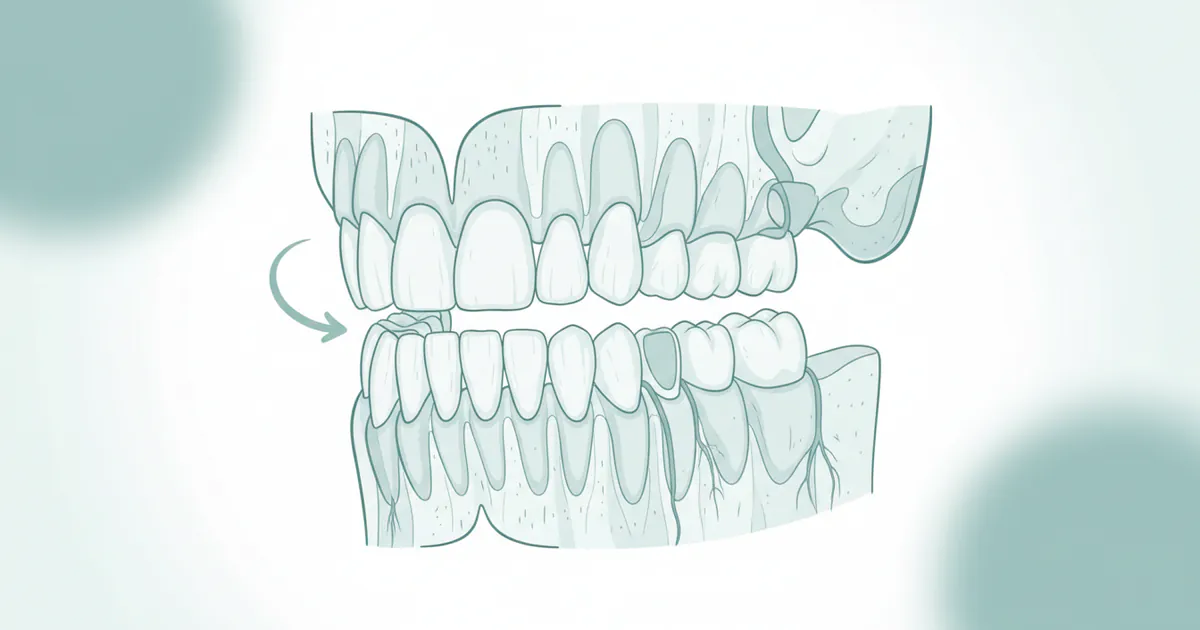
A crossbite is a form of malocclusion where one or more teeth are out of alignment with their opposing teeth when the jaws are closed. In a healthy bite, the upper teeth typically sit slightly outside and overlap the lower teeth. With a crossbite, this normal relationship is inverted in one or more areas of the mouth. This can involve a single tooth or an entire section of teeth.
While often perceived as merely an aesthetic concern, a crossbite significantly impacts the functional aspects of your bite. It can force the jaw to shift into an unnatural position during chewing, leading to muscular strain and an imbalanced distribution of forces across your teeth. This constant abnormal pressure can have detrimental effects on the teeth, gums, and temporomandibular joints (TMJ), which connect your jaw to your skull. Early identification and treatment of a crossbite are crucial not only for a straighter smile but for the overall health and longevity of your oral system.
Types / Variations
Crossbites are not all the same; they vary based on which teeth are affected and where in the mouth the misalignment occurs. Understanding these types is key to proper diagnosis and treatment planning.
Anterior Crossbite
An anterior crossbite involves the front teeth (incisors and canines). In this type, one or more of the upper front teeth bite behind the lower front teeth when the mouth is closed. It often resembles an underbite, where the lower jaw protrudes.
- Impact: Can lead to excessive wear on the affected front teeth, gum recession, and difficulty biting into food. It can also strain the jaw joint.
Posterior Crossbite
A posterior crossbite involves the back teeth (premolars and molars). Here, the upper back teeth bite inside the lower back teeth. This is the more common type of crossbite.
- Impact: Can cause the jaw to shift to one side when closing, leading to an asymmetric facial appearance. It often results in uneven tooth wear, grinding, and potential TMJ issues.
Unilateral Crossbite
This refers to a crossbite that affects only one side of the mouth. For example, the upper back teeth on the right side might bite inside the lower back teeth, while the left side has a normal bite.
- Impact: Can lead to facial asymmetry, as the jaw muscles on one side may develop differently due to uneven chewing.
Bilateral Crossbite
In a bilateral crossbite, the misalignment affects both sides of the mouth. Both the upper left and right back teeth might bite inside their lower counterparts.
- Impact: Can lead to a constricted upper arch and significant chewing difficulties.
Single Tooth Crossbite vs. Segmental Crossbite
A crossbite can affect just one tooth (e.g., a single upper front tooth biting behind a lower front tooth) or an entire segment of teeth (e.g., all upper back teeth on one side biting inside the lower back teeth). The extent of the crossbite will influence the complexity and duration of treatment.
Buccal Crossbite vs. Lingual Crossbite (Scissorbite)
While less commonly discussed in general terms, these specific classifications highlight whether the upper teeth are too far to the outside (buccal) or too far to the inside (lingual) relative to the lower teeth. A severe form of buccal crossbite where upper teeth completely overlap the lower outer teeth without touching is sometimes called a scissorbite.
``
Causes / Why It Happens
The development of a crossbite is often multifactorial, stemming from a combination of genetic predispositions, environmental factors, and detrimental oral habits. Understanding these underlying causes is essential for both prevention and effective treatment planning.
Genetic Factors
Genetics play a significant role in determining jaw size, tooth size, and the overall alignment of teeth. If one or both parents had a crossbite or other forms of malocclusion, their children are more likely to inherit similar dental and skeletal characteristics that can lead to a crossbite. These genetic traits can manifest as:
- Discrepancy in Jaw Size: The upper jaw (maxilla) may be too narrow or too wide compared to the lower jaw (mandible).
- Abnormal Tooth Size or Shape: Teeth that are too large or too small for the jaw can erupt in misaligned positions.
Oral Habits
Certain habits, particularly during childhood, can profoundly influence jaw development and tooth eruption, contributing to the formation or worsening of a crossbite.
- Thumb Sucking or Pacifier Use (Prolonged): If these habits persist beyond the age of 3-4, the constant pressure can narrow the upper jaw and push the upper front teeth forward or out of alignment, leading to a posterior or anterior crossbite.
- Tongue Thrusting: When the tongue pushes against the front teeth during swallowing, it can cause an open bite or contribute to an anterior crossbite.
- Mouth Breathing: Chronic mouth breathing, often due to allergies or enlarged tonsils/adenoids, can alter facial muscle development and jaw posture, leading to a narrow upper jaw and a higher palate, which is a common precursor to posterior crossbites.
Premature Tooth Loss or Delayed Eruption
The timing of tooth eruption and loss is critical for maintaining proper arch form and guiding subsequent permanent teeth into their correct positions.
- Early Loss of Baby Teeth: If a baby tooth is lost too early due to decay or injury, the adjacent teeth can drift into the empty space, preventing the permanent tooth from erupting correctly and potentially causing a crossbite.
- Delayed Eruption of Permanent Teeth: If permanent teeth take too long to erupt, it can disrupt the natural spacing and alignment, leading to mispositioning.
Abnormal Tooth Eruption
Sometimes, a permanent tooth simply erupts in the wrong position, either due to overcrowding, an obstruction, or an unusual growth path. This can result in a single tooth being in crossbite with its opposing counterpart.

Trauma or Injury
A severe injury to the face or jaw, particularly during developmental years, can affect jaw growth and tooth alignment, potentially leading to a crossbite.
Understanding these causes highlights the importance of early orthodontic evaluation, especially for children, to identify risk factors and intervene before a crossbite becomes more complex.
Signs and Symptoms
Recognizing the signs and symptoms of a crossbite early can facilitate timely intervention and prevent more serious complications. While some indications are visibly obvious, others may manifest as discomfort or functional issues.
Visual Cues
- Visible Misalignment: The most apparent sign is when one or more upper teeth bite inside or outside the lower teeth.
- For anterior crossbites, an upper front tooth might appear "tucked in" behind a lower front tooth.
- For posterior crossbites, you might notice a gap or an uneven bite when looking at the back teeth, with upper teeth sitting too far inward.
- Facial Asymmetry: Especially with unilateral posterior crossbites, the lower jaw may shift to one side when biting down, leading to an uneven appearance of the face. One cheekbone might appear more prominent, or the chin might seem off-center.
- Tooth Wear: Uneven or excessive wear on certain tooth surfaces is a clear indicator. Teeth in crossbite experience abnormal forces, causing the enamel to wear down faster than normal.
- Gum Recession: The constant friction and pressure from misaligned teeth can irritate the gums, leading to inflammation and recession around the affected teeth.
Functional Issues
- Chewing Difficulties: An improper bite makes it harder to properly cut and grind food, leading to inefficient chewing and potential digestive issues. You might find yourself chewing primarily on one side of your mouth.
- Speech Problems: Depending on the severity and location of the crossbite, it can affect tongue placement and airflow, leading to lisps or other speech impediments.
- Pain and Discomfort:
- Jaw Pain (TMJ Disorders): The forced shifting of the jaw to achieve a functional bite can strain the temporomandibular joints, leading to clicking, popping, pain in the jaw joint, or difficulty opening and closing the mouth.
- Headaches: Chronic muscle tension in the jaw and face due to a misaligned bite can radiate as frequent headaches or migraines.
- Tooth Sensitivity: Worn enamel exposes the underlying dentin, leading to increased sensitivity to hot, cold, or sweet stimuli.
Other Potential Indicators
- Increased Risk of Cavities: Areas where teeth are misaligned can be harder to clean, trapping food particles and increasing the risk of decay.
- Difficulty with Oral Hygiene: Brushing and flossing become more challenging when teeth are not properly aligned.
If you observe any of these signs in yourself or your child, it’s advisable to consult a dentist or orthodontist for an evaluation. Early diagnosis of a crossbite is crucial for preventing the progression of these symptoms and ensuring a more straightforward treatment process.
Treatment Options
Treating a crossbite involves correcting the misalignment of the teeth and jaws to achieve a proper, functional bite. The chosen treatment depends on the type and severity of the crossbite, the patient's age, and underlying causes. A comprehensive orthodontic evaluation is always the first step.
1. Palatal Expanders (Rapid Maxillary Expander - RME)
Primarily for Children and Adolescents (Growing Patients)
- What it is: A device cemented to the upper back teeth, used to gradually widen the upper jaw (maxilla). It consists of two halves connected by a screw mechanism that is turned by the patient or parent with a special key.
- Pros: Highly effective for correcting posterior crossbites by addressing the underlying narrowness of the upper jaw. Can prevent the need for more complex treatments later.
- Cons: Requires patient compliance for turning the screw. Can cause temporary discomfort and gaps between front teeth (which are later closed).
- Duration: Typically worn for 3-6 months for active expansion, followed by 6-9 months of retention.
- Cost Range: $2,000 - $4,000 (often as part of Phase 1 orthodontics).
2. Braces
Suitable for Children, Adolescents, and Adults Braces are a highly versatile orthodontic appliance that can correct a wide range of malocclusions, including various types of crossbites. They apply continuous pressure to slowly move teeth into their correct positions.
- Types of Braces:
- Traditional Metal Braces: Most common, durable, and effective. Often the most cost-effective.
- Pros: Highly effective for complex movements.
- Cons: Most visible.
- Cost Range: $3,000 - $7,500
- Pro Tip: For those concerned about aesthetics, choosing certain braces color bands can make them less noticeable, or even fun and fashionable for younger patients. Darker colors like navy or dark green can make teeth appear whiter, while clear or white bands can sometimes stain.
- Ceramic Braces: Clear or tooth-colored brackets that are less noticeable than metal braces.
- Pros: Less visible than metal.
- Cons: Can stain, slightly more brittle, and often more expensive.
- Cost Range: $4,000 - $8,000
- Lingual Braces: Custom-made brackets placed on the inside surface of the teeth, making them virtually invisible from the outside.
- Pros: Completely discreet.
- Cons: Most expensive, can affect speech temporarily, harder to clean.
- Cost Range: $8,000 - $12,000
- Traditional Metal Braces: Most common, durable, and effective. Often the most cost-effective.
- Duration: Typically 18-36 months, depending on severity.
- Mechanism: Brackets, wires, and often elastic bands (interarch elastics) are used to exert specific forces to correct the crossbite.
3. Clear Aligners (e.g., Invisalign)
Suitable for Adolescents and Adults (for mild to moderate cases)
- What it is: A series of custom-made, clear, removable plastic aligners that gradually shift teeth. Each aligner is worn for about 1-2 weeks before moving to the next set.
- Pros: Virtually invisible, removable for eating and cleaning, generally more comfortable than traditional braces.
- Cons: Not suitable for all severe crossbite cases, requires high patient compliance (must be worn 20-22 hours/day).
- Duration: 6-24 months, depending on complexity.
- Cost Range: $3,500 - $8,500
4. Selective Grinding (Enamelplasty)
For Minor Crossbites (often single-tooth)
- What it is: A procedure where a small amount of enamel is carefully removed from specific tooth surfaces to eliminate interferences that are causing a minor crossbite or bite discrepancy.
- Pros: Quick, painless, conservative.
- Cons: Only for very minor adjustments, cannot correct skeletal issues.
- Cost Range: $50 - $300 per tooth (often included in a larger treatment plan).
5. Orthognathic Surgery (Jaw Surgery)
For Severe Skeletal Crossbites (Adults with no remaining growth)
- What it is: Surgical repositioning of the upper jaw (maxillary osteotomy), lower jaw (mandibular osteotomy), or both, to correct significant skeletal discrepancies that cannot be fixed by orthodontics alone. Orthodontic treatment (braces or aligners) is typically done before and after surgery.
- Pros: Corrects severe functional and aesthetic issues, provides stable, long-term results.
- Cons: Major surgery with associated risks, longer recovery period, significant cost.
- Duration: Orthodontic phase 12-18 months pre-surgery, surgery itself, then 6-12 months post-surgery orthodontics.
- Cost Range: $20,000 - $50,000+ (including surgical fees, anesthesia, hospital costs; often in addition to orthodontic fees).
6. Habit Appliances
Primarily for Children
- What it is: Custom-made oral appliances designed to break harmful oral habits like thumb sucking or tongue thrusting, which are contributing to the crossbite.
- Pros: Addresses the root cause of habit-induced crossbites, often simplifying or eliminating the need for further orthodontic work if caught early.
- Cons: Requires patient compliance.
- Cost Range: $500 - $2,000
``
The best treatment plan for a crossbite is highly individualized. An orthodontist will perform a thorough examination, including X-rays, photos, and possibly 3D scans, to determine the exact nature of your crossbite and recommend the most appropriate course of action.
Step-by-Step Process: What to Expect During Treatment
Correcting a crossbite is a journey that typically follows a structured process, from initial consultation to the crucial retention phase. While specifics vary based on the chosen treatment, the general steps remain consistent.

Step 1: Initial Consultation and Diagnosis
- First Visit: You'll meet with an orthodontist who will conduct a thorough examination of your teeth, jaws, and facial structure.
- Records Collection: This usually includes:
- Digital X-rays: Panoramic (full mouth) and cephalometric (side profile) X-rays to assess tooth position, root structure, and jaw relationships.
- Intraoral and Extraoral Photographs: Pictures of your teeth, smile, and face from various angles.
- 3D Scans or Impressions: Digital scans or traditional molds of your teeth to create a precise 3D model of your bite.
- Diagnosis and Treatment Plan Discussion: Based on the records, the orthodontist will diagnose the specific type and severity of your crossbite. They will then present a personalized treatment plan, explaining the recommended appliances (e.g., palatal expander, braces, clear aligners), the estimated duration, and the associated costs. This is your opportunity to ask questions about the process, potential discomfort, and expected outcomes.
Step 2: Pre-Treatment Preparations
- Dental Health Check: Before starting orthodontic treatment, it's essential that your teeth and gums are healthy. Any cavities, gum disease, or other dental issues must be addressed by your general dentist.
- Appliance Fabrication: If a palatal expander or clear aligners are chosen, these custom appliances will be fabricated based on your dental records. For braces, brackets will be prepared.
Step 3: Active Treatment Phase
This is where the actual correction of the crossbite takes place.
- Appliance Placement:
- Palatal Expander: If applicable, the expander is cemented to the upper molars. The orthodontist will instruct you on how to activate it by turning a key, usually daily, for a few weeks or months.
- Braces: Brackets are bonded to your teeth, and archwires are threaded through them. For crossbites, specific wires and elastics (rubber bands) may be used to guide the teeth and jaws into correct alignment.
- Clear Aligners: You will receive a series of aligners, wearing each set for 1-2 weeks before moving to the next.
- Regular Adjustments/Check-ups:
- Braces: You'll visit the orthodontist every 4-8 weeks for adjustments, where wires may be changed, tightened, or elastics updated.
- Clear Aligners: Check-ups are typically less frequent, every 6-10 weeks, to monitor progress and provide the next sets of aligners.
- Expanders: Regular visits to monitor progress and advise on activation.
- Compliance is Key: Throughout this phase, diligent wearing of elastics (if prescribed), proper aligner wear, and meticulous oral hygiene are critical for successful and timely results.
Step 4: Debonding / Treatment Completion
- Removal of Appliances: Once the crossbite has been corrected and the desired alignment achieved, your braces or expander will be removed. If you were using clear aligners, your final set will be complete.
- Post-Treatment Records: New X-rays, photos, and scans/impressions are often taken to document the successful outcome of your treatment.
Step 5: Retention Phase
This is arguably the most crucial phase for long-term stability.
- Retainer Placement: To prevent your teeth from shifting back to their original positions (relapse), retainers are essential. You will be fitted for custom retainers, which can be:
- Removable Retainers: Such as Hawley retainers (wire and acrylic) or clear Essix retainers (like clear aligners).
- Fixed (Bonded) Retainers: A thin wire bonded to the back of your front teeth.
- Lifelong Wear: Initially, removable retainers are typically worn full-time (except for eating and brushing) for several months, then gradually transitioned to nighttime wear indefinitely. Adherence to retainer wear instructions is vital to maintain your corrected bite.
Each step in this process is designed to systematically correct the crossbite, ensuring a healthy, functional, and aesthetically pleasing outcome.
Cost and Insurance
The cost of correcting a crossbite in the US can vary significantly based on several factors, including the type and severity of the crossbite, the chosen treatment method, the orthodontist's fees, geographic location, and whether orthodontic surgery is required.
Average US Costs by Treatment Type
Here's a general overview of cost ranges for common crossbite treatments:
- Palatal Expanders:
- Range: $2,000 - $4,000
- Note: Often included as part of a broader Phase 1 orthodontic treatment for children, which may then be followed by braces.
- Traditional Metal Braces:
- Range: $3,000 - $7,500
- Mid-range nationwide average: ~$5,500
- Ceramic Braces:
- Range: $4,000 - $8,000
- Mid-range nationwide average: ~$6,000
- Clear Aligners (e.g., Invisalign):
- Range: $3,500 - $8,500
- Mid-range nationwide average: ~$6,000
- Lingual Braces:
- Range: $8,000 - $12,000+
- Mid-range nationwide average: ~$10,000
- Orthognathic Surgery (Jaw Surgery):
- Range: $20,000 - $50,000+
- Note: This includes surgical fees, anesthesia, and hospital costs. This is often in addition to the cost of orthodontic treatment (braces or aligners) before and after surgery.
- Retainers:
- Range: $150 - $600 per retainer (can be included in total treatment cost or billed separately for replacements).
Geographic Variations in the US
Costs can fluctuate based on your location within the United States. Major metropolitan areas and coastal regions (e.g., New York, California) tend to have higher prices compared to rural areas or states in the Midwest.
- High-Cost Areas: Northeastern, Mid-Atlantic, Pacific Coast states.
- Mid-Cost Areas: Southeastern, Mountain West states.
- Lower-Cost Areas: Midwest, Southern states.
Dental Insurance Coverage
Navigating dental insurance for crossbite treatment can be complex.
- Orthodontic Benefits: Many dental insurance plans offer some level of orthodontic coverage, but it varies widely.
- Lifetime Maximum: Most plans have a lifetime maximum benefit for orthodontics, typically ranging from $1,000 to $3,000. Once this limit is reached, you are responsible for the remaining costs.
- Coinsurance: Plans often cover a percentage of the cost after your deductible is met, commonly 25% to 50% for orthodontic services.
- Deductibles: You'll need to pay a certain amount out-of-pocket before your insurance starts to cover costs.
- Age Limits: Some plans only cover orthodontics for children under a certain age (e.g., 18 or 19). Always check your specific policy.
- Medical Necessity: For severe cases, especially those requiring orthognathic surgery, the medical portion of your health insurance plan might cover a significant portion of the surgical costs if it's deemed medically necessary due to functional impairment (e.g., severe chewing problems, TMJ dysfunction). Your orthodontist and oral surgeon can help with pre-authorizations.
- Medicaid/CHIP: For eligible low-income families, Medicaid or the Children's Health Insurance Program (CHIP) may cover orthodontic treatment for children if it is deemed medically necessary and meets specific criteria.
Payment Plans and Financing Options
Even with insurance, a substantial portion of the cost may be out-of-pocket. Most orthodontic offices offer:
- In-house Payment Plans: Many practices allow you to pay the total cost in monthly installments over the course of treatment, often interest-free.
- Third-Party Financing: Companies like CareCredit or LendingClub offer specialized healthcare financing with various interest rates and payment terms.
- Discounts: Some orthodontists offer discounts for paying in full upfront or for multiple family members undergoing treatment.
Pro Tip: Always get a detailed written estimate from your orthodontist, outlining all costs, treatment phases, and what's included (e.g., retainers). Contact your insurance provider directly to understand your specific orthodontic benefits and limitations before starting treatment.
Cost Comparison Table (Examples)
| Treatment Type | Average US Cost Range | Typical Duration | Key Considerations |
|---|---|---|---|
| Palatal Expander | $2,000 - $4,000 | 6-12 months | Best for children, often precedes braces. |
| Metal Braces | $3,000 - $7,500 | 18-36 months | Most common, effective for complex cases, adjustable with braces color options. |
| Clear Aligners | $3,500 - $8,500 | 6-24 months | Aesthetically pleasing, high compliance needed, for mild to moderate crossbites. |
| Orthognathic Surgery | $20,000 - $50,000+ | 6-12 months recovery | For severe skeletal discrepancies, often with orthodontics before and after. |
Recovery and Aftercare
The journey to correcting a crossbite doesn't end when your braces are removed or your last aligner is worn. The recovery and aftercare phase is critical for ensuring the long-term stability of your new bite and maintaining optimal oral health.
Immediate Post-Treatment
- Initial Discomfort: After braces removal or switching to a new aligner/expander, you might experience some soreness or tenderness in your teeth and gums. Over-the-counter pain relievers like ibuprofen or acetaminophen can help manage this.
- Retainer Fitting: You will be fitted for your retainers almost immediately after active treatment concludes. It is paramount to wear them exactly as instructed by your orthodontist.

Retainer Wear: The Key to Long-Term Stability
The most critical aspect of aftercare for a corrected crossbite is consistent retainer wear. Without retainers, teeth have a natural tendency to shift back to their original positions (relapse), undoing all the time, effort, and investment of your treatment.
- Types of Retainers:
- Removable Retainers: Such as Hawley retainers (acrylic and wire) or clear Essix retainers (vacuum-formed plastic, resembling clear aligners). Initially, these are typically worn full-time (except for eating, brushing, and contact sports) for several months. Your orthodontist will then transition you to nighttime wear, which is often recommended indefinitely.
- Fixed (Bonded) Retainers: A thin, custom-fit wire bonded to the back surface of your front teeth (typically canine to canine). These are permanent and provide continuous retention. They require careful cleaning, as food particles can get trapped around them.
- Lifelong Commitment: The ADA and most orthodontists recommend lifelong retainer wear, even if it's just a few nights a week, to prevent minor shifts that can accumulate over time.
Oral Hygiene During and After Treatment
Maintaining excellent oral hygiene is vital throughout the entire treatment process and in the retention phase.
- During Braces Treatment: Brushing and flossing around brackets and wires requires extra effort. Specialized toothbrushes (orthodontic brushes), interdental brushes, and floss threaders can be helpful. Your orthodontist will provide specific instructions.
- With Clear Aligners/Removable Retainers: Always remove aligners/retainers before eating or drinking anything other than water. Brush your teeth thoroughly before reinserting them to prevent trapping food particles and bacteria against your teeth.
- Cleaning Your Retainers:
- Daily Cleaning: Brush removable retainers with a soft-bristled toothbrush and mild soap or non-abrasive toothpaste. Rinse thoroughly.
- Deep Cleaning: For a more thorough clean, an ultrasonic retainer cleaner is highly recommended. These devices use high-frequency sound waves to dislodge plaque, tartar, and bacteria from every crevice of your retainer, often in combination with a specialized cleaning solution. This helps keep retainers hygienic and free from odors and discoloration.
- Fixed Retainers: Use floss threaders or special orthodontic floss to clean under the wire daily, in addition to regular brushing.
Regular Dental Check-ups
Continue to visit your general dentist for routine cleanings and check-ups every six months. Your dentist will monitor your overall oral health, address any potential issues, and ensure your retainers are functioning correctly.
Managing Relapse
Despite best efforts, minor tooth movement (relapse) can sometimes occur. If you notice your retainer no longer fits comfortably or your teeth are shifting, contact your orthodontist promptly. Often, a minor adjustment or a new retainer can prevent further movement.
Prevention
While some crossbites are genetically predetermined and difficult to prevent entirely, many can be avoided or significantly mitigated, especially in children, through early intervention and the elimination of harmful oral habits.
1. Early Orthodontic Evaluation
- ADA Recommendation: The American Dental Association (ADA) and American Association of Orthodontists (AAO) recommend that all children have their first orthodontic evaluation by age 7. At this age, permanent molars and incisors have usually erupted, allowing an orthodontist to identify current problems or predict future ones, including an emerging crossbite.
- Benefits of Early Intervention (Phase 1 Orthodontics):
- Guiding Jaw Growth: For a narrow upper jaw, a palatal expander can effectively widen it while the bones are still flexible, often preventing the need for jaw surgery later in life.
- Correcting Harmful Habits: Early identification of habits like thumb sucking allows for intervention before significant skeletal changes occur.
- Creating Space: Early treatment can create space for crowded teeth, helping them erupt into their correct positions.
- Reducing Treatment Complexity: Addressing a crossbite in childhood can simplify or shorten the duration of later Phase 2 comprehensive orthodontic treatment (braces).
2. Eliminating Harmful Oral Habits
- Thumb Sucking/Pacifier Use: Encourage children to stop these habits by age 3 or 4. If they persist, consult your pediatrician or orthodontist for strategies to help break the habit, such as positive reinforcement, reminder appliances, or habit-breaking appliances.
- Tongue Thrusting: If persistent, a custom-made tongue crib or similar appliance can help retrain the tongue to rest and swallow correctly.
- Mouth Breathing: Address the underlying cause of chronic mouth breathing (e.g., allergies, enlarged tonsils/adenoids) with an ENT specialist. Correcting mouth breathing can promote proper jaw development and nasal breathing, reducing the risk of a narrow upper jaw.
3. Monitoring Tooth Eruption and Space Management
- Regular Dental Check-ups: Ensure your child attends regular dental check-ups. Your general dentist can monitor the eruption of permanent teeth and identify any issues like premature loss of baby teeth or overcrowding.
- Space Maintainers: If a baby tooth is lost too early, a space maintainer may be recommended to prevent adjacent teeth from drifting into the empty space, thus preserving room for the permanent tooth and reducing the risk of a crossbite.
4. Education and Awareness
Parents should be educated on the signs of a developing crossbite and understand the importance of early intervention. Being proactive can save significant time, discomfort, and expense in the long run.
By being vigilant and seeking professional evaluation at the recommended age, many of the more severe consequences of a crossbite can be avoided, setting the stage for a lifetime of healthy smiles.
Risks and Complications
While a crossbite can seem like a minor dental imperfection, leaving it untreated or experiencing complications during treatment can lead to a range of significant oral health issues.
Risks of an Untreated Crossbite
An untreated crossbite puts abnormal stress on your teeth, gums, and jaw, leading to progressive problems over time.
- Uneven Tooth Wear: The most common complication. Teeth in crossbite grind against each other in an unnatural way, causing enamel to wear down unevenly and prematurely. This can lead to increased sensitivity, chipping, and even fracture of the teeth.
- Gum Recession: Constant abnormal pressure and friction from a misaligned bite can irritate the gums around the affected teeth, leading to inflammation and recession. This exposes the tooth roots, making them vulnerable to decay, sensitivity, and periodontal disease.
- TMJ (Temporomandibular Joint) Disorders: The jaw may be forced to shift or compensate to achieve a functional bite, putting chronic strain on the temporomandibular joints. This can result in jaw pain, clicking or popping sounds when opening/closing the mouth, difficulty chewing, headaches, and even lockjaw.
- Facial Asymmetry: Especially with unilateral posterior crossbites, the continuous shifting of the jaw during growth can lead to uneven development of the facial muscles and bones, resulting in a visibly asymmetric face.
- Speech Impediments: Misaligned teeth can interfere with proper tongue placement and airflow, potentially causing lisps or difficulty pronouncing certain sounds.
- Increased Risk of Dental Caries and Periodontal Disease: Crooked teeth are harder to clean effectively, making them more susceptible to plaque buildup, cavities, and gum disease.
- Difficulty Chewing: An inefficient bite can make it hard to properly masticate food, potentially leading to digestive issues.
- Psychosocial Impact: Visible dental misalignment can affect self-esteem and confidence, especially in adolescents and young adults.
Risks and Complications During Orthodontic Treatment
While orthodontic treatment is generally safe, potential complications can arise.
- Root Resorption: In some cases, orthodontic forces can cause the roots of the teeth to shorten slightly. While usually not clinically significant, severe root resorption can weaken teeth. Regular X-rays help monitor this.
- Decalcification/White Spots: Poor oral hygiene during braces treatment can lead to plaque accumulation around the brackets, resulting in demineralization of the enamel, appearing as white spots. These are permanent and emphasize the critical need for meticulous brushing.
- Gingivitis/Periodontal Disease: Again, inadequate oral hygiene during treatment can lead to gum inflammation (gingivitis) or, in severe cases, progression to periodontal disease.
- Relapse: If retainers are not worn as instructed after active treatment, teeth can shift back towards their original positions, leading to a recurrence of the crossbite. This is a major reason why lifelong retainer wear is emphasized.
- Appliance Breakage: Brackets can detach, wires can break, or aligners can be lost. These usually require extra appointments for repair or replacement.
- Allergic Reactions: Rarely, individuals may be allergic to components of orthodontic appliances (e.g., nickel in some metal braces).
- Discomfort/Pain: While generally manageable, some discomfort is expected after adjustments or with new aligners. Prolonged or severe pain should be reported to the orthodontist.
Understanding these risks underscores the importance of choosing an experienced orthodontist, strictly adhering to their instructions, and maintaining excellent oral hygiene throughout the entire process.
Children / Pediatric Considerations
Addressing a crossbite in children is often a cornerstone of early orthodontic intervention, also known as Phase 1 or interceptive orthodontics. The American Dental Association (ADA) and the American Association of Orthodontists (AAO) recommend that children have their first orthodontic evaluation by age 7. This early assessment is critical because a child's jawbones are still developing and are much more pliable than an adult's, making certain corrections simpler and more effective.

Why Early Intervention Matters for Crossbites in Children:
- Guiding Jaw Growth: Many crossbites, particularly posterior ones, stem from a narrow upper jaw. In children, the palate (roof of the mouth) has a growth plate that hasn't fully fused. A palatal expander can effectively widen the upper jaw at this stage, creating more space and correcting the crossbite without surgery. Attempting this in adulthood often requires surgical intervention.
- Preventing Asymmetry: An untreated unilateral posterior crossbite in a growing child can force the lower jaw to shift to one side whenever the child bites down. Over time, this can lead to uneven jaw growth, facial asymmetry, and potential TMJ problems that become permanent if not corrected early.
- Breaking Bad Habits: Harmful oral habits like prolonged thumb sucking, pacifier use, or tongue thrusting are often causes of crossbites. Early intervention allows the orthodontist to provide appliances or guidance to help break these habits before they cause irreversible skeletal changes.
- Protecting Teeth and Gums: Even in childhood, a crossbite can lead to uneven tooth wear and gum recession. Correcting it early protects the primary (baby) and erupting permanent teeth from damage.
- Simplifying Future Treatment: Addressing a crossbite in childhood can significantly reduce the complexity and duration of Phase 2 comprehensive orthodontic treatment (with braces or aligners) that may be needed during adolescence. In some cases, early treatment can even eliminate the need for full braces later on.
Common Pediatric Treatments for Crossbites:
- Palatal Expanders: These are the most common and effective treatment for posterior crossbites in children, gently widening the upper jaw.
- Limited Braces (Partial Braces): Sometimes, a few brackets and wires are used on specific teeth to correct a single-tooth crossbite or to guide erupting teeth into better positions.
- Removable Appliances: Custom-made plates or retainers can be used to move specific teeth or to act as habit-breaking devices.
- Selective Grinding: For very minor interferences in baby teeth, slight reshaping can eliminate the crossbite.
Pro Tip for Parents: If you notice your child's upper front teeth biting behind their lower front teeth, or if their upper back teeth seem to be inside their lower back teeth, schedule an orthodontic consultation. It's better to be evaluated early, even if treatment isn't immediately necessary, to catch potential issues before they become more complex.
Frequently Asked Questions
Is a crossbite painful?
A crossbite itself might not cause immediate pain, but the abnormal bite can lead to discomfort over time. Common sources of pain include uneven tooth wear, gum recession, muscle strain in the jaw, and temporomandibular joint (TMJ) disorders, which can manifest as jaw pain, headaches, or facial pain. The severity of the pain varies greatly among individuals.
How long does crossbite treatment take?
The duration of crossbite treatment depends on the type and severity of the crossbite, the patient's age, and the chosen treatment method. For children using palatal expanders, active expansion might take 3-6 months, followed by 6-9 months of retention. Braces or clear aligners for a full crossbite correction can range from 6 months for minor cases to 3 years for more complex ones, with an average of 18-24 months.
Can clear aligners fix a crossbite?
Yes, clear aligners like Invisalign can effectively treat many types of crossbites, particularly mild to moderate cases. However, for severe skeletal crossbites or those requiring significant jaw expansion, traditional braces, palatal expanders, or even orthognathic surgery might be more appropriate or used in conjunction with aligners. Your orthodontist will determine if clear aligners are a suitable option for your specific condition.
What's the difference between anterior and posterior crossbite?
An anterior crossbite involves the front teeth, where one or more upper front teeth bite behind the lower front teeth. A posterior crossbite, on the other hand, involves the back teeth, where the upper back teeth bite inside the lower back teeth. Both types require different diagnostic approaches and treatment strategies.
Are there specific braces colors that help with crossbite?
No, the braces color of the elastic bands around the brackets does not affect the effectiveness of crossbite correction. The function of the elastics is purely to hold the wire in place and, when specific interarch elastics are used, to apply corrective forces. The color choice is purely aesthetic and a matter of personal preference. Many patients enjoy customizing their braces with different colors!
Is crossbite genetic?
Genetics play a significant role in the development of a crossbite. Inherited factors such as jaw size, tooth size, and facial bone structure can predispose an individual to having a crossbite. However, environmental factors and oral habits (like thumb sucking) also contribute significantly, meaning it's often a combination of nature and nurture.
What happens if a crossbite is left untreated?
Leaving a crossbite untreated can lead to a host of problems, including abnormal and uneven tooth wear, gum recession, increased risk of cavities and gum disease, speech impediments, difficulty chewing, chronic jaw pain (TMJ disorders), and facial asymmetry. These issues can worsen over time, potentially requiring more complex and costly interventions later.
How often should I clean my retainer with an ultrasonic retainer cleaner?
Using an ultrasonic retainer cleaner 2-3 times a week, or as recommended by your orthodontist, is an excellent way to keep your removable retainers thoroughly clean and free from bacteria, plaque, and odor-causing buildup. Daily brushing with a soft brush and mild soap is also essential for routine hygiene.
Can adults get their crossbite fixed?
Absolutely! While it's ideal to address crossbites in childhood, adults can successfully have their crossbites corrected. Treatment options for adults include braces (metal, ceramic, lingual), clear aligners, and, in severe skeletal cases, orthognathic surgery. The process may take slightly longer in adults due to fully developed jawbones, but successful outcomes are very common.
What's the role of palatal expanders in crossbite treatment?
Palatal expanders are primarily used in children and adolescents to correct posterior crossbites caused by a narrow upper jaw. They work by gently widening the upper jaw's palate over several weeks or months, creating more space for the teeth and allowing them to align properly. This prevents the need for more invasive procedures like jaw surgery later in life.
When to See a Dentist
Recognizing when to seek professional dental or orthodontic attention for a crossbite is crucial for preventing long-term complications and ensuring the most effective treatment.
Red Flags Requiring Immediate Attention:
- Significant Pain: If you or your child experience persistent jaw pain, facial pain, frequent headaches, or discomfort while chewing that doesn't subside, it could indicate severe strain on the temporomandibular joints (TMJ) due to the crossbite.
- Difficulty Chewing or Biting: If chewing food becomes consistently difficult, painful, or you find yourself having to shift your jaw unnaturally to bite down, it's a sign that the crossbite is significantly impacting function.
- Noticeable Facial Asymmetry: If you observe that your child's jaw shifts to one side when they close their mouth, or if their face appears noticeably uneven, especially in younger children, this warrants an urgent orthodontic evaluation as it could indicate uneven jaw growth.
- Rapid Tooth Wear or Chipping: If you notice teeth wearing down quickly, developing sharp edges, or chipping due to abnormal contact, immediate attention is needed to prevent further damage and sensitivity.
- Severe Gum Recession Around Affected Teeth: Visible gum recession and increased tooth sensitivity around teeth involved in the crossbite indicate a serious problem that needs to be addressed to protect the tooth roots.
Routine Care Guidance:
- Age 7 Orthodontic Check-up: The American Dental Association recommends that all children have their first orthodontic evaluation by age 7. Even if no issues are apparent to you, an orthodontist can identify subtle signs of an developing crossbite or other malocclusions that might benefit from early intervention. This is a crucial preventive step.
- Visible Misalignment: If you simply notice that one or more upper teeth bite inside the lower teeth, or vice-versa, even without pain, it's a clear indication to schedule a consultation with an orthodontist.
- Concerns About Oral Habits: If your child has prolonged thumb-sucking, pacifier use (beyond age 4), or a persistent tongue thrust, discuss these habits with your pediatrician or dentist, who may then refer you to an orthodontist.
- Speech Difficulties: If a crossbite is suspected as a contributing factor to a lisp or other speech impediments, an orthodontic evaluation is recommended alongside a speech therapist consultation.
While your general dentist can identify a crossbite during routine check-ups, an orthodontist is the specialist trained to diagnose and treat malocclusions. If you have any concerns about your or your child's bite, don't hesitate to seek a consultation. Early detection is often the key to simpler, more effective, and less costly treatment.
Frequently Asked Questions
Medically Reviewed Content
This article was written by our dental health editorial team and reviewed for medical accuracy. Our content follows strict editorial guidelines for reliability and trustworthiness.
Medical Disclaimer
This article is for informational purposes only and does not constitute medical advice. Always consult with a qualified dental professional for diagnosis and treatment. Do not delay seeking professional advice because of something you read on this website.
Related Articles
Retainer Fee: Complete Guide
The journey to a perfectly aligned smile doesn't end when your braces come off or your last clear aligner tray is discarded. In fact, a crucial phase, often overlooked but absolutely essential for maintaining your results, begins: retention. For many, the idea of a retainer fee can be an unexpec
February 22, 2026
Braces for Adults: Complete Guide
Braces for Adults: Complete Guide Category: Orthodontics
February 22, 2026
Invisalign Braces: Complete Guide
A radiant, perfectly aligned smile is more than just aesthetically pleasing; it's a gateway to improved oral health, enhanced confidence, and even better overall well-being. For millions of Americans seeking to correct misaligned teeth, the thought of traditional metal braces can be daunting, often
February 22, 2026
Adult Braces: Complete Guide
Adult Braces: Complete Guide
February 22, 2026