Root Canal vs Extraction: Complete Comparison Guide
Key Takeaways
- Experiencing persistent tooth pain can be one of life's most disruptive discomforts, often signaling a serious underlying dental problem. When faced with a severely damaged or infected tooth, patients often find themselves at a critical crossroads, needing to choose between two primary treatment opt
Root Canal vs Extraction: Complete Comparison Guide
Experiencing persistent tooth pain can be one of life's most disruptive discomforts, often signaling a serious underlying dental problem. When faced with a severely damaged or infected tooth, patients often find themselves at a critical crossroads, needing to choose between two primary treatment options: a root canal or an extraction. This decision, often made under stress, carries significant implications for your long-term oral health, overall well-being, and even your financial planning. Understanding the nuances of root canal vs extraction is paramount to making an informed choice that aligns with your health goals.
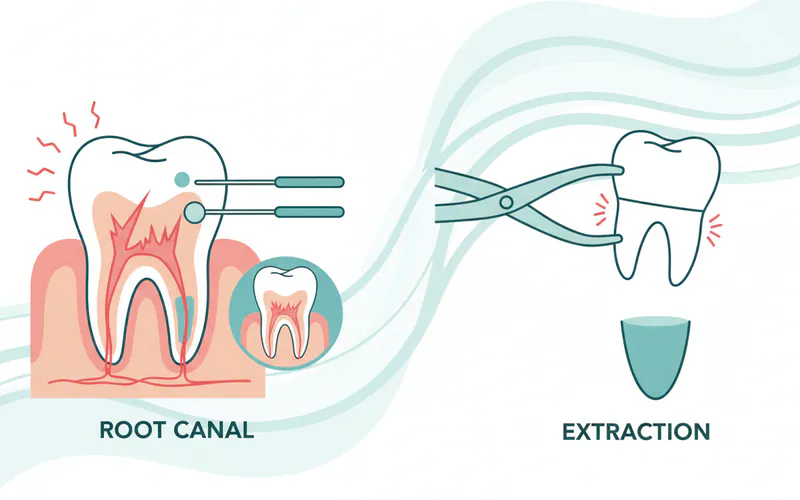
At SmilePedia.net, we believe in empowering our readers with comprehensive, medically accurate information. This guide aims to demystify these two common dental procedures, providing a detailed comparison to help you understand what each involves, their benefits, drawbacks, costs (including root canal cost with insurance considerations), and what to expect during and after treatment. We'll explore the scenarios where one is clearly preferred over the other, delve into recovery, potential complications, and even touch upon important considerations for children. By the end of this article, you will have a clear understanding of which path may be best for preserving your smile or resolving your dental pain.
Key Takeaways:
- Preservation vs. Removal: A root canal aims to save a damaged tooth, while an extraction removes it entirely. Tooth preservation is generally preferred when possible due to better long-term oral health.
- Procedure Timelines: A root canal typically involves 1-2 appointments over 1-2 weeks, followed by a crown placement. An extraction is usually a single appointment, but replacement (implant, bridge) adds time and cost.
- Cost Variation: Root canal costs range from $700-$2,000 for front teeth and $1,000-$2,500+ for molars. Extractions are typically $75-$300 for simple, $200-$600 for surgical, but replacement options (implant: $3,000-$6,000+) significantly increase long-term expenses.
- Insurance Coverage: Most dental insurance plans cover 50-80% of root canal and extraction costs after deductibles, depending on the specific procedure and plan. Always verify your benefits.
- Recovery: Root canal recovery is generally quick, with mild soreness for a few days. Extraction recovery can take 1-2 weeks, with potential for discomfort and swelling, plus risks like dry socket.
- Long-Term Implications: Preserving your natural tooth with a root canal helps maintain jawbone structure, bite alignment, and avoids the complexities and costs of tooth replacement. Extraction necessitates replacement to prevent issues like bone loss, shifting teeth, and chewing difficulties.
- Decision Factors: The choice hinges on the extent of damage, tooth restorability, patient health, and financial considerations. A consultation with an endodontist or oral surgeon is crucial.
Understanding Your Options: Root Canal vs. Extraction
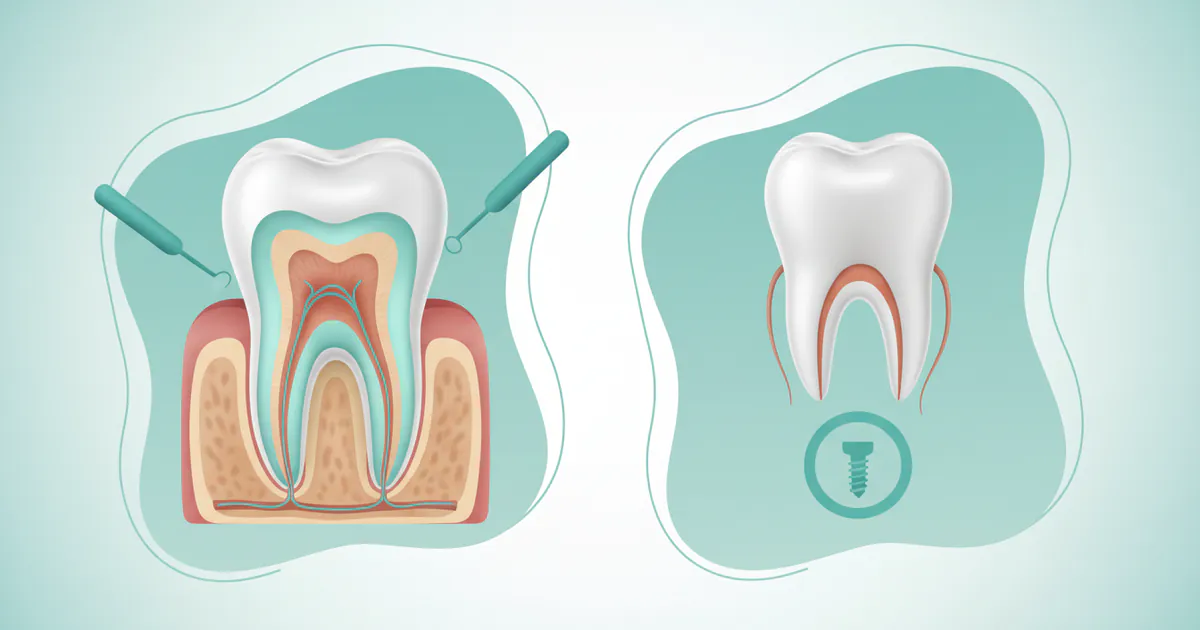
When severe tooth decay, infection, or trauma strikes, the internal soft tissue of your tooth—the dental pulp—can become irrevocably damaged. The pulp, containing nerves, blood vessels, and connective tissue, is vital for tooth development but not for its function once mature. When it becomes infected, it can lead to excruciating pain, abscess formation, and if left untreated, spread of infection and bone loss. At this critical juncture, your dentist will present two main paths: attempt to save the tooth with a root canal, or remove it entirely through extraction.
What is a Root Canal (Endodontic Treatment)?
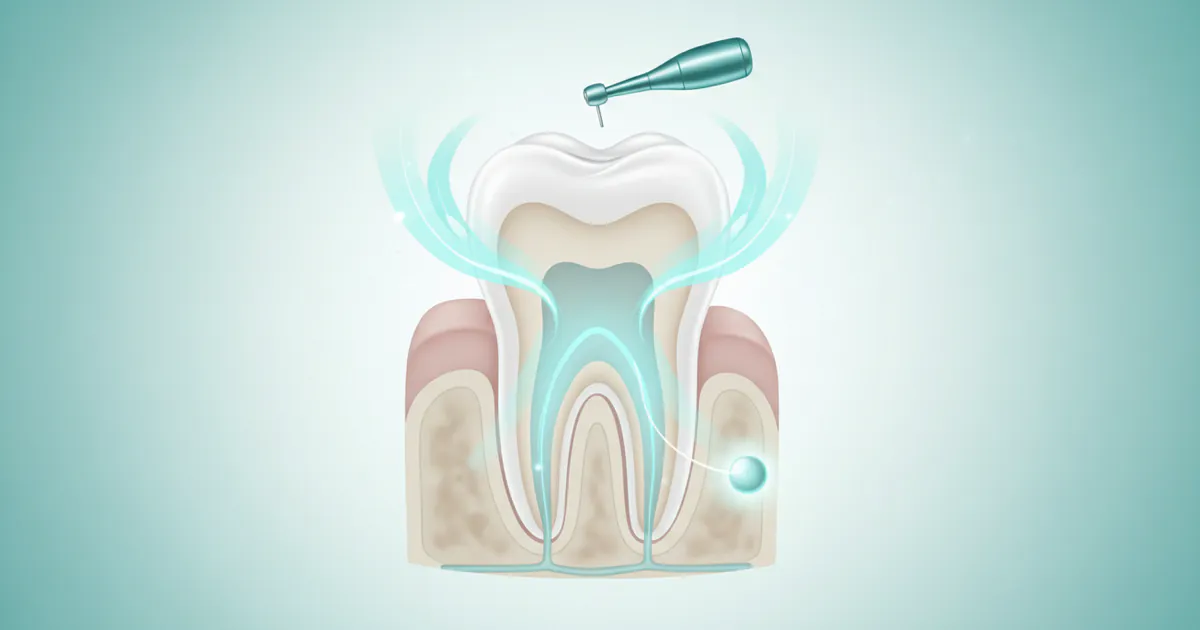
A root canal, scientifically known as endodontic treatment, is a procedure designed to save a tooth that has infected or inflamed pulp. The goal is to remove the diseased pulp, clean and disinfect the internal chamber of the tooth, and then fill and seal it to prevent further infection. This procedure allows the tooth structure to remain in your mouth, maintaining your natural bite and appearance.
Types of Root Canal Procedures
While the conventional root canal is the most common, there are variations depending on the complexity and location of the infection:
- Conventional Root Canal: This is the most frequently performed procedure, addressing infection within the root canals of a tooth.
- Endodontic Retreatment: If a tooth previously treated with a root canal becomes reinfected or fails to heal, retreatment involves reopening the tooth, removing the previous filling material, and re-cleaning the canals.
- Apicoectomy: This is a surgical procedure performed when an infection persists or redevelops at the tip of the tooth's root after a conventional root canal. It involves removing the very tip of the root and sealing the root canal from the bottom.
- Pulpotomy/Pulpectomy: Often performed on primary (baby) teeth, a pulpotomy removes only the infected pulp in the crown of the tooth, while a pulpectomy removes all pulp from the crown and roots. These aim to save the baby tooth until it's naturally ready to fall out.
Causes and Why a Root Canal is Needed
The primary reasons for needing a root canal are:
- Deep Decay: Untreated cavities can progress, allowing bacteria to reach the pulp.
- Repeated Dental Procedures: Multiple fillings or restorations on the same tooth can stress the pulp.
- Cracked or Chipped Tooth: A crack can expose the pulp to bacteria and trauma.
- Trauma to the Tooth: A severe blow to the tooth, even without visible damage, can injure the pulp.
- Gum Disease: Advanced periodontal disease can sometimes affect the pulp through pathways in the roots.
These conditions can lead to pulpitis, which is inflammation of the pulp. If reversible, the tooth can heal; if irreversible, a root canal or extraction is required.
Signs and Symptoms Indicating a Root Canal
Recognizing the signs early can prevent more severe complications:
- Persistent Tooth Pain: Pain that doesn't go away, often severe, especially when biting or chewing.
- Sensitivity to Hot and Cold: Lingering sensitivity after exposure to hot liquids, foods, or cold temperatures.
- Swelling or Tenderness in Gums: Around the affected tooth.
- Pimple-like Bump on the Gums: A "fistula" or abscess, indicating pus drainage.
- Discoloration of the Tooth: The tooth may darken due as the pulp dies.
- Pain that Wakes You Up at Night: A classic sign of irreversible pulpitis.
Step-by-Step Root Canal Process
The procedure is typically performed by an endodontist (a root canal specialist) or a general dentist.
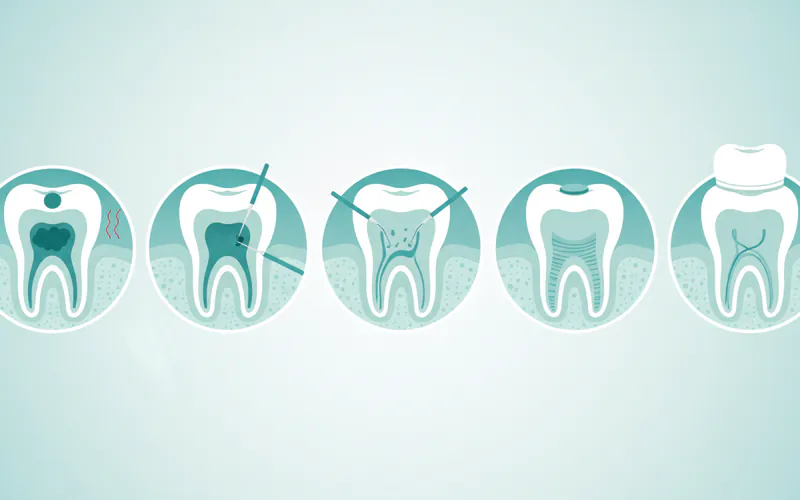
- Diagnosis and Anesthesia: The dentist will take X-rays and conduct tests to confirm the diagnosis. Local anesthesia is administered to numb the tooth and surrounding area, ensuring a pain-free experience.
- Access Opening: A small opening is made through the crown of the tooth to access the pulp chamber and root canals.
- Pulp Removal: The infected or inflamed pulp is carefully removed using specialized instruments. The root canals are meticulously cleaned and shaped.
- Disinfection: The canals are thoroughly irrigated with antiseptic solutions to eliminate bacteria.
- Filling and Sealing: Once clean, the canals are filled with a biocompatible material, typically a rubber-like compound called gutta-percha, and sealed with an adhesive cement to prevent reinfection.
- Temporary Filling: A temporary filling is placed in the access opening to protect the tooth until the permanent restoration.
- Permanent Restoration (Crown): In most cases, a crown is necessary after a root canal to protect the weakened tooth from future fractures and restore its full function. This usually occurs in a separate appointment, 1-2 weeks after the root canal.
Recovery and Aftercare for a Root Canal
After a root canal, it's normal to experience mild sensitivity or soreness for a few days, especially when chewing. Over-the-counter pain relievers like ibuprofen or acetaminophen are usually sufficient.
- Avoid Chewing: Do not chew on the treated tooth until it receives its permanent crown to prevent fracture.
- Oral Hygiene: Continue regular brushing and flossing.
- Follow-up: Attend your follow-up appointment for the permanent crown or filling.
- Pro Tip: If you experience severe pain, swelling, or an allergic reaction, contact your dentist immediately.
Risks and Complications of a Root Canal
While highly successful (over 95%), potential risks include:
- Persistent Infection: Despite thorough cleaning, some bacteria may remain, leading to reinfection.
- Instrument Fracture: A small instrument can break inside the canal, making treatment challenging.
- Perforation: A hole can inadvertently be made through the side of the tooth.
- Post-Treatment Pain: Some discomfort is normal, but severe or prolonged pain might indicate a problem.
- Tooth Fracture: Without a crown, the treated tooth is more brittle and susceptible to fracture.
What is a Tooth Extraction?
Tooth extraction is the complete removal of a tooth from its socket in the jawbone. While dentists prioritize saving natural teeth, extraction becomes necessary when a tooth is beyond repair or poses a threat to overall oral health.
Types of Tooth Extractions
Extractions are categorized by their complexity:
- Simple Extraction: Performed on visible teeth that can be removed with forceps after loosening them with an elevator tool. This is typically done under local anesthesia.
- Surgical Extraction: This procedure is necessary for teeth that are not easily accessible, such as impacted wisdom teeth, teeth broken below the gum line, or those with curved roots. It involves incisions in the gum tissue, sometimes removal of bone, and potentially sectioning the tooth into pieces. Surgical extractions may require local anesthesia with sedation or even general anesthesia.
Causes and Why an Extraction is Needed
Reasons for tooth extraction include:
- Severe Decay: When decay has destroyed too much tooth structure to be restored with a filling or crown.
- Advanced Periodontal Disease: Gum disease that has loosened the tooth significantly due to bone loss.
- Irreparable Trauma: A tooth fractured below the gum line or with extensive root damage.
- Impacted Teeth: Teeth that fail to erupt properly, like wisdom teeth, causing pain, infection, or damage to adjacent teeth.
- Orthodontic Treatment: To create space for other teeth to move into alignment.
- Overcrowding: When there are too many teeth in the mouth.
- Failed Root Canal: If a previous root canal treatment has failed and cannot be retreated successfully.
Signs and Symptoms Indicating an Extraction
The symptoms often overlap with those requiring a root canal, but generally indicate a more severe, irreparable condition:
- Severe, Unmanageable Pain: Pain that is not relieved by common pain medications.
- Significant Swelling and Infection: A large abscess, fever, and facial swelling.
- Loose Tooth: Due to severe gum disease or trauma.
- Broken Tooth: Where the fracture extends deep below the gum line, making restoration impossible.
- Chronic Infection: Repeated infections that cannot be resolved by other means.
Step-by-Step Extraction Process
The procedure varies slightly between simple and surgical extractions.
- Diagnosis and Anesthesia: X-rays are taken to assess the tooth's position, root structure, and proximity to nerves or sinuses. Local anesthesia is administered to numb the area. For surgical extractions, sedation or general anesthesia might be used.
- Loosening the Tooth: For simple extractions, an elevator tool is used to gently loosen the tooth from its socket. For surgical extractions, an incision may be made in the gum to expose the tooth and bone.
- Tooth Removal: Dental forceps are used to grasp the tooth and carefully rock it back and forth until it is fully dislodged from the socket. In surgical cases, bone may be removed, or the tooth might be sectioned into smaller pieces for easier removal.
- Cleaning and Gauze Placement: The socket is cleaned, and a sterile gauze pad is placed over the extraction site to control bleeding and encourage clot formation.
- Sutures (Surgical Extractions): In surgical extractions, sutures (stitches) may be used to close the gum tissue.
Recovery and Aftercare for an Extraction
Proper aftercare is crucial for preventing complications like dry socket.
- Bleeding Control: Bite firmly on the gauze for 30-45 minutes. Change gauze as needed. Minor oozing is normal for up to 24 hours.
- Pain Management: Take prescribed pain medication or over-the-counter pain relievers as directed.
- Swelling Reduction: Apply an ice pack to the outside of your cheek for 15-20 minutes at a time during the first 24-48 hours.
- Avoid Disturbing the Clot: Do NOT rinse vigorously, spit forcefully, use straws, smoke, or drink alcohol for at least 24-48 hours. This dislodges the blood clot, leading to a painful "dry socket."
- Soft Diet: Eat soft foods for the first few days (yogurt, soup, mashed potatoes).
- Oral Hygiene: Brush gently, avoiding the extraction site. Rinse with warm salt water gently after 24 hours to keep the area clean.
- Rest: Avoid strenuous activity for the first 24-48 hours.
- Pro Tip: If the gauze doesn't stop bleeding after an hour or two, or if you experience increasing pain or swelling, contact your dentist.
Risks and Complications of an Extraction
Common risks include:
- Dry Socket (Alveolar Osteitis): The most common complication, where the blood clot fails to form or dislodges, exposing the bone and causing intense pain. Occurs in 2-5% of extractions.
- Infection: Although rare, bacteria can enter the socket, requiring antibiotics.
- Nerve Damage: More common with wisdom teeth extractions, potentially causing numbness or tingling in the lip, tongue, or chin (usually temporary, but can be permanent).
- Damage to Adjacent Teeth or Restorations: Accidental damage during the procedure.
- Sinus Perforation: If an upper tooth's roots are close to the sinus cavity, a small opening can occur.
- Prolonged Bleeding: Especially for patients on blood thinners.
When is a Root Canal the Preferred Choice?
The American Dental Association (ADA) and endodontic specialists universally advocate for preserving natural teeth whenever possible. A root canal is the preferred choice when:
- The Tooth is Salvageable: Despite pulp infection, the structural integrity of the tooth (crown and root) is largely intact and can be restored with a crown.
- Maintaining Oral Function: Saving the tooth helps preserve your natural bite, chewing efficiency, and speech.
- Preventing Further Dental Issues: An extraction can lead to shifting teeth, bone loss in the jaw, and the need for more complex and expensive replacement procedures like implants or bridges.
- Aesthetics: Your natural tooth typically looks better and functions more naturally than any prosthetic replacement.
- Overall Health: Retaining your natural dentition is generally better for your overall oral and systemic health.
When is Extraction Necessary?
While preservation is ideal, an extraction becomes the necessary, or sometimes the only, viable option when:
- Irreparable Damage: The tooth is extensively fractured, decayed below the gum line, or has significant root resorption, making it impossible to restore.
- Severe Bone Loss: Advanced periodontal disease has destroyed too much supporting bone, making the tooth unstable and non-functional.
- Failed Root Canal Retreatment: If a tooth has undergone multiple endodontic treatments that have failed, and an apicoectomy is not an option or has also failed.
- Risk of Spreading Infection: When a severely infected tooth poses a significant risk to adjacent teeth, bone, or overall systemic health, and other treatments are unlikely to succeed.
- Impacted Teeth: Wisdom teeth causing pain, infection, or damage to neighboring teeth.
- Orthodontic Space Creation: To facilitate orthodontic treatment where overcrowding prevents proper alignment.
The Core Dilemma: Root Canal vs. Extraction
Choosing between saving a tooth and removing it is a complex decision with various factors to consider.
Success Rates and Longevity
- Root Canal: Modern root canal treatments boast a high success rate, typically over 95% when performed by an experienced endodontist or general dentist, especially when followed by a proper crown. With good oral hygiene, a root-canal-treated tooth can last a lifetime.
- Extraction: An extraction, by definition, is 100% successful in removing the problematic tooth. However, the long-term "success" then shifts to how effectively the missing tooth is replaced, if at all.
Impact on Oral Health and Future Dentistry
- Root Canal: Preserving the tooth prevents the cascade of issues associated with tooth loss:
- Bone Loss: The jawbone needs stimulation from chewing to maintain its density. A natural tooth provides this; an empty socket leads to bone resorption.
- Shifting Teeth: Adjacent teeth can drift into the gap, affecting bite alignment and potentially leading to new problems like TMJ disorders or increased risk of decay in newly exposed root surfaces.
- Opposing Tooth Over-eruption: The tooth directly opposite the removed one may "over-erupt" (grow longer) into the empty space.
- Complex Replacements: Avoiding extraction means avoiding the need for dental implants, bridges, or partial dentures, which are often more invasive, time-consuming, and costly than a root canal and crown.
- Extraction: While resolving the immediate pain, an extraction without subsequent replacement can lead to:
- Significant bone loss (up to 25% in the first year alone).
- Shifting of remaining teeth.
- Changes in facial structure over time due to bone loss.
- Challenges in chewing and speech.
- The need for expensive and often complex replacement procedures (implants, bridges) to restore function and prevent further issues.
Pain and Discomfort Levels
- Root Canal: Modern root canal procedures are largely pain-free thanks to effective local anesthesia. While some soreness can occur post-procedure, it's typically manageable with over-the-counter pain relievers. The procedure itself alleviates the severe pain caused by the infection.
- Extraction: The extraction procedure itself is also typically pain-free due to local anesthesia. However, post-operative pain can be more significant and prolonged, especially with surgical extractions. The risk of dry socket adds a layer of potential intense pain and discomfort during recovery.
Recovery Time and Post-Procedure Care
- Root Canal: Recovery from a root canal is generally quick. Most patients can return to normal activities the next day, experiencing only mild soreness for a few days. The main "aftercare" involves getting the permanent crown placed.
- Extraction: Recovery from an extraction can take 1-2 weeks, particularly for surgical extractions. It involves strict adherence to post-operative instructions to promote healing and prevent complications like dry socket. Restrictions on diet and physical activity are common.
Long-Term Outlook: Preserving vs. Replacing
The long-term outlook is the most significant differentiating factor.
- Root Canal: A successful root canal preserves your natural tooth, which is always the best choice for maintaining oral health. It integrates seamlessly into your bite, requires no special care beyond good oral hygiene, and prevents the complications of tooth loss.
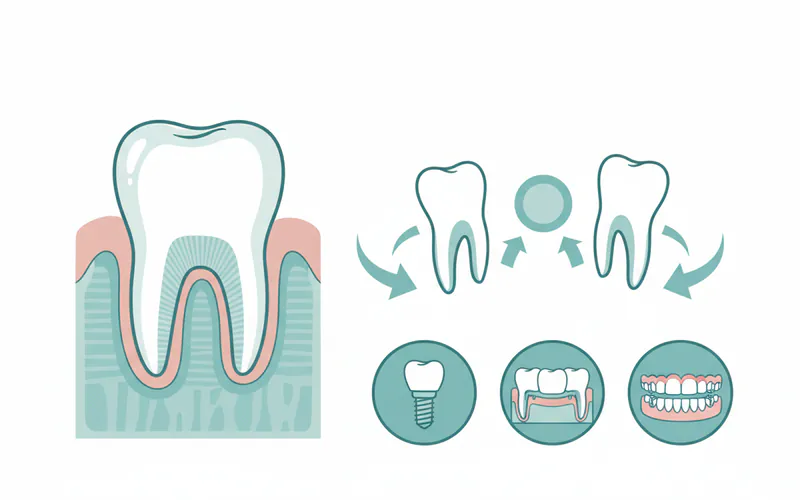
- Extraction: An extraction creates a void that, ideally, should be filled.
- Dental Implant: Considered the gold standard for tooth replacement, an implant is a titanium post surgically placed into the jawbone, acting as a new tooth root. It's strong, durable, and prevents bone loss. However, it's costly and involves surgery.
- Dental Bridge: A bridge replaces one or more missing teeth by anchoring to adjacent natural teeth (which must be crowned). It's a non-removable option but requires grinding down healthy adjacent teeth.
- Removable Partial Denture: A less expensive option, but removable and can be less stable than implants or bridges, potentially affecting speech and chewing over time.
Choosing extraction without replacement can lead to significant aesthetic and functional problems, potentially requiring more extensive and costly dental work in the future.
Comparison Table: Root Canal vs. Extraction
| Feature | Root Canal (Endodontic Treatment) | Tooth Extraction |
|---|---|---|
| Primary Goal | Preserve natural tooth, remove infection | Remove irreparable tooth |
| Procedure Time | 1-2 appointments (1-2 weeks), plus separate crown appointment | Usually 1 appointment |
| Longevity | Can last a lifetime with proper care (95%+ success rate with crown) | Permanent removal; longevity shifts to replacement option |
| Pain Level (During) | Minimal to none, with local anesthesia | Minimal to none, with local anesthesia |
| Pain Level (After) | Mild soreness for a few days, manageable with OTC pain relievers | Moderate to significant pain for 3-7 days, risk of dry socket |
| Recovery Time | 1-3 days for initial soreness; full function after crown placement | 1-2 weeks for initial healing; full recovery can be months for bone |
| Impact on Bone | Preserves jawbone density | Leads to localized jawbone loss (resorption) |
| Impact on Adjacent Teeth | None, helps maintain alignment | Can cause adjacent teeth to shift, potentially leading to new problems |
| Aesthetics | Maintains natural tooth appearance | Creates a gap; requires prosthetic replacement for aesthetics |
| Future Dentistry Needs | Crown required; routine dental check-ups | Often requires subsequent replacement (implant, bridge, denture) |
| Typical Provider | General Dentist, Endodontist (specialist) | General Dentist, Oral Surgeon (specialist) |
Cost and Insurance Considerations: Root Canal vs. Extraction
The financial aspect is a major factor in the decision-making process. Understanding the direct and indirect costs, as well as insurance coverage, is crucial.
Root Canal Cost with Insurance
The cost of a root canal varies significantly based on several factors:
- Location of the Tooth: Front teeth (incisors/canines) typically have 1-2 canals and are less expensive. Premolars (bicuspids) have 1-2 canals. Molars have 3-4+ canals and are the most complex, hence most expensive.
- Complexity: Retreatment or cases with calcified or curved canals will cost more.
- Specialist vs. General Dentist: Endodontists (specialists) often charge more than general dentists due to their advanced training and specialized equipment, but they also have higher success rates for complex cases.
- Geographic Location: Costs vary by state, city, and even zip code within the US.
Average US Cost Ranges (Without Insurance):
- Front Tooth (Incisor/Canine): $700 - $1,300
- Premolar (Bicuspid): $800 - $1,500
- Molar: $1,000 - $2,500+
- Crown (separate cost): $800 - $2,500+
Root Canal Cost with Insurance: Most dental insurance plans classify root canals as "major restorative procedures." Coverage typically ranges from 50% to 80% of the procedure cost, after your deductible has been met.
- Deductible: This is the amount you pay out-of-pocket before your insurance starts to cover costs (e.g., $50-$150 per year).
- Annual Maximum: Most plans have an annual limit on how much they will pay in a calendar year (e.g., $1,000-$2,500).
- Co-insurance: This is the percentage you are responsible for after your deductible. If your plan covers 70% of a molar root canal costing $1,500, and you've met your $100 deductible, you would pay 30% of $1,400 ($420), plus the $100 deductible, for a total of $520.
Pro Tip: Always contact your dental insurance provider directly or ask your dentist's office to submit a pre-treatment estimate to understand your specific out-of-pocket costs.
Extraction Cost with Insurance
The cost of extraction is primarily determined by its complexity:
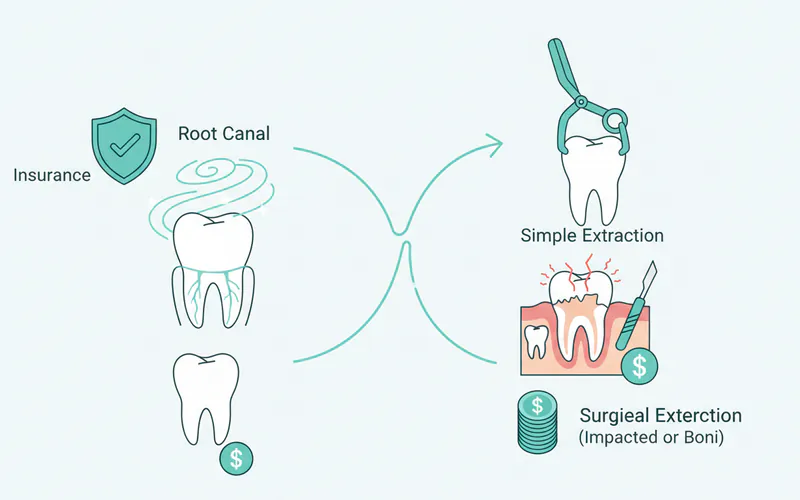
- Simple Extraction: $75 - $300
- Surgical Extraction (Impacted or Bone Removal): $200 - $600
- Wisdom Tooth Extraction (Impacted): Can range from $250 - $800 per tooth, especially if general anesthesia is used.
Extraction Cost with Insurance: Extractions are usually covered as "basic" or "major" procedures, with coverage often ranging from 50% to 80% after deductibles.
Long-Term Costs of Extraction (Replacement Options): This is where extraction can become significantly more expensive than a root canal in the long run.
- Dental Implant (Single Tooth): $3,000 - $6,000+ (includes implant, abutment, and crown). Often not fully covered by dental insurance.
- Dental Bridge (3-unit): $2,000 - $5,000+ (for replacing one tooth). Coverage varies.
- Removable Partial Denture: $600 - $2,500+. Coverage varies.
Comparison Table: Estimated Out-of-Pocket Costs (with typical insurance coverage)
| Procedure | Average Cost (No Insurance) | Typical Out-of-Pocket (with 70% insurance, after $100 deductible) |
|---|---|---|
| Root Canal | ||
| Front Tooth | $700 - $1,300 | $310 - $490 |
| Molar | $1,000 - $2,500 | $400 - $790 |
| Crown (after Root Canal) | $800 - $2,500 | $250 - $750 |
| TOTAL Root Canal + Crown | $1,500 - $3,800 | $650 - $1,540 |
| Extraction | ||
| Simple Extraction | $75 - $300 | $100 - $160 |
| Surgical Extraction | $200 - $600 | $160 - $280 |
| Replacement Options (Additional Cost) | ||
| Single Dental Implant | $3,000 - $6,000+ | $1,000 - $3,000+ (often limited coverage) |
| 3-Unit Bridge | $2,000 - $5,000+ | $700 - $1,800+ |
| Removable Partial Denture | $600 - $2,500+ | $250 - $800+ |
| TOTAL Extraction + Implant | $3,075 - $6,600+ | $1,160 - $3,280+ |
Note: These are estimates. Actual costs and coverage will vary based on your specific dental plan, provider, and geographic location.
Payment Plans and Financing Options
For patients without adequate insurance or facing high out-of-pocket costs, several options can make dental care more affordable:
- Dental Savings Plans: These are not insurance but offer discounts on dental services from participating providers.
- In-house Payment Plans: Many dental offices offer installment plans.
- Third-Party Financing: Companies like CareCredit or LendingClub offer low-interest or interest-free payment plans for healthcare expenses.
- University Dental Schools: Can offer reduced costs for treatment performed by students under supervision.
Prevention: Avoiding the Need for Root Canals and Extractions
The best treatment is prevention. By adopting diligent oral hygiene habits and regular dental visits, you can significantly reduce your risk of needing either a root canal or an extraction.
- Brush Twice Daily: Use fluoride toothpaste and a soft-bristled brush.
- Floss Daily: To remove plaque and food particles from between teeth and under the gumline.
- Regular Dental Check-ups & Cleanings: Visit your dentist every six months for professional cleaning and examination. Early detection of cavities or gum disease can prevent them from progressing.
- Balanced Diet: Limit sugary foods and drinks, which contribute to tooth decay.
- Use a Mouthguard: If you play contact sports, a custom-fitted mouthguard can prevent dental trauma.
- Avoid Chewing Hard Objects: Don't chew on ice, popcorn kernels, or non-food items, which can crack teeth.
- Address Bruxism (Teeth Grinding): If you grind your teeth, especially at night, talk to your dentist about a nightguard to protect your teeth.
Children / Pediatric Considerations
For children, the decision between saving a primary (baby) tooth or extracting it involves unique factors.
- Pulp Therapy (Pulpotomy/Pulpectomy): Instead of a full root canal, children often receive pulp therapy. A pulpotomy removes infected pulp from the crown, leaving healthy root pulp. A pulpectomy removes all pulp. Both aim to save the baby tooth until its natural exfoliation (falling out).
- Space Maintenance: Baby teeth play a crucial role as "space holders" for permanent teeth. Premature loss of a baby tooth can lead to adjacent teeth shifting, causing crowding and alignment issues for the permanent tooth trying to erupt. If a baby tooth is extracted, a space maintainer may be necessary to hold the space open.
- Root Canal in Spanish (Endodoncia Infantil): Parents seeking information about root canals for their children in Spanish can refer to "endodoncia infantil" or "pulpectomía/pulpotomía."
- Impact on Permanent Teeth: An infection in a baby tooth can potentially affect the developing permanent tooth underneath.
- Behavioral Factors: The child's ability to cooperate with the procedure is also a consideration.
Pediatric dentists prioritize saving baby teeth to ensure proper development of the permanent dentition, maintain chewing function, and facilitate speech. Extraction is usually a last resort, followed by a space maintainer if needed.
Frequently Asked Questions
What is the main difference between a root canal and an extraction?
The main difference is the outcome: a root canal preserves your natural tooth by removing infected pulp, while an extraction removes the entire tooth. Root canals aim for long-term tooth retention, whereas extractions resolve an immediate problem but create a missing tooth that often requires replacement.
Is a root canal more painful than an extraction?
No, generally not. Both procedures are performed under local anesthesia, so you shouldn't feel pain during the treatment. Post-procedure, a root canal typically results in less pain and quicker recovery compared to an extraction, which can involve more significant soreness and potential complications like dry socket.
How much does a root canal cost with insurance?
With typical dental insurance, you can expect to pay anywhere from $300 to $1,500+ out-of-pocket for a root canal and a crown, depending on the tooth's location, complexity, your specific insurance plan (deductible, co-insurance), and the annual maximum. Always get a pre-treatment estimate from your dentist.
What are the alternatives to a root canal or extraction?
If a tooth's pulp is irreversibly damaged, there are generally no alternatives to either a root canal or an extraction. However, if the damage is minor and the pulp is still healthy, a filling, crown, or onlay might be sufficient to restore the tooth. For a missing tooth after an extraction, alternatives for replacement include dental implants, bridges, or partial dentures.
Can I just leave an infected tooth untreated?
No, leaving an infected tooth untreated is highly dangerous. The infection can spread to other teeth, the jawbone, and even cause serious systemic health issues, including sepsis or a life-threatening abscess. Untreated dental infections are medical emergencies that require prompt attention.
How long does a root canal last?
A successfully root-canal-treated tooth, especially when protected by a permanent crown, can last a lifetime with proper oral hygiene and regular dental check-ups. Its longevity is comparable to that of a natural, healthy tooth.
What is "root canal in Spanish"?
The direct translation for "root canal" in Spanish is "tratamiento de conducto" or simply "endodoncia." For pediatric cases, you might hear "endodoncia infantil," "pulpotomía," or "pulpectomía."
Is it always better to save a tooth with a root canal?
Generally, yes, saving your natural tooth is almost always the preferred option. It maintains your natural bite, prevents bone loss, avoids shifting of other teeth, and eliminates the need for more complex and expensive replacement procedures like implants or bridges. However, if the tooth is too damaged to be restored, extraction becomes necessary.
What if I can't afford a root canal? Should I get an extraction instead?
Cost is a significant factor. While an extraction is initially cheaper, the long-term costs of replacing a missing tooth (implants, bridges) often far exceed the cost of a root canal and crown. Discuss payment plans, dental savings plans, or third-party financing options with your dental office before choosing extraction solely based on initial cost.
Can a root canal be done in one visit?
Sometimes, simple root canal procedures on front teeth can be completed in a single visit. However, molars, retreated teeth, or teeth with complex infections often require two or more appointments to ensure thorough cleaning and disinfection. A separate visit is almost always needed for the permanent crown.
When to See a Dentist
Don't wait for excruciating pain to seek dental care. Early intervention can often save a tooth that might otherwise require extraction.
Clear Warning Signs That Need Immediate Attention (Emergency):
- Severe, persistent toothache that interferes with daily life, especially if it wakes you at night.
- Swelling in your gums, cheek, or face, particularly if accompanied by fever.
- A "pimple" on your gums that may be draining pus.
- Pain when biting or chewing.
- Extreme sensitivity to hot or cold that lingers for a long time after the stimulus is removed.
- A knocked-out or severely fractured tooth due to trauma.
Red Flags vs. Routine Care Guidance: Any continuous pain or noticeable change in your oral health warrants a dental visit. While a dull ache might not seem urgent, it could indicate a slowly progressing infection. If you experience any of the warning signs above, contact your dentist or an emergency dental clinic immediately. Delaying treatment can lead to the spread of infection, increased pain, and a higher likelihood of needing an extraction. Routine check-ups are essential for detecting problems before they become emergencies. Your dentist is the best resource to guide you toward the most appropriate treatment for your specific situation.
Frequently Asked Questions
Medically Reviewed Content
This article was written by our dental health editorial team and reviewed for medical accuracy. Our content follows strict editorial guidelines for reliability and trustworthiness.
Medical Disclaimer
This article is for informational purposes only and does not constitute medical advice. Always consult with a qualified dental professional for diagnosis and treatment. Do not delay seeking professional advice because of something you read on this website.
Related Articles
How to Stop Throbbing Pain After Root Canal
Undergoing a root canal procedure is often a necessary step to save a tooth severely damaged by decay or infection, preventing further complications and excruciating pain. While the procedure itself is performed under local anesthesia to ensure comfort, it's common for patients to experience some le
February 22, 2026
Root Canal After Care: Complete Guide
A root canal procedure can be a tooth-saving treatment, offering relief from pain and preventing further infection. However, the success and longevity of this crucial dental intervention heavily rely on diligent root canal after care. Neglecting post-treatment instructions can lead to complicati
February 22, 2026
Can You Drive After a Root Canal
Undergoing a root canal procedure can understandably bring up a host of questions and concerns, from understanding the process itself to managing recovery. One of the most common and practical inquiries people have is: can you drive after a root canal? The answer isn't always a simple yes or no,
February 22, 2026
Is a Root Canal Painful
When facing the prospect of a root canal, one of the most common and immediate questions that comes to mind is: is a root canal painful? It's a valid concern, stemming from outdated perceptions and anecdotal stories. However, modern root canal therapy is a highly effective and generally comforta
February 22, 2026