Best Denture Adhesive: Complete Guide
Key Takeaways
- When you rely on dentures for everyday activities like eating, speaking, and smiling confidently, a secure fit isn't just a convenience – it's a necessity. Unfortunately, even the best-fitting dentures can occasionally feel loose, leading to embarrassing slips, discomfort, and even compromised oral
When you rely on dentures for everyday activities like eating, speaking, and smiling confidently, a secure fit isn't just a convenience – it's a necessity. Unfortunately, even the best-fitting dentures can occasionally feel loose, leading to embarrassing slips, discomfort, and even compromised oral health. This is where the best denture adhesive becomes an invaluable tool, providing the extra security many denture wearers need to navigate their day with peace of mind. In fact, a survey by the American College of Prosthodontists found that over 30% of denture wearers use adhesive daily to improve their denture stability and confidence.
But with a myriad of options flooding the market, how do you choose the right one for your needs? What are the different types, and are there potential risks involved? This comprehensive guide from SmilePedia.net will explore everything you need to know about denture adhesives, from understanding their purpose and application to recognizing when a loose denture signifies a more significant underlying issue. We'll delve into the various formulations, discuss their pros and cons, break down associated costs, and equip you with the knowledge to make informed decisions about your denture care and overall oral health.
Key Takeaways:
- Denture adhesive enhances the stability, comfort, and confidence of denture wearers by reducing slippage and trapping food particles.
- Types include creams/pastes (most popular), powders (good for new users), strips/wafers (pre-measured, mess-free), and liquids (strong hold, precise application).
- Correct application involves cleaning dentures and gums, applying a small amount of adhesive, and pressing firmly for several seconds.
- Costs range from $3-$15 per tube/pack for adhesives, while professional solutions like relines can cost $250-$500 per arch, and new dentures $600-$8,000+ per arch.
- Excessive reliance on adhesive, persistent looseness, or discomfort indicates a need for a dental check-up, as it could signal ill-fitting dentures or bone resorption.
- Regular professional dental check-ups (at least once a year) are crucial for monitoring denture fit and oral health, even if you use adhesive.
- Zinc-free formulas are recommended to avoid potential health risks associated with excessive zinc intake from some adhesives.
What is Denture Adhesive? An Overview
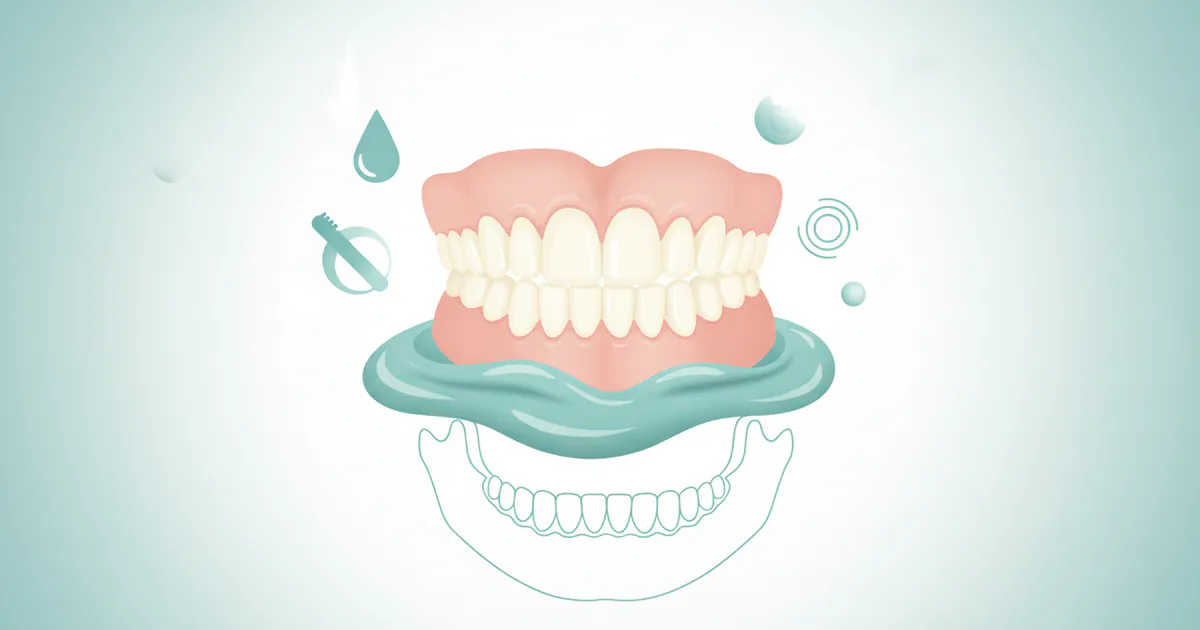
Denture adhesive, often referred to as denture glue or fixative, is a non-toxic, over-the-counter substance designed to create a stronger bond between your dentures and your gums. Its primary purpose is to hold dentures more securely in place, preventing them from slipping, rocking, or dislodging during everyday activities like eating, speaking, laughing, or coughing.
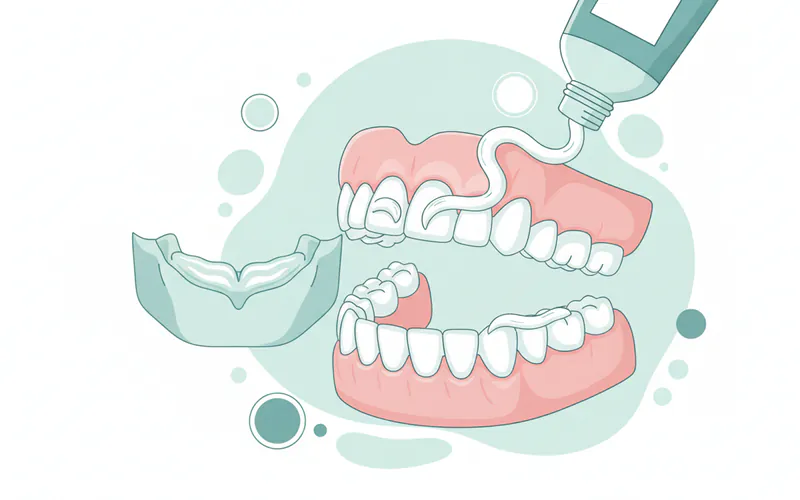
While properly fitted dentures should ideally stay in place with natural suction and muscle control, many factors can lead to a less-than-perfect fit over time. Adhesives provide that extra layer of security, significantly improving a denture wearer's comfort and confidence. They work by absorbing moisture from your mouth to swell slightly, filling tiny gaps between the denture and gum tissue, and creating a seal that enhances suction and grip. This improved fit can also help prevent food particles from getting trapped beneath the denture, which can cause irritation and bad breath.
It's important to understand that denture adhesive is a supplemental aid, not a substitute for well-fitting dentures. If your dentures are consistently loose, cause pain, or require increasing amounts of adhesive, it's a clear sign that you should consult your dentist.
Types of Denture Adhesive: Finding Your Best Fit
The market offers a variety of denture adhesive formulations, each with its own characteristics, advantages, and ideal applications. Understanding these differences can help you choose the best denture adhesive for your specific needs.
Creams and Pastes
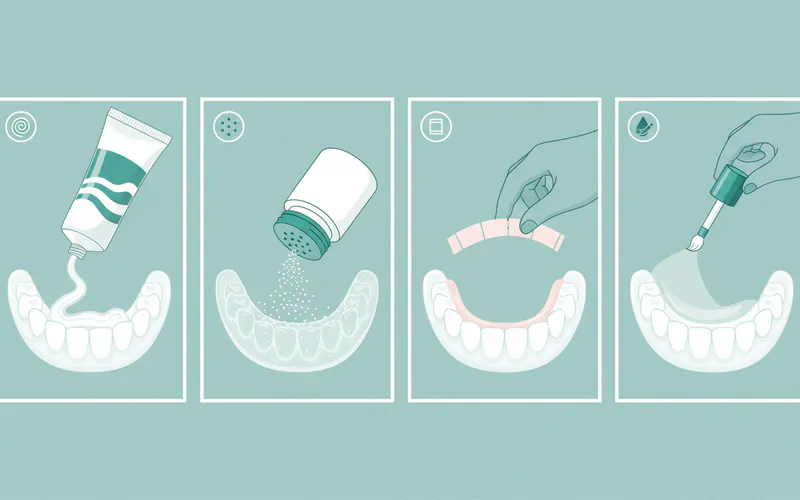
Creams and pastes are by far the most popular and widely used form of denture adhesive. They come in tubes and offer a strong, long-lasting hold.
- How they work: These adhesives create a thin, pliable layer that fills the microscopic spaces between your denture and gum tissue. They typically contain a blend of polymer gums (like carboxymethylcellulose, Gantrez S-97, or PVM/MA copolymer) that react with saliva to swell and form a secure, cushioning seal.
- Pros:
- Strong hold: Many formulations provide excellent, all-day hold.
- Cushioning effect: Can help absorb some of the pressure of chewing, reducing sore spots.
- Good for irregular ridges: Fills gaps effectively, even with some gum recession.
- Variety of formulas: Available in extra-hold, zinc-free, flavor-free, and precision-tip options.
- Cons:
- Can be messy: If too much is used, it can ooze out from under the denture.
- Requires thorough cleaning: Residue can be stubborn to remove from dentures and gums.
- Learning curve: Takes practice to apply the correct amount.
- Cost: Generally $5-$12 per tube.
Powders
Denture adhesive powders are a traditional option, often favored for their ease of use and ability to provide a strong, natural-feeling hold.
- How they work: These finely milled powders are sprinkled onto a clean, moist denture. When they come into contact with saliva, they form a gel-like layer that helps create suction and grip.
- Pros:
- Less messy than creams (for some): No oozing if applied correctly.
- Easy to apply: Simply sprinkle and moisten.
- Natural feel: Often preferred by those who dislike the thick feel of creams.
- Good for those with sufficient saliva: Relies on moisture to activate.
- Cons:
- Hold might not be as strong or long-lasting as creams for everyone.
- Requires consistent moisture: Less effective for individuals with dry mouth.
- Can clump if too much is used or if the denture isn't properly moistened.
- Cost: Typically $3-$8 per container.
Strips and Wafers
Denture adhesive strips and wafers are pre-cut, thin, flexible pieces of adhesive material designed for specific denture shapes.
- How they work: These are placed directly onto the clean, dry denture, then moistened and pressed into place. The material swells slightly with saliva, forming a seal.
- Pros:
- Mess-free application and removal: No oozing, no sticky residue on fingers.
- Consistent amount: Each strip provides a uniform layer of adhesive.
- Ideal for travel: Convenient and portable.
- Often flavor-free.
- Cons:
- May not fit all denture shapes perfectly: Can require trimming.
- Hold might be less powerful than creams for some individuals.
- Can be more expensive per application than creams or powders.
- Cost: Ranges from $8-$15 per pack (typically 30-60 strips).
Liquids and Gels
Less common but gaining popularity, liquid and gel adhesives offer a different application method.
- How they work: Applied with a small brush or nozzle, these liquid-to-gel formulas spread evenly over the denture surface, hardening slightly to create a strong, durable bond.
- Pros:
- Precision application: Allows for targeted placement.
- Very strong hold: Often marketed for maximum hold and duration.
- Thin layer: Can feel less bulky than creams.
- Cons:
- Can be more difficult to find in stores.
- Requires very careful application to avoid over-applying.
- May be harder to remove if it sets too firmly.
- Cost: Generally $10-$20 per bottle.
Why Do Dentures Become Loose? Understanding the Causes
While the best denture adhesive can offer a temporary solution, it's crucial to understand why your dentures might feel loose in the first place. Denture looseness is often a sign of underlying changes in your oral anatomy that warrant a dental evaluation.
Natural Bone Resorption
The most common reason for loose dentures is alveolar bone resorption. When natural teeth are lost, the bone that once supported them no longer receives the stimulation it needs. Over time, this jawbone gradually shrinks and changes shape. This process is continuous and inevitable for denture wearers.
- Impact: As the bone shrinks, the contours of your gums change, and your dentures, which were custom-made to fit the original shape, no longer conform precisely. This creates gaps, reduces suction, and leads to instability.
Improper Initial Fit
Sometimes, dentures may not have been perfectly fitted from the outset.
- Impact: Inadequate impressions, rushed fabrication, or a poor design can result in dentures that never achieved optimal stability, even when new.
Wear and Tear of Dentures
Just like natural teeth, dentures can wear down over time.
- Impact: The acrylic material can become abraded, the teeth can flatten, and the overall structure can change, leading to altered occlusion (how your teeth meet) and reduced stability. Cracks or damage can also affect fit.
Changes in Oral Tissues
Soft tissues in your mouth can also change.
- Impact: Weight fluctuations, certain medications (especially those causing dry mouth), and systemic diseases can all alter the shape and resilience of your gums, impacting denture fit.
Dry Mouth (Xerostomia)
Saliva plays a crucial role in the natural suction and lubrication of dentures.
- Impact: Medications, radiation therapy, and certain health conditions can lead to dry mouth, significantly reducing the natural suction that helps hold dentures in place. This is where adhesives, which activate with moisture, can become less effective or require specific formulations.
Insufficient Muscle Control
Some individuals, especially those new to dentures or with certain neuromuscular conditions, may struggle to develop the muscle control in their cheeks and tongue necessary to keep dentures stable.
Recognizing these causes is the first step toward finding a lasting solution, which may extend beyond just applying more adhesive.
Signs and Symptoms of Ill-Fitting Dentures
When your dentures no longer fit properly, your body often sends clear signals. Recognizing these signs and symptoms is important, as persistent issues can lead to more serious complications.
- Increased Reliance on Denture Adhesive: If you find yourself using more and more adhesive, or needing to apply it multiple times a day, your dentures are likely ill-fitting.
- Denture Slippage or Movement: The most obvious sign is when your dentures slide, lift, or click when you talk, eat, or laugh. This is uncomfortable and can be embarrassing.
- Sore Spots and Irritation: Poorly fitting dentures rub against the gums, creating pressure points that can lead to painful sores, ulcers, and inflammation. These can make eating very difficult.
- Difficulty Chewing: If food gets trapped under your dentures, or if they shift while you're eating, chewing efficiency decreases, and you might start avoiding certain foods.
- Speech Changes: Loose dentures can affect your ability to articulate words clearly, leading to lisping or mumbling.
- Bad Breath (Halitosis): Food particles trapped under loose dentures, combined with poor hygiene, can decompose and lead to persistent bad breath.
- Clicking Noises: A noticeable clicking or clacking sound when you speak or chew is a strong indicator that your dentures are moving too much.
- Facial Appearance Changes: Over time, significant bone resorption caused by ill-fitting dentures can lead to a sunken facial appearance, making your chin appear closer to your nose.
If you experience any of these symptoms, it's essential to schedule an appointment with your dentist. They can assess the fit of your dentures and recommend appropriate solutions.
Solutions for Loose Dentures: Beyond Adhesives
While denture adhesives offer a quick fix for minor looseness, they are often a temporary measure. For persistent or significant fit issues, your dentist can recommend more permanent and effective solutions. Understanding these options is key to maintaining optimal oral health and comfort.
1. Denture Adhesives (Supplemental Aid)
As discussed, adhesives provide a temporary bond between your dentures and gums, improving stability and reducing food entrapment. They are suitable for minor adjustments in fit or for enhancing confidence in social situations.
- Pros: Inexpensive, readily available, easy to use, immediate effect.
- Cons: Temporary, requires daily application, can be messy, doesn't address the underlying problem of ill-fitting dentures, potential for overuse and associated risks (e.g., zinc toxicity).
- Cost: $3-$15 per tube/pack.
2. Denture Reline
A reline is a procedure where your dentist reshapes the fitting surface of your existing denture to conform more closely to the current contours of your gums. This can significantly improve retention and comfort.
- Types:
- Soft Reline: A softer, pliable material (like silicone or rubber) is applied to the denture base. It's often used for patients with tender gums or those who have recently had extractions, as it provides more cushioning. It typically lasts for 6-12 months.
- Hard Reline: A durable, acrylic-based material is used. This offers a more permanent solution and is usually done in a dental lab. It can last for 1-2 years.
- Pros: Less expensive and quicker than new dentures, improves fit and comfort, extends the life of existing dentures.
- Cons: Doesn't address problems with worn or damaged denture teeth, temporary (requires periodic replacement, especially soft relines).
- Cost:
- Soft Reline: $250-$450 per arch.
- Hard Reline: $350-$500 per arch.
- Timelines: Soft relines can often be done chairside in one appointment (1-2 hours). Hard relines usually require impressions and a lab, so 2-3 appointments over several days.
3. Denture Rebase
A rebase involves replacing the entire acrylic base of the denture while keeping the existing denture teeth. This is done when the denture base is cracked, stained, or significantly worn, but the teeth are still in good condition.
- Pros: More comprehensive than a reline, addresses significant base damage, retains familiar denture teeth.
- Cons: More involved and costly than a reline, still doesn't address issues with bone resorption if the original denture shape was compromised.
- Cost: $400-$800 per arch.
- Timelines: Similar to hard relines, typically 2-3 appointments over a week as it involves lab work.
4. New Dentures
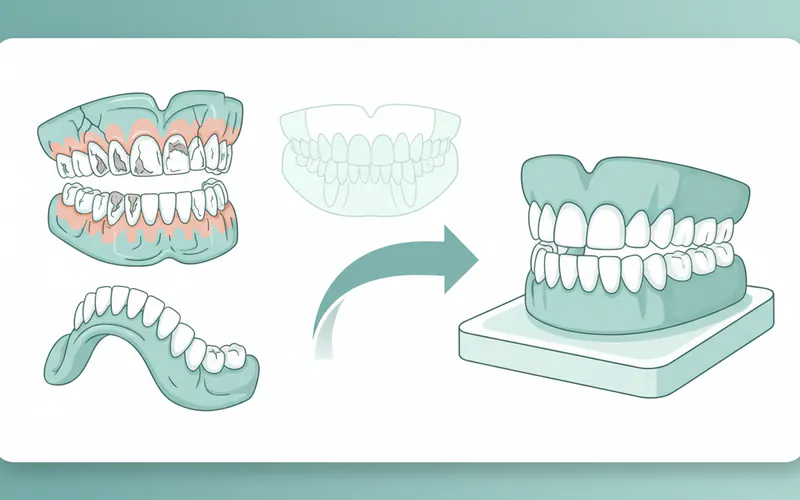
If your existing dentures are severely ill-fitting, old, damaged, or your oral anatomy has changed significantly, new dentures may be the best long-term solution. Modern dentures are highly customized for a comfortable and aesthetic fit.
- Pros: Optimal fit and aesthetics, improved function, a fresh start.
- Cons: Most expensive non-surgical option, requires several appointments and a longer fabrication time.
- Cost:
- Conventional/Economy Dentures: $600-$1,500 per arch.
- Mid-range/Custom Dentures: $1,500-$4,000 per arch.
- Premium/High-Quality Dentures: $4,000-$8,000+ per arch.
- Timelines: Can take several weeks to months, involving multiple impressions, try-in appointments, and adjustments.
5. Dental Implants for Denture Stabilization (Overdentures)
For the most stable and long-lasting solution, dental implants can be used to anchor dentures. This involves surgically placing a few titanium implants into the jawbone, to which special attachments on the denture can then snap or clip. These are known as implant-supported overdentures.
- Pros: Superior stability and retention, eliminates the need for adhesive, significantly improves chewing ability, prevents further bone loss, enhances confidence, feels more like natural teeth.
- Cons: Surgical procedure, most expensive option, longer treatment time (due to healing), not suitable for everyone (requires adequate bone density).
- Cost:
- Implant-supported overdenture (2-4 implants per arch): $6,000-$20,000+ per arch, depending on the number of implants and type of denture.
- This is often the best long-term solution for those seeking the ultimate stability and is a worthwhile investment for many.
- Timelines: Can take 4-9 months, including implant placement surgery, healing time (osseointegration), and denture fabrication.
Pro Tip: Always consult your dentist if you notice significant changes in your denture fit or if you're using increasing amounts of adhesive. They can accurately diagnose the problem and recommend the most appropriate "treatment" or solution for your specific situation. Don't self-diagnose and rely solely on adhesives if there's an underlying issue.
Comparison Table: Solutions for Loose Dentures
| Solution | Primary Purpose | Estimated US Cost (per arch) | Pros | Cons | Longevity |
|---|---|---|---|---|---|
| Denture Adhesive | Temporary hold, minor looseness | $3 - $15 | Inexpensive, immediate, easy to use | Temporary, messy, doesn't fix underlying issue | Daily |
| Soft Reline | Improve fit, comfort for tender gums | $250 - $450 | Quick, cushioning, relatively affordable | Temporary (6-12 months), doesn't fix severely worn dentures | 6-12 months |
| Hard Reline | Improve fit, restore stability | $350 - $500 | Durable, effective for minor bone changes, extends denture life | Doesn't fix severely worn dentures or teeth, requires lab time | 1-2 years |
| Denture Rebase | Replace damaged/worn denture base, keep teeth | $400 - $800 | Reuses existing teeth, comprehensive base replacement | More involved than reline, doesn't address major bone changes | 5-8 years (of base) |
| New Dentures | Complete replacement for severely ill-fitting/old | $600 - $8,000+ | Optimal fit, aesthetics, function; fresh start | Most expensive non-surgical, longer fabrication time | 5-10 years |
| Implant-Supported Overdentures | Maximum stability, bone preservation, comfort | $6,000 - $20,000+ | Superior stability, no adhesive, bone preservation, natural feel | Surgical, most expensive, longer treatment, requires sufficient bone | 10-20+ years (implants) |
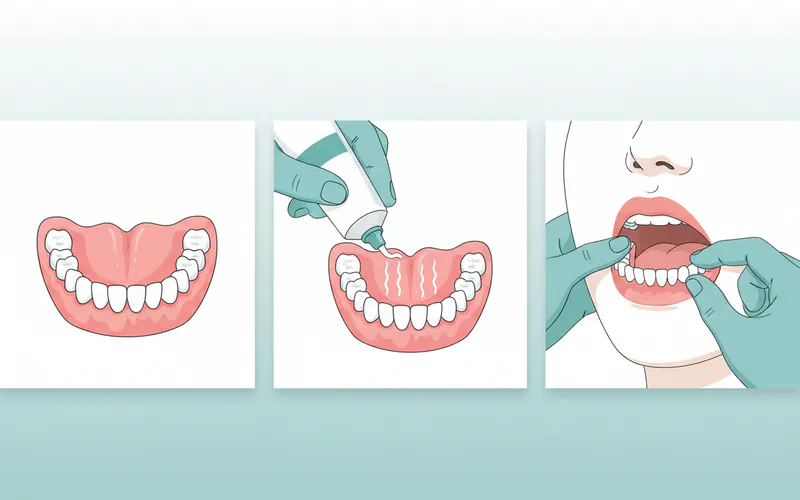
Step-by-Step Process for Applying Denture Adhesive
Proper application is crucial for maximizing the effectiveness of any denture adhesive and minimizing mess. Follow these steps for the best denture adhesive experience:
1. Clean Your Dentures and Mouth
- Remove and clean your dentures: Always remove your dentures and clean them thoroughly first. Use a denture brush and a non-abrasive denture cleanser (not regular toothpaste) to remove food particles, plaque, and any old adhesive residue. Rinse them well under cool water.
- Clean your mouth: Gently brush your gums, tongue, and the roof of your mouth with a soft-bristled toothbrush. This stimulates circulation and removes any remaining food debris or bacteria. Rinse your mouth thoroughly with water.
2. Dry or Moisten Your Dentures (Depending on Adhesive Type)
- For creams/pastes and strips/wafers: For most cream adhesives and all strips/wafers, your dentures should be dry or slightly damp before application to ensure the adhesive sticks properly. Excess moisture can dilute the adhesive.
- For powders: Your dentures should be moist for powders. Sprinkling powder on a wet surface helps activate it.
- Pro Tip: Read the specific instructions on your chosen adhesive packaging, as some brands may have slightly different recommendations.
3. Apply the Adhesive
- Creams/Pastes:
- Apply a few small dots or thin strips of adhesive to the fitting surface of your dentures (the part that touches your gums).
- DO NOT apply too close to the edge of the denture to prevent oozing.
- Start with a small amount; you can always add more if needed. Over-application is the most common cause of mess and reduced effectiveness.
- Powders:
- Lightly sprinkle a thin, even layer of powder over the entire fitting surface of your moist dentures.
- Tap off any excess powder. The goal is a fine, uniform coating, not a mound.
- Strips/Wafers:
- Peel off the protective backing (if applicable).
- Center the strip or wafer onto the fitting surface of your clean, dry denture.
- Press it firmly into place with your fingers, smoothing out any wrinkles or air bubbles. If necessary, trim any excess material that extends beyond the denture's edge.
4. Insert Your Dentures
- Place the dentures carefully into your mouth, aligning them correctly with your gums.
- Press firmly and hold them in place for 5-10 seconds. This allows the adhesive to bond effectively.
- Bite down gently for a few seconds to further set the adhesive and ensure a good fit.
5. Remove Excess Adhesive (If Needed)
- If any adhesive oozes out from under your dentures, wipe it away gently with a soft tissue or a clean, damp cloth. Rinse your mouth again if desired.
Removing Denture Adhesive
At the end of the day (or as recommended by your dentist), you'll need to remove your dentures and clean off the adhesive.
- Removal: Swish your mouth with warm water or a mouthwash. Gently rock your dentures back and forth to break the seal. For lower dentures, try pulling them upwards and outwards; for upper dentures, pull downwards and outwards.
- Cleaning Dentures: Use a denture brush and specialized denture cleanser to scrub off all remaining adhesive residue. Some stubborn residue might require soaking in a denture cleansing solution before brushing.
- Cleaning Gums: Gently brush your gums with a soft toothbrush or wipe them with a clean, damp cloth to remove any adhesive residue and stimulate circulation.
Pro Tip: Never sleep with your dentures in place unless specifically instructed by your dentist. Your gums need a break to rest and recover, and sleeping with dentures can harbor bacteria and lead to gum irritation. Always remove, clean, and soak your dentures overnight.
Cost and Insurance Considerations for Denture Adhesives and Related Treatments
Understanding the financial aspects of denture care, from daily adhesives to more extensive treatments, is crucial for planning your oral health budget.
Cost of Denture Adhesives
Denture adhesives are relatively inexpensive, making them an accessible daily aid for many.
- Creams/Pastes: Typically range from $5 to $12 per tube for standard sizes (e.g., 2.2-2.4 oz). Specialty formulas (extra hold, zinc-free) might be slightly higher.
- Powders: Generally $3 to $8 per container.
- Strips/Wafers: $8 to $15 per pack (containing 30-60 strips).
- Liquids/Gels: $10 to $20 per bottle.
These products are available at most drugstores, supermarkets, and online retailers across the US.
Cost of Professional Denture Solutions
When you need more than just adhesive, the costs for professional dental services can vary significantly based on the type of procedure, the materials used, your geographic location, and the dentist's fees. Here are average US ranges:
- Denture Relines:
- Soft Reline (Chairside): $250 - $450 per arch.
- Hard Reline (Lab Processed): $350 - $500 per arch.
- Denture Rebase: $400 - $800 per arch.
- New Dentures:
- Economy/Conventional: $600 - $1,500 per arch (basic materials, limited customization).
- Custom/Mid-range: $1,500 - $4,000 per arch (better materials, more customization, improved fit).
- Premium/High-Quality: $4,000 - $8,000+ per arch (highest quality materials, extensive customization, natural aesthetics, durability).
- Implant-Supported Overdentures: This is a more complex treatment involving both surgery and prosthetics.
- 2-4 implants + overdenture per arch: $6,000 - $20,000+ per arch. This cost includes the implants, surgical placement, abutments, and the specially designed denture.
Insurance Coverage
- Denture Adhesives: These are almost never covered by dental insurance or medical insurance, as they are considered an over-the-counter consumable. You will pay for these out-of-pocket.
- Denture Relines, Rebases, and New Dentures:
- Most dental insurance plans in the US offer some coverage for prosthodontic services, often under "major restorative" benefits.
- Coverage typically ranges from 20% to 50%, depending on your plan.
- There may be waiting periods (e.g., 6-12 months for major services), annual maximums (e.g., $1,000-$2,000), and deductibles (e.g., $50-$100) that you need to meet before coverage kicks in.
- It's essential to check with your specific insurance provider regarding their coverage for "fixed prosthodontics" or "removable prosthodontics."
- Implant-Supported Overdentures:
- Coverage for dental implants can be complex. Some dental insurance plans are starting to offer partial coverage for the surgical component or the restorative component, but often not both completely.
- Medical insurance may cover the surgical placement of implants if it's deemed medically necessary due to trauma or a severe underlying condition, but this is rare for typical denture stabilization.
- Often, patients pay a significant portion of implant costs out-of-pocket.
Pro Tip: When considering more expensive treatments like new dentures or implants, always request a detailed treatment plan and a breakdown of costs from your dentist. Your dental office can often help you submit a "pre-determination" or "pre-authorization" to your insurance company to understand your exact out-of-pocket expenses before beginning treatment. Don't hesitate to ask about various payment options.
Recovery and Aftercare: Maintaining Your Dentures and Oral Health
Proper recovery and diligent aftercare are essential, whether you're adjusting to new dentures, using adhesives daily, or have undergone a reline or rebase. This ensures the longevity of your dentures, the health of your gums, and your overall well-being.
Daily Denture Care
- Clean Daily: Remove your dentures every night and clean them thoroughly. Brush them with a soft-bristled denture brush and a specialized non-abrasive denture cleanser. This removes plaque, food particles, and adhesive residue. Regular toothpaste is too abrasive and can scratch dentures, creating microscopic channels where bacteria can thrive.
- Soak Overnight: Place your dentures in a soaking solution specifically designed for dentures (e.g., effervescent tablets) or plain water. This keeps them moist, prevents warping, and aids in cleaning. Never use hot water, as it can warp acrylic.
- Brush Your Gums and Tongue: Even without teeth, it's vital to brush your gums, tongue, and the roof of your mouth daily with a soft toothbrush. This removes bacteria, stimulates blood circulation, and helps prevent gum irritation.
- Rinse After Meals: Briefly remove and rinse your dentures after meals to dislodge food particles. Rinse your mouth with water as well.
Aftercare for Adhesives Users
- Remove All Residue: Ensure all adhesive residue is removed from your dentures and gums daily. Leftover adhesive can harbor bacteria, cause irritation, and affect the fit for the next application.
- Use Sparingly: Only use the amount of adhesive necessary to achieve a secure hold. Over-applying doesn't necessarily mean a stronger hold and can lead to mess and potential health risks if zinc-containing adhesives are used excessively.
- Monitor Fit: If you consistently need increasing amounts of adhesive, or if your dentures are still loose after application, it's a sign your dentures need professional attention.
Aftercare for Relines/Rebases
- Initial Soreness: It's normal to experience some mild soreness or tenderness for a few days after a reline or rebase as your gums adjust to the new fit. Over-the-counter pain relievers can help.
- Follow Instructions: Adhere strictly to your dentist's instructions regarding when and how to wear your newly relined/rebased dentures, and any specific cleaning protocols.
- Return for Adjustments: If sore spots persist for more than a few days, or if the fit doesn't feel right, schedule an adjustment appointment with your dentist. Minor adjustments are often needed to perfect the fit.
General Oral Health and Check-ups
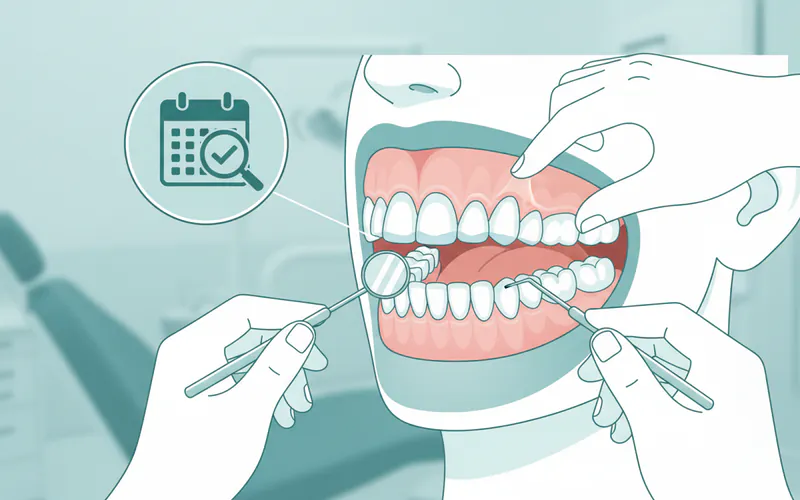
- Regular Dental Check-ups: Even with full dentures, regular dental check-ups are paramount. The American Dental Association (ADA) recommends annual check-ups for denture wearers. Your dentist will:
- Examine your gums and other oral tissues for signs of inflammation, infection, or oral cancer.
- Check the fit and condition of your dentures.
- Assess bone health and identify any significant bone resorption.
- Provide guidance on denture care and cleaning.
- Healthy Diet: Maintain a balanced diet. A lack of essential nutrients can affect the health of your oral tissues and bones.
- Stay Hydrated: Drink plenty of water to maintain saliva production, which is important for oral health and natural denture retention.
Prevention: Minimizing the Need for Denture Adhesives
While some need for denture adhesive is common, especially as oral anatomy naturally changes, certain practices can minimize your reliance on it and extend the life of your dentures.
- Regular Dental Check-ups (Annually): This is the most critical preventative measure. Your dentist can detect early signs of bone resorption, gum changes, or denture wear that could lead to looseness. Proactive relines or adjustments can prevent the need for excessive adhesive.
- Maintain Excellent Oral Hygiene:
- Clean Dentures Daily: As mentioned in aftercare, proper cleaning prevents plaque and tartar buildup, which can alter the denture's fit and irritate gums.
- Clean Your Mouth Daily: Brushing your gums, tongue, and palate maintains tissue health, stimulates circulation, and removes bacteria.
- Proper Denture Handling and Storage:
- Handle dentures carefully to avoid dropping and breaking them.
- Always store them in water or a denture soaking solution when not in your mouth to prevent warping and drying out.
- Address Dry Mouth (Xerostomia): If you suffer from dry mouth, discuss it with your dentist or physician. Strategies include:
- Drinking more water.
- Using over-the-counter saliva substitutes.
- Chewing sugar-free gum or sucking on sugar-free candies to stimulate saliva flow.
- Reviewing medications with your doctor to see if any are contributing to dry mouth.
- Avoid Abusive Habits:
- Do not use excessive adhesive: This can hide problems and lead to complications.
- Do not attempt DIY denture repairs: Using super glue or other household adhesives can damage your dentures, be toxic, and cause irreparable harm. Always see your dentist for repairs.
- Maintain a Healthy Lifestyle: A balanced diet rich in calcium and vitamin D supports bone health. Avoiding smoking and excessive alcohol consumption improves overall oral tissue health.
By proactively caring for your oral health and your dentures, you can significantly reduce the frequency and amount of denture adhesive you need, leading to greater comfort and confidence.
Risks and Complications Associated with Denture Adhesives
While generally safe when used correctly, denture adhesives do carry some potential risks and complications, especially with misuse or overuse.
1. Zinc Toxicity
Some older or less common denture adhesives contain zinc. While zinc is an essential trace element, excessive intake can lead to neurological problems, including:
- Nerve damage: Numbness, tingling, weakness in the arms and legs (neuropathy).
- Difficulty walking.
- Anemia and copper deficiency.
Cause: This typically occurs when individuals use large amounts of zinc-containing adhesive over extended periods due to ill-fitting dentures. The zinc can be absorbed through the oral mucosa.
Prevention: Choose zinc-free denture adhesives. Most major brands now offer zinc-free formulations, and the ADA recommends avoiding zinc-containing adhesives. If your dentures are consistently loose, seek professional dental care rather than relying on excessive adhesive.
2. Allergic Reactions or Irritation
Although rare, some individuals may experience an allergic reaction to certain ingredients in denture adhesives, leading to:
- Redness, swelling, or itching of the gums and oral tissues.
- Burning sensation.
- Sore spots or ulcers.
Cause: Sensitivity to specific polymers, flavoring agents, or preservatives in the adhesive.
Prevention: If you suspect an allergic reaction, discontinue use immediately and consult your dentist. Try a different brand or a "hypoallergenic" or flavor-free adhesive.
3. Poor Oral Hygiene and Infections
Over-reliance on adhesive can sometimes mask poor hygiene practices.
- Fungal infections (e.g., candidiasis or "thrush"): If dentures are not cleaned thoroughly daily, or if adhesive residue is left on dentures and gums, it creates an ideal environment for yeast and bacteria to proliferate.
- Gum inflammation (Gingivitis): Trapped food particles and bacteria under ill-fitting dentures, compounded by adhesive residue, can irritate gum tissues.
Prevention: Always remove and thoroughly clean your dentures and oral tissues daily, removing all adhesive residue. Never sleep with dentures unless advised by a dentist.
4. Masking of Underlying Problems
The most significant risk is that consistent use of denture adhesive can mask the underlying problem of ill-fitting dentures.
- Delayed Diagnosis: A loose denture indicates that your jawbone is changing or your denture is worn. Relying solely on adhesive delays necessary professional intervention like a reline, rebase, or new dentures.
- Accelerated Bone Loss: Continuously ill-fitting dentures can unevenly distribute chewing forces, potentially accelerating bone resorption in certain areas of the jaw.
- Soft Tissue Damage: Chronic irritation from a poorly fitting denture can lead to gum inflammation, hyperplasia (overgrowth of tissue), and chronic sore spots.
Prevention: Use denture adhesive as a temporary aid or for minor stabilization, not as a permanent fix for ill-fitting dentures. Consult your dentist if your dentures frequently feel loose, cause discomfort, or require increasing amounts of adhesive.
Frequently Asked Questions
How often should I apply denture adhesive?
Most denture adhesives are designed for once-daily application, providing hold for up to 12-16 hours. However, individual needs vary based on denture fit, saliva production, and activity levels. If you find yourself needing to reapply multiple times a day, it's a strong indicator that your dentures need to be checked by a dentist.
How much denture adhesive should I use?
Start with a small amount – typically 2-3 pea-sized dots or short, thin strips on the fitting surface of your denture. Over-application doesn't necessarily mean a stronger hold and can lead to oozing, mess, and difficulty cleaning. Refer to the product's instructions, but always err on the side of using less initially.
Can I sleep with denture adhesive on?
It is generally recommended to remove your dentures and thoroughly clean them (and your mouth) every night. Your gums need to rest and recover from the pressure of the dentures, and sleeping with adhesive can trap bacteria and irritate the tissues, increasing the risk of infection and inflammation.
Is zinc-free denture adhesive better?
Yes, absolutely. Many dental professionals recommend using zinc-free denture adhesives. While zinc is naturally present in some foods, excessive intake through denture adhesives (especially with overuse of zinc-containing formulas) has been linked to severe neurological problems and nerve damage. Most major brands now offer zinc-free options.
What are the alternatives to denture adhesive for loose dentures?
For chronically loose dentures, alternatives include professional relines (resurfacing the denture to fit your current gums), rebases (replacing the entire denture base), or fabricating new dentures. The most stable and long-lasting solution is often implant-supported overdentures, where dental implants are used to anchor the denture securely.
Does denture adhesive hurt to remove?
No, removing denture adhesive should not be painful. If you experience discomfort, you might be pulling too hard, or your gums could be irritated from ill-fitting dentures. Swishing with warm water often helps loosen the adhesive seal, making removal easier. Always remove gently.
How do I remove stubborn denture adhesive residue from my gums?
Gently brush your gums, tongue, and the roof of your mouth with a soft-bristled toothbrush and warm water after removing your dentures. You can also use a clean, damp washcloth to wipe away residue. Avoid harsh scrubbing, which can irritate your sensitive oral tissues.
Can denture adhesive fix a broken denture?
Absolutely not. Denture adhesive is designed only to help secure dentures, not repair them. Attempting to fix a broken denture with adhesive (or household glues) is dangerous. It can introduce toxic chemicals, damage the denture further, and create sharp edges that can injure your mouth. Always take a broken denture to your dentist for proper repair or replacement.
Can I use super glue instead of denture adhesive?
NEVER use super glue or any household adhesive to fix or secure your dentures. These products are not designed for oral use, are toxic if ingested, can cause severe irritation or chemical burns to your oral tissues, and can permanently damage your dentures beyond repair. Always use only FDA-approved denture adhesives specifically formulated for oral use.
How long do dentures typically last before needing replacement?
With proper care, a well-made set of dentures typically lasts 5 to 10 years. However, due to natural changes in your jawbone (resorption), many individuals need a reline every 1-2 years and a full replacement closer to the 7-year mark to maintain an optimal fit and comfort.
When to See a Dentist
While denture adhesive can be a helpful tool, it's critical to know when its use signifies a more serious underlying issue that requires professional attention. Don't let excessive adhesive mask problems that could impact your long-term oral health.
You should schedule an appointment with your dentist if you experience any of the following:
- Increased Reliance on Adhesive: If you find yourself using more adhesive than usual, needing to reapply it multiple times a day, or your dentures consistently feel loose even with adhesive, it's a red flag. Your dentures likely no longer fit properly.
- Persistent Sore Spots or Pain: Continual irritation, redness, or painful sores on your gums are a clear sign that your dentures are ill-fitting and causing trauma to your tissues. This needs immediate attention to prevent chronic inflammation or infection.
- Difficulty Eating or Speaking: If your dentures are slipping, clicking, or making it hard to chew or articulate words clearly, their function is compromised, and they need adjustment.
- Bad Breath: Persistent bad breath that doesn't improve with regular cleaning could indicate trapped food particles under ill-fitting dentures or an oral infection.
- Changes in Facial Appearance: Over time, significant bone resorption due to ill-fitting dentures can lead to changes in your facial contours, such as a sunken appearance or the chin appearing closer to the nose.
- Damaged or Broken Dentures: Any cracks, chips, or fractures in your dentures require professional repair or replacement. Never attempt DIY fixes.
- Suspected Allergic Reaction: If you experience redness, swelling, burning, or itching in your mouth after using adhesive, discontinue use and consult your dentist immediately.
- Signs of Zinc Toxicity: If you use zinc-containing adhesives and experience symptoms like numbness, tingling, weakness, or difficulty walking, stop using the adhesive and seek urgent medical and dental attention.
Emergency vs. Routine Care:
- Emergency: Severe pain, uncontrolled bleeding, a completely broken denture that renders you unable to eat or speak (if you have no natural teeth remaining), or signs of a serious oral infection (fever, swelling).
- Scheduled Appointment: Increased adhesive use, mild sore spots that don't resolve, minor looseness, or any of the signs listed above that are not immediately life-threatening.
Remember, your dentist is your best resource for maintaining healthy oral tissues and well-fitting dentures. Regular check-ups, typically once a year as recommended by the ADA, are essential even for denture wearers to monitor your oral health and the condition of your prosthetics.
Frequently Asked Questions
Medically Reviewed Content
This article was written by our dental health editorial team and reviewed for medical accuracy. Our content follows strict editorial guidelines for reliability and trustworthiness.
Medical Disclaimer
This article is for informational purposes only and does not constitute medical advice. Always consult with a qualified dental professional for diagnosis and treatment. Do not delay seeking professional advice because of something you read on this website.
Related Articles
Cheap Dentures: Complete Guide
Facing the prospect of tooth loss can be daunting, and the thought of replacing missing teeth often brings financial concerns to the forefront. Did you know that an estimated 36 million Americans are completely edentulous (missing all their teeth), and another 120 million are missing at leas
February 23, 2026
Full Mouth Reconstruction Near Me: Complete Guide
You've been living with dental pain, difficulty eating, or a smile you're too embarrassed to share. Perhaps years of neglect, trauma, or disease have taken a toll on your oral health, leaving you wondering if there's any hope for a complete restoration. You're not alone. **Millions of Americans face
February 23, 2026
$99 Dentures Near Me: Complete Guide
Losing teeth can significantly impact your quality of life, affecting everything from your ability to chew and speak to your self-confidence. For many, the high cost of dental care can feel like an insurmountable barrier to regaining a healthy smile. This often leads people to search for "affordable
February 23, 2026
Snap-in Dentures Cost Near Me: Complete Price Guide 2026
For many Americans navigating the challenges of significant tooth loss, the search for a stable, comfortable, and aesthetically pleasing dental solution often leads to implant-supported dentures. Unlike traditional dentures that rely on suction and adhesives, snap-in dentures offer a remarkable impr
February 23, 2026