How Much Does an Xray Cost
Key Takeaways
- Dental X-rays, also known as dental radiographs, are an indispensable diagnostic tool in modern dentistry. They allow dentists to visualize structures that are not visible during a routine oral examination, revealing crucial information about your oral health. But beyond their medical necessity, a c
Dental X-rays, also known as dental radiographs, are an indispensable diagnostic tool in modern dentistry. They allow dentists to visualize structures that are not visible during a routine oral examination, revealing crucial information about your oral health. But beyond their medical necessity, a common question on many patients' minds is: how much does an xray cost? Understanding the financial aspect of dental care, including the cost of various diagnostic procedures, is vital for effective health planning. From routine bitewing X-rays that detect interproximal decay to comprehensive panoramic or 3D CBCT scans used for complex treatment planning, the costs can vary significantly depending on the type of X-ray, your location, and whether you have dental insurance.
This comprehensive guide from SmilePedia.net aims to demystify the costs associated with dental X-rays, providing you with a clear understanding of what to expect. We'll delve into the different types of X-rays, why they are essential for maintaining your oral health, typical price ranges across the United States, how insurance factors into the equation, and strategies for managing these expenses. Our goal is to equip you with the knowledge to make informed decisions about your dental care, ensuring both your health and your wallet are well-managed.
Key Takeaways:
Key Takeaways:
- The average cost of a dental X-ray in the US ranges from $25 for a single periapical X-ray to $250-$600 for a panoramic X-ray, and $300-$700 for a CBCT scan. A full mouth series typically costs $100-$250.
- Costs are influenced by the type of X-ray, geographic location (urban vs. rural), the dental practice's fees, and whether you have dental insurance.
- Dental insurance typically covers a portion of routine X-rays, often 80-100% for preventative X-rays like bitewings and 50-80% for diagnostic X-rays like panoramics or full mouth series, after deductibles are met.
- Regular dental X-rays are crucial for detecting issues like cavities, gum disease, bone loss, impacted teeth, and cysts early, often before they become symptomatic.
- Radiation exposure from modern dental X-rays is minimal and considered safe, especially with digital technology and lead aprons, adhering to the ALARA principle (As Low As Reasonably Achievable).
- For those without insurance, options like dental discount plans, community dental clinics, payment plans, and negotiating cash prices can help reduce out-of-pocket expenses.
- Children often require X-rays to monitor tooth development, detect early decay, and assess orthodontic needs, with specific considerations for their unique anatomy and behavior.
What Are Dental X-rays and Why Are They Essential?
Dental X-rays, officially known as radiographs, are a type of imaging that creates pictures of the inside of your teeth and bones using electromagnetic radiation. While you might only see your teeth and gums when you look in the mirror, a surprising amount of crucial dental health information lies hidden beneath the surface. This is where X-rays become indispensable.
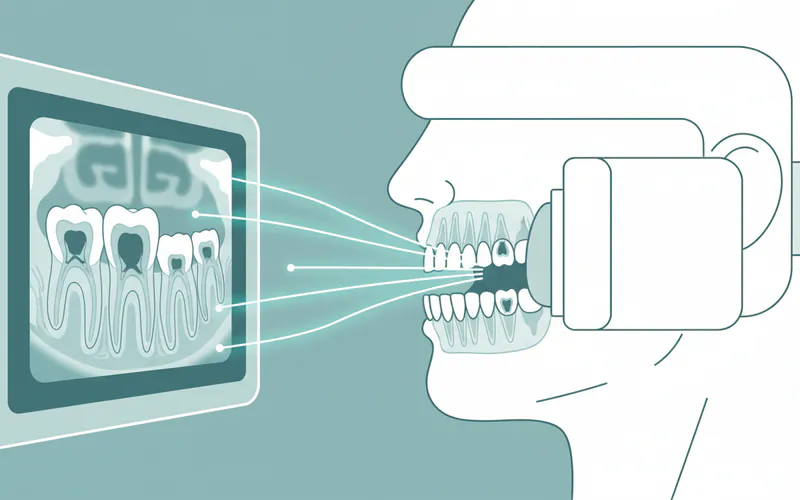
The primary purpose of dental X-rays is diagnostic. They allow your dentist to:
- Identify cavities: Especially small ones between teeth (interproximal decay) or under existing fillings, which are impossible to see with the naked eye.
- Detect bone loss: A key indicator of periodontal (gum) disease. X-rays show the extent of bone loss around teeth.
- Examine tooth roots: To check for infections, abscesses, or other abnormalities.
- Monitor developing teeth in children: To ensure proper growth, detect impacted teeth, or identify missing teeth.
- Assess wisdom teeth: To evaluate their position, potential impaction, and need for extraction.
- Plan complex treatments: Such as orthodontics, dental implants, root canals, or extractions, by providing detailed anatomical information.
- Detect cysts, tumors, or other abnormal growths: In the jawbone and surrounding structures.
Without regular dental X-rays, many serious oral health problems could go undetected until they become advanced, more painful, and significantly more expensive to treat. The American Dental Association (ADA) emphasizes the importance of X-rays as a foundational component of comprehensive dental care, tailoring frequency based on individual risk factors and dental history.
Types of Dental X-rays and Their Uses
The dental field utilizes several types of X-rays, each designed to capture specific views of your oral structures. Understanding these variations is key to comprehending the differences in their application and, subsequently, their cost.
Intraoral X-rays (Taken Inside the Mouth)
These are the most common types of dental X-rays and provide highly detailed images of individual teeth and their supporting bone structures.
Bitewing X-rays
- What they show: The crowns of both upper and lower teeth in a single image, focusing on the back teeth. They are excellent for detecting decay between teeth (interproximal decay) and assessing the fit of fillings or crowns. They also show early signs of bone loss due to gum disease.
- Frequency: Typically taken annually or every 1-3 years, depending on your risk factors for decay.
- Cost Range (without insurance): $30-$75 for two X-rays, or $50-$120 for a set of four.
Periapical (PA) X-rays
- What they show: The entire tooth, from the crown to the root and the surrounding bone structure. PAs are used to diagnose issues like abscesses, bone infections, periodontal disease, root fractures, and to evaluate bone health before procedures like root canals or extractions.
- Frequency: Taken as needed for specific diagnostic purposes.
- Cost Range (without insurance): $25-$50 per single X-ray.
Occlusal X-rays
- What they show: A broader view of an entire arch (upper or lower jaw) in one shot. They help detect extra teeth, unerupted teeth, jaw fractures, cysts, or foreign objects in the floor of the mouth or palate.
- Frequency: As needed.
- Cost Range (without insurance): $40-$80 per X-ray.
Full Mouth Series (FMX or FMS)
- What it is: A comprehensive set of 14-20 intraoral X-rays, usually comprising several bitewings and periapical images, capturing every tooth and surrounding bone.
- What it shows: A complete diagnostic picture of all your teeth, roots, and surrounding bone structures, allowing for a thorough assessment of your entire mouth.
- Frequency: Typically recommended every 3-5 years or for new patients to establish a baseline.
- Cost Range (without insurance): $100-$250.
Extraoral X-rays (Taken Outside the Mouth)
These X-rays are taken from outside the mouth and provide broader views of the jaw, skull, and TMJ (temporomandibular joint). They are often used for orthodontic planning, surgical planning, or to detect problems not visible with intraoral X-rays.
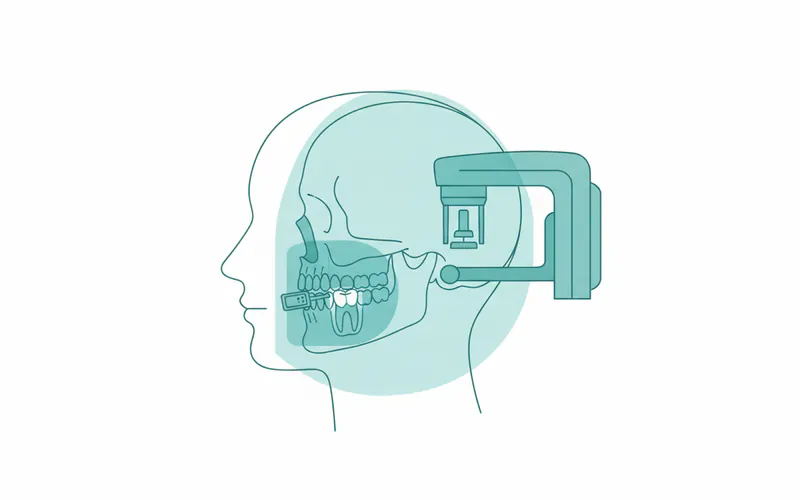
Panoramic X-rays (Panorex)
- What it shows: A single image that captures a wide view of the entire mouth, including all teeth in both upper and lower jaws, the jawbones, sinuses, and temporomandibular joints. It's excellent for identifying impacted wisdom teeth, jaw fractures, cysts, tumors, or problems with the TMJ. It does not show detailed interproximal decay as well as bitewings.
- Frequency: Typically taken every 3-5 years, or as needed for specific conditions or treatment planning.
- Cost Range (without insurance): $75-$250.
Cephalometric Projections (Ceph)
- What it shows: A side view of the head, primarily used by orthodontists to evaluate the relationships between teeth, jaws, and facial structures. It helps in planning orthodontic treatment and monitoring progress.
- Frequency: As needed for orthodontic assessment.
- Cost Range (without insurance): $80-$150.
Cone Beam Computed Tomography (CBCT)
- What it shows: A highly advanced 3D imaging technology that provides a detailed, three-dimensional view of the mouth, face, and jaw bones. CBCT scans are crucial for complex procedures like dental implant placement, bone grafting, difficult wisdom tooth extractions, root canal treatment planning, and diagnosing intricate pathologies.
- Frequency: Taken only when specific 3D information is required for diagnosis or treatment planning.
- Cost Range (without insurance): $300-$700.
Digital vs. Film X-rays
Modern dentistry predominantly uses digital X-rays, which have largely replaced traditional film X-rays.
- Digital X-rays: Use electronic sensors to capture images that are immediately displayed on a computer screen. They offer significantly lower radiation exposure (up to 80% less than film), faster processing, enhanced image manipulation capabilities (zooming, contrast adjustment), and are environmentally friendly (no chemicals).
- Film X-rays: Involve traditional film that must be chemically processed in a darkroom. They have higher radiation exposure and slower processing times.
While digital X-rays are more expensive for the dental practice to implement, their benefits often justify a slightly higher cost per X-ray, though many practices absorb this and charge similarly to film. The trend is overwhelmingly towards digital.
Why Dental X-rays Are Essential: Understanding the Need
Dental X-rays aren't just an add-on; they are fundamental for diagnosing conditions that can severely impact your oral and overall health. They allow for early detection, which is critical for effective and less invasive treatment.
Key Reasons Your Dentist Recommends X-rays:
- Detecting Hidden Decay: Cavities often start between teeth or under fillings, where they are invisible to the naked eye. X-rays can reveal these small lesions before they become painful or lead to larger issues requiring more extensive treatments like root canals or extractions.
- Assessing Periodontal Disease: X-rays show the level of bone support around your teeth. Bone loss is a hallmark of periodontal (gum) disease. Early detection allows for timely intervention to prevent further progression and potential tooth loss.
- Identifying Infections and Abscesses: Infections at the root tip or within the jawbone can be asymptomatic initially. X-rays clearly show these areas of inflammation or pus formation.
- Evaluating Tooth Development: For children and teenagers, X-rays monitor the growth of permanent teeth, detect congenital issues like missing or extra teeth, and assess if wisdom teeth are likely to become impacted.
- Planning Orthodontic Treatment: Cephalometric and panoramic X-rays provide crucial data for orthodontists to develop precise treatment plans, charting the movement of teeth and assessing jaw relationships.
- Pre-Surgical Assessment: Before procedures like dental implant placement, wisdom tooth extraction, or complex oral surgery, X-rays (especially CBCT scans) provide detailed anatomical maps of nerves, sinuses, and bone density, minimizing risks.
- Monitoring Existing Restorations: X-rays can show if existing fillings or crowns are failing, if there's decay underneath them, or if there are any issues with root canal treated teeth.
- Detecting Pathologies: Occasionally, X-rays reveal more serious conditions like cysts, tumors, or other abnormal growths in the jawbone that would otherwise go unnoticed until they cause significant problems.
Pro Tip: Always discuss the necessity of X-rays with your dentist. While routine X-rays are important, their frequency should be based on your individual risk factors and dental history, aligning with ADA guidelines for evidence-based care.
The Step-by-Step Process of Getting a Dental X-ray
Getting a dental X-ray is a quick, painless, and straightforward procedure. Here's what you can expect:
- Preparation: Before the X-rays begin, your dental hygienist or assistant will ask you to remove any metallic objects from your head and neck area, such as jewelry (earrings, necklaces), glasses, and removable dental appliances (like retainers). This is because metal can interfere with the X-ray image quality.
- Lead Apron and Thyroid Collar: You will be draped with a heavy lead apron over your chest and lap, and a lead thyroid collar will be placed around your neck. This shielding protects your body from any unnecessary radiation exposure, although modern digital X-rays use very low doses.
- Positioning for Intraoral X-rays (Bitewings, PAs):
- For intraoral X-rays, the hygienist will place a small sensor (for digital X-rays) or film packet (for traditional film) into your mouth. This sensor is often attached to a small plastic holder that helps position it correctly.
- You will be asked to bite down gently on the holder to keep the sensor still.
- The hygienist will position the X-ray machine's cone to target the specific area.
- They will step behind a protective barrier or out of the room during the very brief exposure time (a fraction of a second).
- This process is repeated for each image needed. It might feel a bit awkward, but it shouldn't be painful.
- Positioning for Extraoral X-rays (Panoramic):
- For a panoramic X-ray, you'll stand or sit in a special machine. You'll bite down on a small plastic bite block to stabilize your head.
- The machine will rotate around your head, taking a single, wide image of your entire jaw and surrounding structures. This rotation usually takes 20-30 seconds.
- Image Processing and Review:
- With digital X-rays, the images appear almost instantly on a computer screen. Your dentist can review them immediately, zooming in, adjusting contrast, and measuring structures.
- With traditional film X-rays, the film needs to be chemically processed in a darkroom before it can be viewed, which takes a few minutes.
- Discussion with Your Dentist: Once the images are ready, your dentist will review them with you, pointing out any areas of concern, explaining their findings, and discussing potential treatment options.
The entire process for a standard set of bitewing X-rays typically takes only a few minutes, while a full mouth series or a panoramic X-ray might take 5-10 minutes.
Cost of Dental X-rays in the US: A Detailed Breakdown
Understanding the financial aspect of dental X-rays is crucial. The cost can fluctuate based on several factors, including the type of X-ray, your geographic location, the specific dental practice, and your insurance coverage. When considering "how much does an xray cost," it's important to look at both the sticker price and your out-of-pocket expenses.
Factors Influencing X-ray Costs:
- Type of X-ray: As discussed, a single periapical X-ray is significantly less expensive than a panoramic or a 3D CBCT scan. The more comprehensive the image, the higher the cost.
- Geographic Location: Dental costs, including X-rays, vary by region. Practices in metropolitan areas or areas with a higher cost of living (e.g., New York, Los Angeles) generally charge more than those in rural areas or states with lower living expenses.
- Dental Practice: Individual dental offices set their own fees. A high-end practice with state-of-the-art equipment might charge more than a general family dentistry office. Specialist offices (e.g., orthodontists, oral surgeons) might also have different fee schedules.
- Digital vs. Film: While digital X-rays require a higher initial investment for the dental office, their efficiency and reduced chemical costs often balance out, so prices aren't drastically different. However, some older practices might still use film.
- Insurance Coverage: Whether you have dental insurance and the specifics of your plan will significantly impact your out-of-pocket costs.
Average US X-ray Costs (Without Insurance):
Here's a breakdown of typical cash prices for common dental X-rays across the United States. These are averages, and actual prices can fall outside these ranges.
| X-ray Type | Low Range (Rural/Budget) | Mid Range (Average) | High Range (Urban/Premium) |
|---|---|---|---|
| Bitewing (2-4 images) | $30 - $60 | $60 - $120 | $100 - $150 |
| Periapical (single) | $25 - $40 | $40 - $60 | $50 - $75 |
| Occlusal (single) | $40 - $60 | $60 - $80 | $70 - $100 |
| Full Mouth Series (FMS) | $100 - $180 | $180 - $250 | $220 - $300 |
| Panoramic (Panorex) | $75 - $150 | $150 - $250 | $200 - $350 |
| Cephalometric (Ceph) | $80 - $120 | $120 - $180 | $150 - $220 |
| CBCT Scan (3D) | $300 - $500 | $500 - $700 | $650 - $1,000+ |
Pro Tip: When comparing dental practices, always ask for a full breakdown of costs, including all X-rays, exams, and procedures. This transparency will help you understand the total investment.
Dental Insurance and X-ray Coverage
Dental insurance plays a significant role in reducing your out-of-pocket expenses for X-rays. Most dental plans categorize X-rays as either preventative or diagnostic.
- Preventative X-rays: This category typically includes bitewing X-rays, which are part of routine check-ups. Many insurance plans cover these at 80-100%, often without being subject to your deductible.
- Diagnostic X-rays: This includes periapical, panoramic, full mouth series, cephalometric, and CBCT scans. These are generally covered at a lower percentage, typically 50-80%, and often after your annual deductible has been met. Coverage for CBCT scans can be more variable, sometimes requiring pre-authorization or being subject to medical insurance if related to a medical condition.
Key Insurance Terms to Understand:
- Deductible: The amount you must pay out-of-pocket before your insurance begins to cover costs.
- Co-pay: A fixed amount you pay for a service at the time it's rendered, even after your deductible is met.
- Coinsurance: The percentage of the cost you are responsible for after your deductible is met (e.g., if insurance covers 80%, your coinsurance is 20%).
- Annual Maximum: The total amount your insurance will pay for your dental care in a calendar year. Once this limit is reached, you are responsible for 100% of the costs.
- Waiting Periods: Some plans have waiting periods before certain services, including specific types of X-rays, are covered.
Example Scenario: Let's say a panoramic X-ray costs $200.
- Without Insurance: You pay $200.
- With Insurance (80% coverage after a $50 deductible):
- If you haven't met your deductible, you pay the first $50.
- The remaining $150 is covered at 80% ($120), so you pay 20% ($30).
- Your total out-of-pocket cost: $50 (deductible) + $30 (coinsurance) = $80.
Frequency Limitations: Be aware that insurance companies often have limits on how frequently they will cover certain X-rays. For example, bitewings might be covered once per year, and a panoramic X-ray every 3-5 years. If your dentist recommends X-rays more frequently, you may be responsible for the full cost. Always check your specific policy details or ask your dental office to verify benefits.
Recovery and Aftercare for Dental X-rays
The recovery and aftercare for dental X-rays are virtually non-existent. Since dental X-rays are a diagnostic procedure and not an invasive treatment, you can resume all your normal activities immediately afterward. There is no pain, downtime, or special instructions required.
The minimal radiation exposure from modern digital dental X-rays is not a cause for concern in terms of needing specific "recovery." Your body's cells are designed to repair any damage from low-level radiation, and the benefits of accurate diagnosis far outweigh the negligible risks.
Risks and Complications of Dental X-rays
While dental X-rays are overwhelmingly safe, it's important to be aware of the theoretical risks, primarily concerning radiation exposure.
Radiation Exposure
- Minimal Dose: Modern dental X-ray machines, especially digital ones, use extremely low doses of radiation. A full mouth series of digital X-rays exposes you to about 0.005 mSv (millisieverts) of radiation. To put this in perspective, the average person in the US is exposed to about 3.1 mSv annually from natural background radiation (from soil, cosmic rays, radon gas, etc.).
- ALARA Principle: Dentists adhere to the "As Low As Reasonably Achievable" (ALARA) principle. This means they only take X-rays when necessary, use the lowest possible radiation dose, and utilize protective measures.
- Protection: Lead aprons and thyroid collars are standard practice to shield your body from stray radiation.
- Cumulative Effect: While individual X-rays pose minimal risk, radiation exposure is cumulative over a lifetime. This is why dentists tailor X-ray frequency to individual needs rather than a one-size-fits-all approach.
Pregnancy Considerations
- If you are pregnant or suspect you might be, it is crucial to inform your dentist. While the radiation from dental X-rays is extremely localized and low, and the lead apron protects the abdomen, many dentists will postpone non-urgent X-rays as a precautionary measure, especially during the first trimester. Emergency X-rays (e.g., for severe infection) are still considered safe with proper shielding.
Allergic Reactions (Extremely Rare)
- With digital X-rays, the risk of allergic reactions to film processing chemicals is eliminated. In rare cases, some individuals might have a minor, temporary sensitivity to the intraoral sensor placement if they have a very strong gag reflex or sensitive tissues, but this is not a medical "complication."
Overall, the diagnostic benefits of dental X-rays in preventing and treating serious oral health issues far outweigh the minimal risks associated with radiation exposure, which is carefully controlled and minimized in modern dental practices.
Children / Pediatric Considerations for Dental X-rays
Dental X-rays are just as, if not more, important for children as they are for adults, but with specific considerations due to their developing mouths and higher susceptibility to certain conditions.
Why Children Need X-rays:
- Detecting Early Decay: Children often have softer enamel and less developed oral hygiene habits, making them more prone to cavities, particularly between teeth. X-rays can catch these early, before they spread or cause pain.
- Monitoring Tooth Development: X-rays are essential for observing the eruption patterns of permanent teeth, checking for extra (supernumerary) or missing teeth, and assessing potential impaction (e.g., wisdom teeth, canines).
- Assessing Jaw Growth and Development: Panoramic and cephalometric X-rays help pediatric dentists and orthodontists evaluate jaw relationships and bone growth, crucial for early orthodontic intervention if needed.
- Diagnosing Trauma: Children are more susceptible to dental injuries from falls or sports. X-rays help diagnose fractures of the teeth or jaw, or damage to developing permanent teeth.
- Guiding Space Management: If a primary (baby) tooth is lost prematurely, X-rays can help determine if a space maintainer is needed to prevent shifting of adjacent teeth and ensure proper eruption space for the permanent tooth.
Special Considerations for Pediatric X-rays:
- Reduced Radiation: Children are more sensitive to radiation than adults, so pediatric dentists use the lowest possible doses and limit X-ray frequency based on individual needs and risk factors (ADA guidelines recommend X-rays only when clinically necessary). Digital X-rays are particularly beneficial for children due to their significantly lower radiation.
- Smaller Sensors: Child-sized sensors or film packets are used for intraoral X-rays to ensure comfort and better fit in smaller mouths.
- Behavior Management: Dental teams are trained to make the X-ray experience positive for children, using child-friendly language, demonstration, and encouragement to help them stay still.
- Protective Measures: Lead aprons and thyroid collars are always used, and parents should also wear protective gear if they need to hold their child during the X-ray.
Frequency for Children: The frequency of X-rays for children varies. For children at high risk of decay, bitewings might be recommended every 6-12 months. For children with low risk, they might be taken every 1-2 years. A panoramic X-ray might be taken around age 6-8 to check for developing permanent teeth, and again in adolescence to evaluate wisdom teeth. Your pediatric dentist will determine the appropriate schedule for your child.
Cost Breakdown: Managing Your Dental X-ray Expenses
Beyond the average costs, let's explore how to navigate the financial landscape of dental X-rays, especially when considering other dental expenses like how much does a teeth cleaning cost or even larger investments like how much is smile direct club.
Average US Costs: Summary Table
| X-ray Type | Average Cost (Without Insurance) | Typical Patient Responsibility (With Insurance, after deductible) |
|---|---|---|
| Bitewing (4 images) | $80 - $120 | $0 - $30 (often 100% covered) |
| Periapical (single) | $40 - $60 | $10 - $20 |
| Full Mouth Series (FMS) | $180 - $250 | $50 - $125 |
| Panoramic (Panorex) | $150 - $250 | $40 - $125 |
| CBCT Scan (3D) | $500 - $700 | $150 - $350 (can be higher, variable coverage) |
Note: These are estimates. Your actual costs will depend on your specific plan and provider.
Without Insurance: Strategies for Affordability
If you don't have dental insurance, there are still several ways to make dental X-rays more affordable:
- Ask for Cash Discounts: Many dental offices offer a discount (e.g., 5-20%) for patients who pay in full at the time of service, especially with cash or check, as it reduces administrative costs for them.
- Dental Discount Plans: These are not insurance but membership programs where you pay an annual fee (typically $99-$200 per year) and receive discounted rates on dental services, including X-rays, from participating dentists. Discounts can range from 10-50%.
- Community Dental Clinics/Dental Schools: These facilities often offer services at a reduced cost because they are publicly funded or provide training. Quality of care is still high, as dental schools are supervised by experienced professionals.
- Payment Plans and Financing: For more expensive X-rays (like CBCT) or if combined with other treatments, many offices offer in-house payment plans. Third-party medical financing companies like CareCredit offer deferred interest or low-interest payment options for healthcare expenses, including dental.
- Health Savings Accounts (HSAs) and Flexible Spending Accounts (FSAs): If you have an HSA or FSA through your employer, you can use these tax-advantaged funds to pay for dental X-rays and other qualified dental expenses.
Payment Plans and Financing Options
For patients needing extensive work that involves multiple X-rays and procedures, understanding financing can be crucial:
- In-house Payment Plans: Many dental offices offer flexible payment schedules directly with the patient.
- Third-party Financing (e.g., CareCredit): These credit cards are specifically for healthcare expenses. They often provide interest-free periods if the balance is paid within a certain timeframe (e.g., 6, 12, or 18 months).
- Personal Loans: Banks or credit unions offer personal loans that can be used for dental expenses, though interest rates vary.
Cost-Saving Tips:
- Preventive Care: The best way to save money on dental X-rays and other procedures is through diligent preventive care. Regular brushing, flossing, and professional teeth cleanings (which typically cost $75-$200 without insurance, often 100% covered with insurance) can help prevent issues that would necessitate extensive diagnostic X-rays and costly treatments.
- Understand Your Insurance: Know your plan's specifics, including deductibles, co-pays, annual maximums, and frequency limitations for X-rays.
- Discuss Alternatives (when appropriate): While X-rays are often non-negotiable for proper diagnosis, discuss with your dentist if alternative diagnostic methods or reduced X-ray frequency are appropriate for your specific situation.
- Get Estimates: Before any significant procedure involving X-rays, always get a detailed written estimate from your dental office.
While questions like "how much is smile direct club" are related to broader cosmetic dental solutions, it's important to remember that such treatments also rely on initial diagnostic X-rays to assess suitability and plan treatment. Even if you're exploring at-home clear aligner options, a recent panoramic X-ray is almost always required to ensure no underlying issues would complicate treatment.
Frequently Asked Questions
Are dental X-rays safe?
Yes, modern dental X-rays are considered very safe. They utilize extremely low doses of radiation, especially digital X-rays which reduce exposure by up to 80% compared to traditional film. Dentists also use lead aprons and thyroid collars for additional protection, adhering to strict safety protocols known as the ALARA principle (As Low As Reasonably Achievable).
How often do I need dental X-rays?
The frequency of dental X-rays depends on your individual oral health, age, and risk factors for dental disease. For new patients, a full mouth series or panoramic X-ray may be taken to establish a baseline. For routine check-ups, bitewing X-rays are often taken annually or every 1-3 years for adults, and more frequently for children at high risk of cavities. Your dentist will determine the appropriate schedule based on a thorough examination.
Can I refuse a dental X-ray?
While you have the right to refuse any medical procedure, including X-rays, it's important to understand the implications. X-rays are a crucial diagnostic tool. Refusing them may limit your dentist's ability to accurately diagnose conditions like hidden cavities, bone loss, or infections, potentially leading to delayed treatment and more severe problems. Discuss your concerns with your dentist; they can explain the necessity for your specific case.
Do dental X-rays hurt?
No, dental X-rays are typically painless. You might feel slight pressure or discomfort from the sensor or film holder in your mouth, especially with smaller mouths or a sensitive gag reflex, but it should not cause pain. The actual exposure to radiation is momentary and imperceptible.
How long do dental X-rays take?
The time required for dental X-rays is very short. A set of bitewing X-rays typically takes just a few minutes. A full mouth series or a panoramic X-ray might take 5-10 minutes. The images from digital X-rays appear instantly on a computer screen for immediate review by your dentist.
What are the alternatives to dental X-rays?
While certain visual inspection tools and technologies (like intraoral cameras or transillumination) can aid in diagnosing surface issues, there is no universally equivalent alternative to dental X-rays for visualizing hidden structures like bone, tooth roots, and interproximal decay. X-rays provide unique, indispensable diagnostic information that other methods cannot replicate, especially for planning complex treatments.
Are X-rays covered by insurance?
Most dental insurance plans cover a portion of dental X-ray costs. Preventative X-rays (like bitewings) are often covered at a higher percentage (80-100%), sometimes without a deductible. Diagnostic X-rays (like panoramic or full mouth series) typically have 50-80% coverage after your deductible is met. It's essential to check your specific plan's benefits and frequency limitations.
What's the difference between bitewing and panoramic X-rays?
Bitewing X-rays provide detailed images of the crowns of upper and lower back teeth in a specific area, primarily used to detect decay between teeth and assess early bone loss. Panoramic X-rays (Panorex) provide a broad, single image of your entire mouth, including all teeth, jawbones, sinuses, and TMJ. They are great for overall assessment, impacted teeth, or jaw issues, but less detailed for interproximal decay than bitewings.
Why do dentists need X-rays for a simple check-up?
Even if you don't have any pain or visible problems, X-rays are essential during a routine check-up because many serious dental issues develop silently beneath the surface. Hidden cavities, early signs of gum disease (bone loss), cysts, or infections may not be apparent during a visual examination. X-rays allow for early detection and intervention, preventing minor problems from becoming major ones.
How do I save money on dental X-rays if I don't have insurance?
To save money without insurance, you can inquire about cash discounts directly with your dental office, explore dental discount plans, visit community dental clinics or dental schools which often have lower fees, or use tax-advantaged accounts like HSAs or FSAs if you have them. For higher-cost X-rays, ask about payment plans or third-party financing options like CareCredit.
When to See a Dentist
Regular dental check-ups are fundamental to maintaining good oral health, and X-rays are often a crucial part of these visits. However, there are specific signs and situations that warrant a dental visit sooner rather than later.
Routine Care Guidance:
- Annual Check-up: Even if you experience no symptoms, an annual dental exam with appropriate X-rays (often bitewings) is recommended to catch silent issues.
- New Patient Visit: If you're new to a dental practice, a comprehensive exam, which typically includes a full mouth series or panoramic X-ray, will be performed to establish a baseline of your oral health.
- Every 6 Months for Cleaning: Most individuals benefit from professional dental cleanings every six months, which may coincide with routine X-rays based on your dentist's recommendation.
Red Flags That Need Prompt Attention (may require immediate X-rays):
- Persistent Toothache or Pain: Any lasting discomfort, especially pain that is sharp, throbbing, or worsens with hot/cold temperatures or biting, needs evaluation. X-rays can pinpoint the source of the pain, such as a cavity, infection, or cracked tooth.
- Swelling in Your Gums or Face: Swelling can indicate a severe infection or abscess that requires immediate diagnosis and treatment.
- Bleeding Gums (beyond light brushing): While some gum bleeding can be normal with initial flossing, persistent or heavy bleeding, especially if accompanied by redness or tenderness, could indicate gum disease requiring X-ray assessment of bone loss.
- Sensitivity to Hot, Cold, or Sweet: While sometimes a minor issue, persistent sensitivity could signal tooth decay, a crack, or gum recession.
- Visible Cavities or Dark Spots: If you see any holes or dark areas on your teeth, don't wait for your next appointment.
- Loose Teeth: Adult teeth should not be loose. This can be a sign of advanced gum disease or trauma.
- Difficulty Chewing or Biting: Issues with occlusion or pain when eating hard foods warrant a check.
- Lost Filling or Crown: This exposes the sensitive inner parts of your tooth and needs prompt attention to prevent further damage or infection.
- Trauma to the Mouth or Jaw: Any injury from an accident or fall, even if no visible damage, can cause hidden fractures to teeth or bone that only X-rays can reveal.
- Unusual Growths or Sores: Any unhealing sores, lumps, or white/red patches in your mouth or on your tongue should be examined by a dentist.
Emergency vs. Scheduled Appointment: If you experience severe pain, sudden swelling, significant trauma, or persistent bleeding, call your dentist immediately for an emergency appointment. For less urgent concerns, such as a lost filling without pain or mild, persistent sensitivity, you can typically schedule a routine visit. In both cases, X-rays will likely be a vital part of the diagnostic process to understand the underlying issue.
Prioritizing your dental health with regular check-ups and necessary X-rays is an investment in your overall well-being. Understanding the costs and benefits allows you to make confident decisions for a healthier, brighter smile.
Frequently Asked Questions
Medically Reviewed Content
This article was written by our dental health editorial team and reviewed for medical accuracy. Our content follows strict editorial guidelines for reliability and trustworthiness.
Medical Disclaimer
This article is for informational purposes only and does not constitute medical advice. Always consult with a qualified dental professional for diagnosis and treatment. Do not delay seeking professional advice because of something you read on this website.
Related Articles
How Much Does Tooth Bonding Cost
Imagine looking in the mirror and seeing a smile that doesn't quite reflect your inner confidence – maybe a small chip from an unexpected accident, an annoying gap between your front teeth, or a stain that just won't budge. For many Americans, these minor imperfections can significantly impact self-
February 22, 2026
How Much Are Gold Grillz for Teeth
When considering a unique blend of personal style and dental aesthetics, many individuals find themselves drawn to the allure of gold grillz. But beyond the flashy appearance and cultural significance, a practical question often arises: how much are gold grillz for teeth? This isn't just a simpl
February 22, 2026
How Much Are Tooth Gems
In an age where personal expression extends to every facet of our lives, it's no surprise that cosmetic dentistry has evolved beyond mere functionality to embrace aesthetic adornment. From subtle enhancements to bold statements, teeth have become a new canvas for individuality. One increasingly popu
February 22, 2026

How Much Does a Dog Xray Cost
As a premier dental health portal, SmilePedia.net is dedicated to illuminating all facets of oral health and related medical costs for our valued readers across the US. While our primary focus remains squarely on human dentistry – from routine cleanings to complex restorative procedures – we underst
February 22, 2026