How Much Does Tooth Bonding Cost
Key Takeaways
- Imagine looking in the mirror and seeing a smile that doesn't quite reflect your inner confidence – maybe a small chip from an unexpected accident, an annoying gap between your front teeth, or a stain that just won't budge. For many Americans, these minor imperfections can significantly impact self-
How Much Does Tooth Bonding Cost
Imagine looking in the mirror and seeing a smile that doesn't quite reflect your inner confidence – maybe a small chip from an unexpected accident, an annoying gap between your front teeth, or a stain that just won't budge. For many Americans, these minor imperfections can significantly impact self-esteem and daily interactions. In fact, a recent study indicated that nearly one-third of adults are unhappy with the appearance of their teeth. This dissatisfaction often leads people to explore cosmetic dental solutions, with dental bonding emerging as one of the most popular, cost-effective, and minimally invasive options.

But as with any dental procedure, a primary concern for patients is always the financial aspect. "How much does tooth bonding cost?" is one of the most frequently asked questions in dental offices across the country. Understanding the investment required for dental bonding is crucial for making an informed decision about your oral health and aesthetic goals. This comprehensive guide from SmilePedia.net will demystify the expenses associated with dental bonding, exploring everything from average US price ranges and insurance coverage to factors influencing the final cost, alternative treatments, and essential aftercare. We’ll cover the procedure itself, what to expect, and how to maintain your newly enhanced smile, providing you with all the information you need to confidently consider dental bonding.
Key Takeaways:
- Average Cost: Dental bonding typically costs between $300 and $1,000 per tooth in the US, with an average around $500-$800.
- Cost Factors: Price varies based on the number of teeth, complexity of the repair, dentist's fees, geographic location, and whether it's for cosmetic or restorative purposes.
- Insurance Coverage: Insurance often covers bonding if it's considered restorative (e.g., repairing a chipped tooth, filling a cavity), but less frequently for purely cosmetic enhancements. Expect 50-80% coverage for restorative cases.
- Procedure Time: The process is relatively quick, usually taking 30-60 minutes per tooth, making it a single-visit solution in most cases.
- Durability: Bonded teeth can last 5 to 10 years with proper care, though they are more prone to chipping and staining than veneers or crowns.
- Alternatives: Consider veneers for greater durability and stain resistance, or crowns for significant structural repairs, but these options are generally more expensive.
- Maintenance: Avoid biting hard objects, chewing ice, and consuming excessive staining foods/drinks to prolong the life and appearance of your bonding.
What is Dental Bonding? An Overview
Dental bonding, often referred to simply as "bonding" or "composite bonding," is a cosmetic dental procedure that involves applying a tooth-colored composite resin material to your teeth. This resin, made from a plastic and glass mixture, is then sculpted, shaped, and polished to match your natural teeth, effectively improving the appearance of a chipped, cracked, discolored, or misaligned tooth. The term "bonding" refers to the process by which the material is "bonded" or attached to the tooth structure using a special adhesive and a high-intensity curing light.
It's a versatile solution primarily used to address minor cosmetic concerns and some restorative issues. Because the composite resin can be matched precisely to the shade of your existing teeth, the results are natural-looking and seamless. One of the greatest advantages of dental bonding is its minimally invasive nature; unlike veneers or crowns, which often require significant removal of natural tooth enamel, bonding typically requires very little, if any, tooth preparation, preserving more of your healthy tooth structure.
Types and Variations of Dental Bonding
While "dental bonding" generally refers to direct composite bonding, where the material is applied directly to the tooth, it’s helpful to understand the nuances and related applications:
Direct Composite Bonding (The Most Common Form)
This is the procedure most people think of when they hear "dental bonding."
- Process: The composite resin is applied directly to the tooth surface by the dentist during a single visit. The dentist shapes and sculpts the material, then hardens it with a special curing light.
- Applications:
- Repairing chipped or cracked teeth.
- Closing small gaps between teeth (diastemas).
- Changing the shape or length of teeth.
- Masking severe tooth discoloration that whitening can't address.
- Protecting exposed tooth roots due to gum recession.
- As a cosmetic alternative to amalgam (silver) fillings, known as composite fillings. These are essentially dental bonding material used to fill cavities.
Indirect Composite Bonding (Bonded Restorations)
While less commonly referred to simply as "bonding," indirect methods involve composite resin that is fabricated outside the mouth, typically in a dental lab, and then bonded to the tooth.
- Inlays and Onlays: These are used to repair teeth with mild to moderate decay or cracks that are not extensive enough to require a crown. They are custom-made from composite resin (or porcelain) in a lab and then bonded to the tooth in a subsequent visit. This offers greater durability than direct composite fillings.
- Composite Veneers: Sometimes, a dentist may create a composite veneer indirectly in the office or lab, and then bond it to the tooth. However, this is distinct from traditional porcelain veneers.
For the purpose of this article, when we discuss "dental bonding," we are primarily referring to the direct composite bonding procedure, as it is the most common and cost-effective application.
Causes: Why Dental Bonding is Needed
Patients typically seek dental bonding to correct a range of cosmetic or minor restorative issues that affect the appearance and sometimes the function of their teeth. Understanding the common reasons for needing bonding can help you determine if it's the right solution for your specific concerns.
1. Chipped or Cracked Teeth
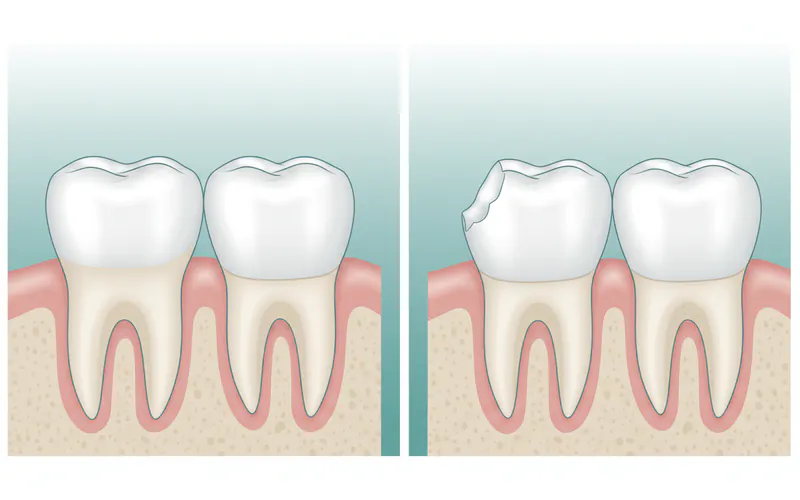
One of the most frequent reasons for dental bonding is to repair minor chips or cracks in teeth. This can result from:
- Accidental trauma (e.g., a fall, sports injury).
- Biting down on something hard (e.g., ice, hard candy, unpopped popcorn kernels).
- Grinding or clenching teeth (bruxism) over time, which can weaken enamel. Bonding can seamlessly restore the tooth's original shape and integrity, preventing further damage and restoring aesthetic appeal.
2. Closing Gaps Between Teeth (Diastemas)
Small gaps, particularly between the front teeth, are a common aesthetic concern. Dental bonding offers a relatively quick and non-invasive way to close these spaces, creating a more uniform smile without the need for orthodontics (braces or clear aligners). The composite resin is carefully sculpted to build up the sides of the adjacent teeth, visually narrowing or eliminating the gap.
3. Masking Tooth Discoloration
While professional teeth whitening is highly effective for extrinsic stains (surface stains), some deeper, intrinsic stains (internal stains) may not respond to whitening treatments. These can be caused by certain medications, excessive fluoride intake, trauma, or genetics. Dental bonding can effectively cover these stubborn discolorations, providing a brighter, more consistent tooth shade.
4. Changing the Shape or Length of Teeth
If you have teeth that are unusually short, uneven, or oddly shaped (e.g., "peg laterals" which are small, pointed lateral incisors), bonding can be used to reshape and lengthen them. This can create a more balanced and harmonious smile. It's an excellent option for minor cosmetic adjustments that don't require more extensive procedures like veneers or crowns.
5. Protecting Exposed Tooth Roots
Gum recession, where the gum tissue pulls back from the tooth, can expose the tooth roots. This not only makes teeth appear longer but can also lead to increased sensitivity to hot and cold temperatures. Dental bonding material can be applied over these exposed root surfaces to protect them, reduce sensitivity, and improve the tooth's appearance.
6. As an Alternative to Amalgam Fillings (Composite Fillings)
Although often categorized separately, composite fillings are a form of dental bonding. When a cavity needs to be filled, composite resin can be used instead of traditional silver (amalgam) fillings. This offers a mercury-free option that blends seamlessly with the natural tooth color, making the restoration virtually invisible. This is a restorative application, but it also provides an aesthetic benefit.
Signs and Symptoms That May Indicate a Need for Bonding
You might be a candidate for dental bonding if you notice any of the following on your teeth:
- Visible chips or small fractures on the enamel, especially on front teeth.
- Small to moderate gaps between teeth that you wish to close.
- Persistent discoloration that doesn't improve with whitening treatments.
- Teeth that appear too short, uneven, or irregularly shaped.
- Increased tooth sensitivity around the gum line, suggesting exposed roots.
- Small to medium-sized cavities that need filling, where you prefer a tooth-colored option.
If you observe any of these signs, it's advisable to consult with your dentist. They can assess your oral health, discuss your aesthetic goals, and determine if dental bonding is the most appropriate and effective solution for you.
Treatment Options: Bonding vs. Alternatives
While dental bonding is an excellent choice for many, it's not the only solution for improving your smile. Understanding how bonding compares to other cosmetic and restorative dental treatments is essential for making the best decision for your needs and budget.
Dental Bonding
- Pros:
- Cost-effective: Generally the least expensive cosmetic option.
- Minimally invasive: Requires little to no removal of tooth enamel.
- Quick: Often completed in a single dental visit (30-60 minutes per tooth).
- Natural appearance: Resin can be custom-matched to existing tooth color.
- Repairable: Can often be repaired if chipped or damaged.
- Cons:
- Less durable: More prone to chipping, staining, and wear than veneers or crowns.
- Shorter lifespan: Typically lasts 5-10 years, compared to 10-15+ for veneers and crowns.
- Staining: Composite resin can stain over time, especially with coffee, tea, red wine, and tobacco.
- Limited scope: Best for minor to moderate imperfections, not severe issues.
Dental Veneers (Porcelain or Composite)
Veneers are thin, custom-made shells designed to cover the front surface of teeth.
- Porcelain Veneers:
- Pros: Highly durable, stain-resistant, very natural appearance, long-lasting (10-15+ years).
- Cons: More expensive than bonding, typically requires more enamel removal, usually a two-visit procedure, not easily repairable if chipped.
- Composite Veneers (Indirect): Similar material to bonding, but fabricated outside the mouth and bonded. Often more durable and stain-resistant than direct bonding but less so than porcelain.
- Cost: Significantly higher than bonding, ranging from $1,000 to $2,500 per tooth for porcelain, and $800 to $1,500 per tooth for indirect composite.
Dental Crowns
Crowns are full caps placed over a damaged tooth to restore its shape, size, strength, and appearance.
- Pros: Highly durable, strong, ideal for severely damaged, cracked, or weakened teeth. Protects the entire tooth. Long-lasting (10-15+ years).
- Cons: Most invasive, requires significant tooth reduction, more expensive than bonding, typically a two-visit procedure.
- Cost: Ranging from $800 to $2,500 per tooth, depending on material (porcelain, metal, or zirconia).
Teeth Whitening
This procedure lightens the natural shade of teeth, addressing overall discoloration.
- Pros: Non-invasive, quick results, relatively inexpensive for a full smile enhancement.
- Cons: Only works on natural tooth structure (bonding, veneers, crowns won't whiten), doesn't fix chips, gaps, or shape issues, not effective for intrinsic stains.
- Cost: Professional in-office whitening costs $300 to $800, while take-home kits from a dentist are $200 to $400. This addresses the common question: how much is it to whiten your teeth?
Orthodontics (Braces or Clear Aligners)
Orthodontic treatment corrects misaligned teeth, bite problems, and significant gaps.
- Pros: Comprehensive solution for alignment issues, improves oral health and function, results are permanent.
- Cons: Long treatment duration (months to years), more expensive than bonding, requires commitment to wear appliances.
- Cost: Ranges from $3,000 to $8,000, depending on the complexity and type of appliance.
Fillings (Composite vs. Amalgam)
- Composite Fillings: Tooth-colored, mercury-free, bonds to tooth structure, aesthetically pleasing. This is essentially dental bonding material used restoratively.
- Amalgam Fillings: Silver-colored, very durable, less expensive.
- Cost: Composite fillings generally cost $150 to $400 per tooth, while amalgam fillings are $100 to $250 per tooth.
When considering "how much does it cost to get new teeth," it's important to distinguish between minor cosmetic enhancements like bonding and major restorations. "New teeth" often implies more extensive work like crowns, bridges, or dental implants, which are significantly more involved and costly than bonding. Bonding is ideal for enhancing existing teeth rather than replacing them entirely.
Table 1: Comparison of Dental Bonding with Other Cosmetic Procedures
| Feature | Dental Bonding | Porcelain Veneers | Dental Crowns | Professional Whitening |
|---|---|---|---|---|
| Average Cost | $300 - $1,000 per tooth | $1,000 - $2,500 per tooth | $800 - $2,500 per tooth | $300 - $800 (entire arch) |
| Durability | 5-10 years | 10-15+ years | 10-15+ years | Temporary (6 months to 2 years) |
| Stain Resistance | Moderate (can stain) | Excellent | Excellent | Not applicable (stains removed) |
| Tooth Prep | Minimal to none | Moderate | Significant (entire tooth) | None |
| Procedure Time | 1 visit (30-60 min/tooth) | 2 visits | 2 visits | 1-2 visits (1-2 hours) |
| Best For | Minor chips, gaps, discoloration, shape | Significant aesthetic changes, alignment | Severely damaged, weak, or decayed teeth | Overall tooth brightening |
Step-by-Step Process: What to Expect During Dental Bonding
One of the appeals of dental bonding is its straightforward and relatively quick procedure. Here’s what you can typically expect during your dental bonding appointment:
1. Consultation and Planning
Your journey begins with a comprehensive consultation with your dentist. You’ll discuss your aesthetic goals, and the dentist will examine your teeth to determine if bonding is the most suitable treatment. They'll assess your oral health, ensuring there are no underlying issues like decay or gum disease that need to be addressed first. This is also an opportunity to discuss the projected cost and insurance coverage.
2. Shade Matching
Before any work begins, your dentist will use a shade guide to select a composite resin color that closely matches your natural tooth enamel. This crucial step ensures that the bonded area blends seamlessly with the rest of your teeth, making the restoration virtually undetectable.
3. Tooth Preparation
Unlike veneers or crowns, dental bonding typically requires minimal to no tooth preparation. In some cases, the dentist may lightly etch the tooth surface with a conditioning liquid. This creates microscopic porosities on the enamel, which helps the bonding material adhere more securely. If the tooth has severe decay or a significant chip, a local anesthetic might be administered, but for most bonding procedures, it’s not necessary.

4. Application of Conditioning Liquid (Etchant)
A mild phosphoric acid solution, often called an etchant or conditioning liquid, is applied to the tooth surface. This liquid is left on for a few seconds and then rinsed off. Its purpose is to roughen the enamel slightly, creating a better surface for the bonding agent to attach to.
5. Applying the Bonding Agent
After the tooth is thoroughly rinsed and dried, a liquid bonding agent (adhesive) is applied. This agent acts as a primer, creating a strong link between the natural tooth and the composite resin. A curing light may be used to partially harden this layer.
6. Applying and Sculpting the Composite Resin
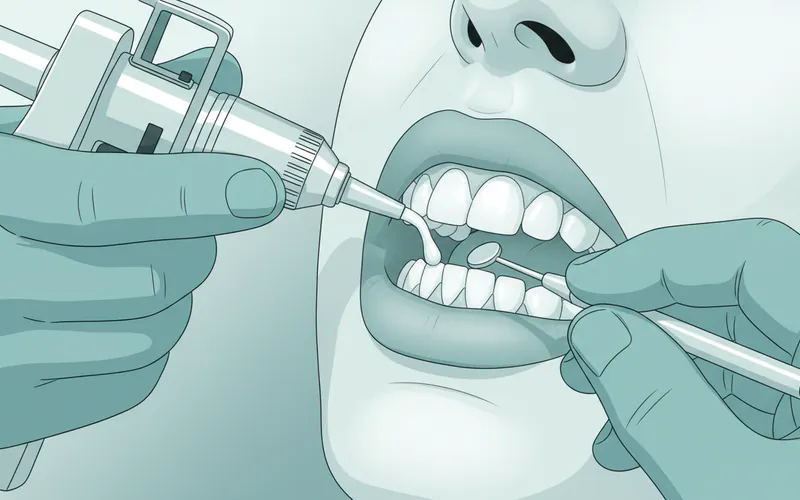
The tooth-colored composite resin, which has a putty-like consistency, is then applied over the bonding agent. Your dentist will meticulously sculpt and shape the resin to achieve the desired contour and appearance. This step requires artistic skill and precision to ensure the bonded tooth looks natural and harmonious with your other teeth. The resin is applied in layers, building up the tooth gradually.
7. Curing (Hardening) the Resin
Once the desired shape is achieved, a special high-intensity curing light (often blue LED light) is used to rapidly harden or "cure" the composite resin. This light-activation process causes the resin to polymerize and become solid, locking it into place. Each layer of resin is cured individually.
8. Trimming, Shaping, and Polishing
After the resin is fully hardened, your dentist will make any final adjustments to the shape and contour using various dental instruments. They will trim away any excess material and carefully sculpt the bonded area to ensure it integrates perfectly with your bite and smile. The final step involves extensive polishing to give the bonded tooth a smooth, natural, and lustrous finish that mimics the sheen of natural enamel.
9. Final Check
The dentist will check your bite to ensure the bonding doesn't interfere with your occlusion. You'll also have a chance to inspect the results and ensure you are happy with the aesthetic outcome. The entire process for a single tooth usually takes between 30 to 60 minutes. If multiple teeth are being bonded, the appointment will be longer, or multiple appointments may be scheduled.
Cost and Insurance: Breaking Down the Investment
Understanding how much does tooth bonding cost is crucial for financial planning. The price of dental bonding can vary significantly based on several factors, but typically, you can expect to pay anywhere from $300 to $1,000 per tooth in the United States.
Factors Influencing the Cost of Dental Bonding
- Number of Teeth: The most obvious factor. Bonding multiple teeth will increase the total cost.
- Extent of Repair:
- Simple repairs: A small chip or minor gap closure will be on the lower end of the cost spectrum (e.g., $300-$500).
- Complex repairs: More extensive reshaping, rebuilding a significant portion of a tooth, or covering a large discolored area will be more expensive (e.g., $600-$1,000+).
- Geographic Location: Dental costs vary widely by region.
- Major metropolitan areas (e.g., New York City, Los Angeles, San Francisco): Tend to have higher dental fees.
- Suburban or rural areas: Generally offer more affordable rates.
- East Coast and West Coast: Often have higher average prices compared to the Midwest or Southern states.
- Dentist's Experience and Overhead: Highly experienced cosmetic dentists or practices in prime locations with advanced technology may charge more. Their fees reflect their expertise, the quality of materials, and the level of service provided.
- Additional Procedures: If other treatments are needed before bonding (e.g., cavity filling, gum treatment), these will add to the overall cost.
Average US Price Ranges for Dental Bonding
- Simple bonding (e.g., minor chip repair, small gap closure): $300 - $500 per tooth
- Moderate bonding (e.g., significant reshaping, larger chip): $500 - $800 per tooth
- Complex bonding (e.g., extensive rebuilding, multiple surfaces, severe discoloration): $800 - $1,000+ per tooth
- Composite fillings (a form of bonding for cavities): $150 - $400 per tooth, depending on size and location.
Pro Tip: Always get a detailed written estimate from your dentist before proceeding. This estimate should break down the cost per tooth and clarify what is included.
Dental Insurance Coverage for Bonding
This is where it gets a bit nuanced. Dental insurance coverage for bonding largely depends on whether the procedure is considered restorative (medically necessary) or purely cosmetic (elective).
- Restorative Bonding: If bonding is performed to restore a tooth's function or health, such as repairing a chipped tooth from an accident, filling a cavity with composite resin, or covering an exposed root to prevent sensitivity, it is often partially covered by dental insurance.
- Coverage: Expect your insurance to cover 50% to 80% of the cost after your deductible is met.
- CPT Codes: Dentists typically use specific Current Procedural Terminology (CPT) codes for restorative bonding (e.g., D2910 for reattachment of tooth fragment, or D2391-D2394 for composite resin fillings).
- Cosmetic Bonding: If bonding is done solely for aesthetic reasons, such as closing a small gap to improve appearance without any functional impairment, or changing the shape of an otherwise healthy tooth, it is generally not covered by most dental insurance plans.
- Coverage: Expect 0% coverage. You will be responsible for the full cost.
Key Questions to Ask Your Insurance Provider:
- Does my plan cover composite resin restorations (bonding) for restorative purposes?
- What percentage of the cost is covered for procedure code [dentist can provide this]?
- What is my annual maximum benefit, and how much have I used?
- What is my deductible, and has it been met?
- Are there any waiting periods for this type of procedure?
Your dental office's administrative staff can often help you navigate your insurance benefits and submit pre-treatment estimates to your provider to clarify coverage before your appointment.
Recovery and Aftercare for Bonded Teeth
The recovery process after dental bonding is typically quick and straightforward. There's usually no downtime, and you can resume normal activities immediately. However, proper aftercare is crucial for maximizing the longevity and appearance of your bonded teeth.
Immediate Post-Procedure Care
- Sensitivity: You might experience some mild tooth sensitivity to hot and cold temperatures for a few days, especially if the bonding was extensive or close to the gum line. This is usually temporary and subsides on its own.
- Eating and Drinking: It's generally safe to eat and drink immediately after the procedure. However, if any local anesthetic was used, wait until the numbness wears off to avoid accidentally biting your tongue or cheek.
- Staining Foods/Drinks: Composite resin is more porous than natural enamel and can stain, especially in the first 24-48 hours after placement. It's advisable to avoid highly staining foods and beverages (coffee, tea, red wine, dark berries, tobacco) for at least a day or two to minimize initial discoloration.
Long-Term Aftercare and Maintenance
To ensure your dental bonding lasts as long as possible and continues to look its best, follow these guidelines:
- Practice Excellent Oral Hygiene:
- Brush your teeth at least twice a day with a soft-bristled toothbrush and fluoride toothpaste.
- Floss daily to remove plaque and food particles between teeth and around the bonded areas.
- Consider using an antiseptic mouthwash to further reduce bacteria.
- Avoid Staining Substances: Composite resin is susceptible to staining. Minimize your intake of:
- Coffee, tea, and red wine.
- Dark-colored sodas and juices.
- Tobacco products (smoking and chewing).
- If you do consume these, rinse your mouth with water immediately afterward, or brush your teeth if possible.
- Be Gentle with Your Teeth:
- Avoid biting hard objects: Do not chew on ice, hard candies, pen caps, or your fingernails. These habits can chip or fracture the composite resin, just as they can damage natural teeth.
- Avoid using your teeth as tools: Don't open packages or tear things with your bonded teeth.
- Chew carefully: If you have bonding on front teeth, try to bite into hard foods (like apples or carrots) with your back teeth.
- Wear a Mouthguard:
- If you grind or clench your teeth (bruxism) at night, wear a custom nightguard provided by your dentist to protect your bonded teeth from excessive force.
- If you play contact sports, wear a protective sports mouthguard.
- Regular Dental Check-ups and Cleanings:
- Visit your dentist every six months for routine check-ups and professional cleanings. Your dentist can monitor the condition of your bonding, detect any issues early, and professionally polish the bonding to help maintain its luster.
- Pro Tip: Inform your dental hygienist that you have dental bonding, as special care might be needed during polishing to avoid damaging the resin.
By diligently following these aftercare instructions, you can typically expect your dental bonding to last 5 to 10 years before needing repair or replacement, though many patients enjoy their results for even longer. The longevity greatly depends on your oral habits and maintenance.
Prevention: Protecting Your Smile and Existing Bonding
While dental bonding can effectively fix minor imperfections, preventing the need for future procedures and protecting your existing bonding is always the best approach. Prevention focuses on maintaining overall oral health and avoiding habits that can damage teeth.
General Oral Health Prevention
- Consistent Oral Hygiene: Brush twice a day with fluoride toothpaste and floss daily. This is the cornerstone of preventing cavities and gum disease, which can compromise the tooth structure needing bonding.
- Balanced Diet: Limit sugary and acidic foods and drinks, which can erode enamel and contribute to decay. Opt for a diet rich in fruits, vegetables, and whole grains.
- Regular Dental Check-ups: Visiting your dentist every six months for professional cleanings and examinations allows for early detection and intervention of potential problems before they become significant enough to require bonding.
- Fluoride Treatments: Your dentist may recommend professional fluoride applications or fluoride mouthwashes if you are prone to cavities, strengthening your enamel.
Preventing Damage to Bonded Teeth
The same principles for preventing damage to natural teeth apply, but with extra vigilance, as composite resin is generally not as strong as natural enamel or porcelain.
- Avoid Biting Hard Objects: This is the most crucial step. Never chew on ice, hard candies, nuts (unless very carefully), popcorn kernels, pen caps, or your fingernails. These can easily chip or crack the bonding material.
- Protect Against Bruxism: If you grind or clench your teeth, especially at night, talk to your dentist about a custom-fitted nightguard. This appliance creates a protective barrier, absorbing the forces that could otherwise damage your bonded teeth (and natural ones).
- Wear a Sports Mouthguard: Participate in any contact sports? A custom-fitted mouthguard is essential to protect your teeth, including any bonded restorations, from impact.
- Limit Staining Foods and Drinks: While prevention primarily refers to physical damage, preventing staining is key for the aesthetic longevity of your bonding. Minimize consumption of coffee, tea, red wine, dark berries, and tobacco. If you do consume them, rinse your mouth with water immediately afterward.
- Don't Use Teeth as Tools: Avoid tearing tape, opening bottles, or holding objects with your teeth. This puts undue stress on them and can lead to chips or fractures.
By integrating these preventive measures into your daily routine, you can significantly extend the life of your dental bonding and maintain a healthy, beautiful smile.
Risks and Complications Associated with Dental Bonding
While dental bonding is generally considered a safe and low-risk procedure, like any dental treatment, it does carry some potential risks and complications. Being aware of these can help you manage expectations and know when to contact your dentist.
1. Chipping and Fracturing
This is the most common complication. Composite resin is not as strong or durable as natural tooth enamel, porcelain, or metal. Bonded teeth are more susceptible to chipping or fracturing, especially if you bite down on hard foods, chew ice, or have habits like nail-biting or teeth grinding.
- What to do: Small chips can often be repaired with additional bonding. Larger fractures might require replacement of the bonding or an alternative restoration.
2. Staining and Discoloration
Composite resin is more porous than natural tooth enamel, making it more prone to staining over time. Beverages like coffee, tea, red wine, and dark sodas, as well as tobacco products, can cause the bonding to discolor and lose its initial luster.
- What to do: Practice diligent oral hygiene, limit exposure to staining agents, and rinse your mouth after consuming them. Professional cleanings and polishing can sometimes help remove surface stains, but internal staining of the resin cannot be whitened. If significant discoloration occurs, the bonding may need to be replaced.
3. Sensitivity
Some patients may experience temporary tooth sensitivity to hot or cold temperatures after bonding, especially if the procedure was extensive or near the gum line. This usually resolves within a few days or weeks.
- What to do: Use desensitizing toothpaste. If sensitivity persists or worsens, contact your dentist, as it could indicate an underlying issue.
4. Debonding or Loosening
In rare cases, the composite resin material may debond or loosen from the tooth surface. This can happen if the bonding agent didn't adhere properly, or due to excessive biting forces.
- What to do: If the bonding comes off, keep the piece if possible and contact your dentist immediately for reattachment or replacement.
5. Allergic Reaction (Extremely Rare)
While exceedingly rare, some individuals may have an allergic reaction to the composite resin material or the bonding agents used.
- What to do: If you experience unusual symptoms like persistent itching, swelling, or rash around the treated area, seek immediate dental or medical attention.
6. Gap Recurrence
While bonding can close gaps, if the underlying cause of the gap (e.g., genetic factors, gum disease, or tongue thrust) is not addressed, the gap could potentially reopen over time, requiring further treatment.
Your dentist will discuss these potential risks with you during your consultation to ensure you have a clear understanding of the procedure and its outcomes. Choosing an experienced dentist and following all aftercare instructions are the best ways to minimize these risks.
Children and Pediatric Considerations for Dental Bonding
Dental bonding is a frequently used and highly beneficial treatment option for children and adolescents, especially for addressing common dental issues that arise during childhood.

Common Reasons for Bonding in Children
- Chipped or Fractured Front Teeth: Children are often active and prone to accidents, making chipped front teeth a common occurrence. Dental bonding is an excellent, quick, and non-invasive way to repair these chips, restoring the tooth's appearance and preventing further damage. This is particularly important for permanent teeth that have just erupted.
- Gaps Between Teeth: While many childhood gaps close naturally as permanent teeth erupt, some small gaps may persist. Bonding can be used to cosmetically close these gaps, though orthodontics might be recommended for larger or alignment-related gaps.
- Cavity Fillings: Composite resin fillings (a form of bonding) are widely used in pediatric dentistry to fill cavities in both primary (baby) and permanent teeth. They are preferred over amalgam fillings due to their natural appearance and mercury-free composition.
- Misshapen Teeth: Occasionally, a child may have a permanent tooth that is naturally smaller or misshapen. Bonding can be used to improve its contour and size.
Advantages of Bonding for Children
- Minimally Invasive: It requires little to no removal of healthy tooth structure, which is ideal for developing teeth.
- Quick Procedure: Children often have limited patience for lengthy dental treatments. Bonding is typically completed in one visit, making it less stressful.
- Cost-Effective: Compared to crowns or veneers, bonding is more affordable, which is a significant consideration for parents.
- Aesthetic: It provides a natural-looking repair, helping children feel confident about their smiles.
- Repairable: If a child re-chips a bonded tooth, it can often be easily repaired.
Special Considerations for Pediatric Bonding
- Durability: Children's active lifestyles can put more stress on bonded teeth. Parents should reinforce good habits like avoiding chewing on hard objects.
- Tooth Development: The dentist will consider the child's age and the developmental stage of the tooth. For very young children with significant chips, a temporary repair might be done, with a more permanent solution considered as they get older.
- Oral Hygiene Education: It's crucial for parents to teach and reinforce excellent oral hygiene habits to prevent cavities in bonded teeth and maintain the bonding's appearance.
- Regular Dental Visits: Regular check-ups are vital for monitoring the bonding and the child's overall oral health.
For parents concerned about their child's chipped or damaged teeth, or cavities, dental bonding offers a safe, effective, and aesthetic solution that can preserve their young smile.
Cost Breakdown: A Deeper Dive into Dental Bonding Expenses
When budgeting for dental bonding, a detailed understanding of the average US costs, insurance implications, and financing options is invaluable.
Average US Costs (Low, Mid, High)
As established, dental bonding ranges from $300 to $1,000 per tooth.
- Low End ($300-$500 per tooth):
- Typically covers very minor repairs, like a small chip on the edge of a front tooth or a minimal gap closure.
- Often found in less expensive geographic areas or with general dentists.
- Mid-Range ($500-$800 per tooth):
- Covers moderate repairs, such as reshaping a noticeable portion of a tooth, addressing larger chips, or covering moderate discoloration.
- Represents the average cost across many US regions and dental practices.
- High End ($800-$1,000+ per tooth):
- Applies to complex cases requiring significant artistic skill and extensive material, such as rebuilding a substantial portion of a tooth, covering a very large surface area, or multiple intricate adjustments.
- More common in major metropolitan areas, with highly experienced cosmetic dentists, or when multiple teeth are bonded in a detailed smile makeover.
Example Scenario:
- Scenario 1 (One Small Chip): Repairing a small chip on one front tooth might cost $400.
- Scenario 2 (Two Teeth for Gaps): Closing small gaps between two front teeth might cost $1,200 ($600 per tooth).
- Scenario 3 (Extensive Reshaping): Reshaping and lengthening a peg lateral incisor could cost $900.
With vs. Without Insurance
Understanding the impact of insurance is critical.
- Without Insurance: If you don't have dental insurance or if your bonding is purely cosmetic (not covered), you will be responsible for 100% of the cost.
- Example: A $600 bonding procedure would cost you $600 out-of-pocket.
- With Insurance (Restorative Coverage): If your bonding is deemed restorative (e.g., repairing a functional chip, composite filling), your insurance might cover 50-80% after your deductible.
- Example: A $600 bonding procedure, with a $50 annual deductible and 70% coverage:
- You pay the first $50 (deductible).
- Remaining cost: $550.
- Insurance covers 70% of $550 = $385.
- Your out-of-pocket cost: $50 (deductible) + $165 (30% of $550) = $215.
- Your savings: $385.
- Example: A $600 bonding procedure, with a $50 annual deductible and 70% coverage:
Payment Plans and Financing Options
Even with insurance, or if you're paying entirely out-of-pocket, the cost of dental bonding can be a concern. Many dental practices offer or accept various financing options:
- In-House Payment Plans: Some dental offices offer interest-free payment plans, allowing you to pay the total cost over several months.
- Third-Party Financing (e.g., CareCredit, LendingClub): These are healthcare credit cards or loans specifically designed for medical and dental expenses. They often offer:
- No-interest promotional periods: If paid in full within a certain timeframe (e.g., 6, 12, 18, or 24 months).
- Low-interest extended payment plans: For longer repayment periods.
- Pro Tip: Always understand the terms and interest rates before committing to a financing plan.
- Flexible Spending Accounts (FSAs) and Health Savings Accounts (HSAs): If you have an FSA or HSA through your employer, you can use these tax-advantaged accounts to pay for dental bonding, regardless of whether your insurance covers it. This uses pre-tax dollars, saving you money.
Cost-Saving Tips
- Preventive Care: The best way to save money is to avoid the need for bonding in the first place! Regular brushing, flossing, and dental check-ups prevent cavities and strengthen teeth against damage.
- Dental Schools: Dental schools often offer significantly reduced fees for procedures, performed by supervised students. The quality of care is high, but appointments may take longer.
- Negotiate: Some dentists may offer a discount for cash payments, especially if you don't have insurance. It never hurts to ask!
- Community Dental Clinics: Non-profit or government-subsidized clinics sometimes offer dental services at a lower cost.
- Compare Dentists: Get quotes from a few different dentists in your area. While cost shouldn't be the only factor, it's good to understand the range of prices.
- Max Out Insurance Benefits: If your bonding is restorative, strategically plan your appointments to utilize your annual maximum benefits. If you have multiple teeth needing work, you might spread treatments over two calendar years to maximize coverage.
Table 2: Estimated Cost Ranges for Dental Bonding Scenarios (Out-of-Pocket, without insurance)
| Scenario | Number of Teeth | Complexity | Estimated Cost Range (USD) |
|---|---|---|---|
| Minor Chip Repair | 1 | Simple | $300 - $500 |
| Closing Small Gap | 1 (or 2 for effect) | Simple-Moderate | $500 - $700 (per tooth) |
| Significant Chipping/Reshaping | 1 | Moderate | $700 - $900 |
| Extensive Rebuilding/Major Cosmetic | 1 | Complex | $900 - $1,200+ |
| Multiple Front Teeth (2-4) | 2-4 | Moderate | $1,000 - $3,000+ |
| Composite Filling (Small-Medium) | 1 | Restorative | $150 - $250 |
| Composite Filling (Large/Multiple Surfaces) | 1 | Restorative | $250 - $400 |
Frequently Asked Questions
Q1: Is dental bonding painful?
A: Dental bonding is generally not painful. Most patients do not require anesthesia, especially if the procedure is on the surface of the tooth and doesn't involve deep decay or reshaping close to the nerve. You might feel a slight pressure during the application and sculpting of the resin, but it's typically very well-tolerated. If working near the gum line or existing decay, local anesthetic may be used.
Q2: How long does dental bonding last?
A: With proper care and good oral hygiene, dental bonding can typically last anywhere from 5 to 10 years. Its longevity is influenced by your eating habits, the location of the bonding (front teeth bonding may be more prone to wear), and whether you grind your teeth. Regular dental check-ups can help extend its lifespan.
Q3: Can bonded teeth be whitened?
A: No, bonded teeth cannot be whitened. The composite resin material does not respond to teeth whitening agents like natural tooth enamel does. If you plan to whiten your teeth, it's best to do so before getting dental bonding. Your dentist can then match the bonding material to your newly whitened tooth shade for a seamless look.
Q4: What are the main alternatives to dental bonding?
A: The main alternatives to dental bonding for cosmetic improvements include dental veneers (porcelain or indirect composite) for more extensive and durable aesthetic changes, and dental crowns for significant structural repair. For overall tooth brightening, professional teeth whitening is an option, and for alignment issues, orthodontics (braces or clear aligners) may be recommended.
Q5: How many teeth can be bonded at once?
A: The number of teeth that can be bonded at once depends on the complexity of the cases and the dentist's schedule. Often, dentists can bond several teeth in a single visit, especially if the bonding is relatively straightforward. For extensive smile makeovers involving many teeth, it might be more comfortable and effective to schedule multiple appointments.
Q6: Does dental bonding feel natural?
A: Yes, once the bonding procedure is complete, and the composite resin is sculpted and polished, it should feel completely natural. Your dentist will ensure it doesn't interfere with your bite or mouth movements. The texture will be smooth, mimicking your natural tooth enamel.
Q7: Can I eat and drink normally after bonding?
A: You can typically eat and drink normally immediately after your bonding procedure, especially if no local anesthetic was used. However, it's advisable to avoid highly staining foods and beverages (like coffee, tea, red wine, and dark berries) for the first 24-48 hours, as the composite resin can be more susceptible to initial staining. Avoid very hard or sticky foods to prevent chipping.
Q8: Will my insurance cover the cost of dental bonding?
A: Insurance coverage for dental bonding depends on whether it's considered restorative (medically necessary) or purely cosmetic. If used to repair a chipped tooth, fill a cavity, or protect an exposed root, it's often partially covered (e.g., 50-80%). If it's solely for aesthetic enhancement, it's generally not covered. Always check with your insurance provider and dental office for specifics.
Q9: How does bonding compare to getting "new teeth"?
A: Dental bonding is a procedure to enhance or repair existing teeth. When people refer to "getting new teeth," they usually mean more extensive restorative work like dental crowns (which cap an entire tooth), dental bridges (to replace one or more missing teeth), or dental implants (which replace a tooth root and crown). These options are significantly more invasive and costly than bonding.
Q10: What if my bonded tooth gets chipped again?
A: If your bonded tooth gets chipped again, don't panic. Small chips can often be repaired by adding more composite resin to the existing bonding. Your dentist will assess the damage and determine if a simple repair is feasible or if the entire bonding needs to be replaced.
When to See a Dentist
Knowing when to seek professional dental attention is crucial for maintaining your oral health and addressing concerns effectively.
Red Flags: When to See a Dentist Immediately
- Sudden, Severe Tooth Pain: If you experience sharp, persistent, or throbbing pain in a tooth, especially after trauma or biting down.
- Visible Crack or Break: A significant crack or a large piece of your tooth has broken off (whether natural or previously bonded).
- Knocked-Out Tooth: If a tooth has been completely dislodged from its socket.
- Swelling or Abscess: Swelling in your gums, face, or jaw, or a small, pimple-like bump on your gums (which could indicate an infection).
- Persistent Sensitivity: Sensitivity to hot or cold that doesn't subside after a few days, or is accompanied by pain.
- Loose Tooth: If a tooth feels noticeably loose.
These situations often indicate a serious issue that requires prompt attention to prevent further damage, infection, or tooth loss.
Routine Care and Aesthetic Concerns: Scheduled Appointments
- Minor Chips or Cracks: If you have a small, non-painful chip or crack that primarily affects the appearance of your tooth.
- Unsightly Gaps: You're bothered by small gaps between your teeth.
- Discoloration: You have stains that don't respond to over-the-counter whitening, or intrinsic stains.
- Misshapen or Uneven Teeth: You'd like to improve the shape or length of one or more teeth for cosmetic reasons.
- Exposed Tooth Roots: If you notice receding gums or increased sensitivity near the gum line.
- Annual Check-ups and Cleanings: These are essential for preventing problems, identifying issues early, and maintaining overall oral health.
For any of the "red flag" scenarios, contact your dentist's office immediately or seek emergency dental care. For routine care or cosmetic concerns, schedule a consultation to discuss your options, including dental bonding, and create a personalized treatment plan. Taking proactive steps for both emergency and routine dental care ensures your smile remains healthy and beautiful.
Frequently Asked Questions
Medically Reviewed Content
This article was written by our dental health editorial team and reviewed for medical accuracy. Our content follows strict editorial guidelines for reliability and trustworthiness.
Medical Disclaimer
This article is for informational purposes only and does not constitute medical advice. Always consult with a qualified dental professional for diagnosis and treatment. Do not delay seeking professional advice because of something you read on this website.
Related Articles
How Much Are Gold Grillz for Teeth
When considering a unique blend of personal style and dental aesthetics, many individuals find themselves drawn to the allure of gold grillz. But beyond the flashy appearance and cultural significance, a practical question often arises: how much are gold grillz for teeth? This isn't just a simpl
February 22, 2026
How Much Are Tooth Gems
In an age where personal expression extends to every facet of our lives, it's no surprise that cosmetic dentistry has evolved beyond mere functionality to embrace aesthetic adornment. From subtle enhancements to bold statements, teeth have become a new canvas for individuality. One increasingly popu
February 22, 2026

How Much Does a Dog Xray Cost
As a premier dental health portal, SmilePedia.net is dedicated to illuminating all facets of oral health and related medical costs for our valued readers across the US. While our primary focus remains squarely on human dentistry – from routine cleanings to complex restorative procedures – we underst
February 22, 2026
How Much Does an X-ray Technician Make
When you visit your dental office, a crucial part of your diagnostic process often involves imaging – specifically, dental X-rays. Behind the scenes, skilled professionals operate sophisticated equipment to capture these vital images, aiding your dentist in identifying issues that aren't visible dur
February 22, 2026