Malocclusion
5,133 words · 17 min read
Quick Definition
A misalignment or incorrect relationship between the upper and lower teeth when the jaw is closed. Common types include overbite, underbite, crossbite, and open bite.
Malocclusion: A Comprehensive Guide to Misaligned Bites
Malocclusion, derived from the Latin "malus" (bad) and "occlusio" (closure), refers to a misalignment or incorrect relationship between the upper and lower teeth when the jaws are closed. In simpler terms, it's an "imperfect bite." While a perfectly aligned bite is rare, malocclusion describes conditions where the misalignment is significant enough to cause aesthetic, functional, or health problems.
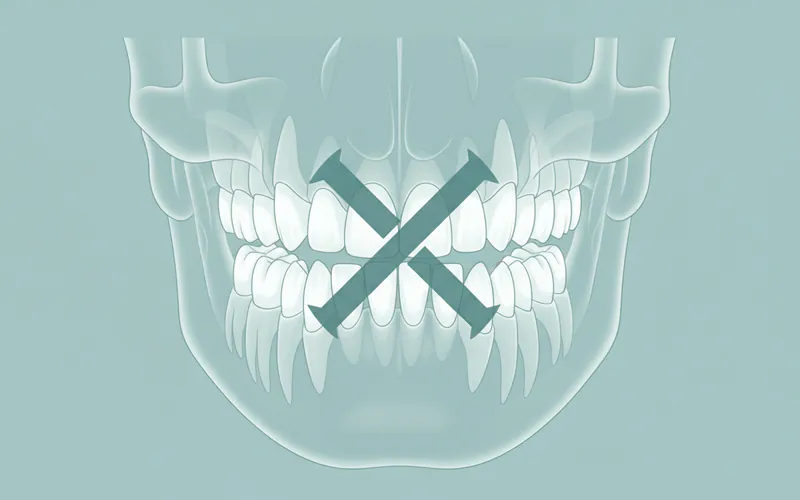
This common dental condition affects millions of people across the United States. In fact, studies suggest that up to 75% of children and adolescents exhibit some form of malocclusion, though not all cases require intervention. It's not merely an aesthetic concern; an improper bite can lead to a host of dental health issues, including difficulty chewing, speech impediments, increased risk of tooth decay and gum disease, and even jaw pain. Understanding malocclusion is the first step toward achieving optimal oral health and a confident smile. This definitive guide will explore everything you need to know about malocclusion, from its causes and types to diagnosis and comprehensive treatment options.
Key Takeaways:
- Malocclusion means "bad bite" – a misalignment between upper and lower teeth.
- It's a common condition, affecting a large percentage of the population.
- Beyond aesthetics, it can cause functional problems like chewing difficulties, speech issues, and pain.
- Untreated malocclusion increases the risk of tooth decay, gum disease, and excessive tooth wear.
- Early diagnosis and intervention are crucial, especially for children.
- A range of orthodontic treatments, including braces and clear aligners, can effectively correct malocclusion.
Detailed Explanation
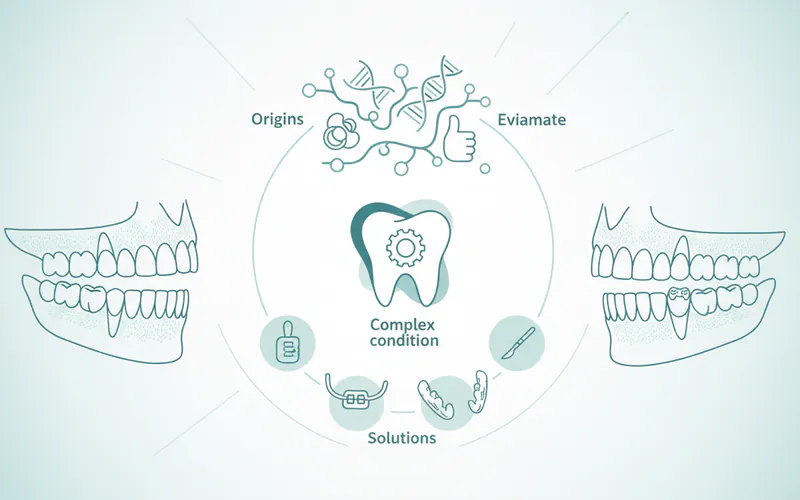
Malocclusion is a complex condition with various manifestations, origins, and solutions. Understanding these nuances is key to effective management.
Types and Classifications of Malocclusion
Malocclusions are broadly categorized using Angle's Classification, which primarily focuses on the relationship between the first molars. Beyond this, specific bite issues further define the type of malocclusion.
Angle's Classification:
- Class I Malocclusion (Neutrocclusion): This is the most common type. The upper and lower molars are in a normal relationship, but there are other individual tooth misalignments, such as crowding, spacing, rotations, or minor overbite or overjet (horizontal overlap). The bite is generally correct in the molar region, but other teeth are crooked or out of alignment.
- Class II Malocclusion (Distocclusion / Overbite): In this type, the upper jaw and teeth protrude significantly forward relative to the lower jaw and teeth. The upper first molar is positioned too far forward compared to the lower first molar. This often results in a pronounced overbite (deep bite) where the upper front teeth significantly overlap the lower front teeth vertically, or a large overjet where the upper front teeth stick out horizontally. This is sometimes referred to as "buck teeth."
- Class III Malocclusion (Mesiocclusion / Underbite): Here, the lower jaw and teeth protrude forward relative to the upper jaw and teeth. The lower first molar is positioned too far forward compared to the upper first molar. This creates an underbite, where the lower front teeth sit in front of the upper front teeth when the jaw is closed.
Specific Bite Issues (Often seen in conjunction with Angle's Classes):
- Overbite (Deep Bite): Occurs when the upper front teeth overlap the lower front teeth excessively, often covering more than 50% of the lower teeth. This can lead to wear on the lower front teeth, gum irritation, and jaw pain.
- Underbite: The opposite of an overbite, where the lower front teeth bite in front of the upper front teeth. This can cause uneven wear, difficulty biting and chewing, and speech issues.
- Crossbite: This occurs when some upper teeth bite inside the lower teeth.
- Anterior Crossbite: One or more upper front teeth bite behind the lower front teeth.
- Posterior Crossbite: One or more upper back teeth bite inside the lower back teeth. A crossbite can affect one side (unilateral) or both sides (bilateral) of the mouth, potentially leading to uneven jaw growth, tooth wear, and functional problems.
- Open Bite: Characterized by a space between the upper and lower teeth when the jaws are closed.
- Crowding: When there isn't enough space in the jaw for all teeth to erupt properly, causing them to overlap, rotate, or push against each other. This is one of the most common reasons for orthodontic treatment.
- Spacing (Diastema): Gaps between teeth, often due to missing teeth, small teeth, or a large jaw. A common example is a diastema between the two upper front teeth.
- Rotated Teeth: Teeth that have erupted twisted or turned out of their normal alignment.
Causes and Risk Factors
Malocclusion is rarely caused by a single factor but often results from a combination of genetic, environmental, and behavioral influences.
Genetic Factors (Heredity):
- Jaw Size and Shape: The size and shape of the jaws, and the size of the teeth, are largely inherited. If one parent has a small jaw and another has large teeth, the child may inherit both, leading to crowding.
- Tooth Size and Number: Inherited tooth sizes that don't match jaw size can lead to crowding or spacing. Missing teeth (hypodontia) or extra teeth (supernumerary teeth) can also be genetic.
- Facial and Cranial Development: Inherited patterns of facial growth can predispose individuals to specific malocclusion types, such as Class II or Class III jaw relationships.
Early Childhood Habits:
- Prolonged Thumb Sucking or Pacifier Use: Beyond the age of 3-4 years, these habits can exert pressure on the developing teeth and jaw, leading to open bites, flared upper front teeth, and constricted upper jaws.
- Tongue Thrusting: A swallowing pattern where the tongue pushes against the front teeth, potentially causing an open bite.
- Mouth Breathing: Chronic mouth breathing, often due to allergies, enlarged tonsils, or adenoids, can alter facial growth patterns, leading to a narrow upper jaw and potential open bite.
Dental Factors:
- Premature Loss of Primary (Baby) Teeth: If baby teeth are lost too early due to decay or injury, adjacent teeth can drift into the vacant space, blocking the eruption path of the permanent teeth.
- Late Loss of Primary Teeth: If baby teeth are retained too long, they can block the eruption of permanent teeth, causing them to erupt out of alignment.
- Impacted Teeth: Teeth that are unable to erupt into their proper position because they are blocked by other teeth or bone (wisdom teeth are a common example, but can also occur with canines).
- Supernumerary (Extra) Teeth: Can cause crowding or block the eruption of normal teeth.
- Missing Teeth (Congenital or Extracted): Can lead to shifting of adjacent teeth and spacing issues.
- Poorly Fitted Dental Restorations: Crowns, fillings, or bridges that are not properly aligned can interfere with the bite.
Trauma:
- Facial or Jaw Injuries: Accidents can alter the position of teeth or damage the developing jaw, leading to malocclusion.
Medical Conditions:
- Certain rare genetic syndromes or developmental disorders can also be associated with specific types of malocclusion.
Signs and Symptoms to Watch For
Malocclusion can manifest in various ways, from easily noticeable crooked teeth to subtle issues causing discomfort. Recognizing these signs early is crucial.
Visible Signs:
- Visibly Crooked, Crowded, or Misplaced Teeth: The most obvious sign, where teeth overlap, are twisted, or have noticeable gaps.
- Abnormal Alignment of Teeth: Upper and lower teeth don't meet properly when the mouth is closed.
- Protruding Upper or Lower Teeth: A noticeable overjet (upper teeth stick out) or underbite (lower teeth stick out).
- Gaps (Diastemas) Between Teeth: Spaces that are larger than typical.
- Crossbite: Upper teeth biting inside lower teeth.
Functional Symptoms:
- Difficulty Chewing or Biting: Food may not be ground effectively, leading to digestive issues or avoidance of certain foods.
- Speech Difficulties: Lisping or other pronunciation problems can be caused by the tongue not being able to make proper contact with the teeth or palate.
- Mouth Breathing: If chronic, this can be a symptom of malocclusion or a contributing factor.
- Jaw Pain or Discomfort (TMJ Disorders): An imbalanced bite can put undue stress on the temporomandibular joints (TMJ), leading to pain, clicking, or locking of the jaw.
- Headaches: Chronic headaches can sometimes be linked to jaw strain from a malocclusion.
- Excessive Wear on Certain Teeth: Teeth that hit improperly can grind against each other, leading to flattened or chipped surfaces over time.
- Biting the Cheeks or Tongue: Misaligned teeth can cause accidental biting of the soft tissues inside the mouth.
Oral Hygiene Issues:
- Increased Risk of Tooth Decay (Cavities): Crooked or crowded teeth are harder to clean effectively, allowing plaque and food particles to accumulate.
- Increased Risk of Gum Disease (Gingivitis, Periodontitis): Similar to decay, poor alignment makes thorough brushing and flossing difficult, leading to gum inflammation and potential bone loss.
If you or your child exhibits any of these signs or symptoms, an evaluation by a dental professional is highly recommended.
Diagnosis Process — What Your Dentist Does
Diagnosing malocclusion is a systematic process that typically begins with your general dentist and may involve a referral to an orthodontist, a specialist in diagnosing, preventing, and treating dental and facial irregularities.
-
Comprehensive Clinical Examination:
- Visual Assessment: The dentist will carefully examine your teeth, jaws, and facial profile. They will look for obvious signs of misalignment, crowding, spacing, and abnormal jaw relationships.
- Bite Analysis: You'll be asked to bite down in different positions to assess how your upper and lower teeth meet. The dentist will evaluate for overbite, underbite, crossbite, and open bite.
- Oral Health Check: The dentist will also check for signs of tooth decay, gum disease, and any wear patterns on your teeth that might indicate an improper bite.
- Palpation of TMJ: The dentist may gently feel your jaw joints for tenderness, clicking, or popping sounds.
-
Diagnostic Records:
- Dental X-rays:
- Panoramic X-ray: Provides a broad view of the entire mouth, showing all teeth (erupted and unerupted), jawbones, and sinuses. It helps identify impacted teeth, missing teeth, bone abnormalities, and general tooth alignment.
- Cephalometric X-ray: A side-profile X-ray of the head and neck. This is crucial for orthodontists as it allows them to measure the relationships between the teeth, jaws, and facial structures. It helps in planning tooth movement and assessing skeletal growth patterns.
- Periapical X-rays: May be taken for specific teeth to assess root health or bone levels.
- Dental Impressions/3D Scans:
- Traditional Impressions: Your dentist or orthodontist will take molds of your upper and lower teeth using a soft, putty-like material. These impressions are then used to create plaster models (casts) of your teeth, allowing for a precise, 3D view of your bite from all angles.
- Digital Scans: Many modern practices use intraoral scanners to create highly accurate 3D digital models of your teeth and jaws. These digital models are quicker, cleaner, and can be easily stored and shared.
- Photographs: Extraoral (facial) and intraoral (inside the mouth) photographs are taken to document the initial state of the teeth, bite, and facial features. These serve as a baseline for treatment planning and tracking progress.
- Dental X-rays:
-
Consultation and Treatment Planning:
- Based on all the diagnostic records, your dentist or orthodontist will formulate a comprehensive treatment plan. They will explain the type of malocclusion, the recommended treatment options, the expected duration, costs, and potential outcomes.
- This is an opportunity to ask questions and discuss your concerns and aesthetic goals.
Treatment Options with Pros, Cons, and Costs
The treatment for malocclusion is highly individualized, depending on the type and severity of the condition, age, and patient preferences. The primary goal is to achieve a stable, functional, and aesthetically pleasing bite.
1. Orthodontic Appliances (Braces):
- Description: Traditional braces use brackets bonded to the teeth and connected by a wire. The wire is periodically adjusted to exert gentle, continuous pressure, gradually moving the teeth into their desired positions.
- Metal Braces: The most common type, made of high-grade stainless steel.
- Ceramic Braces: Made of clear or tooth-colored ceramic material, less noticeable than metal braces.
- Lingual Braces: Custom-made braces bonded to the inside (lingual) surface of the teeth, making them virtually invisible.
- Pros:
- Highly Effective: Can correct even complex malocclusions.
- Predictable Results: Proven track record over many decades.
- Cost-Effective (Metal): Generally the most affordable option.
- Durability: Very robust.
- Cons:
- Visibility: Metal braces are quite noticeable (less so with ceramic/lingual).
- Oral Hygiene Challenges: Food can easily get trapped, requiring meticulous cleaning.
- Dietary Restrictions: Avoid sticky, hard, or crunchy foods.
- Initial Discomfort: Soreness after adjustments.
- Lingual Braces are Expensive & Can Affect Speech: Also harder to clean.
- Cost (US):
- Metal Braces: $3,000 - $7,500
- Ceramic Braces: $4,000 - $8,500
- Lingual Braces: $8,000 - $12,000+
2. Clear Aligners (e.g., Invisalign):
- Description: A series of custom-made, clear, removable plastic trays that gradually shift teeth. Each aligner tray is worn for 1-2 weeks before moving to the next in the series.
- Pros:
- Nearly Invisible: Very discreet, popular among adults.
- Removable: Can be taken out for eating, brushing, and flossing, improving oral hygiene.
- Fewer Dietary Restrictions: No food limitations when aligners are removed.
- Comfort: Generally smoother and less irritating to soft tissues than braces.
- Cons:
- Compliance is Key: Must be worn for 20-22 hours per day to be effective.
- Not Suitable for All Cases: May not be ideal for very complex malocclusions (though capabilities are expanding).
- Cost: Often comparable to or slightly more expensive than traditional braces.
- Attachments: Small, tooth-colored "buttons" may be bonded to teeth to help aligners grip, making them slightly less invisible.
- Cost (US): $3,500 - $8,000+
3. Dental Appliances:
- Description: Used to modify jaw growth, create space, or correct specific issues.
- Palatal Expanders: Widen the upper jaw, often used in children with crossbites or narrow arches.
- Space Maintainers: Preserve space for permanent teeth if baby teeth are lost prematurely.
- Headgear: External appliance used to correct severe bite problems by influencing jaw growth.
- Retainers: Worn after active treatment to hold teeth in their new positions (fixed or removable).
- Pros: Targeted correction, often used in interceptive orthodontics.
- Cons: Some can be bulky or require significant patient cooperation.
- Cost (US): Varies greatly, often included in overall orthodontic treatment or $500 - $2,500 as a separate appliance.
4. Tooth Removal (Extractions):
- Description: In cases of severe crowding or to facilitate jaw alignment, one or more teeth (often premolars) may need to be extracted to create space.
- Pros: Creates necessary space for alignment without expansion.
- Cons: Irreversible, can be a deterrent for some patients.
- Cost (US): Typically $150 - $400 per tooth (simple extraction), more for surgical extractions.
5. Orthognathic Surgery (Jaw Surgery):
- Description: For severe skeletal malocclusions where the jaws are significantly misaligned and cannot be corrected by orthodontics alone. Surgery repositions the upper jaw, lower jaw, or both, typically in conjunction with braces.
- Pros: Corrects severe functional and aesthetic issues, life-changing results.
- Cons: Major surgery with significant recovery time, risks associated with surgery.
- Cost (US): $20,000 - $50,000+ (can be partially covered by medical insurance if deemed medically necessary).
Comparison Table: Common Malocclusion Treatments
| Feature | Traditional Braces | Clear Aligners (Invisalign) | Orthognathic Surgery |
|---|---|---|---|
| Visibility | Noticeable (metal/ceramic) | Nearly invisible | No external appliance |
| Removable | No | Yes | N/A |
| Comfort | Initial soreness, potential irritation | Generally smoother, initial pressure | Post-op swelling, discomfort |
| Oral Hygiene | Challenging, meticulous cleaning | Easier, remove to brush/floss | Normal after healing |
| Dietary Restrictions | Many (sticky, hard foods) | None (remove to eat) | Soft diet initially |
| Treatment Time | 18-36 months | 6-24 months | 12-24 months (with braces) + recovery |
| Complexity | All types, including severe | Most mild-moderate, some complex | Severe skeletal discrepancies |
| Average Cost (US) | $3,000 - $8,500 | $3,500 - $8,000+ | $20,000 - $50,000+ |
Step-by-Step: What to Expect During Treatment
Embarking on malocclusion treatment is a journey that typically follows a predictable sequence, especially for orthodontic care.
- Initial Consultation & Records:
- Your first visit involves a thorough examination, discussion of your concerns, and potentially taking initial diagnostic records (X-rays, photos, scans/impressions). This phase helps the orthodontist understand your specific needs.
- Treatment Planning:
- The orthodontist meticulously analyzes your diagnostic records to create a customized treatment plan. They will explain the proposed approach, the appliances to be used, the estimated timeline, and the expected outcomes. This is your opportunity to ask questions and gain clarity.
- Appliance Placement (e.g., Braces Bonding or Aligners Delivery):
- For Braces: Brackets are carefully bonded to each tooth, and the archwires are threaded through them. This appointment usually takes 1-2 hours.
- For Aligners: You will receive your first sets of aligners, along with instructions on how to wear and care for them. Any necessary attachments (small, tooth-colored bumps) will also be bonded to your teeth.
- Regular Adjustments/Aligner Changes:
- For Braces: You'll visit the orthodontist every 4-8 weeks for adjustments. The archwire may be changed, tightened, or bent to continue moving your teeth.
- For Aligners: You'll typically switch to a new set of aligners every 1-2 weeks at home, with periodic check-up appointments every 6-10 weeks to monitor progress and receive new sets of aligners.
- Addressing Specific Issues:
- Throughout treatment, additional appliances like rubber bands (elastics), springs, or temporary anchorage devices (TADs) may be introduced to correct specific bite relationships or move stubborn teeth.
- Debanding/Completion of Aligner Treatment:
- Once your teeth have reached their ideal positions, the braces will be removed (debanding). This is often an exciting day! For aligner users, the final aligner marks the end of active treatment.
- Retention Phase:
- This is a critical, lifelong phase. Retainers (either fixed, removable, or both) are prescribed to hold your teeth in their new positions. Without retainers, teeth tend to shift back towards their original positions, a phenomenon known as relapse. Consistent retainer wear is essential for maintaining your results.
Recovery Timeline and Aftercare
The "recovery" from malocclusion treatment isn't a single event but an ongoing process of adjustment and maintenance.
Immediate Aftercare (First few days/weeks):
- Discomfort/Soreness: It's normal to experience some pain or tenderness in your teeth and jaws after braces are placed or adjusted, or when starting a new set of aligners. Over-the-counter pain relievers like ibuprofen or acetaminophen can help.
- Soft Food Diet: Stick to soft foods for the first few days to a week after initial placement or adjustments.
- Irritation: Braces can cause irritation to the cheeks, lips, and tongue. Orthodontic wax can be applied to rough spots for relief.
- Speech Changes: You might experience a temporary lisp or difficulty speaking, especially with lingual braces or new aligners, which usually resolves within a few days.
During Treatment Aftercare:
- Meticulous Oral Hygiene: This is paramount.
- Braces: Brush after every meal, use specialized floss threaders or interdental brushes to clean around brackets and wires. Your orthodontist will provide specific instructions.
- Aligners: Remove aligners to brush and floss normally. Clean aligners daily with lukewarm water and a soft brush or aligner cleaning tablets.
- Dietary Modifications (Braces): Avoid hard, sticky, or crunchy foods that can break brackets or bend wires.
- Regular Check-ups: Attend all scheduled adjustment or progress appointments.
- Wear Appliances as Directed: Consistently wear rubber bands, headgear, or aligners for the prescribed hours.
Post-Treatment Aftercare (Retention Phase):
- Retainer Wear: This is the most crucial part of long-term success.
- Fixed Retainers: A thin wire bonded to the back of the front teeth. Require diligent flossing.
- Removable Retainers: Worn full-time initially (except for eating and brushing), then gradually tapered to nighttime-only wear.
- Continued Oral Hygiene: Maintain excellent brushing and flossing habits.
- Regular Dental Check-ups: Continue seeing your general dentist for cleanings and check-ups.
- Retainer Replacement: If a retainer is lost or broken, contact your orthodontist immediately to have it repaired or replaced.
Prevention Strategies
While some forms of malocclusion are hereditary and unavoidable, many others can be prevented or intercepted with early attention.
- Early Orthodontic Evaluation (Phase 1 Orthodontics): The American Association of Orthodontists (AAO) recommends a child's first orthodontic visit by age 7. At this age, a child's teeth and jaws are still developing, allowing an orthodontist to:
- Identify developing bite problems.
- Guide jaw growth (e.g., with palatal expanders for crossbites).
- Correct harmful oral habits.
- Manage space for erupting permanent teeth.
- Reduce the need for more extensive treatment later.
- Address Harmful Oral Habits Early:
- Thumb/Finger Sucking: Encourage cessation by age 3-4. If habits persist, consult a dentist or pediatrician for strategies.
- Pacifier Use: Wean children from pacifiers by age 2-3.
- Tongue Thrusting: May require myofunctional therapy (exercises to retrain tongue position).
- Mouth Breathing: Identify and address underlying causes (e.g., allergies, enlarged tonsils/adenoids) with a physician.
- Maintain Good Oral Hygiene: Prevent premature loss of baby teeth due to decay, which can lead to space loss for permanent teeth.
- Regular Dental Check-ups: Consistent visits to your general dentist allow for early detection of potential issues, monitoring of tooth eruption, and maintenance of overall oral health.
- Protect Teeth from Trauma: Use mouthguards during sports to prevent dental injuries that can cause tooth displacement or jaw fractures.
- Balanced Diet: Ensure adequate nutrition for healthy bone and tooth development.
Cost Ranges in the US (with/without insurance)
The cost of malocclusion treatment in the US can vary significantly based on several factors: the type and severity of malocclusion, the chosen treatment method, the duration of treatment, the orthodontist's fees, and geographic location.
- Initial Consultation & Records: $0 - $300 (many orthodontists offer free initial consultations).
- Phase 1 (Interceptive) Orthodontics: $2,000 - $4,000
- Comprehensive Orthodontics (Braces or Aligners):
- Metal Braces: $3,000 - $7,500
- Ceramic Braces: $4,000 - $8,500
- Lingual Braces: $8,000 - $12,000+
- Clear Aligners (Invisalign): $3,500 - $8,000+
- Retainers: Often included in the total treatment cost, but replacement retainers can cost $150 - $500 each.
- Extractions: $150 - $400 per tooth (simple), $300 - $800 per tooth (surgical).
- Orthognathic Surgery (Jaw Surgery): $20,000 - $50,000+ (This is for the surgical procedure itself; orthodontic treatment before and after surgery adds to the total).
Insurance Coverage:
- Dental Insurance:
- Many dental insurance plans offer some coverage for orthodontic treatment, especially for children and adolescents. Coverage typically ranges from 25% to 50% of the cost, often with a lifetime maximum benefit (e.g., $1,000 - $3,000).
- Adult orthodontic coverage is less common or has lower benefits.
- It's crucial to check your specific policy details, including waiting periods and age limits.
- Medical Insurance:
- Orthognathic surgery (jaw surgery) is often covered by medical insurance if it's deemed medically necessary to correct a functional problem (e.g., difficulty chewing, breathing, or severe TMJ issues), rather than purely for cosmetic reasons. Coverage can be substantial but may involve deductibles and co-pays.
- Without Insurance:
- For those without insurance, many orthodontic practices offer flexible payment plans, interest-free financing options, or discounts for upfront payment. Health Savings Accounts (HSAs) and Flexible Spending Accounts (FSAs) can also be used for treatment costs with pre-tax dollars.
For Parents / Pediatric Considerations
Addressing malocclusion in children is particularly important due to their ongoing growth and development.
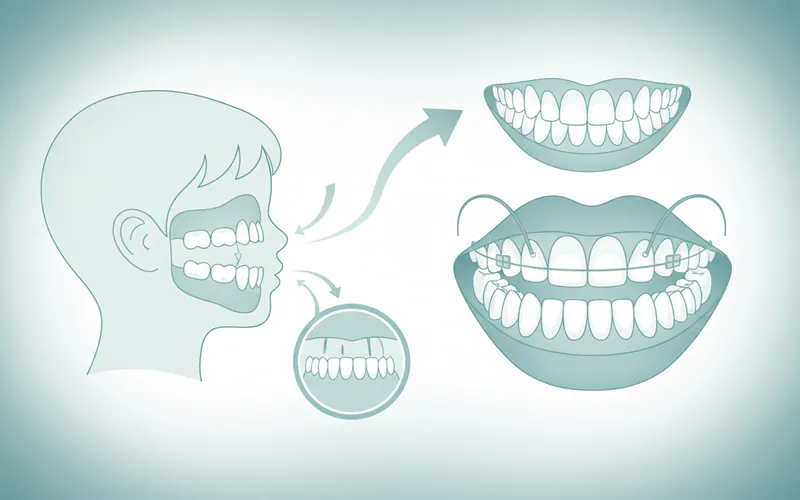
- Early Intervention (Phase 1 Orthodontics): As mentioned, the AAO recommends an orthodontic check-up by age 7. This allows the orthodontist to identify minor issues before they become major problems. Early treatment, known as Phase 1 or interceptive orthodontics, can guide jaw growth, correct crossbites, make space for crowded teeth, or address harmful habits.
- Common Pediatric Malocclusions:
- Thumb Sucking/Pacifier Use: Prolonged habits can lead to open bites and flared front teeth.
- Posterior Crossbites: Often treated with palatal expanders to widen the upper jaw.
- Crowding: Early detection can allow for space maintenance or timely extractions if necessary.
- Early or Late Loss of Primary Teeth: Can disrupt the natural eruption sequence of permanent teeth.
- Benefits of Early Treatment:
- Reduced Need for Future Extractions: Guiding growth can often create enough space.
- Improved Jaw Growth: Correcting skeletal discrepancies while the child is still growing.
- Reduced Treatment Time for Phase 2: If a second phase of treatment (full braces) is needed, it may be shorter and less complex.
- Enhanced Self-Esteem: Addressing visible issues early can positively impact a child's confidence.
- Parental Role: Parents play a crucial role in ensuring their child maintains good oral hygiene, adheres to dietary restrictions (if applicable), and complies with wearing any prescribed appliances or retainers.
Frequently Asked Questions
How much does malocclusion treatment cost?
The cost of malocclusion treatment in the US varies widely, ranging from $2,000 for simple interceptive treatments to over $12,000 for complex cases with lingual braces, and $20,000-$50,000+ for jaw surgery. Traditional metal braces typically fall between $3,000 and $7,500, while clear aligners like Invisalign are usually $3,500 to $8,000+. Many factors influence the final price, including the type of malocclusion, the chosen appliance, treatment duration, and geographic location.
Is malocclusion treatment painful?
Most malocclusion treatments, especially those involving orthodontics, can cause some discomfort, but it's rarely described as severe pain. You might experience soreness or pressure in your teeth and jaws for a few days after braces are first placed, or after adjustments, or when switching to new clear aligners. This discomfort is manageable with over-the-counter pain relievers and usually subsides quickly. The soft tissues of the mouth may also experience temporary irritation as they adjust to new appliances.
How long does malocclusion treatment take?
The duration of malocclusion treatment depends on its complexity and the chosen method. Most comprehensive orthodontic treatments (braces or clear aligners) last between 18 and 36 months. Simpler cases might be completed in as little as 6-12 months, while very severe cases, especially those requiring jaw surgery, can extend beyond 3 years. Consistent patient compliance (wearing aligners or elastics as instructed) can significantly impact the treatment timeline.
Are there alternatives to braces for malocclusion?
Yes, several alternatives to traditional braces exist. Clear aligners (like Invisalign) are a popular choice for their discreet appearance and removability. For specific issues, dental appliances such as palatal expanders can correct narrow jaws, and retainers are crucial for maintaining results post-treatment. In severe skeletal cases, orthognathic (jaw) surgery combined with orthodontics is the most effective solution. The best alternative depends on the specific type and severity of your malocclusion.
Does dental insurance cover malocclusion treatment?
Many dental insurance plans offer some coverage for orthodontic treatment, particularly for children and adolescents. Coverage typically ranges from 25% to 50% of the cost, often with a lifetime maximum benefit (e.g., $1,000 - $3,000). Adult orthodontic coverage is less common or has lower benefits. It's essential to review your specific policy to understand waiting periods, age limits, and the extent of coverage. For jaw surgery, medical insurance may provide coverage if the procedure is deemed medically necessary.
Can malocclusion correct itself?
In most cases, malocclusion does not correct itself. While minor shifts can occur, significant dental or skeletal misalignments typically require professional intervention. In children, some very mild conditions might spontaneously improve with the cessation of harmful habits (like thumb sucking), but this is rare for moderate to severe malocclusions. Without treatment, malocclusion often worsens over time and can lead to more serious dental and health problems.
What happens if malocclusion is left untreated?
Leaving malocclusion untreated can lead to a range of complications:
- Increased risk of tooth decay and gum disease due to difficulty cleaning crowded or misaligned teeth.
- Abnormal wear and tear on tooth surfaces, leading to chipping, fractures, or sensitivity.
- Speech impediments (e.g., lisps).
- Difficulty chewing and biting, potentially affecting digestion.
- Jaw pain (TMJ disorders), headaches, and facial muscle discomfort.
- Psychological impact from dissatisfaction with one's smile and appearance.
- In severe cases, breathing problems (especially sleep apnea) and continued abnormal jaw growth.
What's the difference between an orthodontist and a general dentist for malocclusion?
A general dentist is trained to diagnose malocclusion and can provide basic orthodontic care in some cases, such as removable aligners for very mild issues. However, an orthodontist is a dental specialist who has completed an additional 2-3 years of specialized training beyond dental school. This advanced education focuses specifically on diagnosing, preventing, and treating dental and facial irregularities. For comprehensive and complex malocclusion treatment, an orthodontist possesses the expertise to achieve the best functional and aesthetic outcomes. Your general dentist can often provide a referral to a trusted orthodontist.
When to See a Dentist
It's always a good idea to discuss any concerns about your bite or your child's bite with a dental professional.
Routine Check-ups:
- Children by age 7: The American Association of Orthodontists recommends this initial screening to assess developing issues.
- Any age: If you notice any of the signs or symptoms of malocclusion, such as crooked teeth, difficulty chewing, jaw pain, or excessive tooth wear.
- Annual dental exams: Your general dentist will monitor your bite as part of your regular check-ups.
When to Seek Immediate Consultation (not necessarily emergency, but prompt):
- Noticeable changes in bite: If your bite suddenly feels different, or if teeth have shifted significantly after trauma or without clear reason.
- Persistent jaw pain or headaches: Especially if accompanied by clicking, popping, or limited jaw movement.
- Difficulty closing lips or breathing: Severe overjets or underbites can sometimes impact lip closure or even contribute to sleep-related breathing disorders.
- Accidental biting of cheeks or tongue: If this becomes frequent, it indicates a severe misalignment.
Even if you don't experience pain, addressing malocclusion proactively can prevent more significant problems down the road and contribute to a healthier, more confident smile for life.
Medical Disclaimer
This article is for informational purposes only and does not constitute medical advice. Always consult with a qualified dental professional for diagnosis and treatment. Do not delay seeking professional advice because of something you read on this website.