How Much Does Invisalign Cost

Key Takeaways
- Navigating the world of orthodontics can be a significant decision, both for your oral health and your wallet. For many Americans considering discreet teeth straightening, one of the first and most critical questions that comes to mind is: how much does Invisalign cost? This isn't just a simple
Navigating the world of orthodontics can be a significant decision, both for your oral health and your wallet. For many Americans considering discreet teeth straightening, one of the first and most critical questions that comes to mind is: how much does Invisalign cost? This isn't just a simple number; it's a complex equation influenced by a multitude of factors, from the severity of your dental issues to your geographical location and even your dental insurance plan. Understanding these variables is crucial to setting realistic expectations and budgeting for your new smile. This comprehensive guide from SmilePedia.net will delve deep into the financial aspects of Invisalign treatment, comparing it to other options, exploring payment plans, and outlining exactly what you can expect during your journey to a perfectly aligned smile, ensuring you have all the information needed to make an informed decision about this popular orthodontic solution.
Key Takeaways:
- Invisalign treatment typically costs between $3,000 and $8,000 in the United States, with the average hovering around $5,000.
- The price varies significantly based on treatment complexity, duration, your chosen provider's experience, and geographic location.
- Most dental insurance plans offering orthodontic benefits may cover a portion of Invisalign, similar to traditional braces, often up to $1,500-$3,000.
- Treatment duration can range from 6 months to 2 years, influencing the total cost and number of aligners required.
- Financing options like in-house payment plans, third-party medical credit, and HSAs/FSAs can make Invisalign more affordable.
- Retainers are essential post-treatment and are an additional, often separate, cost, typically ranging from $150-$500 per arch.
What Is Invisalign? An Overview
Invisalign is a revolutionary orthodontic treatment that uses a series of clear, custom-made, removable aligners to gradually shift teeth into their desired positions. Unlike traditional metal braces, which use brackets and wires, Invisalign aligners are virtually invisible, making them a popular choice for adults and teenagers seeking a more discreet way to straighten their teeth. The system was developed by Align Technology in 1997 and has since helped millions of people achieve healthier, more aesthetically pleasing smiles.
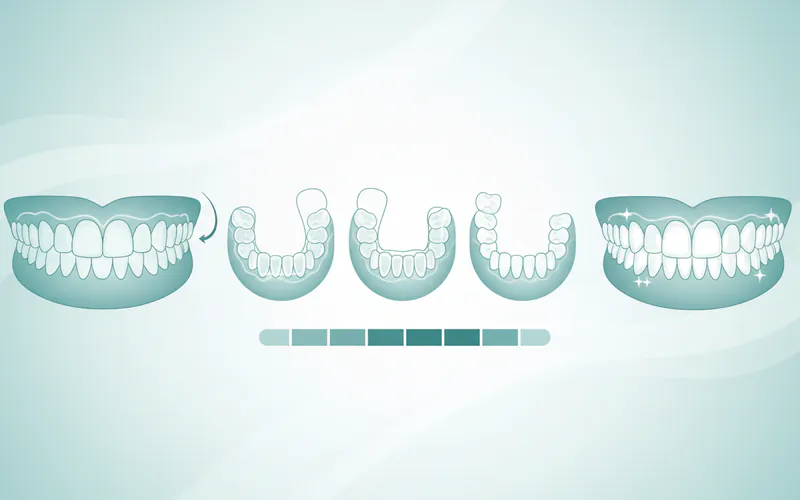
The core principle behind Invisalign is precise, controlled force. Each set of aligners is worn for 1-2 weeks before moving on to the next set in the series. Over time, these subtle movements accumulate, guided by a sophisticated 3D treatment plan created by your orthodontist using advanced imaging technology. This digital planning allows both the patient and the provider to visualize the entire treatment journey, from start to finish, before even the first aligner is created.
Invisalign is effective in treating a wide range of orthodontic issues, from simple cosmetic adjustments to more complex bite problems. Its discretion and removability offer significant lifestyle advantages, allowing patients to eat their favorite foods without restrictions and maintain excellent oral hygiene more easily than with fixed braces.
``
Types and Variations of Invisalign
While the core technology remains consistent, Invisalign offers several variations designed to address different needs and complexities, which directly impact how much Invisalign costs. Understanding these different types can help you anticipate the scope and potential expense of your treatment.
Invisalign Full (Comprehensive)
This is the most common and comprehensive form of Invisalign treatment. It's designed for moderate to severe cases of malocclusion (misalignment of teeth and bite issues). This includes significant crowding, spacing, overbites, underbites, and crossbites. Full treatment involves an unlimited number of aligners, allowing for extensive tooth movement and refinement over an extended period.
- Duration: Typically 12-24 months, but can be longer for very complex cases.
- Cost Range: Generally falls within the higher end of the spectrum, from $4,000 to $8,000.
Invisalign Lite
Invisalign Lite is designed for patients with mild to moderate orthodontic issues. This includes minor crowding, spacing, or relapse after previous orthodontic treatment. It's a more streamlined treatment protocol, usually involving a limited number of aligners (typically up to 14 pairs).
- Duration: Often 6-12 months.
- Cost Range: More affordable than Full, usually ranging from $3,000 to $5,000.
Invisalign Express
This is the shortest and most economical Invisalign option, intended for very minor cosmetic adjustments. It's suitable for patients with very minimal crowding or spacing, often involving a maximum of 5-7 aligner sets.
- Duration: As short as 3-6 months.
- Cost Range: The lowest cost option, typically $2,000 to $4,000.
Invisalign Teen
Specifically designed for teenagers, Invisalign Teen incorporates features that address the unique needs of younger patients. These include compliance indicators (small blue dots that fade with wear to show if aligners are being worn long enough), eruption tabs to accommodate erupting molars, and up to six free replacement aligners for lost or damaged ones.
- Duration: Varies greatly depending on the complexity, similar to Invisalign Full.
- Cost Range: Generally comparable to Invisalign Full, $4,000 to $8,000, accounting for the added features.
Invisalign First
This treatment is designed for children aged 6-10 who are still developing their permanent teeth. It's a Phase 1 interceptive orthodontic treatment aimed at addressing developing bite problems, creating space for permanent teeth, and guiding jaw growth. It can reduce the need for more extensive treatment later.
- Duration: Typically 6-18 months.
- Cost Range: Usually $3,000 to $6,000, depending on complexity and whether it's part of a two-phase treatment plan.
Conditions Invisalign Treats
While the article focuses on cost, understanding why someone might need Invisalign helps contextualize the varying price points. Invisalign effectively treats a variety of malocclusions, which are misalignments of the teeth and/or jaw. The severity and type of these conditions are primary determinants of treatment complexity and, consequently, how much Invisalign costs.
- Overbite (Deep Bite): When the upper front teeth significantly overlap the lower front teeth.
- Underbite: When the lower front teeth extend out in front of the upper front teeth.
- Crossbite: When some upper teeth bite inside the lower teeth.
- Open Bite: When the upper and lower front teeth do not meet when the mouth is closed.
- Diastema (Gaps/Spacing): Spaces between teeth, often caused by missing teeth or an oversized jaw.
- Crowding: When there isn't enough space in the jaw for all teeth to fit normally, causing them to overlap or twist.
- Protrusion: Front teeth that stick out excessively.
- General Straightening: For purely cosmetic improvements or minor shifts.
Your orthodontist will assess your specific condition to determine if Invisalign is the right choice and which variation would be most appropriate.
The Invisalign Treatment Process: What to Expect
Understanding the step-by-step process helps you appreciate the comprehensive nature of the treatment and the value it provides, impacting the overall cost justification.
Step 1: Initial Consultation and Assessment
Your journey begins with a thorough examination by an orthodontist. They will assess your oral health, discuss your goals, and determine if Invisalign is suitable for you. This typically involves:
- Comprehensive Dental Exam: Checking for cavities, gum disease, and overall oral health.
- Digital Scans/Impressions: Using an iTero Element scanner or traditional dental impressions to create a precise 3D model of your teeth.
- X-rays and Photographs: To capture detailed images of your teeth, roots, and jaw structure.
Based on this data, the orthodontist will develop a customized treatment plan using ClinCheck® software. This software allows you to see a virtual representation of how your teeth will move and what your final smile will look like before you even start treatment. This initial consultation is often free or a minimal fee, and it's where you'll get your first estimate of how much Invisalign costs for your specific case.
Step 2: Custom Aligner Fabrication
Once your treatment plan is approved, your custom aligners are fabricated. Align Technology uses advanced 3D printing technology to create a series of clear, thermoplastic aligners tailored precisely to your teeth. Each aligner is designed to achieve specific, controlled tooth movements.
Step 3: Starting Treatment and Wearing Aligners
You'll receive your first sets of aligners from your orthodontist. They will provide detailed instructions on how to wear and care for them. Key instructions typically include:
- Wear Time: Aligners must be worn for 20-22 hours per day, removing them only for eating, drinking anything other than water, brushing, and flossing.
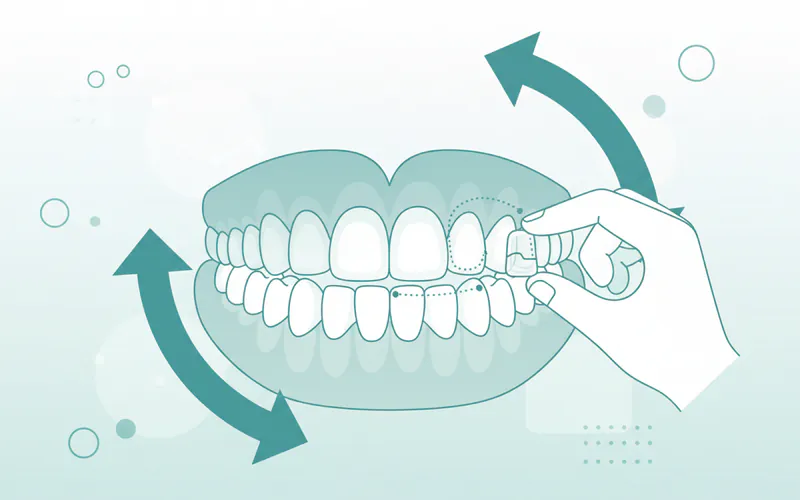
- Changing Aligners: You'll typically switch to a new set of aligners every 1-2 weeks, as instructed by your orthodontist.
- Attachments and Elastics: Some patients may require small, tooth-colored attachments (buttons) bonded to their teeth to help the aligners grip more effectively. Elastics might also be used to correct bite issues.
Step 4: Regular Progress Checks
You'll have regular check-up appointments with your orthodontist, usually every 6-8 weeks. These appointments are essential to monitor your progress, ensure the treatment is proceeding as planned, and make any necessary adjustments. Your orthodontist will provide you with your next sets of aligners during these visits.
Step 5: Refinements and Completion
As you approach the end of your initial series of aligners, your orthodontist will assess your smile. Many patients require a "refinement" stage, which involves taking new scans and ordering additional aligners to achieve the perfect final result. This is often included in the comprehensive Invisalign Full cost but may be an extra charge for Lite or Express treatments if significant adjustments are needed.
Step 6: Retention (The Lifelong Commitment)
Once your teeth have reached their final positions, the active treatment phase is complete. However, the journey isn't over. To maintain your newly straightened smile, you must wear retainers. This is a critical, lifelong step. Your orthodontist will provide you with either clear Vivera® retainers (made by Invisalign) or traditional wire retainers. Failing to wear retainers as prescribed will lead to relapse, where your teeth gradually shift back to their original positions. The cost of retainers is usually separate from the initial Invisalign treatment fee.
How Much Does Invisalign Cost? A Detailed Breakdown
This is the core of our article, so we'll dive deep into the financial aspects. How much does Invisalign cost is not a fixed price, but rather a range influenced by numerous factors.
Average US Cost Ranges
Across the United States, the cost of Invisalign can vary significantly.
- Low End: For very minor cases (e.g., Invisalign Express or Lite), costs can start at $2,000 - $4,000.
- Average/Mid-Range: Most comprehensive Invisalign treatments (Invisalign Full or Teen) fall between $4,000 - $7,000.
- High End: For highly complex cases requiring extensive treatment time or specialized care, costs can reach $8,000 or more.
The national average cost for Invisalign in the US is approximately $5,000. However, this is an average, and your specific quote will depend heavily on the factors detailed below.
Factors Influencing Invisalign Cost
- Complexity of Your Case: This is the single biggest determinant. More severe misalignment, bite issues, or the need for extensive tooth movement will require more aligners, longer treatment times, and more oversight from your orthodontist, leading to higher costs.
- Length of Treatment: Directly correlated with complexity. Shorter treatments (e.g., 6 months) are less expensive than longer ones (e.g., 24 months).
- Orthodontist's Experience and Location:
- Experience: Highly experienced orthodontists or those with a "Diamond Plus" or "Top 1%" Invisalign provider status may charge more due to their expertise and reputation.
- Geographic Location: Costs vary significantly by region. Major metropolitan areas (e.g., New York City, Los Angeles, San Francisco) typically have higher prices than rural areas or cities with lower costs of living. For example, Invisalign in Manhattan might start at $6,000, while in a smaller Midwestern town, it might start at $4,500 for a similar case.
- Included Services: What's bundled into the price?
- Initial consultation and diagnostics (often separate).
- All aligner sets.
- Mid-treatment adjustments and refinements.
- Retention (Vivera retainers are often an additional cost, typically $400-$800 for a set of four upper and lower retainers).
- Some providers include the first set of retainers, while others charge separately. Always clarify this.
- Relapse (Re-treatment): If you've had braces or Invisalign before and your teeth have shifted, the cost of re-treatment might be lower if the misalignment is minor.
Regional Cost Variations (Estimates)
| Region | Estimated Invisalign Full Cost Range |
|---|---|
| Northeast (NYC, Boston) | $5,500 - $8,500 |
| West Coast (LA, SF) | $5,000 - $8,000 |
| Mid-Atlantic (DC, Philly) | $4,500 - $7,500 |
| Southeast (Atlanta, Miami) | $4,000 - $7,000 |
| Midwest (Chicago, Dallas) | $3,500 - $6,500 |
| Rural Areas | $3,000 - $6,000 |
These ranges are estimates and can fluctuate.
Insurance Coverage for Invisalign
Many dental insurance plans cover a portion of orthodontic treatment, and Invisalign is often treated similarly to traditional braces.
- Orthodontic Benefits: Check your policy for "orthodontic coverage." This is typically a lifetime maximum benefit, meaning once you use it, it's gone.
- Coverage Amount: Common lifetime maximums for orthodontic benefits range from $1,000 to $3,000. Some plans might offer more, while others offer none.
- Deductibles and Co-payments: You'll likely need to meet your dental deductible before coverage kicks in, and you may have a co-payment percentage.
- Waiting Periods: Some plans have waiting periods (e.g., 6-12 months) before orthodontic benefits become active.
- Medically Necessary vs. Cosmetic: While most orthodontics are considered medically necessary, some plans might differentiate. Invisalign is typically covered if traditional braces would also be covered for your condition.
Pro Tip: Always contact your insurance provider directly and have your orthodontist's office help you verify benefits. They often have experience dealing with insurance companies and can give you a more accurate estimate of your out-of-pocket expenses.
Payment Plans and Financing Options
Even with insurance, a significant portion of the cost for Invisalign may be out-of-pocket. Fortunately, most orthodontic practices offer various financing options to make treatment more accessible.
- In-House Payment Plans: Many orthodontists offer interest-free payment plans, allowing you to pay a down payment and then spread the remaining balance over the course of your treatment (e.g., 12-24 months).
- Third-Party Financing: Companies like CareCredit and LendingClub specialize in healthcare financing. They offer various plans, including interest-free options for a certain period (e.g., 6, 12, 18, or 24 months), followed by standard interest rates if the balance isn't paid in full.
- Flexible Spending Accounts (FSA) and Health Savings Accounts (HSA): If you have an FSA or HSA through your employer or health plan, you can use these pre-tax dollars to pay for Invisalign treatment, saving you money on taxes.
- Credit Cards: While an option, be mindful of high interest rates if you carry a balance.
Comparison: Invisalign vs. Traditional Braces vs. Other Clear Aligners
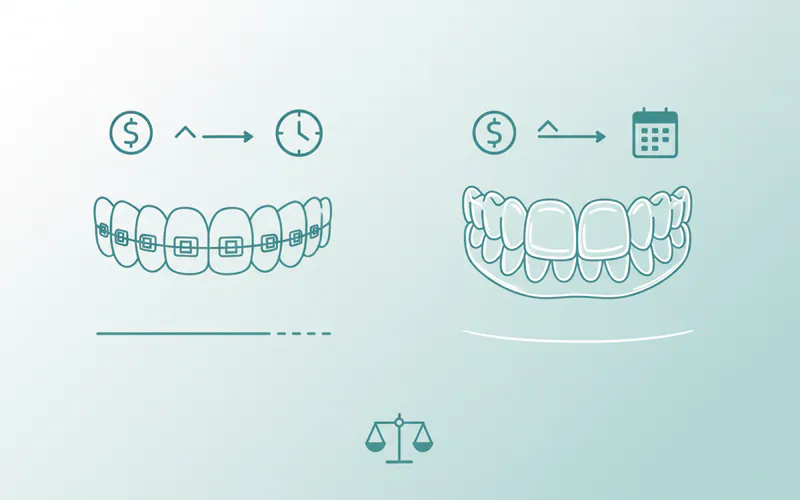
To truly understand how much Invisalign costs, it's helpful to compare it with its alternatives.
Traditional Metal Braces
The tried-and-true method for straightening teeth. They consist of metal brackets bonded to the teeth and connected by archwires.
- Pros: Highly effective for all types of cases, often slightly more affordable than Invisalign, fixed (no compliance issues).
- Cons: Highly visible, dietary restrictions, can cause discomfort/soreness, more challenging oral hygiene.
- Cost: Typically ranges from $3,000 - $7,000, with an average of $4,500 - $5,500. Some complex cases can exceed this.
Ceramic Braces
Similar to metal braces, but with clear or tooth-colored brackets, making them less noticeable.
- Pros: Less visible than metal, highly effective.
- Cons: Can stain (especially with coffee, tea, smoking), more brittle than metal, can be slightly more expensive than metal braces.
- Cost: Usually $4,000 - $8,000.
Lingual Braces
Braces placed on the inside (lingual side) of the teeth, making them completely invisible from the outside.
- Pros: Completely invisible.
- Cons: Most expensive option, can be more uncomfortable (tongue irritation), speech can be affected, more difficult to clean.
- Cost: Often the most expensive, ranging from $8,000 - $10,000+.
At-Home Clear Aligners (e.g., SmileDirectClub, Byte)
These services offer aligners directly to consumers, often without in-person visits to an orthodontist. Patients take impressions at home or visit a scanning center.
- Pros: Significantly lower cost, convenient (no regular orthodontist visits).
- Cons: Not suitable for complex cases, lack of direct supervision can lead to issues, potential for misdiagnosis or improper treatment, limited ability to correct bite issues.
- Cost: Typically $1,800 - $2,500.
``
Orthodontic Treatment Comparison Table
| Feature | Invisalign | Traditional Metal Braces | At-Home Clear Aligners |
|---|---|---|---|
| Visibility | Nearly invisible | Highly visible | Nearly invisible |
| Removability | Removable for eating, brushing, flossing | Fixed (not removable) | Removable for eating, brushing, flossing |
| Treatment for | Mild to complex cases | All cases (mild to severe) | Primarily mild cosmetic cases |
| Average Cost (US) | $3,000 - $8,000 | $3,000 - $7,000 | $1,800 - $2,500 |
| Treatment Time | 6 months - 2 years+ | 1.5 - 3 years | 4 - 8 months |
| Oral Hygiene | Easy (remove to brush/floss normally) | More challenging (food traps, special tools) | Easy (remove to brush/floss normally) |
| Diet Restrictions | None (remove aligners) | Significant (avoid sticky, hard foods) | None (remove aligners) |
| Orthodontist Visits | Every 6-8 weeks | Every 4-6 weeks | Minimal to none (remote monitoring) |
| Compliance | Requires high patient discipline | Passive (fixed) | Requires high patient discipline |
Recovery and Aftercare: The Lifelong Commitment
After investing time and money in your Invisalign treatment, proper aftercare is crucial to protect your new smile. This phase, often called retention, is lifelong and involves wearing retainers.
The Importance of Retainers
Orthodontic relapse is a common phenomenon where teeth shift back towards their original positions after braces or aligners are removed. This natural tendency is why retainers are non-negotiable. The American Dental Association (ADA) emphasizes the importance of lifelong retainer wear to maintain orthodontic results.
Types of Retainers
-
Removable Retainers:
- Vivera Retainers: Made by Align Technology, these are similar to Invisalign aligners and are custom-fit clear plastic. They are durable and comfortable. A set usually includes 4 upper and lower retainers.
- Hawley Retainers: The traditional wire and acrylic retainers. They are durable and adjustable but more noticeable.
- Cost: Removable retainers generally cost $200-$500 per arch, or $400-$800 for a full set of Vivera retainers. This cost is usually not included in your initial Invisalign fee.
-
Fixed (Permanent) Retainers:
- A thin wire bonded to the back of your front teeth (usually canine to canine) on either the top or bottom arch, or both.
- Pros: Always in place, no compliance worries, completely invisible.
- Cons: Can be harder to clean around (requiring special flossers), can break or debond, may collect plaque.
- Cost: Fixed retainers typically cost $250-$500 per arch.
Retainer Cleaner and Maintenance
Keeping your retainers clean is vital for oral hygiene and to prolong their life.
- Daily Cleaning: Brush your retainers gently with a soft toothbrush and cool water every time you brush your teeth. Avoid hot water, which can warp the plastic.
- Deep Cleaning: Use a specialized retainer cleaner solution or tablets (e.g., Retainer Brite, EverSmile WhiteFoam) once a day or a few times a week. These help remove plaque, bacteria, and odors.
- Storage: Always store removable retainers in their case when not wearing them to prevent loss or damage.
- Replacement: Retainers don't last forever. Clear plastic retainers typically need replacement every 1-5 years due to wear and tear. Hawley retainers can last longer but may need adjustments. Factor this into your long-term budget.
Pro Tip: Your orthodontist will provide specific instructions for your retainer care. Follow them diligently. If you lose or damage a retainer, contact your orthodontist immediately to prevent your teeth from shifting.
Risks and Complications of Invisalign
While Invisalign is safe and effective, like any medical treatment, it carries potential risks and complications that patients should be aware of.
- Compliance Issues: The most common "complication" is not wearing aligners for the prescribed 20-22 hours/day. This will significantly prolong treatment, lead to poor results, or even require switching to traditional braces.
- Discomfort/Soreness: It's normal to feel some pressure or mild soreness for a day or two after switching to a new set of aligners. This indicates the aligners are working.
- Temporary Speech Changes: A slight lisp can occur when first wearing aligners, but it typically resolves within a few days as your tongue adapts.
- Allergic Reactions: Though rare, some individuals may have a sensitivity to the thermoplastic material.
- Dental Health Issues: Poor oral hygiene while wearing aligners can increase the risk of cavities and gum disease, as aligners can trap food particles and bacteria against the teeth.
- Root Resorption: In rare cases, orthodontic treatment can lead to shortening of tooth roots. This is more common with traditional braces but can occur with any tooth movement.
- Black Triangles: If teeth were severely crowded, straightening them can sometimes reveal small gaps between teeth near the gum line, appearing as "black triangles." This is often due to loss of gum tissue (papilla) and can be addressed with bonding or gum contouring.
- Attachment Issues: Attachments can sometimes debond or wear down, requiring a visit to the orthodontist for re-bonding.
- Lost/Damaged Aligners: While some Invisalign Teen plans include replacements, losing or damaging aligners can delay treatment and incur additional costs.
Your orthodontist will discuss these potential risks during your consultation and ensure you are a suitable candidate for Invisalign.
Children / Pediatric Considerations: Invisalign First
For younger patients, "Invisalign First" offers an early intervention option that addresses specific developmental concerns. This falls under the umbrella of Phase 1 orthodontics, typically for children aged 6 to 10 who still have a mix of primary and permanent teeth.
Why Early Intervention?
Early treatment with Invisalign First can:
- Correct Jaw Growth: Guide jaw growth to create more space for erupting permanent teeth.
- Address Bite Issues: Correct crossbites, underbites, or severe overbites early on.
- Improve Aesthetics and Self-Esteem: Address noticeable misalignments.
- Reduce Complexity of Future Treatment: A successful Phase 1 can simplify or shorten the duration of Phase 2 treatment (full orthodontic treatment) later in adolescence.
- Prevent Dental Trauma: Reduce the risk of injury to protruding front teeth.
Invisalign First aligners are designed with features like eruption guides to accommodate growing teeth and are customized for children's smaller mouths. The ability to remove them for eating and brushing is a significant advantage for maintaining good oral hygiene in children, compared to traditional expanders or partial braces.
Cost of Invisalign First
The cost for Invisalign First typically ranges from $3,000 to $6,000. This can vary depending on the complexity and duration of the Phase 1 treatment. It's important to note that this initial phase might not eliminate the need for Phase 2 treatment later on, though it often makes it less extensive and potentially less costly. Parents should discuss the full scope of treatment and potential future needs with their orthodontist.
Cost Breakdown: Making Invisalign Affordable
Beyond the general cost ranges, let's look at specific scenarios and strategies for managing the investment.
Average US Costs: Without Insurance
| Treatment Type | Low Range | Average | High Range |
|---|---|---|---|
| Invisalign Express | $2,000 | $3,000 | $4,000 |
| Invisalign Lite | $3,000 | $4,000 | $5,000 |
| Invisalign Full/Teen | $4,000 | $5,500 | $8,000+ |
| Invisalign First | $3,000 | $4,500 | $6,000 |
| Retainers (post-treatment) | $400 | $600 | $800+ |
These figures represent the cost of the aligner treatment itself, without factoring in insurance coverage.
With Insurance: A Typical Scenario
Let's assume a full Invisalign treatment costing $5,500.
- Insurance Lifetime Max Benefit: $2,000
- Your Deductible: $50 (let's say you've met it)
- Your Co-payment: None (often not applicable for orthodontic benefits, which are typically a fixed amount)
Calculation:
- Total Cost: $5,500
- Insurance Contribution: $2,000
- Your Out-of-Pocket Cost: $3,500
This demonstrates how insurance can significantly reduce your burden, but it rarely covers the entire cost.
Payment Plans and Financing Deep Dive
- In-House Plans: Ask your orthodontist if they offer zero-interest payment plans. Many do, often requiring a down payment (e.g., $500-$1,500) and then monthly installments spread over the treatment duration. This is often the most straightforward and cost-effective financing option.
- CareCredit/LendingClub: These medical credit cards can be very useful. They often have promotional periods (e.g., 6, 12, 18, or 24 months) where no interest is charged if the balance is paid in full by the end of the promotional period. Be very careful with these; if you don't pay it off in time, deferred interest can be substantial.
- Personal Loan: A personal loan from a bank or credit union might offer a lower interest rate than a standard credit card, especially for those with good credit.
- Health Savings Account (HSA) / Flexible Spending Account (FSA): These are fantastic tax-advantaged accounts for healthcare expenses.
- HSA: Available with high-deductible health plans (HDHP). Contributions are pre-tax, grow tax-free, and withdrawals for qualified medical expenses are tax-free. Funds roll over year to year.
- FSA: Available with many employer-sponsored health plans. Contributions are pre-tax, but funds typically must be used within the plan year (some offer a grace period or limited rollover).
Pro Tip: If you have an FSA, plan carefully. You can often elect to contribute the full amount you expect to spend on Invisalign at the beginning of the plan year, allowing you to access the full amount before it's actually deducted from your paychecks.
Cost-Saving Tips for Invisalign
- Shop Around (Carefully): Get consultations from 2-3 different orthodontists. While costs may vary, prioritize quality of care and experience over just the lowest price. A good relationship with your provider is key.
- Ask About Discounts: Some offices offer discounts for paying in full upfront, or for multiple family members undergoing treatment.
- Utilize Tax-Advantaged Accounts: Maximize your HSA or FSA contributions.
- Confirm What's Included: Before committing, ensure you know exactly what your quoted price includes: aligners, appointments, refinements, and especially retainers. Unforeseen costs can add up.
- Maintain Excellent Compliance: The biggest way to control costs is to wear your aligners as directed. Non-compliance leads to extended treatment times, needing more aligners, and potentially additional fees for new scans and refinements.
- Maintain Your Retainers: Losing or damaging retainers, especially multiple times, can add hundreds of dollars in replacement costs. Invest in a good retainer cleaner and always store them safely.

Frequently Asked Questions
How painful is Invisalign treatment?
Invisalign treatment typically causes mild discomfort rather than severe pain. You'll likely feel pressure and a sensation of tightness for a day or two after switching to a new set of aligners as your teeth begin to move. This discomfort is usually manageable with over-the-counter pain relievers and subsides quickly.
How long does Invisalign treatment take?
The duration of Invisalign treatment varies widely depending on the complexity of your case. Minor cosmetic adjustments might take as little as 6-12 months, while more significant bite corrections or severe crowding can take 18-24 months or even longer. Your orthodontist will provide a personalized timeline during your initial consultation.
Can I eat and drink normally with Invisalign?
Yes, one of the major advantages of Invisalign is that you remove the aligners for all meals and snacks. This means there are no dietary restrictions, and you can enjoy all your favorite foods. You should only drink plain water while wearing your aligners to avoid staining them or trapping sugars against your teeth.
What happens if I don't wear my Invisalign aligners enough?
Failing to wear your Invisalign aligners for the recommended 20-22 hours per day will significantly hinder your treatment progress. Your teeth won't move as planned, leading to delays, the need for new scans and additional aligners, and potentially extended treatment time, all of which could incur extra costs or compromise your final results.
Is Invisalign covered by insurance?
Many dental insurance plans with orthodontic benefits do cover a portion of Invisalign treatment, often treating it similarly to traditional braces. Coverage typically involves a lifetime maximum benefit, ranging from $1,000 to $3,000. It's crucial to check your specific policy details and work with your orthodontist's office to verify your benefits.
Are there any age limits for Invisalign?
Invisalign is suitable for most teenagers and adults. There's also Invisalign First specifically designed for children aged 6-10 for early intervention. As long as your teeth and gums are healthy, there is generally no upper age limit for Invisalign, making it a popular choice for adults seeking to improve their smiles.
What are the alternatives to Invisalign?
Alternatives to Invisalign include traditional metal braces, ceramic braces (less visible), lingual braces (placed on the back of teeth), and some at-home clear aligner systems. Each option has different costs, aesthetic profiles, treatment capabilities, and comfort levels, which your orthodontist can discuss in detail.
How much do retainers cost after Invisalign?
Retainers are essential after Invisalign treatment to maintain your results and prevent your teeth from shifting back. The cost of retainers is usually separate from the initial Invisalign fee. Removable Vivera retainers typically cost $400-$800 for a set, while fixed retainers can range from $250-$500 per arch.
Do I need to see an orthodontist or a general dentist for Invisalign?
While some general dentists offer Invisalign, it is highly recommended to consult with a board-certified orthodontist. Orthodontists specialize in tooth movement and bite correction, possessing extensive training and experience to diagnose complex cases, plan treatment meticulously, and manage any potential complications, ensuring the best possible outcome for your smile.
Can I get Invisalign if I have crowns or veneers?
Yes, in many cases, you can still get Invisalign if you have crowns, bridges, or veneers. The treatment plan will need to be carefully designed by your orthodontist to account for these existing restorations. Attachments can be placed on crowns, and your orthodontist will ensure that tooth movements don't negatively impact your dental work.
When to See a Dentist or Orthodontist
If you're considering Invisalign or any orthodontic treatment, the best first step is always a consultation with a qualified dental professional.
Routine Care Guidance
- Regular Dental Check-ups: Continue with your routine dental cleanings and check-ups every six months. Your general dentist will monitor your overall oral health during orthodontic treatment.
- Initial Interest in Straightening: If you're simply curious about straightening your teeth, whether for aesthetic reasons or minor functional concerns, schedule a consultation with an orthodontist. Most offer free or low-cost initial evaluations.
Red Flags vs. Scheduled Appointment Guidance
- Red Flags (Schedule an appointment soon):
- Persistent jaw pain or clicking sounds.
- Difficulty chewing or biting.
- Speech impediments related to tooth alignment.
- Frequent biting of your cheek or tongue.
- Excessive wear on certain teeth.
- Significant cosmetic concerns that impact your self-esteem.
- Any new or worsening gaps or crowding.
- Warning Signs During Treatment (Contact your orthodontist immediately):
- Severe, persistent pain that over-the-counter medication doesn't alleviate.
- A broken or lost aligner (especially if you're not able to switch to the next or previous set).
- An attachment that has come off.
- Any signs of gum swelling, bleeding, or infection around your teeth.
- Difficulty removing or inserting aligners.
- Your aligners no longer fitting correctly or feeling "loose" when they shouldn't.
Early detection and intervention, whether for starting treatment or addressing a complication, can save you time, discomfort, and potentially additional costs in the long run. Don't hesitate to reach out to a professional with any questions or concerns about your oral health or orthodontic journey.
Frequently Asked Questions
Medically Reviewed Content
This article was written by our dental health editorial team and reviewed for medical accuracy. Our content follows strict editorial guidelines for reliability and trustworthiness.
Medical Disclaimer
This article is for informational purposes only and does not constitute medical advice. Always consult with a qualified dental professional for diagnosis and treatment. Do not delay seeking professional advice because of something you read on this website.
Related Articles
Retainer Fee: Complete Guide
The journey to a perfectly aligned smile doesn't end when your braces come off or your last clear aligner tray is discarded. In fact, a crucial phase, often overlooked but absolutely essential for maintaining your results, begins: retention. For many, the idea of a retainer fee can be an unexpec
February 22, 2026
Braces for Adults: Complete Guide
Braces for Adults: Complete Guide Category: Orthodontics
February 22, 2026
Invisalign Braces: Complete Guide
A radiant, perfectly aligned smile is more than just aesthetically pleasing; it's a gateway to improved oral health, enhanced confidence, and even better overall well-being. For millions of Americans seeking to correct misaligned teeth, the thought of traditional metal braces can be daunting, often
February 22, 2026
Adult Braces: Complete Guide
Adult Braces: Complete Guide
February 22, 2026