Power Chain Braces: Complete Guide
Key Takeaways
- A perfectly aligned smile is more than just aesthetically pleasing; it's a cornerstone of optimal oral health, contributing to easier cleaning, proper chewing, and reduced risk of certain dental issues. For many individuals embarking on an orthodontic journey, traditional braces are a common path. H
A perfectly aligned smile is more than just aesthetically pleasing; it's a cornerstone of optimal oral health, contributing to easier cleaning, proper chewing, and reduced risk of certain dental issues. For many individuals embarking on an orthodontic journey, traditional braces are a common path. However, achieving precise tooth movement often requires more than just brackets and wires. This is where power chain braces come into play—a specialized component designed to fine-tune tooth alignment, effectively close gaps, and optimize bite correction.
Often introduced during later stages of orthodontic treatment, power chains are a crucial tool that orthodontists utilize to achieve the desired final results, transforming challenging tooth movements into precise adjustments. Understanding what power chains are, how they work, and what to expect when you have them can empower you as a patient, making your orthodontic experience smoother and more predictable. This comprehensive guide will delve into every aspect of power chain braces, from their function and application to associated costs, aftercare, and important considerations, equipping you with the knowledge to navigate your smile transformation confidently.
Key Takeaways:
- Power chain braces are continuous elastic chains used with traditional braces to apply continuous, gentle force for specific tooth movements.
- They are primarily used to close gaps between teeth (e.g., after extractions or due to natural spacing), correct rotations, and consolidate dental arches.
- Often introduced during the mid-to-late stages of orthodontic treatment, power chains typically remain in place for 2-12 months, depending on the desired movement.
- While generally part of the overall braces cost, some clinics might factor them into adjustment fees, which can range from $50-$300 per visit, though often included in comprehensive treatment plans, which range from $3,000-$7,000 for traditional braces.
- Patients commonly experience initial soreness and pressure for 24-72 hours after placement or adjustment, manageable with over-the-counter pain relievers and a soft diet.
- Rigorous oral hygiene and adherence to dietary restrictions (avoiding sticky, hard, or chewy foods) are crucial to prevent breakage and maintain dental health during treatment.
- Retainers for teeth are essential post-treatment to preserve the results achieved with power chains and other orthodontic appliances.
What Are Power Chain Braces? An Overview
When you envision traditional braces, you typically picture metal or ceramic brackets bonded to the teeth and connected by a thin, flexible archwire. These components work together to gradually shift teeth into their correct positions. However, for certain movements, especially closing spaces or rotating teeth, a more focused and continuous force is often required. This is precisely the role of power chain braces.

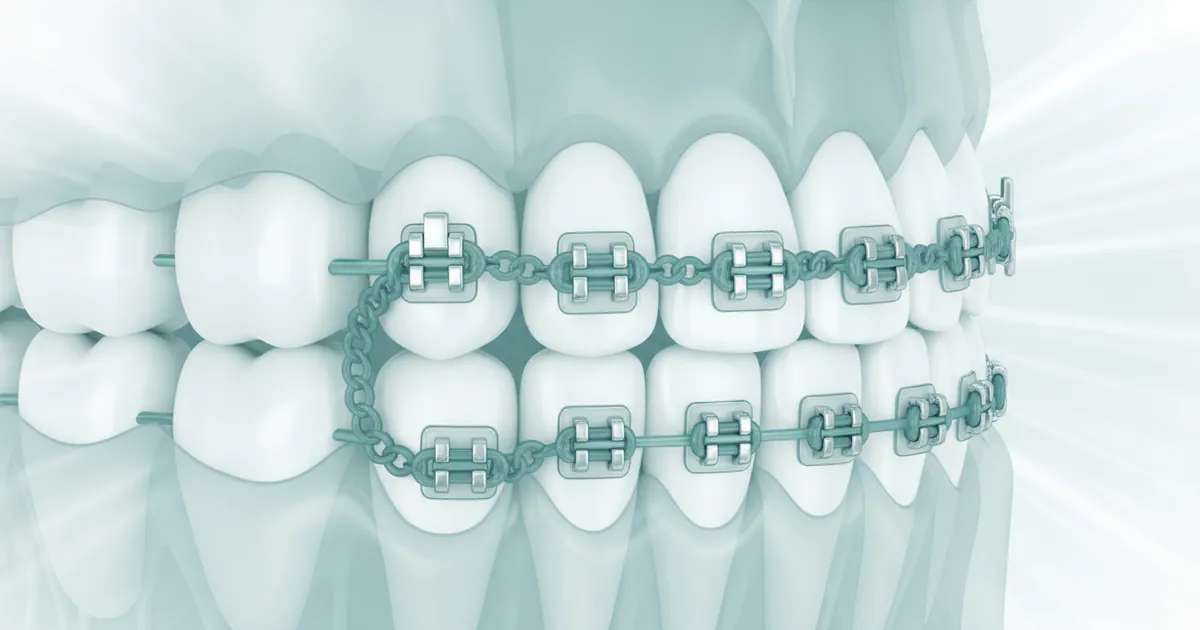
A power chain, often simply called a "chain" or "elastic chain" by orthodontists, is a continuous strand of elastic material, typically made from medical-grade polyurethane elastomer. It consists of a series of interconnected elastic modules or "links" that resemble small doughnuts or rings. These links are stretched and attached to specific brackets along the archwire, creating a continuous, pulling force.
The primary function of power chains is to apply a consistent, controlled force that moves teeth closer together or rotates them more effectively than an archwire alone. Unlike individual elastic bands, which may be applied across a few teeth for specific movements, power chains span multiple teeth, creating a cohesive pulling action across a segment of the dental arch. This continuous force is highly effective for closing gaps that result from tooth extractions, natural spacing (diastema), or consolidating spaces after initial alignment. They are also instrumental in correcting severe rotations or bringing teeth into more optimal occlusion (bite).
Power chains come in various configurations, including different link sizes (short, medium, long) and gauges, allowing orthodontists to customize the force and distance of engagement based on individual patient needs. They are routinely changed during orthodontic adjustment appointments, usually every 3-6 weeks, to maintain continuous, optimal force as teeth move. This regular replacement is critical because elastic materials naturally lose some of their elasticity over time, meaning their force diminishes.
It's important to understand that power chains are not a standalone orthodontic treatment but rather an adjunct used in conjunction with traditional braces. They are a powerful tool in an orthodontist's arsenal, allowing for precise control over tooth movement and contributing significantly to the final, detailed alignment of the smile.
``
Types and Variations of Power Chains
While the fundamental design of a power chain remains consistent—a series of interconnected elastic links—there are several variations that orthodontists use to achieve specific treatment goals. These variations primarily relate to the spacing between the links, which dictates the amount and distribution of force applied.
1. Short (Closed) Power Chains
- Description: In a short power chain, the links are very close together, or "closed." When stretched and placed over brackets, the elastic material fully encompasses each bracket wing or tie.
- Application: This configuration delivers the most concentrated and continuous force. It's often used when significant force is needed to close larger gaps, correct severe rotations, or aggressively consolidate spaces.
- Force Level: High and very continuous.
2. Medium (Moderate) Power Chains
- Description: The links in a medium power chain have a slightly larger space between them compared to short chains. When stretched, they might not completely encompass each bracket but still provide a strong, continuous pull.
- Application: This is a versatile option, commonly used for moderate gap closure, general space consolidation, and fine-tuning alignment where less aggressive force is required than with a short chain.
- Force Level: Moderate to high.
3. Long (Open) Power Chains
- Description: Long power chains have the greatest distance between their links. When stretched, they provide a gentler, more diffuse force.
- Application: These are typically used for lighter force requirements, subtle space management, or when an orthodontist wants to apply force over a broader area with less intensity. They might also be used in earlier stages of gap closure before switching to a stronger chain.
- Force Level: Lower and more spread out.
Color Options
Beyond the functional variations, power chains also come in a wide array of colors, just like the individual elastic ligatures (o-rings) used to hold the archwire to the brackets. While the color doesn't affect the chain's function, it offers a fun way for patients, especially younger ones, to personalize their braces. Popular choices include clear, silver, or tooth-colored chains for a more discreet look, or vibrant colors for a bolder statement. Many patients enjoy coordinating colors or choosing festive themes.
Pro Tip: While colored power chains can be fun, remember that certain highly pigmented foods and drinks (like curry, red wine, coffee, or berries) can stain lighter-colored or clear power chains, making them appear discolored between appointments. Darker colors tend to be more resistant to staining.
The orthodontist will select the appropriate type of power chain based on the specific movements needed, the patient's individual tooth structure, and the overall treatment plan. Regular adjustments involve changing these chains, sometimes switching between different types, to ensure optimal and progressive tooth movement.
Why Power Chains Are Used: Indications and Goals
Power chains are a targeted orthodontic tool used to address specific tooth alignment challenges that might be difficult or slower to correct with archwires alone. They are typically introduced once initial leveling and alignment of the teeth have been achieved, usually in the mid-to-late stages of treatment.
Here are the primary indications and goals for using power chain braces:
1. Closing Gaps Between Teeth (Space Closure)
This is perhaps the most common reason for using power chains.
- Extraction Spaces: If teeth were extracted (e.g., premolars for crowding relief), power chains are highly effective at pulling the remaining teeth together to close these spaces completely.
- Diastema: Natural gaps between teeth, particularly the front teeth (diastema), can be efficiently closed using power chains.
- Generalized Spacing: Some individuals have naturally spaced dentition due to jaw size or tooth size discrepancies. Power chains help consolidate these spaces.
2. Correcting Rotated Teeth
While archwires help derotate teeth, severely rotated teeth may benefit from the continuous, directional pull of a power chain. By attaching the chain strategically to specific brackets, the orthodontist can apply torque and rotational forces more effectively.
3. Consolidating the Dental Arch
After initial alignment, there might still be small, residual spaces or a need to bring the entire dental arch into a more compact and stable form. Power chains are excellent for this "space consolidation," ensuring all teeth are tightly packed together for optimal stability and aesthetics.
4. Improving Bite Alignment (Occlusion)
Power chains, especially when used in conjunction with other elastics, can contribute to correcting certain bite discrepancies. By closing spaces, they help ensure that the upper and lower teeth meet properly when chewing, improving the functional aspects of the bite.
5. Managing Anchorage
In some cases, power chains can be used to control "anchorage" – preventing unwanted tooth movement in one area while encouraging movement in another. For example, if a space needs to be closed from the back, power chains can help pull teeth forward while minimizing backward movement of the front teeth.
Pro Tip: Understanding why your orthodontist has placed power chains can help you appreciate their role in your treatment. Don't hesitate to ask your orthodontist to explain their specific purpose in your case.
What to Expect When Power Chains are Placed
Since power chains are a treatment component, they don't have "symptoms" in the traditional sense. However, there are definite sensations and experiences you can expect when they are placed or adjusted.
1. Initial Discomfort and Pressure
- Sensation: The most immediate and common experience is a feeling of tightness, pressure, or soreness on the teeth. This is a direct result of the new, continuous force being applied to move your teeth.
- Duration: This discomfort typically begins a few hours after the power chains are placed or adjusted and can last anywhere from 24 to 72 hours. For some, it might extend up to a week.
- Intensity: The intensity varies from person to person, but it's generally manageable. It feels similar to the soreness experienced after initial braces placement or a routine wire change, but often more localized to the teeth being moved.
2. Difficulty Chewing
- Sensation: Due to the soreness and movement of teeth, chewing hard or tough foods can be painful or uncomfortable.
- Duration: This usually coincides with the period of initial discomfort.
- Action: It's highly recommended to stick to a soft diet immediately after adjustments.

3. Changes in Oral Sensation
- You might feel the chain against your lips or cheeks initially, but most people quickly adapt.
- Some might experience a slight change in speech temporarily due to the new appliance, though this is less common with power chains than with initial braces or lingual braces.
4. Visual Appearance
- Power chains are visibly present on your braces. Their color choice will impact how noticeable they are.
- They will connect multiple brackets, creating a clear line of elastic material.
5. Oral Hygiene Challenges
- The additional elastic material provides more surfaces for food particles and plaque to accumulate.
- Maintaining diligent oral hygiene becomes even more critical.
Pro Tip: It's completely normal to experience some discomfort. This is a sign that your teeth are moving! If the pain is severe or prolonged beyond a few days, contact your orthodontist.
The Step-by-Step Process of Getting Power Chains
Power chains are part of your broader orthodontic treatment plan. Here's what you can expect regarding their introduction and management:
1. Initial Consultation and Treatment Planning
- First Visit: Your journey begins with a comprehensive orthodontic examination. The orthodontist will assess your bite, take X-rays, photos, and possibly 3D scans of your teeth.
- Diagnosis: They will diagnose any malocclusions, crowding, spacing, or bite issues.
- Treatment Plan: A personalized treatment plan will be developed, outlining the duration, type of braces (e.g., traditional metal, ceramic, or potentially lingual braces if aesthetics are a primary concern), and the anticipated stages of treatment.
2. Braces Placement
- Once the decision is made for traditional braces, brackets are bonded to your teeth, and the initial archwire is threaded through them. This stage focuses on initial leveling and alignment.
3. Routine Adjustments and Monitoring
- You will have regular adjustment appointments, typically every 4-8 weeks. During these visits, the orthodontist will assess tooth movement, change archwires to progressively stiffer ones, and make any necessary modifications.
4. Introduction of Power Chains (Mid-to-Late Treatment)
- Timing: Power chains are usually introduced once the initial alignment of your teeth is largely complete, and major crowding or rotation issues have been addressed by the archwires. They are typically used for the "finishing" stages, focusing on closing specific gaps, fine-tuning rotations, or consolidating spaces. This can be anywhere from 6 to 18 months into treatment.
- Application: At an adjustment appointment, the orthodontist will determine where the power chain is needed. They will stretch the chosen type of power chain (short, medium, or long) over the wings of the selected brackets, carefully attaching it to create the desired continuous pulling force. This process is usually quick and painless, though you'll feel the immediate tightness.
5. Ongoing Adjustments with Power Chains
- Regular Replacement: Power chains lose their elasticity over time (usually 3-6 weeks), so they must be replaced at each subsequent adjustment appointment.
- Monitoring Progress: The orthodontist will monitor the progress of gap closure or rotation correction. They may change the type or configuration of the power chain, adjust the archwire, or add other auxiliaries (like elastics) to work in conjunction with the power chain.
- Patient Role: Your role involves diligent oral hygiene, careful eating, and reporting any issues (like a broken chain or persistent discomfort) to your orthodontist.
6. Removal of Power Chains
- Once the desired tooth movement is achieved (gaps are closed, rotations corrected, and the arch is consolidated), the power chains will be removed. This usually happens a few appointments before your braces are fully removed, allowing for a final period of stabilization or minor adjustments with just the archwire.
7. Retention Phase
- After braces and power chains are removed, the next critical step is wearing retainers for teeth. Retainers, either fixed (bonded behind the teeth) or removable (clear aligner-style or Hawley retainers), are essential to maintain the newly achieved position of your teeth and prevent them from shifting back. This phase is lifelong for optimal results.
Cost and Insurance Considerations for Power Chains
One of the most common questions patients have about any orthodontic appliance is its cost. When it comes to power chain braces, it's important to understand how their cost is typically factored into your overall treatment.
Are Power Chains a Separate Charge?
In the vast majority of cases, power chains are not charged as a separate fee to the patient. They are considered an integral component of comprehensive orthodontic treatment with traditional braces. Their cost, along with the brackets, wires, and other elastic components, is included in the total treatment fee quoted by your orthodontist.
The total cost of traditional orthodontic treatment in the US can range significantly based on:
- Complexity of the case: More severe issues require longer treatment and more adjustments.
- Geographic location: Orthodontic fees can vary by state, city, and even within different neighborhoods.
- Orthodontist's experience: Highly experienced specialists may charge more.
- Type of braces: Metal braces are generally the least expensive, while ceramic, self-ligating, or lingual braces are typically more costly.
Average US Costs for Traditional Braces (Which Include Power Chains)
For traditional metal braces, which are the most common type used with power chains, you can expect the following ranges:
- Low-end: $3,000 - $5,000
- Mid-range: $5,000 - $7,000
- High-end: $7,000 - $10,000+ (for very complex cases or premium practices)

If an orthodontist were to itemize an adjustment visit that includes new power chains, the cost attributed to that specific procedure might range from $50 to $300. However, again, this is almost always bundled into the overall treatment cost, not an extra bill you receive at each visit.
Insurance Coverage for Orthodontics
- Dental Insurance: Many dental insurance plans offer some coverage for orthodontic treatment, especially for children and adolescents. Adult orthodontic coverage is less common but increasing.
- Lifetime Maximum: Most plans that cover orthodontics have a "lifetime maximum" benefit, which is the total amount the insurance company will pay for orthodontic treatment over your lifetime. This can range from $1,000 to $3,000 or more.
- Percentage Coverage: Plans often cover a percentage of the total cost, typically 25% to 50%, up to the lifetime maximum.
- Pre-authorization: It's crucial to get a pre-authorization from your insurance company before starting treatment. This will clarify what your plan covers and your out-of-pocket expenses.
Pro Tip: Always contact your dental insurance provider directly or have your orthodontist's office assist you in verifying your specific orthodontic benefits. Understand your lifetime maximum, annual limits (if any), and any waiting periods or age restrictions.
Payment Plans and Financing Options
Because orthodontic treatment is a significant investment, most orthodontic practices offer various payment solutions to make it more accessible:
- In-house Payment Plans: Many offices provide interest-free payment plans, allowing you to spread the total cost over the duration of your treatment with a down payment and monthly installments.
- Third-Party Financing: Companies like CareCredit or LendingClub offer specialized healthcare financing options, often with deferred interest or low-interest plans for those who qualify.
- Health Savings Accounts (HSAs) and Flexible Spending Accounts (FSAs): If you have an HSA or FSA through your employer, you can use these tax-advantaged accounts to pay for orthodontic treatment, including power chains, as they are qualified medical expenses.
Cost-Saving Tips:
- Shop Around: Get consultations from 2-3 different orthodontists. Most offer free initial consultations.
- Ask About Discounts: Some offices offer discounts for paying in full upfront, or for multiple family members undergoing treatment.
- Utilize HSAs/FSAs: Maximize contributions to these accounts if available.
- Check Dental Schools: Orthodontic treatment at university dental schools can sometimes be more affordable, as it's performed by residents under the supervision of experienced faculty.
Recovery and Aftercare with Power Chains
Once power chains are placed or adjusted, the focus shifts to proper aftercare to ensure their effectiveness, minimize discomfort, and maintain optimal oral health.
1. Managing Discomfort
- Over-the-Counter Pain Relievers: Medications like ibuprofen (Advil, Motrin) or acetaminophen (Tylenol) can effectively manage the initial soreness and pressure. Take them as directed by your orthodontist or package instructions.
- Soft Diet: For the first few days after an adjustment, stick to soft foods that require minimal chewing. Examples include:
- Soups, smoothies, yogurt, mashed potatoes, scrambled eggs.
- Cooked pasta, soft bread, bananas.
- Avoid: Hard, crunchy, sticky, or chewy foods that can irritate sensitive teeth or potentially damage the power chain or brackets.
2. Diligent Oral Hygiene
Power chains introduce more nooks and crannies where food particles and plaque can accumulate, making oral hygiene even more critical.
- Brushing: Brush thoroughly after every meal or at least twice a day for two minutes. Use a soft-bristled toothbrush and pay extra attention around the brackets and under the power chain. An electric toothbrush can be very effective.
- Flossing: Flossing becomes more challenging but is essential. Use a floss threader or orthodontic floss (which has a stiff end) to guide the floss under the archwire and between teeth. Clean around each bracket and under the chain.
- Interdental Brushes: Small interdental brushes (proxabrushes) are excellent for cleaning around brackets and wires.
- Mouthwash: An antimicrobial mouthwash can help reduce bacteria and inflammation, but it's not a substitute for brushing and flossing. A fluoride rinse can also strengthen enamel.
- Water Flosser: A water flosser (e.g., Waterpik) is highly recommended for effectively dislodging food particles and plaque from around braces and power chains.
``
3. Dietary Restrictions
Adhering to dietary restrictions is paramount to prevent damage to your power chains and braces:
- Avoid Sticky Foods: Caramel, taffy, chewing gum, gummy candies (can pull off chains or brackets).
- Avoid Hard Foods: Popcorn, nuts, hard candies, ice, raw carrots, apples (unless cut into small pieces), crusty bread (can break wires or brackets).
- Avoid Chewy Foods: Bagels, tough meats, licorice (can dislodge or break chains).
- Minimize Sugary and Acidic Foods/Drinks: These can increase the risk of tooth decay and decalcification (white spots) around brackets, which are more visible when the braces are removed.
4. What to Do in Case of a Problem
- Broken Power Chain: If a link in your power chain breaks or becomes detached from a bracket, contact your orthodontist's office. While usually not an emergency, it means the intended force is no longer being applied, which can delay treatment. Your orthodontist will advise whether you need an immediate appointment or if it can wait until your next scheduled visit.
- Poking Wire: Sometimes, as teeth move, the archwire might extend beyond the last bracket and poke your cheek. Use a cotton swab to try and push it back into place, or cover it with orthodontic wax. Contact your orthodontist for trimming.
- Loose Bracket: If a bracket comes loose, save it if it detaches completely, and contact your orthodontist.
5. Regular Orthodontic Appointments
- Continue to attend all scheduled adjustment appointments. These are crucial for your orthodontist to monitor progress, replace the power chains (which lose elasticity over time), change wires, and make necessary modifications to your treatment plan. Missing appointments can prolong your treatment time.
Pro Tip: Keep orthodontic wax handy to cover any irritating parts of your braces or power chains. It can provide temporary relief from sore spots.
Preventing Complications and Maintaining Results
While power chains are designed to be robust, certain practices can help prevent complications during treatment and ensure the long-term stability of your results.
1. Preventing Damage to Power Chains and Braces
- Strict Adherence to Dietary Restrictions: This is the most crucial preventive measure. Avoiding hard, sticky, and chewy foods significantly reduces the risk of breaking power chains, dislodging brackets, or bending wires.
- Protect Your Mouth During Sports: If you play contact sports, always wear an orthodontic mouthguard. This protects your teeth, braces, and power chains from impact.
- Avoid Non-Food Items: Don't chew on pens, pencils, ice, or your fingernails. These habits can easily damage your orthodontic appliances.
2. Preventing Oral Health Issues
- Consistent and Thorough Oral Hygiene: As detailed in the "Aftercare" section, meticulous brushing and flossing are non-negotiable. Poor hygiene during orthodontic treatment can lead to:
- Plaque Buildup and Gum Inflammation (Gingivitis): Gums can become red, swollen, and bleed easily.
- Tooth Decay (Cavities): Food trapped around brackets and chains can lead to cavities.
- Decalcification (White Spots): These are early signs of enamel demineralization and can leave permanent white marks on your teeth when braces are removed.
- Regular Dental Check-ups: Continue seeing your general dentist for routine check-ups and cleanings every six months, even while undergoing orthodontic treatment. They will work in conjunction with your orthodontist to ensure your overall oral health.
3. Ensuring Long-Term Stability: Retainers for Teeth
The most critical step in preventing relapse (teeth shifting back to their original positions) after power chains and braces are removed is the consistent and lifelong use of retainers for teeth.
- Why Retainers are Essential: The ligaments and bone supporting your teeth need time to stabilize after orthodontic movement. Without retainers, teeth will naturally want to drift back.
- Types of Retainers:
- Removable Retainers: Clear aligner-style retainers (e.g., Essix) or Hawley retainers (acrylic plate with a wire). Initially, you'll wear them full-time, then typically transition to nighttime wear.
- Fixed (Bonded) Retainers: A thin wire bonded to the back surface of your front teeth. These are permanent and discreet but require diligent flossing.
- Compliance is Key: Your orthodontist will provide specific instructions for retainer wear. Following these instructions precisely is the only way to guarantee the long-term success of your orthodontic treatment, including the precise movements achieved with power chains. Neglecting retainer wear is the leading cause of orthodontic relapse.
Pro Tip: If your removable retainer feels tight, it's a sign your teeth have shifted slightly. Wear it more diligently, and if it doesn't fit properly, contact your orthodontist for an adjustment or replacement immediately.
Risks and Complications Associated with Power Chains
While power chains are a safe and effective orthodontic tool, like any medical treatment, there are potential risks and complications. Being aware of these can help you better understand and manage your treatment experience.
1. Temporary Discomfort and Soreness
- Description: As discussed, the most common "complication" is the expected temporary pain and pressure. While not truly a complication, it's the primary side effect.
- Management: This is usually manageable with over-the-counter pain relievers and a soft diet.

2. Mechanical Issues
- Power Chain Breakage: The elastic material can snap or detach from a bracket, especially if subjected to undue force (e.g., chewing hard foods, trauma). If this happens, the intended force is lost, potentially delaying treatment.
- Bracket or Wire Damage: The constant force, particularly if misused or combined with poor eating habits, can contribute to a bracket coming loose or the archwire bending.
3. Oral Hygiene Challenges and Associated Issues
- Plaque Accumulation: The increased surface area and complex structure of power chains and braces can trap more food and plaque.
- Increased Risk of Tooth Decay: If oral hygiene is inadequate, bacteria can thrive, leading to cavities, particularly around the brackets.
- Gingivitis: Inflammation of the gums due to plaque buildup, characterized by redness, swelling, and bleeding.
- Decalcification (White Spot Lesions): These are permanent white spots on the enamel that occur when acid from plaque demineralizes the tooth surface, often visible after braces are removed. This is a significant cosmetic concern and highlights the importance of meticulous brushing.
4. Root Resorption (Rare but Serious)
- Description: This is a rare complication in which the body reabsorbs the tip of the tooth root. All orthodontic tooth movement involves some degree of root resorption and subsequent repair, but in some individuals, excessive or progressive root shortening can occur.
- Connection to Power Chains: While not solely caused by power chains, the continuous force they apply contributes to overall tooth movement.
- Monitoring: Orthodontists monitor for this with X-rays throughout treatment. In severe cases, treatment may need to be modified or paused.
5. Allergies
- Description: Although rare, some individuals may have an allergic reaction to the materials used in power chains (polyurethane elastomer) or other components of braces (nickel in metal brackets).
- Symptoms: Swelling, rash, or irritation in the mouth or on the lips.
- Action: If you suspect an allergy, inform your orthodontist immediately. Alternative materials are often available.
6. Relapse (Without Retainers)
- Description: While not a direct complication of power chains themselves, neglecting the post-treatment retention phase means that all the work done by power chains and braces can be undone. Teeth will shift back towards their original positions.
- Prevention: Lifelong use of retainers for teeth is essential to prevent this.
Pro Tip: Open communication with your orthodontist is key. Report any unusual or persistent pain, any damage to your appliances, or any other concerns you may have throughout your treatment. Early intervention can prevent minor issues from becoming major complications.
Comparison Table: Power Chains vs. Other Space Closure Methods
Power chains are a highly effective tool for closing gaps, but orthodontists have other options. Here's how power chains compare to alternative methods for managing space in orthodontics:
| Feature | Power Chains | Coil Springs | Closing Loops (in Archwire) |
|---|---|---|---|
| Material | Polyurethane elastomer (elastic) | Metal (Nickel-titanium or Stainless Steel) | Stainless steel or Nickel-titanium wire (integrated into the main archwire) |
| Mechanism | Continuous pulling force; stretches between brackets. | Continuous pushing force; compressed between brackets to create space or stretched to close small spaces. | Built-in springs or bends in the archwire that are activated to close or open spaces. |
| Primary Use | Efficiently close larger gaps (e.g., extraction spaces), consolidate arches. | Closing small spaces, opening space for impacted teeth, maintaining space. Less common for large closures. | Closing spaces, managing anchorage, can be highly customized by the orthodontist. |
| Force Type | Continuous, gentle to moderate pulling. Diminishes over time (3-6 weeks). | Continuous, moderate pushing or pulling. Force can be more stable over time than elastic. | Continuous and active force, precise control by orthodontist. |
| Patient Experience | Initial soreness, regular replacement at adjustments. Visible. | Can cause initial pressure. Less visible if placed internally. Not typically patient-replaceable. | Generally smooth, though initial tightness after activation. Not visible externally. |
| Adjustments | Replaced at each adjustment (every 3-6 weeks). | Activated or replaced less frequently, as needed. | Adjusted or bent at each visit, or archwire replaced. |
| Cost | Included in overall braces cost. | Included in overall braces cost. | Included in overall braces cost. |
| Pros | Highly efficient for space closure, versatile, customizable colors. | Consistent force, effective for specific pushes/pulls, durable. | High precision, integrated into the wire, good for complex movements. |
| Cons | Elasticity diminishes, prone to breakage (if not careful), requires good hygiene, stains. | Can be less effective for very large spaces, discomfort if over-activated. | Requires advanced wire bending skills by the orthodontist, potentially longer adjustment times. |
Children / Pediatric Considerations for Power Chains
Orthodontic treatment for children and adolescents often involves traditional braces, making power chains a common component of their journey to a straighter smile. The considerations for younger patients largely mirror those for adults, but with a few unique points of emphasis.
1. Timing of Treatment
- Many children undergo orthodontic treatment during their adolescent years (ages 10-14) once most or all permanent teeth have erupted. This is a common time for power chains to be introduced, as significant tooth movements for space closure or rotation correction become necessary.
2. Compliance and Responsibility
- Dietary Adherence: Children and teens may find it more challenging to consistently follow dietary restrictions. Parents play a crucial role in monitoring food choices and stocking braces-friendly snacks. Consequences of non-compliance (e.g., broken chains, loose brackets) should be clearly explained.
- Oral Hygiene: Maintaining diligent oral hygiene with braces and power chains requires discipline. Parents need to actively supervise and assist younger children with brushing and flossing, especially immediately after meals and before bed. Education on proper techniques and the use of tools like floss threaders and water flossers is essential.
- Reporting Issues: Children may be less likely to report minor discomfort or issues like a broken chain. Parents should regularly check their child's braces and encourage open communication about how their mouth feels.
3. Emotional and Social Aspects
- Aesthetics: While some teens embrace colorful power chains as a form of self-expression, others may be self-conscious. Clear or silver chains can offer a more discreet option.
- Discomfort: Explaining that initial discomfort is normal and temporary can help alleviate anxiety. Providing soft food options and pain relievers can make the adjustment period easier.
4. Importance of Retainers
- For children and teens, the transition from active treatment to the retention phase with retainers for teeth is critical. Parents must emphasize the importance of consistent retainer wear to prevent relapse, as young patients may be tempted to skip wearing them once their braces are off.
Pro Tip: For children, make oral hygiene fun! Let them choose colorful power chains, special toothbrushes, or flavored mouthwash. Positive reinforcement can greatly improve compliance.
Cost Breakdown (Integrated with Main Content)
As previously discussed in the "Cost and Insurance" section, power chains are generally included in the overall cost of comprehensive orthodontic treatment. To provide a clearer picture, let's reiterate and expand on the financial aspects of full orthodontic treatment that would encompass the use of power chains.
Average US Costs for Orthodontic Treatment (Including Power Chains)
The price for full orthodontic treatment with traditional metal braces in the US generally falls within these ranges:
| Treatment Complexity | Average US Cost Range (Traditional Metal Braces) | Example Scenario |
|---|---|---|
| Simple Cases | $3,000 - $5,000 | Minor crowding or spacing, no bite issues, shorter treatment duration. |
| Moderate Cases | $5,000 - $7,000 | Moderate crowding/spacing, some bite correction, use of power chains for gap closure. |
| Complex Cases | $7,000 - $10,000+ | Severe malocclusion, extractions, extensive bite correction, longer treatment. |
These figures generally cover the entire treatment, including initial consultations, X-rays, impressions, braces placement, all adjustment appointments (where power chains would be added or changed), and one set of retainers after treatment.
With vs. Without Insurance
- Without Insurance: If you have no orthodontic coverage, you will be responsible for 100% of the costs. This is where payment plans and third-party financing become essential.
- With Insurance: If your dental insurance includes orthodontic benefits, it will likely cover a percentage (e.g., 25-50%) up to a lifetime maximum, which is typically $1,000 - $3,000.
- Example: For a $6,000 treatment, if your insurance has a $2,000 lifetime maximum and covers 50%, they would pay $2,000 (as this is less than 50% of $6,000 and within the lifetime max). Your out-of-pocket cost would be $4,000.
- It's crucial to understand your specific policy's deductible and annual limits, as well as any specific requirements (e.g., medical necessity for adults).

Payment Plans and Financing Options
- In-Office Interest-Free Plans: Most orthodontic practices offer monthly payment plans directly through their office. This usually involves an initial down payment (e.g., 10-20% of the total cost) followed by equal monthly installments spread over the estimated treatment duration. For example, a $6,000 treatment with a $1,000 down payment could be $100-$150 per month for 30-36 months.
- Third-Party Medical Financing: Companies like CareCredit are widely accepted and offer various financing options, including plans with 0% APR for a promotional period (e.g., 6, 12, 18 months) if the balance is paid in full during that time, or longer-term plans with fixed interest rates.
- Health Savings Accounts (HSAs) and Flexible Spending Accounts (FSAs): These tax-advantaged accounts allow you to set aside pre-tax money for qualified medical expenses, including orthodontic treatment. Using an HSA or FSA can effectively reduce your out-of-pocket costs by the amount you save on taxes.
Cost-Saving Tips
- Consult Multiple Orthodontists: Prices can vary, so comparing treatment plans and costs from a few different providers can help you find the best value.
- Ask About Discounts: Inquire about upfront payment discounts, family discounts, or any other promotions.
- Consider Dental Schools: University dental schools with orthodontic residency programs often offer high-quality treatment at a reduced cost, as residents perform the work under the close supervision of experienced orthodontists.
- Maximize Insurance Benefits: Understand your policy thoroughly and ensure you use all available benefits.
Frequently Asked Questions
What are power chain braces used for exactly?
Power chain braces are primarily used to close gaps between teeth, correct severely rotated teeth, and consolidate the dental arch. They apply a continuous, gentle force that helps to efficiently move teeth into their desired positions, especially after extractions or to close natural spacing.
How long do you usually wear power chain braces?
The duration of wearing power chain braces varies depending on the individual's treatment plan and the extent of tooth movement needed. They are typically introduced in the mid-to-late stages of treatment and can be worn for anywhere from 2 to 12 months. Your orthodontist will replace them at each adjustment appointment, usually every 3-6 weeks, to maintain continuous force.
Do power chain braces hurt?
You will likely experience some discomfort and pressure for the first 24-72 hours after power chains are placed or adjusted. This is a normal sensation as your teeth begin to move. The pain is usually manageable with over-the-counter pain relievers and a soft diet. If pain is severe or prolonged, contact your orthodontist.
Can I eat normally with power chain braces?
It is crucial to avoid certain foods when wearing power chain braces. Sticky, hard, and chewy foods can easily break the elastic chain or damage your brackets. For the first few days after placement or adjustment, stick to soft foods. Throughout treatment, be cautious with anything that could get stuck or apply excessive force to your braces.
What colors do power chains come in?
Power chains come in a wide variety of colors, similar to the elastic ligatures for brackets. You can choose from clear, silver, or tooth-colored options for a more discreet look, or opt for bright, vibrant colors to personalize your braces. Just be aware that lighter colors can stain from certain foods and drinks.
Are power chains always necessary for braces treatment?
No, power chains are not always necessary for every orthodontic patient. They are a specific tool used by orthodontists when certain movements, such as significant gap closure or rotation correction, are required. If your teeth don't have large gaps or severe rotations, your orthodontist may achieve your desired results with just brackets and archwires.
What happens after power chains are removed?
After power chains have achieved their intended tooth movements and are removed, your orthodontist will likely continue with regular archwires for a period to stabilize the teeth and complete any final adjustments. The most critical step afterward is the placement and consistent use of retainers for teeth, which are essential to prevent your teeth from shifting back to their original positions.
Can power chains cause permanent damage to teeth?
When used correctly by a qualified orthodontist, power chains do not typically cause permanent damage to teeth. However, poor oral hygiene during treatment can lead to tooth decay, gum disease, and permanent white spots (decalcification) around the brackets. In very rare cases, excessive or prolonged orthodontic forces can contribute to root resorption, which your orthodontist monitors with X-rays.
How do power chains compare to lingual braces?
Power chains are an elastic component used with traditional braces (which are placed on the front of the teeth). Lingual braces, on the other hand, are a type of orthodontic appliance where the brackets and wires are custom-made and placed on the inside (tongue side) of the teeth, making them virtually invisible from the outside. While power chains can be used with lingual braces if deemed necessary by the orthodontist for specific movements, they are distinct in their function and placement.
How much extra do power chains add to the cost of braces?
Power chains are generally included in the overall comprehensive cost of orthodontic treatment with traditional braces. They are not typically an additional charge on top of your quoted treatment fee. The average cost of traditional braces in the US ranges from $3,000 to $7,000, and this fee covers all the necessary components and adjustments, including the use of power chains when indicated.
When to See a Dentist or Orthodontist
Knowing when to seek professional dental attention during your orthodontic journey is crucial for both the success of your treatment and your overall oral health.
Routine Care vs. Urgent Concerns
-
Routine Care:
- Scheduled Orthodontic Adjustments: Attend all your scheduled appointments. These visits are vital for your orthodontist to monitor progress, change power chains and wires, and ensure your treatment stays on track.
- Regular Dental Check-ups: Continue seeing your general dentist for professional cleanings and check-ups every six months. Your dentist will ensure there are no cavities, gum disease, or other general oral health issues developing during your orthodontic treatment.
-
Warning Signs Requiring Prompt Attention (Within 1-2 Days):
- Broken or Detached Power Chain: If a link in your power chain breaks or it comes completely off your brackets, contact your orthodontist. This means the intended force is no longer being applied, which can delay treatment. They will advise if you need to come in sooner than your next scheduled appointment.
- Loose or Broken Bracket: A loose bracket isn't applying proper force and can be irritating.
- Poking or Irritating Wire: If a wire has shifted, become bent, or is poking your cheek or gum, it can cause sores or discomfort. Try to gently push it back with a cotton swab or cover it with orthodontic wax, then call your orthodontist.
- Significant Pain or Discomfort: While some soreness is normal after adjustments, severe or persistent pain that isn't relieved by over-the-counter medication should be reported.
-
Emergency Situations (Seek Immediate Care):
- Severe Trauma to the Mouth: Any impact that causes severe pain, bleeding, swelling, or obvious damage to your teeth, gums, or braces requires immediate attention from either your orthodontist, general dentist, or an emergency room if dental offices are closed.
- Signs of Infection: Swelling, severe pain, pus, or fever related to your mouth or gums could indicate an infection.
- Difficulty Breathing or Swallowing: This could be a sign of a severe allergic reaction or infection and requires immediate medical attention.
Pro Tip: Always call your orthodontist's office first for any concerns related to your braces or power chains. They are the experts in managing orthodontic appliances and can provide the best guidance or schedule an urgent appointment if necessary.
Frequently Asked Questions
Medically Reviewed Content
This article was written by our dental health editorial team and reviewed for medical accuracy. Our content follows strict editorial guidelines for reliability and trustworthiness.
Medical Disclaimer
This article is for informational purposes only and does not constitute medical advice. Always consult with a qualified dental professional for diagnosis and treatment. Do not delay seeking professional advice because of something you read on this website.
Related Articles
Retainer Fee: Complete Guide
The journey to a perfectly aligned smile doesn't end when your braces come off or your last clear aligner tray is discarded. In fact, a crucial phase, often overlooked but absolutely essential for maintaining your results, begins: retention. For many, the idea of a retainer fee can be an unexpec
February 22, 2026
Braces for Adults: Complete Guide
Braces for Adults: Complete Guide Category: Orthodontics
February 22, 2026
Invisalign Braces: Complete Guide
A radiant, perfectly aligned smile is more than just aesthetically pleasing; it's a gateway to improved oral health, enhanced confidence, and even better overall well-being. For millions of Americans seeking to correct misaligned teeth, the thought of traditional metal braces can be daunting, often
February 22, 2026
Adult Braces: Complete Guide
Adult Braces: Complete Guide
February 22, 2026