Tooth Eruption Schedule: Complete Guide
Key Takeaways
- The emergence of teeth, a fundamental aspect of human development, is a journey that begins even before birth and continues well into adulthood. Understanding the tooth eruption schedule is vital for parents, caregivers, and individuals to monitor dental development, identify potential issues ea
The emergence of teeth, a fundamental aspect of human development, is a journey that begins even before birth and continues well into adulthood. Understanding the tooth eruption schedule is vital for parents, caregivers, and individuals to monitor dental development, identify potential issues early, and maintain optimal oral health. Did you know that the average child will have all 20 primary teeth by the age of three, and by their late teens or early twenties, most adults will have 32 permanent teeth, including wisdom teeth? This intricate process, while often smooth, can sometimes present challenges that require professional attention. This comprehensive guide will walk you through the entire tooth eruption timeline, from the first baby tooth to the final wisdom tooth, detailing what to expect, common variations, potential complications, and when to seek dental advice, ensuring you have the knowledge to navigate this crucial developmental stage effectively.
Key Takeaways:
- Primary Teeth Eruption: Typically begins around 6 months with lower central incisors, completing by 3 years old with all 20 primary teeth.
- Permanent Teeth Eruption: Starts around 6 years old with the first molars, and most permanent teeth (excluding wisdom teeth) are in by age 12-14.
- Wisdom Teeth: Usually erupt between 17-25 years old, often requiring monitoring or extraction due to impaction.
- Teething Symptoms: Common signs include irritability, drooling, swollen gums, and a mild fever; typically managed with home remedies and OTC pain relievers.
- Delayed Eruption: If no teeth erupt by 18 months or significant asymmetry is noted, consult a dentist. Early intervention for eruption problems can range from $150-$500 for observation to $500-$3,000+ for surgical exposures or extractions, depending on complexity and location.
- Regular Dental Visits: Essential from the first tooth's appearance (or by age one) to monitor development and address any concerns promptly.
- Cost of Managing Complications: Surgical extraction of an impacted wisdom tooth can range from $250-$750 per tooth (simple) to $800-$3,000+ (complex, multiple impactions), often covered partially by dental insurance.

What It Is / Overview
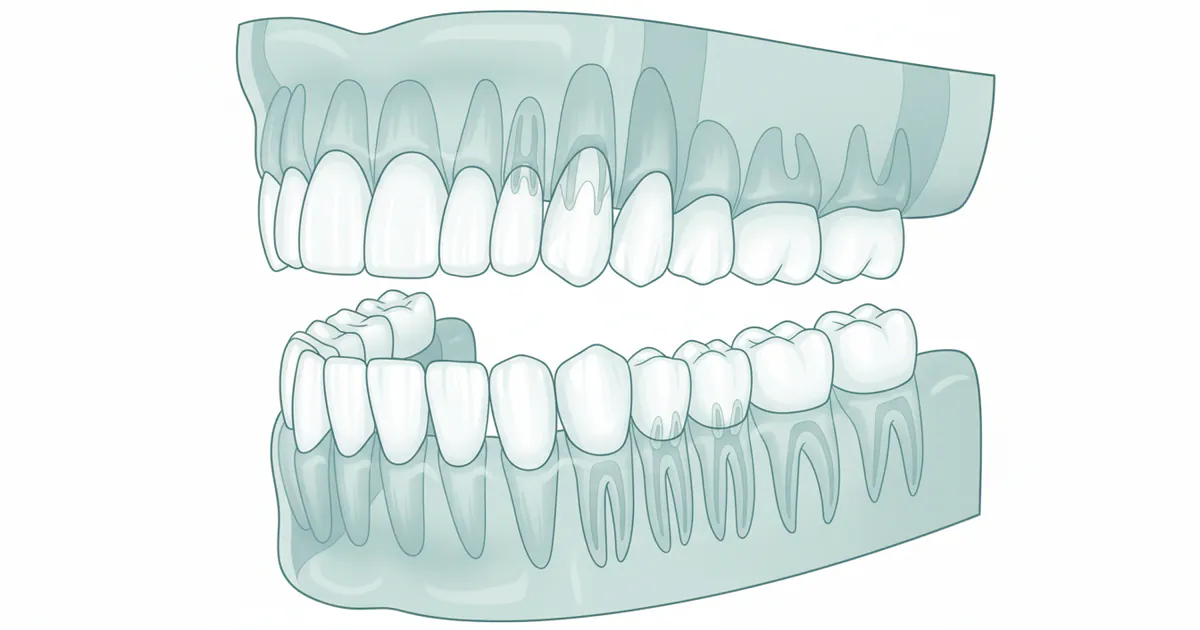
Tooth eruption is the process by which teeth emerge from the gums and become visible in the mouth. It's a complex biological event involving a precise sequence of cellular and molecular interactions that push the tooth through the alveolar bone and gingival tissues. This fundamental developmental stage occurs in two main phases throughout a person's life: the eruption of primary dentition (often called "baby teeth" or "deciduous teeth") and the subsequent eruption of permanent dentition (adult teeth).
The primary teeth set the stage for the permanent teeth, acting as natural space maintainers. There are typically 20 primary teeth – 10 in the upper jaw and 10 in the lower jaw – consisting of incisors, canines, and molars. These teeth are crucial for chewing, speech development, and maintaining the space necessary for their permanent successors.
Following the shedding of primary teeth, the permanent dentition begins to emerge. There are usually 32 permanent teeth – 16 in the upper jaw and 16 in the lower jaw – which include incisors, canines, premolars (bicuspids), and molars (including wisdom teeth). This process ensures a robust and functional dentition for adulthood. Understanding this predictable, yet sometimes variable, tooth eruption schedule is key to monitoring dental health from infancy through young adulthood.
Types / Variations in Tooth Eruption
While a general tooth eruption schedule exists, there can be significant individual variations, both in timing and pattern. Recognizing these variations is crucial for parents and dental professionals to distinguish between normal deviations and potential problems.
Normal Variations
- Timing: The "average" eruption age is just a guide. It's common for a child's first tooth to appear anywhere from 4 to 12 months. Some infants may get their first tooth as early as 3 months, while others might not see one until after their first birthday. As long as the teeth eventually erupt within a reasonable timeframe (e.g., all primary teeth by age 3), slight delays are usually not a concern.
- Sequence: While there's a typical sequence (lower central incisors first), minor deviations in the order of eruption are often considered normal. For instance, a lateral incisor appearing before the central incisor, or even an upper tooth before a lower tooth, might happen without indicating a problem.
- Symmetry: Teeth usually erupt in pairs, meaning the same tooth on the opposite side of the mouth will typically erupt within a few weeks of each other. Minor asymmetry in timing (e.g., one central incisor appearing a month before the other) is common.
Atypical Eruption Patterns and Problems
Deviations from the typical eruption schedule or pattern can sometimes indicate underlying issues.
- Delayed Eruption (Primary Teeth): If no teeth have erupted by 18 months of age, it is considered significantly delayed, known as anovulation. This can be due to:
- Genetic Factors: A family history of late tooth eruption.
- Systemic Conditions: Conditions like hypopituitarism, hypothyroidism, Down syndrome, or rickets can affect tooth development and eruption.
- Local Factors: Thick gingival tissue, presence of an odontoma (a benign tumor-like growth), or lack of space.
- Nutritional Deficiencies: Severe malnutrition, though rare in the US, can impact development.
- Premature Eruption (Primary Teeth):
- Natal Teeth: Teeth present at birth (approximately 1 in 2,000 to 1 in 3,500 births). These are usually lower central incisors.
- Neonatal Teeth: Teeth that erupt within the first 30 days of life. Natal and neonatal teeth can be problematic as they may interfere with breastfeeding, pose a risk of aspiration, or cause injury to the infant's tongue or the mother's nipple. They might also be supernumerary (extra) teeth or actual primary teeth with poor root development, leading to instability.
- Delayed Eruption (Permanent Teeth):
- Impacted Teeth: Most commonly seen with wisdom teeth, but can also affect canines and premolars. An impacted tooth is one that is unable to erupt fully into its normal position due to a physical obstruction (like another tooth, bone, or soft tissue) or because it's angled improperly.
- Ankylosis: A condition where the root of a tooth fuses to the surrounding bone, preventing it from erupting or extruding further. This can affect primary teeth (preventing their shedding) or permanent teeth.
- Supernumerary Teeth: Extra teeth beyond the normal count. These can block the eruption path of permanent teeth. The most common supernumerary tooth is a mesiodens, located between the two upper front incisors.
- Missing Teeth (Anodontia/Hypodontia): The congenital absence of one or more teeth. If a permanent tooth is congenitally missing, its primary predecessor may remain in place for an extended period, or the space may be empty.
- Ectopic Eruption: When a tooth erupts in an abnormal position or angulation. This is most common with the maxillary (upper) canines or first permanent molars. It can lead to resorption (dissolving) of adjacent tooth roots or require orthodontic intervention.
- Transposition: When two teeth swap positions in the dental arch (e.g., a canine and a first premolar exchanging places).
Recognizing these variations and knowing when to consult a pediatric dentist or orthodontist is paramount for ensuring timely and appropriate intervention, which can prevent more significant dental problems later in life.
Causes / Why It Happens
The precise mechanism of tooth eruption is still not fully understood, but it is believed to be a complex interplay of genetic, hormonal, and local environmental factors.
Biological and Genetic Factors
- Genetic Predisposition: A child's tooth eruption schedule often mirrors that of their parents or siblings. Genes play a significant role in determining the timing and sequence of eruption. Research suggests that certain gene mutations can lead to conditions like amelogenesis imperfecta (affecting enamel) or dentinogenesis imperfecta (affecting dentin), which can also influence eruption.
- Bone Remodeling: For a tooth to erupt, the bone covering its crown must resorb, while bone must be deposited around its root to help push it upward. This coordinated remodeling process is critical.
- Root Formation: The formation and elongation of the tooth root are believed to generate forces that contribute to the tooth's upward movement.
- Follicular Forces: The dental follicle, a connective tissue sac surrounding the developing tooth, is thought to play a role by exerting pressure and signaling bone resorption.
- Hormonal Influence: Hormones such as thyroid hormones and growth hormones are known to influence general development, including tooth eruption. Deficiencies in these hormones can lead to delayed eruption.
Local Factors
- Lack of Space: In crowded jaws, or when primary teeth are lost prematurely, there may not be enough space for permanent teeth to erupt properly, leading to impaction or malposition.
- Supernumerary Teeth: As mentioned, extra teeth can physically block the eruption path of normal teeth.
- Pathology: Cysts (like eruption cysts), tumors (like odontomas), or other pathological lesions can obstruct the normal eruption pathway.
- Thick Gingival Tissue: In some cases, unusually dense or fibrous gum tissue can act as a barrier, delaying eruption.
- Early Loss of Primary Teeth: If a primary tooth is lost too early due to decay or injury, the adjacent teeth may drift into the empty space, blocking the path for the permanent successor. This often necessitates the use of a space maintainer by a dentist.
- Prolonged Retention of Primary Teeth: If a primary tooth's root doesn't resorb properly, or if there's no permanent successor to push it out, it can remain in the mouth past its normal shedding time, blocking the permanent tooth.
- Trauma: Injury to the primary dentition can sometimes damage the developing permanent tooth bud beneath, leading to eruption problems or enamel defects.
Systemic Factors
- Nutritional Deficiencies: Severe deficiencies in vitamins (especially Vitamin D) and minerals (like calcium and phosphorus) can impair bone development and tooth formation, indirectly affecting eruption.
- Chronic Diseases: Conditions like chronic kidney disease, severe anemia, or childhood cancers can impact overall development, including tooth eruption.
- Syndromes: Many genetic syndromes have delayed tooth eruption as a characteristic feature. Examples include Down syndrome, Cleidocranial Dysplasia, and Gardner's syndrome.
- Low Birth Weight/Premature Birth: Infants born prematurely or with very low birth weight may experience delays in dental development and eruption.
Understanding these contributing factors helps dental professionals assess and manage any deviations from the typical tooth eruption schedule, ensuring appropriate care and intervention when necessary.
Signs and Symptoms of Tooth Eruption
For most children, the eruption of primary teeth is accompanied by a range of noticeable signs and symptoms, commonly referred to as "teething." While uncomfortable, these symptoms are usually mild and manageable. The eruption of permanent teeth, especially wisdom teeth, can also present specific symptoms.
For Primary Teeth (Teething)
Teething symptoms typically begin a few days before a tooth cuts through the gum and subside once the tooth has fully emerged.
- Swollen, Tender Gums: The most common sign. Gums around the erupting tooth may appear red, swollen, and feel sensitive to the touch.
- Increased Drooling: Babies often drool excessively, which can lead to a rash around the mouth, chin, and chest.
- Irritability and Fussiness: Discomfort from erupting teeth can make infants more irritable, crying more than usual, especially at night.
- Chewing and Biting: Babies will often try to chew on anything they can get their hands on (toys, fingers, clothes) to relieve pressure on their gums.
- Rubbing Face/Ear: They might rub their cheek or pull at their ear on the side where a tooth is erupting. This is usually referred pain and not necessarily an ear infection.
- Changes in Eating/Sleeping Patterns: Discomfort can disrupt feeding (especially if sucking exacerbates gum pain) and sleep.
- Mild Temperature Elevation: A slight increase in body temperature (typically below 100.4°F or 38°C) can accompany teething. Pro Tip: If a fever is higher than 100.4°F or lasts more than 24-48 hours, it's likely due to an illness, not just teething, and a pediatrician should be consulted.
- Eruption Hematoma/Cyst: Sometimes, a bluish or purplish swollen area appears on the gum where a tooth is about to erupt. This is an eruption hematoma or cyst, caused by bleeding in the soft tissue. It usually resolves on its own as the tooth erupts.
For Permanent Teeth
The eruption of permanent teeth is generally less symptomatic than primary teeth, primarily because the jaw is growing and adapting. However, there are exceptions:
- Shedding of Primary Teeth: Loosening and eventual loss of primary teeth are natural indicators that permanent teeth are preparing to erupt. This process is usually painless.
- Mild Gum Discomfort: Occasionally, slight pressure or mild discomfort can be felt as a permanent tooth emerges.
- Crowding/Misalignment: If there isn't enough space, newly erupted permanent teeth may appear crooked or crowded, which can cause minor discomfort.
- "Shark Teeth": Sometimes, a permanent tooth will erupt behind or in front of a primary tooth that hasn't fallen out yet. This is common with lower incisors and usually resolves once the primary tooth is lost, but sometimes requires dental intervention.
For Wisdom Teeth (Third Molars)
Wisdom teeth, typically the last teeth to erupt, are often associated with the most significant symptoms due to common impaction.
- Pain and Tenderness: Dull ache or sharp pain in the back of the jaw, especially when chewing or opening the mouth wide.
- Swollen, Red Gums: The gum tissue around the erupting or impacted wisdom tooth can become inflamed, tender, and swollen (pericoronitis).
- Jaw Stiffness or Difficulty Opening Mouth (Trismus): Inflammation and pressure can restrict jaw movement.
- Headache or Earache: Pain can radiate to the head or ear.
- Unpleasant Taste or Bad Breath: If food particles get trapped under gum flaps around a partially erupted wisdom tooth, it can lead to infection and unpleasant taste or odor.
- Cyst Formation: In some cases, the sac surrounding an impacted wisdom tooth can develop into a cyst, which can damage bone and adjacent teeth.
Tooth Eruption Schedule: Primary Dentition
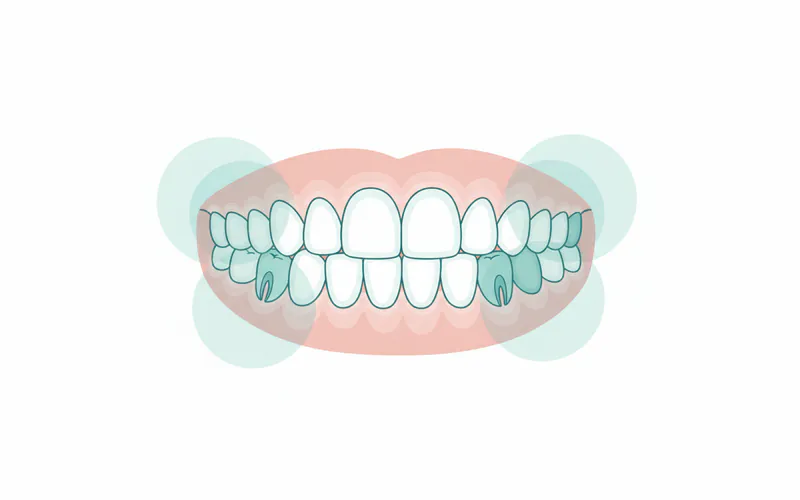
The eruption of primary (baby) teeth follows a generally predictable sequence, though individual variations are common. There are 20 primary teeth in total.
| Tooth Type | Average Eruption Age (Lower Jaw) | Average Eruption Age (Upper Jaw) | Average Shedding Age |
|---|---|---|---|
| Central Incisors | 6-10 months | 8-12 months | 6-7 years |
| Lateral Incisors | 10-16 months | 9-13 months | 7-8 years |
| First Molars | 14-18 months | 13-19 months | 9-11 years |
| Canines (Cuspids) | 17-23 months | 16-22 months | 10-12 years |
| Second Molars | 23-31 months | 25-33 months | 10-12 years |
Timeline Highlights:
- First Tooth: Typically around 6 months, often a lower central incisor.
- All Incisors: Usually in by 12-18 months.
- First Molars: Erupt between 13-19 months.
- Canines: Appear between 16-23 months.
- Second Molars: Last primary teeth to erupt, around 25-33 months.
- Complete Primary Dentition: Most children have all 20 primary teeth by 3 years of age.
Tooth Eruption Schedule: Permanent Dentition
Permanent teeth begin to replace primary teeth around age 6 and continue erupting into early adulthood. There are 32 permanent teeth, including wisdom teeth.
| Tooth Type | Average Eruption Age (Lower Jaw) | Average Eruption Age (Upper Jaw) | Preceded by (Primary Tooth) |
|---|---|---|---|
| First Molars | 6-7 years | 6-7 years | (No primary predecessor) |
| Central Incisors | 6-7 years | 7-8 years | Primary Central Incisor |
| Lateral Incisors | 7-8 years | 8-9 years | Primary Lateral Incisor |
| Canines (Cuspids) | 9-10 years | 11-12 years | Primary Canine |
| First Premolars | 10-12 years | 10-11 years | Primary First Molar |
| Second Premolars | 11-12 years | 10-12 years | Primary Second Molar |
| Second Molars | 11-13 years | 12-13 years | (No primary predecessor) |
| Third Molars (Wisdom) | 17-21 years | 17-21 years | (No primary predecessor) |
Timeline Highlights:
- First Permanent Molars: Often called "6-year molars," these are the first permanent teeth to erupt, usually behind the last primary molar, around 6-7 years. They are not replacements for baby teeth.
- Incisors: Front teeth are replaced between 6-9 years.
- Canines & Premolars: Replaced between 9-12 years.
- Second Permanent Molars: Erupt around 11-13 years.
- Third Molars (Wisdom Teeth): The final teeth to erupt, typically between 17-25 years, but often fail to erupt fully or properly due to lack of space.
Treatment Options for Eruption Problems
While normal tooth eruption doesn't require "treatment," various interventions are available for addressing complications related to the tooth eruption schedule. These range from simple monitoring to surgical procedures.
1. Monitoring and Observation
- When It Applies: For slight delays in primary tooth eruption, minor asymmetry, or early signs of permanent tooth crowding. Often, the issue resolves on its own with time and continued jaw growth.
- Process: Regular dental check-ups (every 6-12 months) with X-rays as needed to track tooth development and position.
- Pros: Non-invasive, allows for natural resolution.
- Cons: Can delay necessary intervention if a problem isn't resolving, potentially leading to more complex issues later.
- Cost: Included in routine dental visits, typically $50-$200 for an exam and X-rays if not covered by insurance.
2. Space Maintainers
- When It Applies: If a primary tooth is lost prematurely (due to decay, trauma, or extraction) before its permanent successor is ready to erupt. A space maintainer prevents adjacent teeth from drifting into the open space, preserving it for the permanent tooth.
- Process: A pediatric dentist custom-fits a small acrylic or metal appliance (fixed or removable) that keeps the space open.
- Pros: Prevents future crowding and malocclusion, potentially avoiding extensive orthodontic treatment.
- Cons: Requires good oral hygiene, can be dislodged or broken, and needs periodic adjustment.
- Cost: $200-$500 per appliance, often partially covered by dental insurance.
3. Extraction of Primary Teeth
- When It Applies: If a primary tooth is over-retained (not falling out) and blocking the eruption of its permanent successor, or if it is ankylosed (fused to bone) and preventing normal eruption. Also, if "shark teeth" occur and the primary tooth is not loosening.
- Process: A simple extraction of the primary tooth under local anesthesia.
- Pros: Clears the path for the permanent tooth, relatively quick and inexpensive.
- Cons: If extracted too early, a space maintainer may be needed.
- Cost: $75-$250 per tooth for a simple extraction, depending on location and complexity.
4. Surgical Exposure and Orthodontic Eruption
- When It Applies: Primarily for impacted permanent teeth (most commonly canines, but also premolars or incisors) that are blocked by bone or soft tissue and cannot erupt on their own.
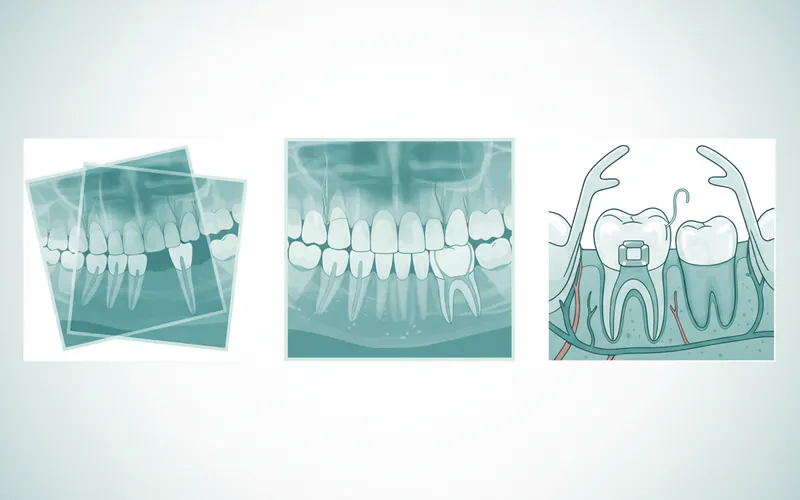
- Process: An oral surgeon or periodontist surgically exposes the crown of the impacted tooth by removing gum tissue and/or bone. An orthodontic bracket and chain are then bonded to the exposed tooth. An orthodontist uses the chain to gently guide the tooth into its proper position over several months using braces.
- Pros: Saves the natural tooth, achieves proper alignment and function.
- Cons: Invasive surgical procedure, lengthy orthodontic treatment (6-18 months), higher cost.
- Cost: Surgical exposure itself can range from $500-$1,500 per tooth. Orthodontic treatment (braces) is a separate cost, ranging from $3,000-$8,000 for a full course.
5. Extraction of Supernumerary Teeth
- When It Applies: When an extra tooth (supernumerary tooth) obstructs the eruption of a permanent tooth or causes crowding.
- Process: Surgical removal of the supernumerary tooth, often involving incision of gum tissue and removal of bone.
- Pros: Removes the obstruction, allowing normal teeth to erupt or be guided into place.
- Cons: Surgical procedure with associated risks (pain, swelling, infection).
- Cost: $200-$800 per tooth, depending on impaction and complexity.
6. Wisdom Tooth Extraction
- When It Applies: When third molars (wisdom teeth) are impacted, partially erupted, causing pain, infection (pericoronitis), cysts, or threatening adjacent teeth.
- Process: Surgical removal of one or more wisdom teeth. Can be a simple extraction if fully erupted, or a complex surgical extraction if impacted, requiring bone and tissue removal. Often performed under local anesthesia with sedation or general anesthesia for multiple impacted teeth.
- Pros: Relieves pain, prevents infection, protects adjacent teeth from damage or decay, resolves crowding issues.
- Cons: Surgical risks (dry socket, nerve damage, swelling, pain), recovery period.
- Cost: $250-$750 per simple extraction, $800-$3,000+ for complex impacted extractions (often multiple teeth at once). Anesthesia costs are additional.
Step-by-Step Process: Managing Teething & Eruption Issues
Understanding what to expect for normal tooth eruptions and when interventions are needed can help parents and individuals feel more prepared.
For Normal Primary Tooth Eruption (Teething)
- Observe for Symptoms: Around 4-12 months, watch for increased drooling, fussiness, swollen gums, and chewing on objects.
- Provide Relief (Home Remedies):
- Gently massage gums: Use a clean finger to rub your baby's gums.
- Cold Objects: Offer a chilled (not frozen) teething ring, washcloth, or pacifier.
- Teething Toys: Ensure they are solid, safe, and free of small parts.
- Wipe Drool: Keep the skin around the mouth dry to prevent rashes.
- Over-the-Counter (OTC) Pain Relief (If needed):
- Infant Acetaminophen (Tylenol) or Ibuprofen (Advil/Motrin): Administer according to weight and age instructions on the label, or as advised by your pediatrician.
- Avoid: Teething gels containing benzocaine (like Orajel) in children under 2 years old, as they can cause a rare but serious condition called methemoglobinemia. Also, avoid homeopathic teething tablets, which have been linked to health risks.
- First Dental Visit: Schedule your child's first dental visit by their first birthday or within 6 months of the first tooth's eruption, as recommended by the American Dental Association (ADA).
- Maintain Oral Hygiene: Start cleaning your baby's gums with a soft cloth or infant toothbrush even before teeth appear. Once teeth erupt, brush twice daily with a tiny smear (rice-grain size) of fluoride toothpaste.

For Addressing Eruption Problems (e.g., Impacted Canine)
This is a general overview; specific steps vary depending on the exact problem and treatment chosen.
- Initial Dental Examination and X-rays:
- Your dentist will examine your child's mouth and typically take panoramic X-rays (orthopantomograms) to visualize unerupted teeth and identify any issues like impaction, supernumerary teeth, or missing teeth.
- Cost: Exam $50-$150, Panoramic X-ray $80-$200.
- Consultation with Specialist:
- If an eruption problem is identified (e.g., an impacted canine), your general dentist will likely refer you to an orthodontist, oral surgeon, or pediatric dentist.
- Pro Tip: Always get a clear explanation of the diagnosis and treatment plan from the specialist. Don't hesitate to ask questions about alternatives, risks, and expected outcomes.
- Treatment Planning:
- The specialist will review imaging, discuss options (e.g., monitor, extract primary tooth, surgical exposure), and create a detailed treatment plan, including timelines and costs.
- Pre-Treatment Procedures (if surgical):
- This might involve taking impressions for orthodontic appliances, discussing anesthesia options (local, sedation, general), and providing pre-operative instructions.
- Surgical Procedure (if needed):
- Surgical Exposure: An oral surgeon makes an incision in the gum, removes bone if necessary, and exposes the crown of the impacted tooth. An orthodontic bracket with a chain is then bonded to the tooth.
- Tooth Extraction: For supernumerary teeth or over-retained primary teeth, a simple or surgical extraction is performed.
- Cost: Varies widely, see "Cost and Insurance" section.
- Orthodontic Treatment (if surgical exposure):
- After surgical exposure, the orthodontist will gradually apply gentle forces to the chain attached to the exposed tooth, guiding it into the dental arch. This typically involves regular orthodontic adjustments (every 4-6 weeks) and can take several months to over a year.
- Cost: Orthodontic treatment (braces) $3,000-$8,000.
- Post-Procedure Care:
- Follow specific instructions for pain management, diet, oral hygiene, and activity restrictions. Swelling and discomfort are common after surgery.
- Regular follow-up appointments are crucial to monitor healing and progress.
Cost and Insurance Considerations
The cost of managing tooth eruption schedule deviations can vary significantly based on the complexity of the issue, the type of intervention required, the specialist performing the procedure, and geographic location within the US.
Average US Costs for Common Eruption-Related Interventions
| Procedure | Average Cost Range (Out-of-Pocket) | Factors Influencing Cost |
|---|---|---|
| Pediatric Dental Exam + X-rays (initial) | $100 - $350 | Number of X-rays, region, general vs. pediatric dentist. |
| Simple Primary Tooth Extraction | $75 - $250 | Location of tooth, type of anesthesia (local vs. sedation). |
| Space Maintainer (Fixed, per arch) | $200 - $500 | Type of appliance (band-and-loop, lingual arch), material, complexity. |
| Surgical Exposure of Impacted Tooth (per tooth) | $500 - $1,500 | Difficulty of exposure (bone removal needed), location of tooth (canine vs. incisor), oral surgeon fees. |
| Orthodontic Treatment (for erupted tooth) | $3,000 - $8,000 | Full braces treatment, clear aligners (Invisalign often higher), duration of treatment, orthodontist fees, region. This cost is for the entire course of treatment, not just the guidance of the exposed tooth. |
| Supernumerary Tooth Extraction (impacted) | $200 - $800 | Position, depth of impaction, general vs. oral surgeon. |
| Wisdom Tooth Extraction (Simple, erupted) | $250 - $750 per tooth | Oral surgeon vs. general dentist, local vs. sedation. |
| Wisdom Tooth Extraction (Impacted, complex) | $800 - $3,000+ per tooth | Degree of impaction, number of teeth, type of anesthesia (IV sedation, general anesthesia adds significantly), oral surgeon fees. |
| Anesthesia (IV Sedation/General) | $400 - $1,000+ per hour | Administered by anesthesiologist or oral surgeon, duration, complexity. |
Insurance Coverage
- Dental Insurance: Most dental insurance plans provide coverage for necessary procedures related to tooth eruption problems.
- Preventive Care: Exams, X-rays, and cleanings are often covered at 80-100%.
- Basic Procedures: Simple extractions and space maintainers typically covered at 50-80%.
- Major Procedures: Surgical exposures, complex extractions (like impacted wisdom teeth or supernumerary teeth), and anesthesia are usually covered at 50% or less, after deductibles are met.
- Orthodontics: Many plans offer limited orthodontic benefits, especially for children, often covering 50% up to a lifetime maximum (e.g., $1,000 - $3,000). Adult orthodontics is less commonly covered.
- Medical Insurance: In some cases, if a problem is deemed medically necessary (e.g., a severe pathology or systemic condition causing eruption issues), medical insurance might cover a portion of oral surgery fees, especially for hospital-based procedures. Always check with both your dental and medical insurance providers.
Payment Plans and Financing
- Dental Office Payment Plans: Many dental and orthodontic offices offer in-house payment plans, allowing you to spread the cost over several months without interest.
- Third-Party Financing: Options like CareCredit or LendingClub offer specialized healthcare financing with various interest-free or low-interest plans, subject to credit approval.
- Health Savings Accounts (HSAs) & Flexible Spending Accounts (FSAs): These tax-advantaged accounts can be used to pay for qualified dental expenses, effectively reducing your out-of-pocket costs with pre-tax dollars.
Recovery and Aftercare for Eruption-Related Procedures
Proper recovery and aftercare are crucial for successful healing and minimizing complications, especially following surgical interventions related to tooth eruption schedule problems.
General Aftercare for Oral Surgery (e.g., Extractions, Surgical Exposure)
- Bleeding Control:
- Bite firmly on the gauze pads placed over the surgical site for 30-60 minutes immediately after the procedure. Replace gauze as needed.
- Some oozing or light bleeding is normal for 24-48 hours. Avoid spitting, rinsing vigorously, or using straws, as this can dislodge the blood clot (leading to a painful "dry socket").
- Pain Management:
- Take prescribed pain medication or over-the-counter pain relievers (like ibuprofen or acetaminophen) as directed. Start before the local anesthesia wears off.
- Swelling Reduction:
- Apply an ice pack to the outside of your face, over the surgical area, for 20 minutes on, 20 minutes off, during the first 24-48 hours. This helps reduce swelling and bruising.
- Keep your head elevated, even while sleeping, for the first few days.
- Diet:
- Stick to soft foods (yogurt, mashed potatoes, soups, smoothies, scrambled eggs) for the first few days.
- Avoid hot liquids, spicy foods, crunchy foods, or foods with small seeds that can get lodged in the surgical site.
- Gradually reintroduce normal foods as comfort allows.
- Oral Hygiene:
- 24 hours post-op: Avoid brushing directly near the surgical site. You may gently brush other areas.
- After 24 hours: Begin gentle rinsing with warm salt water (1/2 teaspoon salt in 8 ounces of warm water) 2-3 times a day, especially after meals. This helps keep the area clean.
- Continue to brush gently, avoiding the surgical site for several days or as advised by your surgeon.
- Activity Restrictions:
- Avoid strenuous activity, heavy lifting, or bending over for at least 3-5 days to prevent increased bleeding and swelling.
- Rest is vital for healing.
- Follow-up Appointments:
- Attend all scheduled post-operative appointments to ensure proper healing and to have sutures removed if non-dissolvable.
Specific Considerations
- For Children: After extraction, ensure the child doesn't pick at the site. Monitor for unusual bleeding, swelling, or fever. Encourage soft foods and gentle cleaning.
- After Surgical Exposure and Orthodontic Bonding:
- Be gentle around the newly placed bracket and chain.
- Maintain excellent oral hygiene around braces, as food debris can easily accumulate.
- Follow orthodontist's instructions for diet and care of orthodontic appliances.
- Regular orthodontic adjustments are critical for guiding the tooth into position.
When to Contact Your Dentist/Surgeon
- Excessive or persistent bleeding (saturating gauze rapidly).
- Severe pain not managed by medication.
- Significant swelling that worsens after 48 hours or restricts breathing/swallowing.
- Fever above 101°F (38.3°C).
- Pus or foul discharge from the surgical site.
- Numbness or tingling that persists beyond the expected duration of local anesthesia.
- Any unexpected or concerning symptoms.
Prevention of Eruption Problems
While you can't prevent normal tooth eruptions, you can take proactive steps to prevent many of the complications that arise from deviations in the tooth eruption schedule.
1. Regular Dental Check-ups from an Early Age
- First Visit by Age One: The ADA recommends a child's first dental visit by their first birthday or within six months of the first tooth's eruption. This allows a pediatric dentist to:
- Monitor the eruption pattern and general oral development.
- Identify potential issues (like missing teeth, supernumerary teeth, or early crowding) through visual exams and X-rays if indicated.
- Provide guidance on proper oral hygiene, nutrition, and habits.
- Ongoing Check-ups: Regular visits (every 6 months) throughout childhood and adolescence are crucial for continuous monitoring of both primary and permanent tooth eruption.
2. Excellent Oral Hygiene and Cavity Prevention
- Brush Twice Daily: With fluoride toothpaste (rice-grain size for under 3, pea-size for 3-6 years old).
- Floss Daily: Once teeth are touching.
- Why it Matters: Untreated cavities in primary teeth are a major cause of premature tooth loss. When a primary tooth is lost too early, adjacent teeth can drift into the empty space, blocking the eruption path of the permanent successor and leading to impaction or crowding. Preventing cavities in primary teeth helps ensure they stay in place until their natural shedding time.
3. Proper Nutrition
- Balanced Diet: Encourage a diet rich in fruits, vegetables, whole grains, and lean proteins.
- Limit Sugary Foods and Drinks: Excessive sugar intake contributes to tooth decay.
- Calcium and Vitamin D: Essential for strong bones and teeth. While dietary deficiencies are rare in the US for eruption delays, overall health supports dental development.
4. Space Management (When Primary Teeth are Lost Early)
- Space Maintainers: If a primary tooth is lost prematurely due to trauma or necessary extraction, a dentist may recommend a space maintainer. This appliance ensures that the space for the permanent tooth is preserved, preventing adjacent teeth from shifting and blocking its eruption path.
5. Early Orthodontic Evaluation
- Around Age 7: The American Association of Orthodontists (AAO) recommends an orthodontic evaluation around age 7. At this age, a child usually has a mix of primary and permanent teeth, allowing the orthodontist to:
- Assess jaw growth and alignment.
- Identify potential eruption problems (e.g., impacted teeth, severe crowding) early.
- Intervene with "Phase 1" or interceptive orthodontics (e.g., palatal expanders, minor braces) if needed to guide eruption or create space, potentially simplifying or shortening later "Phase 2" treatment.
6. Managing Habits
- Thumb Sucking/Pacifier Use: Prolonged thumb sucking or pacifier use past age 4-5 can affect jaw development and tooth alignment, potentially influencing permanent tooth eruption. Dentists can offer guidance on cessation.
By adhering to these preventative measures, parents and individuals can significantly reduce the likelihood of encountering complex and costly tooth eruption schedule complications.
Risks and Complications of Tooth Eruption Problems
While the tooth eruption schedule often proceeds smoothly, various problems can arise, carrying specific risks and potential complications if not addressed.
1. Impaction
- Risk: Most commonly affects wisdom teeth, but can also involve canines, premolars, or incisors. The tooth is unable to fully erupt into its normal position due to blockage by bone, soft tissue, or another tooth.
- Complications:
- Pain and Swelling: Chronic or intermittent discomfort in the jaw.
- Infection (Pericoronitis): Inflammation of the gum tissue surrounding a partially erupted or impacted tooth, often due to food and bacteria trapped under the gum flap. Can be very painful and spread to adjacent tissues.
- Damage to Adjacent Teeth: The impacted tooth can exert pressure on the roots of neighboring teeth, causing resorption (dissolving) or decay if hard to clean.
- Cyst/Tumor Formation: The follicular sac around an impacted tooth can sometimes develop into a fluid-filled cyst or, rarely, a benign tumor, which can destroy bone and damage surrounding structures.
- Crowding: Impaction, particularly of wisdom teeth, can contribute to or worsen existing dental crowding.
2. Delayed Eruption
- Risk: Primary teeth not erupting by 18 months or permanent teeth not appearing at their expected time.
- Complications:
- Space Loss: If a primary tooth is retained too long, the permanent tooth may erupt abnormally, or adjacent teeth may drift, closing the space needed for the delayed permanent tooth.
- Aesthetic Concerns: Gaps or missing teeth can affect appearance.
- Psychological Impact: Especially in children and adolescents, noticeable gaps can lead to self-consciousness.
- Functional Issues: Problems with chewing or speech development.
3. Premature Loss of Primary Teeth
- Risk: Primary teeth lost too early due to severe decay, trauma, or congenital absence of the permanent successor.
- Complications:
- Space Loss: Adjacent teeth can drift into the empty space, blocking the eruption path of the permanent successor. This often necessitates orthodontic intervention or space maintainers.
- Speech Problems: The absence of front teeth can temporarily affect speech development.
- Chewing Difficulties: Can impact nutrition if multiple teeth are lost.
4. Over-Retained Primary Teeth
- Risk: Primary teeth that do not shed naturally, blocking the eruption of permanent teeth. Can be due to lack of permanent successor, ankylosis, or ectopic eruption of the permanent tooth.
- Complications:
- Ectopic Eruption: The permanent tooth may erupt in an abnormal position (e.g., "shark teeth") or become impacted.
- Crowding and Malocclusion: Can contribute to misaligned teeth and bite problems.
- Aesthetic and Functional Issues.
5. Supernumerary Teeth (Extra Teeth)
- Risk: The presence of more teeth than the normal count (e.g., mesiodens between central incisors).
- Complications:
- Impaction/Delayed Eruption: Supernumerary teeth can physically block the eruption of normal permanent teeth.
- Crowding: Contribute to significant crowding and misalignment.
- Cyst Formation: The follicle around an unerupted supernumerary tooth can form a cyst.
- Root Resorption: Can damage the roots of adjacent teeth.
6. Ectopic Eruption
- Risk: A tooth erupting in an abnormal position, often due to a constricted arch or misdirection.
- Complications:
- Impaction: The ectopically erupting tooth may become impacted.
- Resorption of Adjacent Teeth: Can cause damage to the roots or crowns of neighboring teeth.
- Malocclusion: Leads to bite problems and requires orthodontic correction.

Children / Pediatric Considerations
Understanding the infant tooth eruption process is a cornerstone of pediatric dental health. For parents, this period is often filled with questions about teething, proper oral hygiene, and when to seek professional help.
Teething Management for Infants
- Symptoms: Most infants experience fussiness, increased drooling, swollen gums, and a desire to chew on objects. A low-grade fever (below 100.4°F/38°C) is common, but higher fevers or other symptoms suggest illness, not just teething.
- Relief Strategies:
- Gum Massage: Gently rub your baby's gums with a clean finger.
- Chilled Teethers: Offer a chilled (not frozen) teething ring or a cool, wet washcloth for your baby to chew on.
- Wipe Drool: Regularly wipe drool to prevent skin irritation.
- Over-the-Counter Pain Relievers: Infant acetaminophen (Tylenol) or ibuprofen (Advil, Motrin) can be used as directed by your pediatrician for discomfort. Always consult your pediatrician for correct dosage based on weight and age.
- Avoid: Teething gels containing benzocaine (like Orajel) in children under 2 years old due to the risk of methemoglobinemia. Also, avoid homeopathic teething tablets, amber teething necklaces (choking hazard), and any objects that could pose a choking risk.
- First Dental Visit: The ADA and the American Academy of Pediatric Dentistry (AAPD) recommend that a child's first dental visit occur by their first birthday or within six months of the eruption of their first tooth. This early visit establishes a "dental home" and allows the dentist to:
- Assess the eruption sequence and overall oral development.
- Check for early signs of decay ("baby bottle tooth decay").
- Provide guidance on diet, oral hygiene, fluoride use, and pacifier/thumb-sucking habits.
Importance of Primary Teeth
Parents sometimes underestimate the importance of primary teeth, thinking they are "just going to fall out anyway." However, baby teeth are crucial for several reasons:
- Chewing and Nutrition: Allow children to chew food properly, aiding digestion and nutrient absorption.
- Speech Development: Correct positioning of teeth is vital for forming words and sounds.
- Space Maintainers: Primary teeth hold the necessary space in the jaws for the permanent teeth that will replace them. Premature loss of primary teeth can lead to crowding and alignment problems for permanent teeth.
- Self-Esteem: Healthy, well-aligned primary teeth contribute to a child's confidence.
Common Pediatric Eruption Concerns
- Delayed Eruption: If no teeth are present by 18 months, or if there's significant asymmetry in eruption (e.g., only one side erupts), a dental evaluation is warranted to rule out underlying issues like missing teeth or systemic conditions.
- Early Childhood Caries (ECC): Severe decay in baby teeth can lead to premature loss and subsequent eruption problems. Prevention through diet and hygiene is key.
- Shark Teeth: When permanent teeth erupt behind or in front of retained primary teeth. Often, the primary tooth falls out naturally, but sometimes extraction is needed if it persists.
- Trauma: Injuries to primary teeth can sometimes affect the developing permanent tooth underneath, leading to enamel defects or eruption delays/abnormalities.
Oral Hygiene from Day One
- Before Teeth: Wipe your baby's gums with a soft, damp cloth or gauze after feedings.
- First Tooth: Begin brushing twice daily with a soft-bristled infant toothbrush and a tiny smear (rice-grain size) of fluoride toothpaste.
- Age 3-6: Use a pea-sized amount of fluoride toothpaste. Supervise brushing to ensure proper technique and that they spit out the toothpaste rather than swallowing it.
By being proactive in oral care and staying informed about the infant tooth eruption schedule, parents can ensure a healthy start to their child's dental journey.
Cost Breakdown for Eruption Problem Interventions
As discussed, normal tooth eruption incurs no direct cost, but interventions for problems can. Here's a breakdown of average US costs, considering insurance and payment options for services related to the tooth eruption schedule.
Average US Costs for Common Procedures (Ranges)
These ranges are national averages and can fluctuate based on location (e.g., urban vs. rural), specialist's fees, and complexity.
| Procedure | Low Estimate ($) | Mid Estimate ($) | High Estimate ($) |
|---|---|---|---|
| Routine Pediatric Exam & X-rays | 100 | 150 | 350 |
| Simple Primary Tooth Extraction | 75 | 150 | 250 |
| Space Maintainer (fixed) | 200 | 350 | 500 |
| Surgical Exposure (per tooth) | 500 | 1,000 | 1,500 |
| Impacted Wisdom Tooth Extraction | 800 | 1,500 | 3,000+ |
| Supernumerary Tooth Extraction | 200 | 500 | 800 |
| Orthodontic Treatment (Full Braces) | 3,000 | 5,500 | 8,000 |
| IV Sedation (per hour) | 400 | 700 | 1,000+ |
With vs. Without Insurance
- Without Insurance (Self-Pay): You are responsible for 100% of the costs. Many dentists offer a discount for upfront cash payments for uninsured patients.
- With Insurance:
- Deductibles: The amount you must pay out-of-pocket before your insurance plan starts to pay.
- Co-pays: A fixed amount you pay for a service after your deductible is met.
- Co-insurance: The percentage of the cost you are responsible for after your deductible is met (e.g., if insurance covers 80%, you pay 20%).
- Annual Maximums: The most your dental insurance plan will pay in a year (typically $1,000 - $2,000). Once reached, you pay 100% of subsequent costs.
- Lifetime Maximums (for Orthodontics): Some plans have a separate lifetime maximum for orthodontic treatment, which can range from $1,000 to $3,000.
Example Scenario (Impacted Canine with Orthodontic Guidance):
-
Surgical Exposure: $1,200
-
Full Orthodontic Treatment: $6,000
-
Total: $7,200
-
With Insurance (assuming 50% coverage after a $100 deductible and a $2,000 ortho lifetime max):
- Deductible: $100
- Surgical Exposure (50% of $1,200): $600
- Orthodontic (up to lifetime max): $2,000
- Total Out-of-Pocket: $2,700 (plus any additional co-insurance once lifetime max is reached if treatment extends beyond it, which is likely for a $6,000 case).
Payment Plans and Financing Options
- In-Office Payment Plans: Many dental and orthodontic practices offer flexible payment schedules directly through their office. These are typically interest-free if paid within a certain timeframe.
- Third-Party Medical Financing: Companies like CareCredit and LendingClub Patient Solutions specialize in healthcare financing. They offer various plans, including deferred interest options (no interest if paid in full within a promotional period, e.g., 6, 12, 18 months) or fixed low-interest monthly payments for longer terms.
- Health Savings Accounts (HSAs) & Flexible Spending Accounts (FSAs): These are excellent tools for managing dental costs. Funds contributed to HSAs or FSAs are tax-deductible or pre-tax, meaning you effectively save money on qualifying healthcare expenses, including most dental procedures related to eruption.
- Dental Schools: University dental schools often provide services at a reduced cost compared to private practices, as procedures are performed by students under the close supervision of experienced faculty. This can be a cost-effective option for complex cases.
Frequently Asked Questions
What is the normal tooth eruption schedule for baby teeth?
The normal infant tooth eruption schedule typically begins around 6 months with the lower central incisors. The upper central incisors follow, then lateral incisors, first molars, canines, and finally second molars. Most children have all 20 primary teeth by their third birthday.
When should I be concerned about my child's delayed tooth eruption?
You should consult a pediatric dentist if your child shows no signs of teeth by 18 months of age, or if there's a significant difference in eruption timing between teeth on opposite sides of the mouth (asymmetry) that persists for several months. Early dental visits, recommended by age one, help monitor development.
What are common symptoms of teething in infants?
Common teething symptoms include swollen, tender gums, increased drooling, irritability, a desire to chew on objects, and sometimes a low-grade fever (below 100.4°F). These symptoms usually subside once the tooth has fully emerged.
Is it normal for permanent teeth to erupt behind baby teeth ("shark teeth")?
Yes, it's quite common, especially for the lower front incisors. The permanent tooth typically pushes the primary tooth out. If the primary tooth doesn't fall out naturally after a few weeks, or if the permanent tooth is significantly out of alignment, a dentist may recommend extraction of the baby tooth.
What causes a tooth to be impacted, and what are the risks?
A tooth becomes impacted when it's blocked from erupting fully by another tooth, bone, or soft tissue. This is most common with wisdom teeth. Risks include pain, infection (pericoronitis), damage to adjacent teeth, cyst formation, and potential worsening of dental crowding.
What is the cost of wisdom tooth extraction?
The cost of wisdom tooth extraction varies widely. A simple extraction of an erupted wisdom tooth can range from $250-$750 per tooth. Complex, impacted wisdom teeth requiring surgical removal can cost anywhere from $800-$3,000+ per tooth, often higher if multiple teeth are removed with IV sedation or general anesthesia.
Can eruption problems be prevented?
Many eruption problems can be prevented or managed effectively with early intervention. Regular dental check-ups starting by age one, excellent oral hygiene to prevent premature loss of primary teeth, and early orthodontic evaluations (around age 7) are key proactive measures.
Are teething gels safe for babies?
The FDA and ADA advise against using teething gels containing benzocaine (like Orajel) in children under 2 years old, as they can cause a rare but serious condition called methemoglobinemia. Always consult your pediatrician or dentist for safe teething relief options.
How long does the recovery take after surgical removal of an impacted tooth?
Recovery time varies. Initial discomfort and swelling usually subside within 3-7 days. Complete healing of the surgical site can take several weeks to months. Following post-operative instructions carefully, including pain management, diet, and oral hygiene, is crucial for a smooth recovery.
Will dental insurance cover treatments for eruption problems?
Most dental insurance plans cover a portion of necessary treatments for eruption problems. Preventive care (exams, X-rays) is usually covered at a high percentage. Basic procedures like simple extractions may be covered at 50-80%, while major procedures like surgical extractions or orthodontic treatment often have lower coverage (e.g., 50%) and may be subject to deductibles, co-insurance, and annual/lifetime maximums. Always check with your specific plan.
When to See a Dentist
Navigating the tooth eruption schedule is a key part of maintaining lifelong oral health. While minor variations are common, certain signs indicate it's time to consult a dental professional.
Routine Care Guidance
- First Tooth or First Birthday: The American Dental Association (ADA) and American Academy of Pediatric Dentistry (AAPD) recommend a child's first dental visit by their first birthday or within six months of the eruption of their first tooth. This establishes a "dental home" and allows for early guidance and identification of potential issues.
- Routine Check-ups: Regular dental visits every 6-12 months throughout childhood and adolescence are essential to monitor the tooth eruption schedule, overall oral development, and address any emerging concerns.
- Orthodontic Evaluation by Age 7: The American Association of Orthodontists (AAO) recommends an initial orthodontic evaluation by age 7. At this point, the orthodontist can assess jaw growth and alignment, determine if eruption patterns are normal, and identify if early (interceptive) treatment might prevent more complex issues later.
Clear Warning Signs for Immediate Attention (Red Flags)
Contact your dentist or pediatric dentist promptly if you observe any of the following:
- No Teeth by 18 Months: If your child has no primary teeth by 18 months of age, or if there's no eruption by 12 months accompanied by other developmental concerns.
- Significant Asymmetry in Eruption: If a tooth erupts on one side of the mouth but its counterpart on the opposite side hasn't appeared within 3-6 months.
- Severe or Persistent Teething Symptoms: If a child has a high fever (above 100.4°F/38°C), diarrhea, vomiting, or shows signs of severe pain that isn't relieved by typical teething remedies, it's likely an illness, not just teething. Consult a pediatrician immediately.
- Eruption Cyst/Hematoma that Persists or is Painful: While often harmless, a large, painful, or persistent blue/purple swelling on the gum where a tooth is about to erupt should be checked.
- Over-Retained Primary Teeth: If a permanent tooth has erupted, but the baby tooth it should replace has not fallen out after several weeks, especially if the permanent tooth is erupting far out of position ("shark teeth").
- Pain, Swelling, or Difficulty Opening Mouth in the Back of the Jaw: This is a common sign of an erupting or impacted wisdom tooth that may be causing pericoronitis (gum infection), requiring immediate evaluation.
- Persistent Numbness or Tingling: After a tooth extraction, especially of wisdom teeth, persistent numbness (paresthesia) may indicate nerve irritation and should be reported to your oral surgeon.
- Signs of Infection: Redness, pus, severe swelling, throbbing pain, or a foul taste in the mouth around an erupting tooth.
Timely intervention can prevent minor issues from becoming major problems, ensuring the healthiest possible smile for you and your family.
Frequently Asked Questions
Medically Reviewed Content
This article was written by our dental health editorial team and reviewed for medical accuracy. Our content follows strict editorial guidelines for reliability and trustworthiness.
Medical Disclaimer
This article is for informational purposes only and does not constitute medical advice. Always consult with a qualified dental professional for diagnosis and treatment. Do not delay seeking professional advice because of something you read on this website.
Related Articles
Tooth Eruption Order: Complete Guide
The journey of human teeth, from their initial emergence in infancy to the arrival of wisdom teeth in young adulthood, is a fascinating and crucial aspect of our overall health. Understanding the tooth eruption order is not just a matter of curiosity; it's a vital piece of knowledge that empower
February 23, 2026
Primary Tooth Eruption Sequence: Complete Guide
Did you know that by their third birthday, most children will have a full set of 20 primary teeth? The journey of these first teeth, from their initial appearance to their eventual replacement by permanent teeth, is a remarkable and often challenging milestone for both infants and parents. Understan
February 23, 2026
Canine Tooth Eruption: Complete Guide
Have you ever wondered about the complex process that brings your teeth into alignment, especially the prominent, pointed teeth known as canines? While often overshadowed by discussions of wisdom teeth or incisors, the canine tooth eruption process is a critical stage in your oral development, d
February 23, 2026
Permanent Tooth Eruption Sequence: Complete Guide
Welcome to SmilePedia.net, your trusted resource for comprehensive dental health information. The journey of your permanent teeth emerging into your mouth, known as the permanent tooth eruption sequence, is a fundamental aspect of oral development. Did you know that while primary (baby) teeth ty
February 23, 2026